It’s not just about giving kids access to computers and the Internet; Teachers must instruct kids how to use technology “innovatively.” It’s all about the SAMR model (Substitute, Augmentation, Modification, and Redefinition). Teachers should stop worrying about redefining technology, and let it redefine their teaching. Then substitution, augmentation, and modification will fall into place.
What has technology done for our teaching?
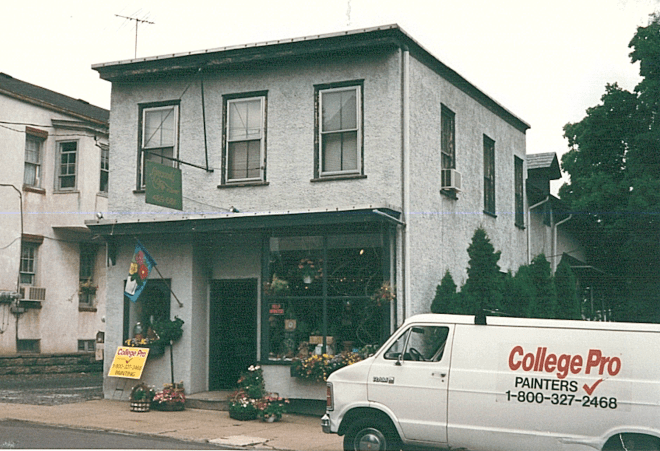
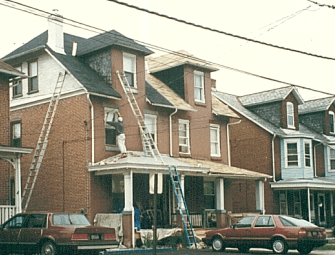
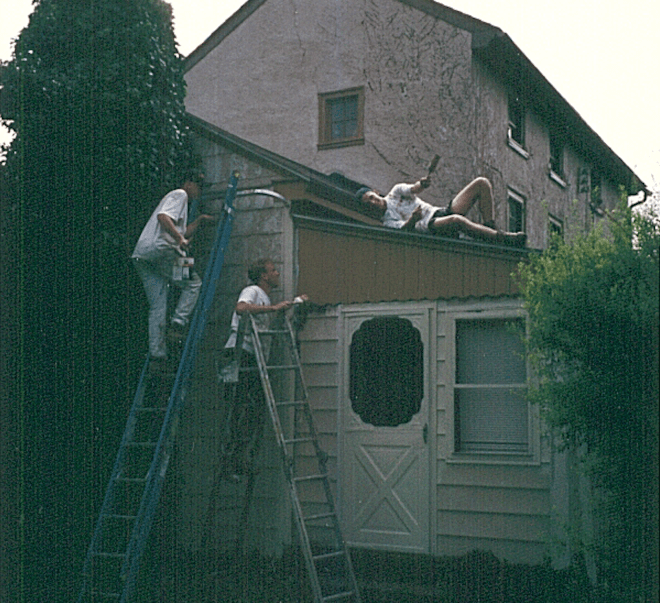
When I was in college I had the amazing opportunity to run my own outdoor house painting business through a corporation called College Pro Painters. This company hired and trained college students to operate franchises — reproductions of the original business begun by a college student, Greig Clark, from Canada in 1971. The training did not spend any time teaching us managers how to paint. It concentrated on teaching us how to train our painters to produce high-quality work by requiring seemingly “barely achievable” expectations. We also learned how to hire our workers, estimate prices, budget supplies, and land jobs.

I had painted for one of the College Pro Painting franchise owners the summer before I was hired to run my own business. It had been a rewarding, successful, and lucrative summer job. Thus, I knew how to paint, and I could do it well.
There came a point in the summer that I was managing three different crews made up of between three and five painters, each, when I was frustrated by the rate of slow production and low quality work. I confessed to my district manager, my boss, that I wished I could just go out there and paint the darn houses, myself! He told me a story.
Before becoming the district manager of the entire North Eastern United States, he had been in the same shoes as me. He was estimating, budgeting, hiring, and training with barely time to sleep and eat. Then his dad got ill. His mom had died when he was young. He had no siblings. It was up to him to help his father.
Maybe you think his business suffered. It didn’t. This incredible businessman began running his business from home. He started having his foremen stop by his house in the mornings. They would pick up orders and estimates. Then they would get supplies from the paint store that the manager had called in. The foremen would talk to the homeowners, walking them around at the end of each day, discussing the progress of the project, and even finalize the job, collecting the final check.
 The ground-breaking technology that made all of this happen back in 1990 was the… ready for this? Telephone. Homeowners called an 800 number to ask for estimates for painting. Because the manager was stuck at home, he was able to check his leads several times a day, calling homeowners back nearly immediately. He scheduled all of his estimates on the same day and back to back, rather than spreading them out. By the end of the summer, the manager who seemed the most limited was able to produce far more painting work than any other manager in his district.
This tale resonated with me. Rather than taking over the work that my painters were producing “under par” and slowly, I gave my employees more responsibilities. I stopped running around town like a manager with his head cut off. No longer did I talk to each painter. I only spoke with the foremen. They became the ones who communicated with the homeowners. They were the ones responsible for the job, anyway! The quality of work slowly rose as foremen realized they wouldn’t be able to collect the final payment until the homeowner was happy. It became the leaders of the crews who put pressure on their painters, instead of me micromanaging everyone. Needless to say, I won the Rookie of the Year Award at the end of my first summer running my own business (1994). And, it was thanks to the encouragement of my district manager, who empowered me with vision and leadership.
What does this have to do with teaching?

How often do teachers take over the learning for their students? How can technology revolutionize the reach of student-ownership? The technology that was cutting edge in 1994 was the beeper. I got pages when leads called for an estimate. I would pull my painting van over at one of the dozen pay phones I frequented and call the 800 number to collect my lead info. Then I would call the future customer, right away. Nowadays we get instant notifications when a social media message or comment comes in. We must teach the next generation how to manage this barrage of technology. Don’t let it innovate you. Be the innovator.
We have all heard the derisive term used in competition when a competitor conquers his opponent so thoroughly that he is said to have “owned” him. It was made popular during the inception of the Internet by hackers (Savagegump, 2005) gaining complete control over a program. Teachers should stop trying to “own” their teaching. Let students control their own learning. Let technology redefine your teaching, and LET GO.
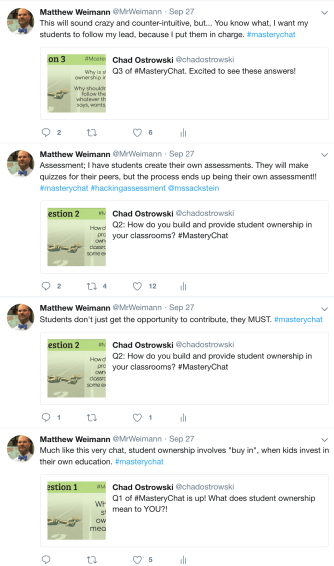
This blog is a byproduct of two experiences: Participation in the “live chat” #MasteryChat on September 27, 2018, hosted by @chadostrowski CEO of @teachbetterteam that centered on “Student-Ownership”… And, reading Deubel’s (2018) “Technology Integration: Essential Questions” for a class from Kutztown University.
Sources:
Deubel, P. (2018). Technology integration: Essential questions. Retrieved September 28, 2018, from Computing Technology for Math Excellence Web site: http://www.ct4me.net/technology_integr.htm
Savagegump. (2005, February 11). Owned. Retrieved September 29, 2018, from https://www.urbandictionary.com/define.php?term=Owned [More than just a definition, this is an etymology of the term.]
U.S. Department of Education, Office of Educational Technology. (2016, January). National education technology plan 2016: Future ready learning: Reimagining the role of technology in education. Washington, D.C. Retrieved from http://tech.ed.gov/netp/

 There is getting into line, and then there is…
 To be able to critique something, one must have background knowledge. Unfortunately, some teachers focus solely on pouring information into their pupils (




 9, 1925 (according to the information provided on the dust jacket) was a curiosity to me because, rather than a novel, it is a collection of stories collected from the native people living in South America.
 text to share with my third grade students who are just beginning to learn how to “set a story” in a place and time. The author begins his book speaking of his experience visiting a tiny village in Honduras. Although the buildings and road differ greatly from the homes and streets that his readers of 1925, and even today, know, the children playing in a cool stream on a hot day resonates with all. In fact, I was greatly inspired by the use of the inclusive language, “…as any other little chap of his age, white, brown, or yellow” (p. 2), connecting his readership with the people he was writing about.
 impossible task, who I empathize with, who are set up as the heroes of the tale; or the owl/wizard team who are about to lose their homes. The way the wizard attempts to stop the sons is through turning the father against them. The father is told that his hard-working sons are lazy and not clearing the land. Each time this happens, the father increases the amount of land that they must level. Now, this seems to go against the owl/wizard’s plan, and yet they continue their scheme until the sons are finally asked to do more work than they can handle.
  that I am reading it so carefully. If I hadn’t, I am sure that I would not have been able to shake the spell of the story. I like the hundreds of people who heard the story told by the elderly woman of the Honduras village that Charles Finger visited, who, incidentally, was depicted as smoking a cigar when Finger found her, and then threw it down to tell the tale; I, also, would have been completely mesmerized by the plight of the young men who wanted to please their father, earn their inheritance, and be successful in life. Just like a character in a fantasy fiction who has a spell broken awakens, realizing that his love had been an aberration, I found myself shaking my head at the human-size iguana who helped the human youths by showing them how to harness the power of the forest animals to clear every plant from the land that the very same forest animals use to make their homes, find food, and live.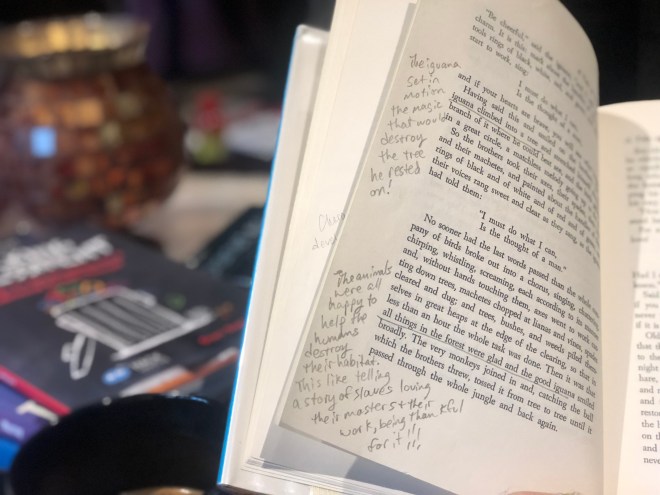
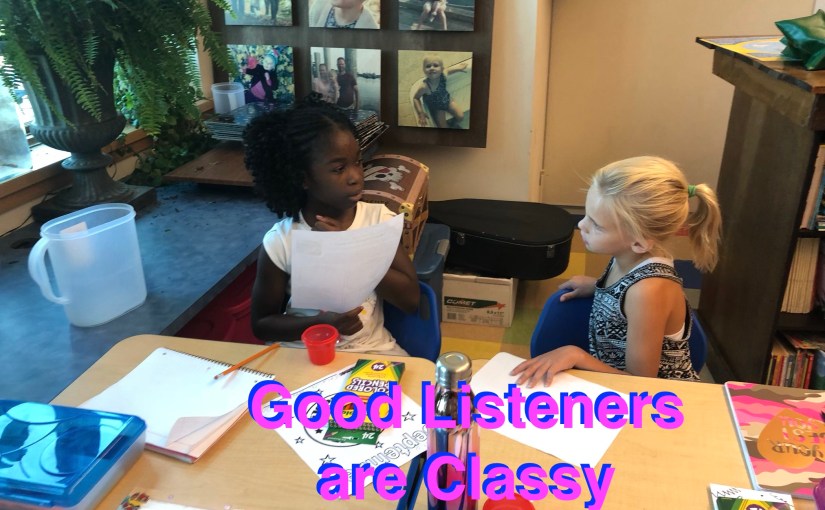

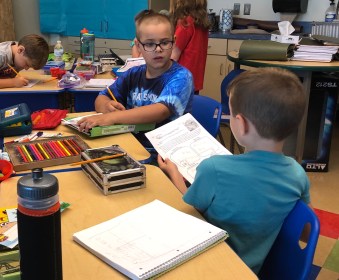
 stand at attention
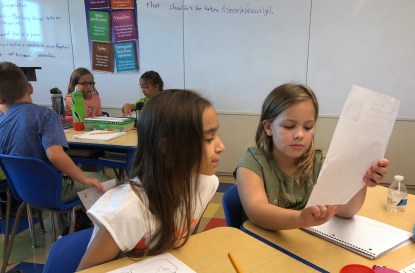

 questions that students struggled with on my “Listening Skills Quiz” concerned how often they should listen.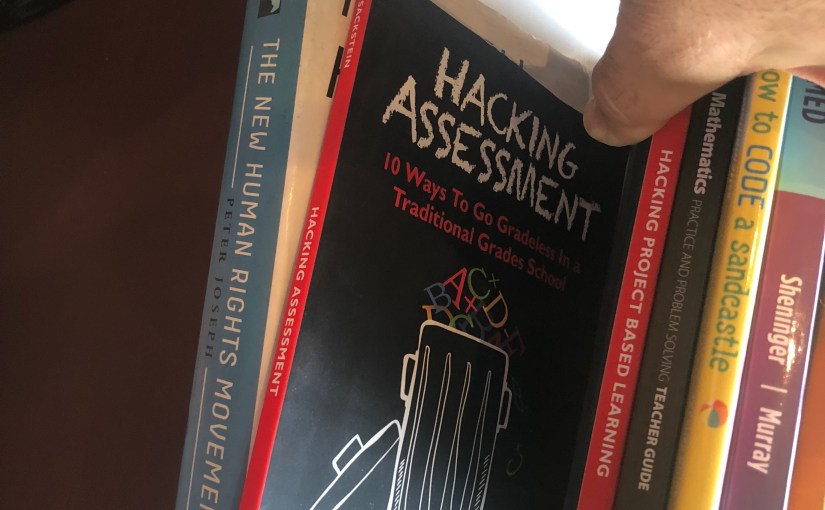

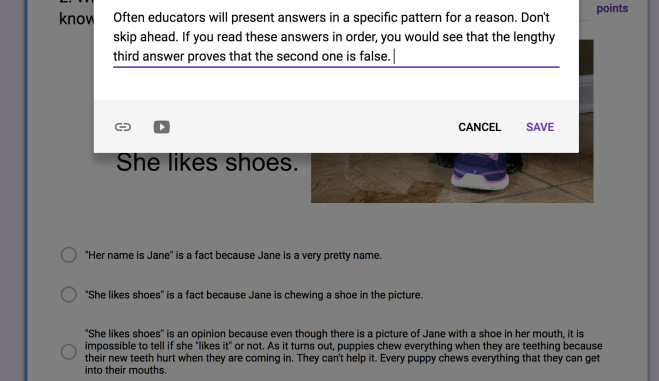

 submit” and “

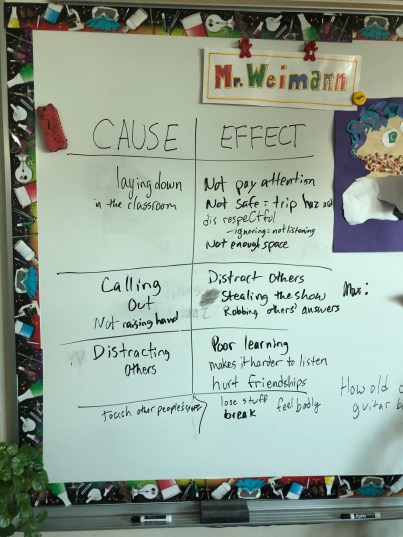


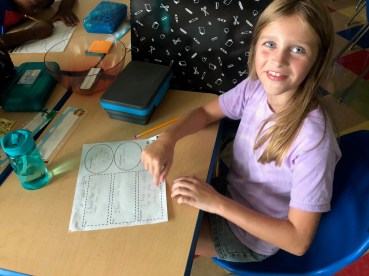 At the beginning of last year I tried telling the students that their pencils were their swords–In this case the pen
 spent every lunch break sharpening pencils. She provided the pencils for pupils whose pencil broke, free of charge. They would simply go over and exchange the writing utensil. I liked this idea, but never implemented it in third grade.
 Grad students asked Donahue (2016) about kids who might take advantage of the pencil producing professor’s liberalism. He explains that if a kid does want to test the teacher, and he/she breaks or loses his/her pencil on purpose, there will come a point, a magic number–fifty, a hundred–at some point the pupil will get it: there will always be a pencil available. And, guess what… I never developed a habit of dropping my ice cream scoop on the ground as a result of being given a new one for free!
 people to behave certain ways (McLeod, 2018). As each level is met, a human being can concentrate on the next. A person isn’t going to worry about safety when he is starving. When pencils are not freely available in the classroom, student psyche could bottom out in the basement of Maslow’s pyramid. How is a kid supposed to feel good (esteem) about himself if he is being controlled by a pencil-nazi who is hoarding the most basic scholastic tool of all time?
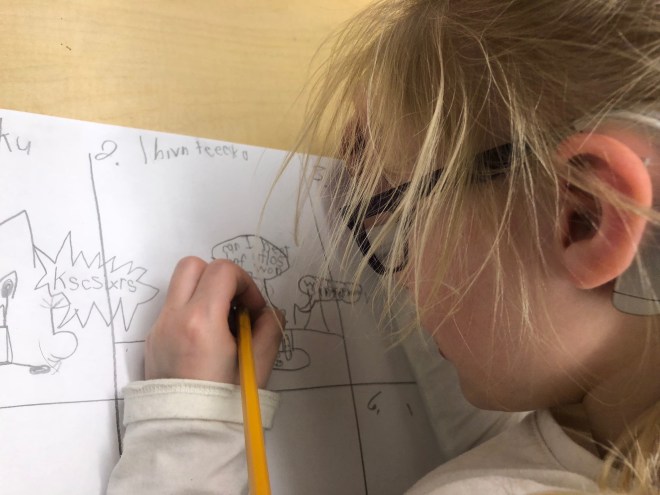 Earlier I equated pencil loss with ice cream spillage, but are kids as fond of pencils as they are of ice cream? Not quite. Replace ice cream with vegetables. A young child doesn’t want to eat his green beans, so he throws them on the floor. Does the parent have the kid get down on his hands and knees to lick the green beans off of the floor? Does the adult send the kid outside to begin tilling a plot of land that will be planted with green beans to be harvested months from now? These scenarios are ridiculous. A responsible grown up simply places more legumes on the child’s plate, explaining and modeling healthy eating. We do this because we want our offspring to grow up to be strong, smart, and live a fulfilled, fun, and productive life.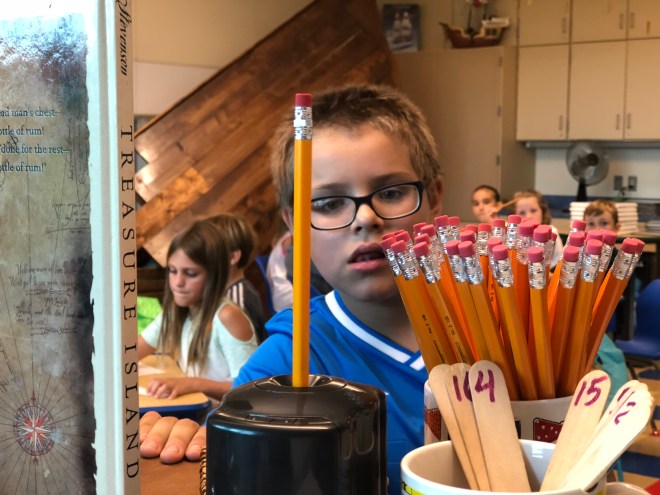
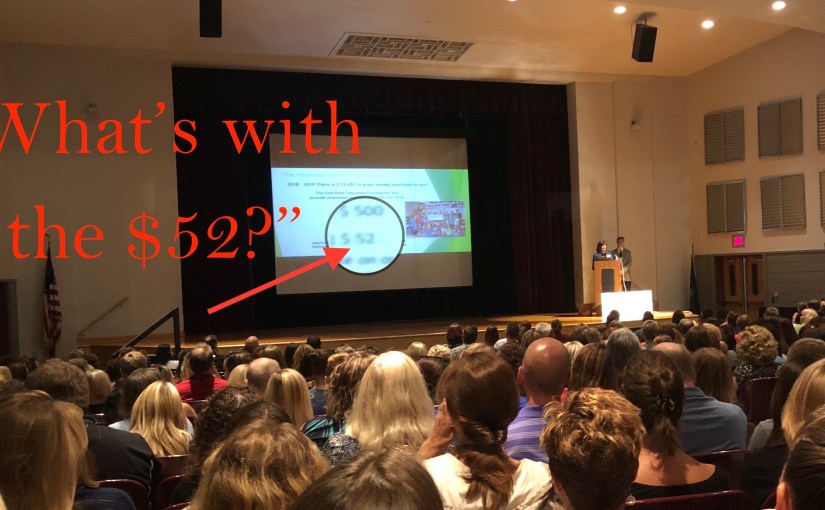
 assembly, August 22, 2018. On the way into the auditorium greeters handed out fliers and small sticky notepads. The flier advertised $15,052 that the
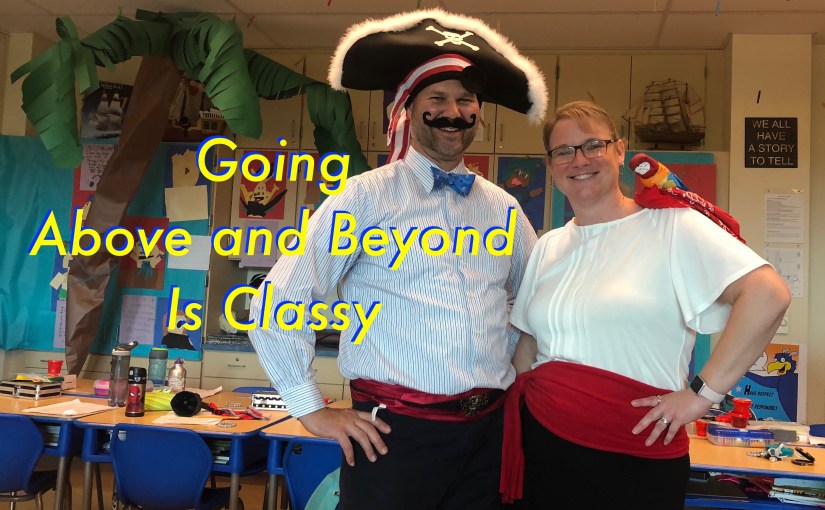
 Heather explained that one of last year’s winners, Paula Fehlinger, had her class auction artwork. When Mrs. Fehlinger asked her class what they wanted to do with the $52 that they had earned, the kids told her that they wanted to donate it to the foundation that had provided them the means to make the artwork in the first place. This was one of the classiest little stories I had heard in a long time, but it was about to get even better…




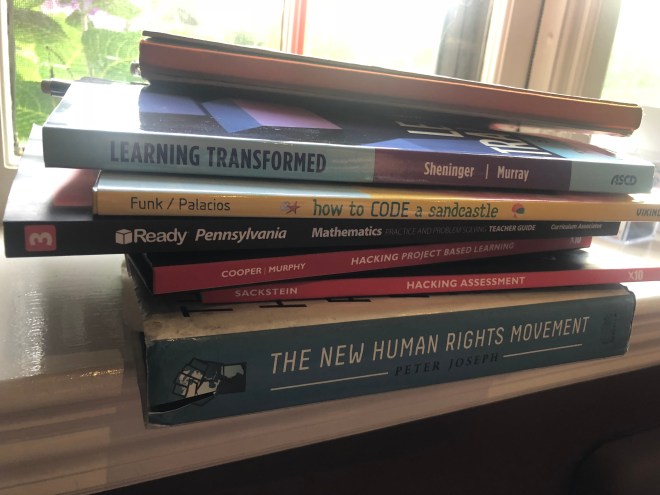
 Page 11 within introduction to “Learning Transformed: 8 Keys to Designing Tomorrow’s Schools, Today” by Thomas C. Murray and Eric C. Sheninger (2017) discusses the typical high school diploma’s lessening value. The authors suggest that “the opportunities available for those with
  for emphasis.) This got me thinking. First, I made a text to film connection. Just recently I had rewatched the movie “21” (Luketic, 2008) starring Jim Sturgess, Laurence Fishburne, Kevin Spacey, and Kate Bosworth, and something that stood out to me more during this second viewing than the first was the premise for the whole movie: It opens with an interviewer asking Jim Sturgess’s character what he has done that stands out. Sturgess is applying for a grant that would fund his education at Harvard Medical School. The interviewer points out all of the impressive credentials that the applicant has earned, along with powerful letters of reference… But… he tells Sturgess that there are thousands of applicants with similar qualifications. He is going to need to “dazzle”.