Appreciating the past is classy. That sentence was worded carefully. Being stuck in the past is not classy. In fact being stuck in general is not classy. Glorifying the past is not classy, either; It says, “Those times were far better than today.” With advances in medicine, technology, and transportation, no time in history can compare to modern times.


To appreciate something is to recognize its worth.


The opposite of “Appreciating the Past” is when a person thinks that things are the way they are because of his or her efforts alone. If you make a scientific breakthrough, that is great, but I guarantee that there were hundreds, if not thousands of scientists and scientific works, not to mention your teachers, parents, and even environmental situation that all lended to you being able to perform your accomplishment.


On the other hand, while age isn’t everything, the older the wine or cheese, the more expensive the bottle or package. There is value in something maintaining its importance, if not even growing its influence, over time.
A lesson that I have been doing for years explores this hypothesis. Every year, after 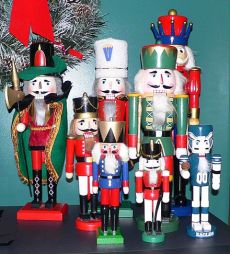 Thanksgiving, an army of nutcrackers marches into the American commercial and decorative landscape. They are everywhere, decorated in every imaginable theme. There are Philadelphia Eagles nutcrackers, stormtrooper nutcrackers, teddybears, ninjas, knights, historical figures, bright pink Breast Cancer Awareness nutcrackers, etc. There is no limit. Where does this army come from? There is a famous, seasonal ballet with a terrific Tchaikovsky score. There are mountains of books. Where did it all begin, and why is it so popular?
In 2012 I dug up the original novel by ETA Hoffman and gave it a read. The 1816 text (translated to English from German) was difficult to comprehend and full of robust vocabulary, so, naturally, I decided to share it with my students. (Challenge is classy; future blog.)


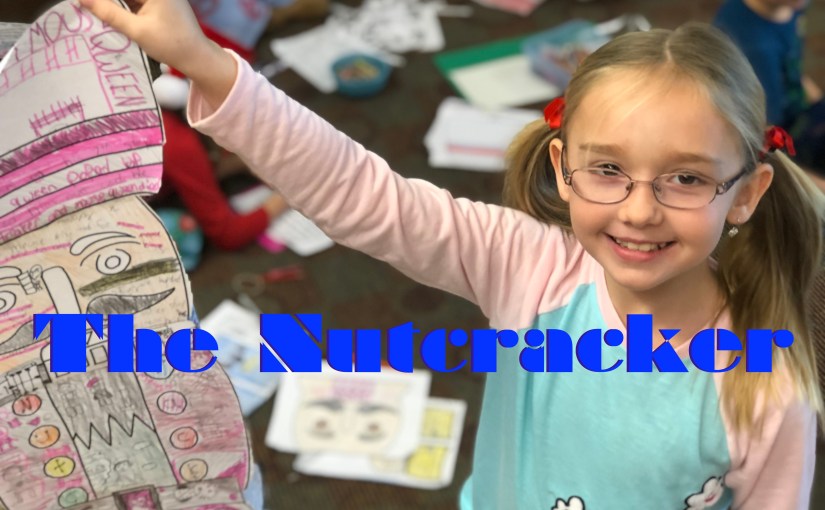
Before beginning, however, I came up with what has proved to be a clever way to record our findings. I projected an image of a nutcracker onto the wall. Using different pieces of paper (eight in all), I traced the outline of the nutcracker. I photocopied and stapled the pages into packets. Students were instructed to write their notes within the outlines, but “Do not go ahead”. In the same way the mysterious nutcracker comes to life within the tale and eventually is set free from his spell by Marie, our paper packets start to reveal themselves once the students get to the image of a face, one of the last pages.

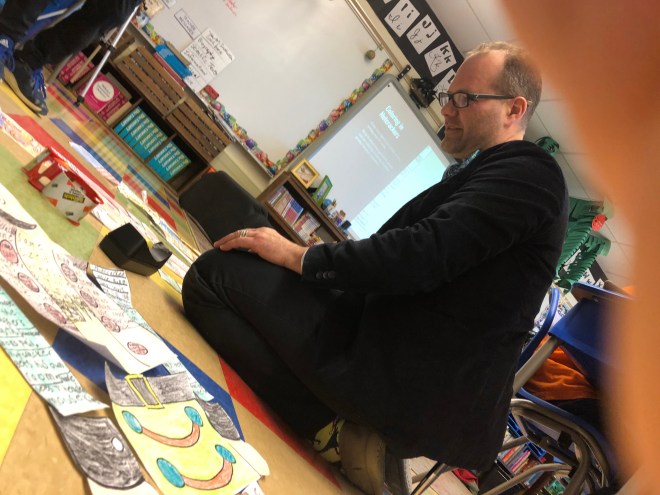
My friend and co-teacher Lori Merrill combined her class with mine, and we would take turns reading the original text to the class. We came across a copy that Maurice Sendak penned and illustrated. It is slightly easier to read than the Dover edition, published 1967. Plus, the Sendak pictures are amazing. This year we had the advantage of a school Youtube channel, “Willow Lane Read Alouds” that allowed us to videotape the read alouds and publish them to the web for kids who missed a chapter to catch up. They could share with family members, as well.
Throughout the read aloud, students record vocabulary, write down key events, and draw illustrations inside the outlines of their soon to be nutcrackers. After finishing the story, students complete their notes, drawing visualizations of the toy-mouse war, the Mouse Queen placing a spell on Princess Pirlipat, Marie giving up her toys and sweets to save Nutcracker, and of course the trek through The Land of the Dolls. Then the students lightly color in all of the sections, cut them out, and assemble their very own nutcrackers. We tape them together, and get them laminated, usually and hopefully just in time to bring home for the holidays.
 Now, these third grade students have a tool that they can use to retell the real story (or at least, the original story) of The Nutcracker. They are also beautiful decorations!
If you look at reviews of the original “Nutcracker”, you will find Fritzes scolding the text for inconsistencies, flaws, and poor quality. There are Madame Mouserinks waiting to bite the Nutcracker’s head off with criticisms. There is no end to the naysayers who demean the text. So, again, why has “The Nutcracker” remained and even grown in popularity?
Perhaps, it is because the characters are so unique. Nutcracker is not just a toy that comes to life. He is the Superman of toys. Judge Drosselmeier is a lawyer, tinkerer, seeming villain, and finally patriarch. Fritz displays the same militaristic attitude that his stiff soldiers show when he sentences Nutcracker’s fait. And, the noble, sweet Marie is about to sacrifice her most precious possession to save the Nutcracker. And, is there a more sadistic nemesis in literature than the seven-headed Mouse King?
 The Nutcracker might maintain its popularity because of its foreignness. Winter swoops in, bringing cold and snow and holidays. Initially, it is fun and exciting because it is so different from summer and fall. Similarly, Nutcrackers take over the turkey, Pilgrim, and Native American displays. They often have an Eastern European aura to them. Also, the ballet was produced by Russians; The story written by a German.
Maybe The Nutcracker is popular because he is a symbol of olden times; simpler times. Who cracks nuts, nowadays? What kid treasures wooden toys that have one moving part?
I don’t know why our culture is so fascinated with The Nutcracker, but visiting its conception is one of the highlights of the school year. I feel like a textual anthropologist when I lead students into reading, learning, and studying the first writings of this cultural icon. I hope that not only do they develop a deeper appreciation for this classic, but that they learn the importance of appreciating the past.
 PDFs of Scanned Nutcracker Papers:
https://drive.google.com/file/d/17fDkJYG3fAYESJ-nmYKQpBLwIEr2z-YY/view?usp=sharing
https://drive.google.com/file/d/1JcCXAlYipgII2Jnxouadm9naTo2sgQMS/view?usp=sharing

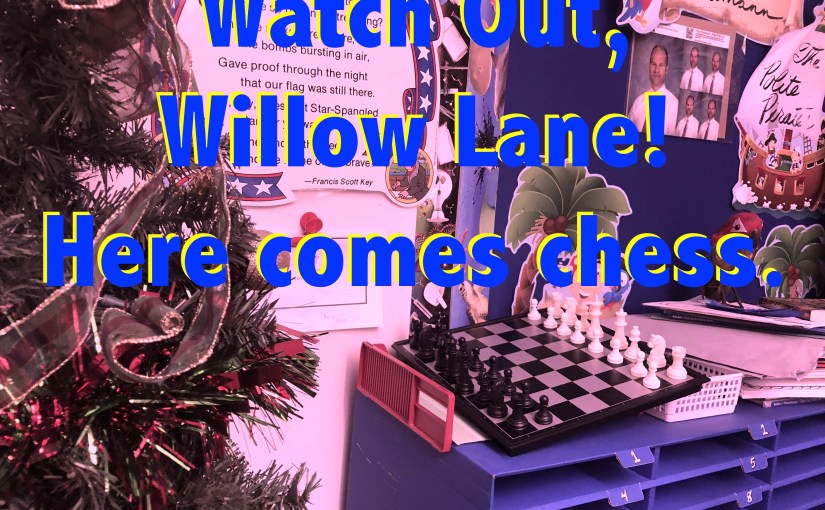
 I was glancing around my classroom before I unplugged the Christmas lights and took off, yesterday, and I saw this: A chess board had been “put away” by being placed on the Red Bin. The Red Bin is the place where notes, money, messages, etc. for the office are placed first thing in the morning. They then get sent down to the office with our lunch count in the green envelope seen under the chess set.
  We are just beginning our school chess club, this year. I accepted too many members, and don’t have enough of the nice big vinyl boards with 3 inch plastic pieces for everyone. (Christmas idea;) So, we have been using a mishmash of different sets. The one in the picture is magnetized, that’s why the pieces can stay in place.


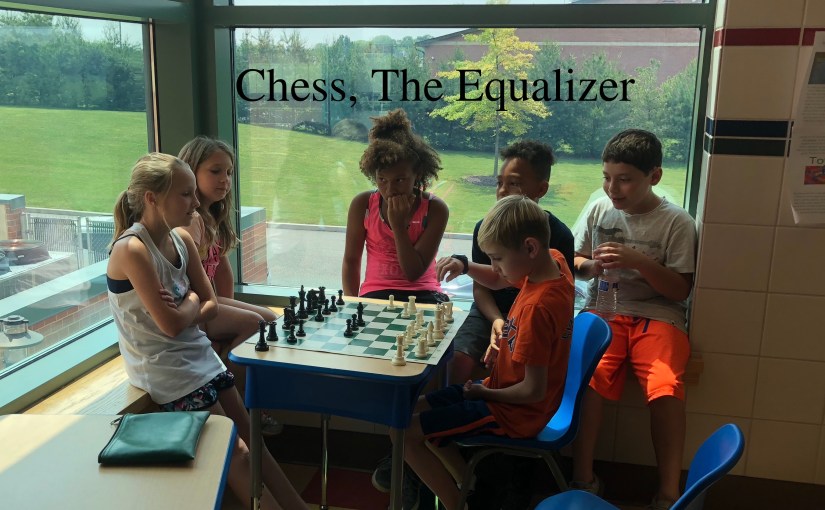
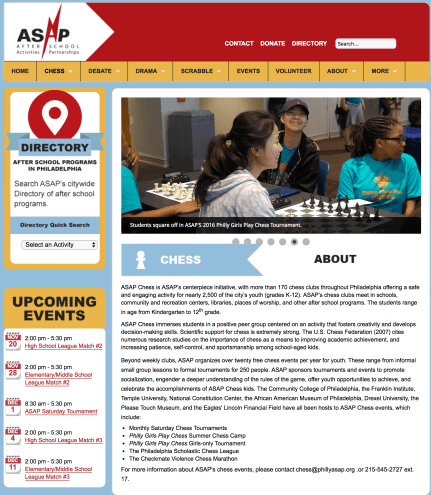
 I couldn’t possibly be more excited to be starting a chess club at Willow Lane Elementary! This Tuesday is our first meeting. I had tossed around the idea of starting this club when I began teaching at Willow, 8 years ago. Instead, I began an after school club that published a school newspaper:


 The only reason that I knew about this interaction was the hurt child came over and told me about it. It almost seemed like she wasn’t sure if she should be upset or not. As she told me her story, others, overhearing the tale, chimed in with their two-cents. This additional commentary seemed to spin the story into a negative frenzy, so that I put an end to the retelling in order to address the class.
  What the boy did when he pointed out the way a little girl looked different from himself was a natural thing to do. We humans can’t help but categorize things (Vanderbilt, 2016). We have genres for music, books, movies, art, dance; You name it! It’s much easier to find things when they are labeled. When I’m in the mood to read a mystery, it’s much faster and easier to go to that section of the bookstore, rather than sift through every single shelf. But, what about those books that are very funny true stories about a person’s life that happen to also be highly mysterious? Now what? Often times, we simply create a new category.
  Tom Vanderbilt (2016) goes a step further, suggesting that the more we like something, the more we want to categorize. A person who enjoys candy will separate a bag of treats into several groups of like sweets. How many times has the book-lover rearranged his or her library, recategorizing titles? I have grouped books that I read close in chronology, only to separate them after reading new texts.
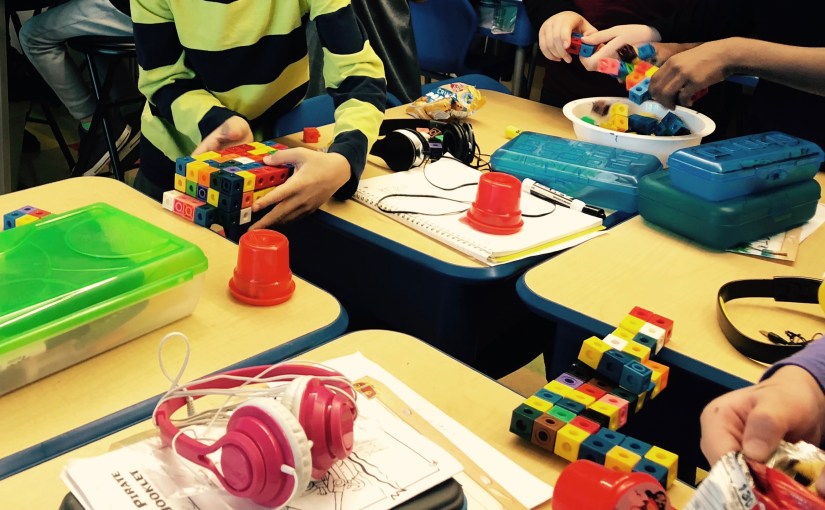
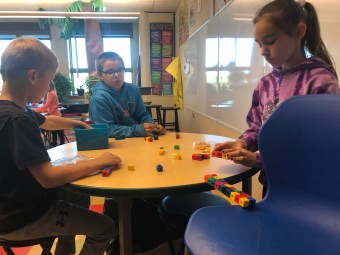
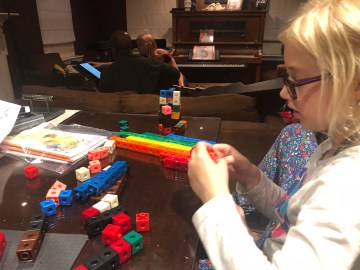
 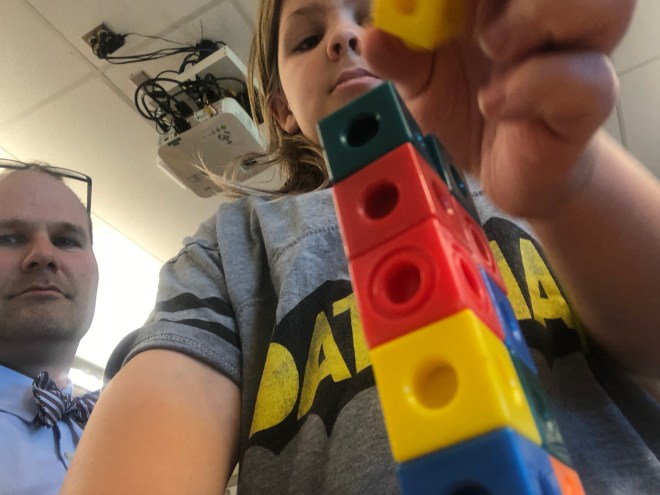 I came up with an activity to help reinforce this concept in my classroom. I call it “Building Bridges”. We have a snack/play time in the afternoons, when we give ourselves a brain break. I instituted a “constructive” play rule, where kids use items that can be connected or built upon in order to make things, rather than just mess around. We have Legos, Lincoln Logs, Tinker Toys, 30+ year-old Robotix toys from my childhood, and we also use the colorful interlocking blocks that came with our math curriculum. Because we have the most of this last medium, I chose to have the whole class use the colorful blocks in a contest. (The competition makes it more exciting.) Groups of kids–I not only let the kids pick their own groups, I didn’t limit the size of groups–arranged and connected blocks to form bridges that spanned distances between desks. I told them that the bridge had to be able to hold and transport a Thymio robot–This is a little robot that students can program to drive. The robot was the trick. Students worked to make their bridges wide enough, thick enough, and strong enough for the robot to use. Rather than drop robots on the floor during trial runs, we measured the weight with a simple scale. The robot was equal in weight to a half-full pencil box.







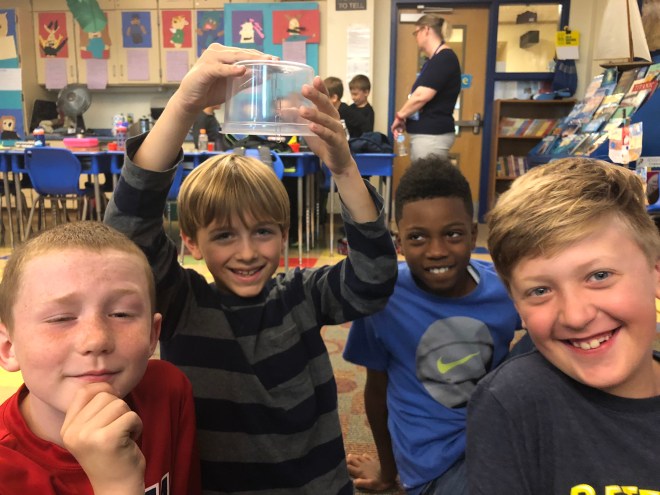
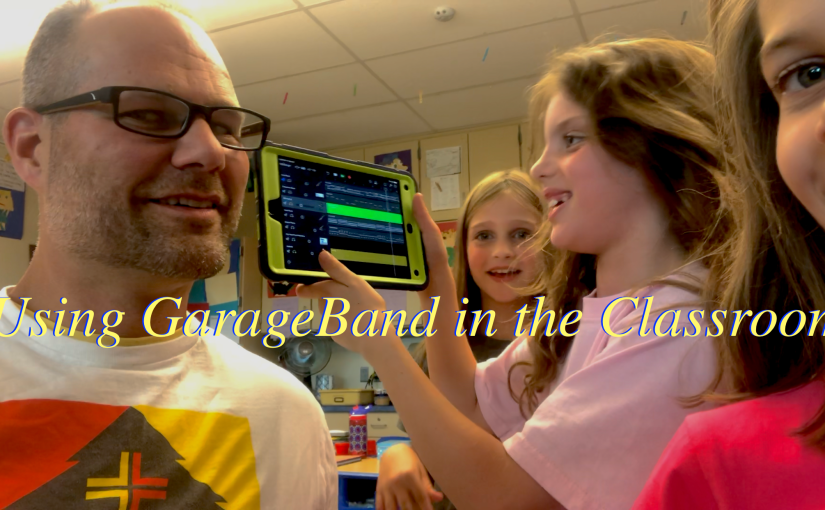



 C is for simple, yet complex. The song is made up of 4 verses with a repeating chorus. The chord progression is E, D, A, E, with the change on the first beat of each of four measures. Dylan Peters (@DylanPetersedu), the brand new Technology Innovator Specialist hired to East Penn School District this past summer (2018) worked with me from the get go to teach my students (and me) how to use GarageBand. We used the “Autoplay” feature to have the instruments play simple rhythms. After guiding groups through creating the same set of four instruments playing the same four measures of music, we showed them how they could change the instruments, altering percussion styles, and fooling with some really funky disc jockey features.

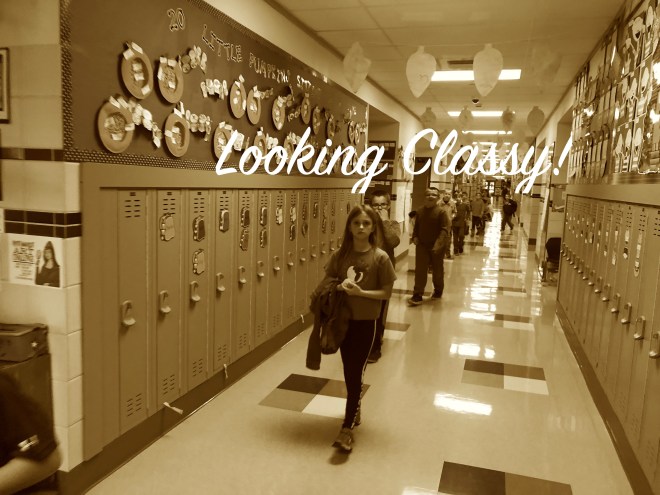
 One silly example I have for this is the way students hold their coats. It is that time of year when kids need coats for recess. The thing is, kids get warm when they run around, and they will take their coats off. Upon entering the school building, they have not cooled down completely, so they don’t want to put their coats back on. What many are inclined to do is place the hood of their coat on their head and let the rest hang behind them. They see peers doing this; Maybe they feel like it is a cape. Kids love doing this. It isn’t that I think that there is anything inherently “wrong” with wearing a coat this way. However, what I do each year is show my students the contrast of draping a coat over the arm and carrying it like a butler’s towel up to the room. It seems to me that students who walk with their coat draped over their arm stand more strait with their chins higher. They do not shuffle into the building. They parade with purpose. I told you that this was a silly example. It is simply an appearance thing, but it really works!



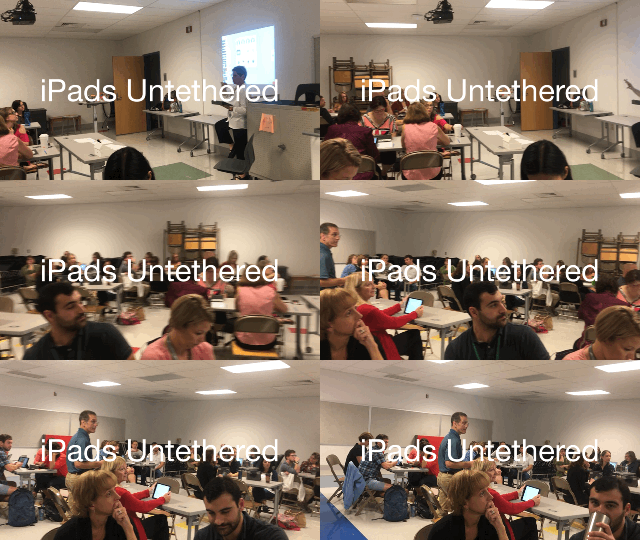
 My classroom has a mishmash of different devices. I literally did not know how they were going to outline their arrays, but I did know that there was more than one way. The iPads are pretty easy. Kids can click on the assigned Google slideshow and immediately start drawing and writing all over the slides, without opening it in the Google Slides App. When students are done they can save/submit the work as a PDF.


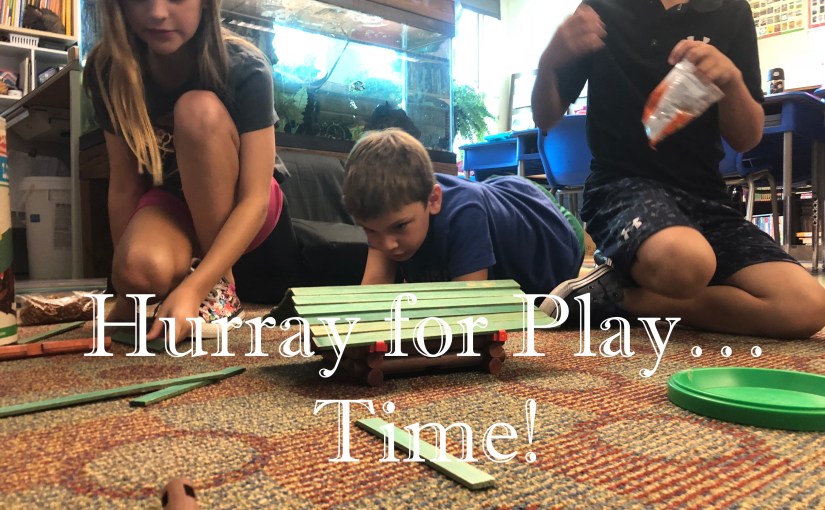


 Merriam Webster defines playtime as “a time for play or diversion” (n.d.). The very first time I introduced this idea, I talked all about the concept and went over the parameters or policies prior to math time. Then during math we used connecting blocks to build arrays that were broken apart, displaying split multiplication problems. When math time was over, I told the students that they could keep using the blocks, but now, they could “Build whatever you want.” They were in heaven. It was like I had taught them the proper way to use the monkey bars, and then told them they could play all over the playground doing anything they wished. Stay within the fence, and follow the general rules, but have a blast and blow off steam. They sure did.


 My students and I are super excited for this new #playtime initiative. I haven’t told them about making videos, yet. But, our creative building has completely revolutionized our Language Arts time. Kids are more attentive, well-behaved, and cooperative in centers, after having a brain break. I look forward to sharing more about this time, how it is working out, and what my students are producing throughout the year. Please share with me articles that you have read that either support this idea, add to this concept, or even contradict my thinking. Thank you.
