
There is lots of talk about how great failure is… in books, articles… all over the Twitterverse people are praising the merits of accepting failure. How great is it, really? When was the last time you experienced a real, core-shaking, devastating defeat? It’s pretty painful.
A couple of years ago it was popular to make compilations of videos of people “failing” at tasks that made them look silly. Guys with skateboards fumbling rail-slides down handrails; girls messing up gymnastics; trucks miscalculating the height of overpasses; and more. I fell into the trap of watching several of these. Is there something therapeutic in watching others fail? Laughter is definitely a healing salve, and these short clips will cause you to chuckle, for sure. But, many of these videos are bloopers of people attempting to do amazing feats. Where are the compilation videos of successes? Also, the seemingly therapeutic laughter is achieved at a cost, albeit difficult to measure, to the person whose failed feat will live on in infamy forever captured by video shared so that the public can laugh at his or her embarrassment. Make no mistake about it. We are laughing at others’ misfortune.
To be sure there is therapy in laughing at one’s own misfortune. Additionally, there is a trend spreading where embracing failure is being given value. TED (n.d.) has a collection of talks; over 17; on this topic. I have preached the positivity of negative results to science experiments for years. Failure breeds future discoveries and unforeseen understanding. While this very well may be noble, what about the person relying on results to bolster claims necessary for earning a grant to fund more failures? Companies and governments are probably going to be less likely to give money to projects that prove unsuccessful. Defeat can be incredibly disappointing.

I experienced a deeply depressing defeat at the beginning of this school year. The fact that it has taken me several months to share it illustrates the emotional impact. I wasn’t sure how I wanted to frame it. The story is a little embarrassing and revealing. I had to throw away something that had taken me many hours to build. Money had been spent on constructing something that in the end needed to be thrown out. Were these hours and this experience wasted? Yes… and no.
Many teachers and parents (Hampton, 2015) experience a sort of nesting phase, similar to a woman about to give birth, prior to the school year. They buy more school supplies than they need, arrange, rearrange, and re-rearrange their rooms over and over, making everything just right, perfect for the new class. Maybe it is a guy thing, or perhaps it’s just “my” thing, but I like to build stuff to get ready for the school year.
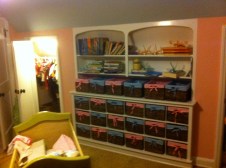
The very first item that I ever made was a couple of bookshelves. I love books, and I wanted to have a room full of them. So, I made homes for them. An idea of what I wanted the shelves to look like, how I wanted them to function, and the ease of making them grew in my mind throughout the summer. In between Professional Development sessions and team planning meetings I was drawing, measuring, sawing, hammering, etc. my bookshelves. They came out great, functioned flawlessly, and are still being used… But, the middle shelf was accidentally placed the exact height of the outlet the construction was to hide. It was impossible to plug anything in with the shelves against the wall. This was easy enough to fix. I simply cut a notch out of the unit so plugs had a space to stick out of the wall. From planning to constructing to fixing this problem, the experience prepared as much my pedagogical psyche as it provided a home for my classroom library.


In the next few years I built a classroom island, a castle, a workbench, fish tank stand/hood, and conference table, among other smaller projects. The classroom island was something I obsessed over the summer prior to making it. The cubbies that I purchased for housing the plunder of books I had been pillaging from second hand bookstores were unattractive and sat flush with the floor. My island has a platform that raises the cubbies off of the ground. I made a countertop that covers the ugly cubby roofs and extends backward to allow students to sit under it. With stools it functions just like the kitchen islands that most students have in their homes.


The castle deserves its own blog.
My workbench was really neat. I didn’t like the way the teacher desk quarantined me behind it, cutting me off from the action of learning. One year I took it all apart and lined it up. The parts included the desk that a teacher’s chair can pull under, a similar table/desk with space under it, and two giant filing cabinets. I placed one of the filing cabinets under the table to hold it up; It had been attached to the teacher desk for support. The other filing cabinet was placed at the end of the twelve foot long line of equipment. Similarly to the classroom island, I built a frame of two by fours to attach one by eights, hanging the creation over one of the long sides and the end so that kids could pull up to it like a gigantic table. Because it was slightly higher than their little student desks, most kids stood to work at it. In my pirate-themed room this came to be known affectionately as “The Plank”.
I learned something new each time I constructed something, and many of the lessons involved solving problems. Every creation proved to be incredibly useful, fun, and loved… Until…
This past summer I got an idea in my head that I could not shake off. It consumed my thoughts. I was picturing building a sunken pirate ship, using planks from the classroom workbench. The workbench had served its purpose, and I wanted to do something different with that space in the room. Plus, I needed lumber for this new obsession–Make no doubt about it–I thought about this project constantly June, July, and August of 2018. Each beginning of the year construction project has been a sort of puzzle. My mind bends ideas and works out how I can form structures quickly and use as little funds as possible. The structure is always something that you can’t simply buy, either. Lastly, it has to be both functional and cool looking. The sunken pirate ship was going to be my masterpiece.
First of all it would be almost completely constructed of wood that I already had, making it virtually free of funds. Second of all, what I pictured in my mind did not exist anywhere but the bottom of the ocean. Thirdly, and most importantly, this new project was going to be the most beautiful, complex, impossible to reproduce, no-one-else-could-possibly-make-this-creation the pedagogical world has ever known! And, it was.

I began by taking a part the beloved workbench and planing each edge of the one by eights so that the angle was 70ish degrees, rather than square. After doing this to all of my planks, I took four foot by four foot pieces of plywood that I brought from home, and I cut out a curve that would serve as the hull of the ship. This was one of the trickiest parts of the project. I brought the plywood up to my room and looked at it for a long time. I wanted the sunken ship to show the curved bottom of the boat, but also come up from the floor at an angle. This meant that I needed a few curved pieces, but different sizes. Additionally, I wanted the model to be the front of a ship, so I had to have the frame graduate from a large curve to a smaller and smaller one. It is almost as hard to write about this as it was to ponder it in my brain. This puzzle took me a long time to solve. Even after I had constructed a frame, it was tricky to figure out how to attach the planks. Should I build the whole thing outside, or piece it together right in my room?
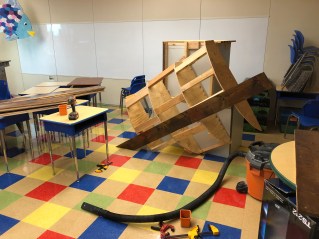
I decided to assemble the ship in my room, rather than run up and down the stairs over and over. I figured out what angle to cut the bottom of each plank, ending at the floor, and attached my first one. It was beautiful, already! Just the success of figuring out how it could work was exhilarating.
I kept adding planks, alternating lengths and looks. I wanted it to look like the front of a pirate ship that had broken in half, so I left some of the boards ending at varying lengths. The front would be cut in an arching round curve, or so I hoped. This was still a little fuzzy in my head.
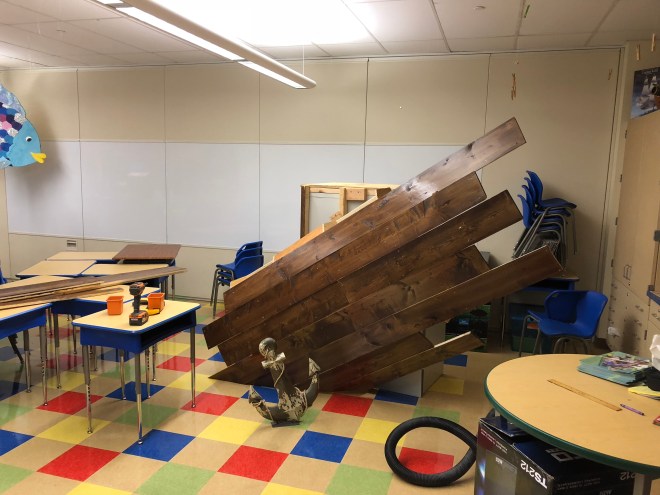 The top part of the ship would be flat or vertical, having no curve, to show that this was more than just a rowboat. It had been a tall mast ship. I continued the framework and attached more planks.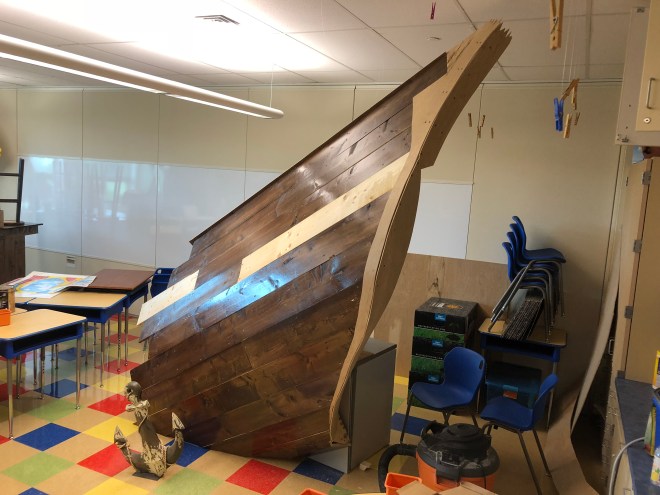
As you can see, from these images, the ship was a work in progress. Much like a sculpture, I was cutting, shaping, adding, removing, and attaching pieces to adjust the art as it evolved. (Through constant formative assessment I made adjustments.)


Some of the shape of the ship would be produced simply through optics. I would position it at such an angle as to make the front of the boat look like it not only curved up, but also came to a seam with the opposite side (which obviously did not exist). One final extremely difficult, mind-bending trick was figuring out what to do with the front of the ship. I wanted it to look like a beam running the spine of the hull. Luan is a very thin wood that comes in sheets and is used for subflooring. You use it to make an otherwise uneven or bumpy floor smooth before laying tile. Because it is so thin, it is very pliable. It was very difficult to bend, hold, mark, and cut, but I got a piece that curved with my boat’s bow pretty well. I tossed around having a spear like staff sticking off the front, also, but the monstrous beast was already nearly touching the ceiling! A broken off point seemed to fit the theme of disaster.


Little did I know the disaster that was about to befall my creation, next.
Fellow teachers from my building visited my room, having heard the commotion or news of my creation. They were increasingly impressed as the structure was developed and took on shape. I remember wanting the boat to have a certain semblance to a ship before inviting my principal, Dr. Moyer, up to see my masterpiece’s progress. When I did finally invite him, I didn’t receive an enthusiastic response. In fact, it took a day before I even heard from him. At the time I was happy to have more minutes to get the ship that much closer to completion. When Dr. Moyer did finally join me in my room, he brought bad news.
Clearly, it pained my principal to inform me that after all of the work that I had put into this beautiful masterpiece, it was going to have to go. It wasn’t his decision. He shared with me an email from maintenance that he had received. The message explained that “The pirate ship being built in room 207 had to be removed, immediately” due to several violations and concerns. Dr. Moyer didn’t see any way around it, but suggested that I talk to the head of maintenance.
The pirate ship was just about done at this point. I called my school district’s head of maintenance several times before we finally connected. Over the phone I told the person who is in charge of not only maintaining all of the district’s facilities, but also responsible for students’ safety that I understood every point that he was making in his email to my principal. I explained that some of the concerns could be remediated and I asked for a chance to make some adjustments to my creation. This saint of a man told me that he would consider my changes and take another look at my project.
This was it. I had to move the ship away from the sprinkler head in the ceiling, make sure the structure was secure, and smooth rough edges as much as possible. I put last minute, finishing touches on the ship to make it look as good as it could… And then, I waited for a verdict.
I am not listing every concern that my masterpiece had raised in the mind of the head of maintenance, but suffice to say, I was unable to completely rectify enough of them to satisfy the justification of leaving the heap of wood in my room, permanently. It was honestly touching how obviously moved this understanding and caring individual was when he told me that, “Unfortunately, the pirate ship still had to be removed from the classroom.”
I had worked feverishly with an obsessed passion to complete this project before school began. I wanted to have this amazing, awe-inspiring, gigantic addition to my pirate-themed room ready for students to appear Monday morning. I couldn’t wait for them to feel the presence of the sunken pirate ship looming in the back of the room. Removing it would be like losing a limb.

Hesitatingly, I inquired if I could just keep it long enough for students to see it. After a pause, my savior said that he needed the ship removed, but that he wasn’t planning to do a walk through of my building on the first day of school. It was understood that if anything negative happened, it was on me. Having constructed the creation myself, I knew that it was perfectly safe. And, I was very confident in my classroom management, so I took the chance of letting my students at least view the craziest creation I had ever attempted.
Dignified Defeat
I took the pirate ship down. I was okay with this decision because it was made with the safety of students in mind. But, make no mistake about it, this was a defeat, a loss, a failure. As I said earlier in this text, I struggled to publish any information about the pirate ship. I never tweeted images of it or talked about it publicly on Facebook. Was I simply embarrassed? Yes, but even more than that, my dream was defeated.
…Or, was it?
I told the head of maintenance that I had envisioned this creation over the summer, and I felt like I just HAD to make it. He suggested that I speak to the people who produce plays at the high school to help with making their sets. There was a respect for my creativity. I’m not sure that he ever completely understood, but I could not NOT construct this pirate ship. I had to see if I could do it. I had to see if my vision would work. I had to see if I could puzzle out the angles and curves. I had to see what it would look like. Could it become anything even close to what I envisioned? As it turned out, yes, I could. Yes, I did. Yes, it was… beautiful. And, now it is gone.


I eased myself into my defeat by thinking I would reconstruct the ship down by my pool. But, I’d have to build a whole new frame, and I didn’t think that the low-quality wood would hold up outside. In the end I let the thing get moldy and threw it all away.
A chess tournament training I attended recently shared what kids must master before attending their first match. They have to know how to checkmate or win a game. They  should know how to operate a chess clock. There are a couple other elements, but what stood out the most to me was the idea that kids must learn to lose. At the time I pictured my 7 year old daughter who hates losing. She has melted down to tears when she loses. But, since then, I have mulled this concept over. At both the beginning of a chess match and at the end you shake hands. It is different from other sports. You don’t jump into competition and then slap hands carelessly at the end, chanting, “Good game, good game, good game,” while never looking the victor in the eyes. A dignified defeat is thankful for the opportunity to learn through this match. I was able to try out my skills, make some good decisions, show my stuff, prove myself to myself and perhaps others, and I am now a better stronger person having competed against you. Maybe, like a match I played against someone better than I, the outcome will be a feeling of “At least I held my own.” There is dignity in that attitude. Dignity is an attitude.
In conclusion, I am pleased to profess that although my room does not dawn a disaster of a sunken pirate ship, it does house one classy educator who has learned the lesson of dignified defeat.


What defeats have you dignified?
Sources:
Hampton, K. (2015, August). THE ART OF AUGUST NESTING. Retrieved March 16, 2019, from https://kellehampton.com/2015/08/the-art-of-august-nesting/
TED. (n.d.). A collection of TED Talks (and more) on the topic of Failure. Retrieved March 17, 2019, from https://www.ted.com/topics/failure



 Perhaps your partner has driven a car before–Maybe they have a Ferrari sitting in the garage that you’ll be able to experience if you allow the friendship to blossom naturally.


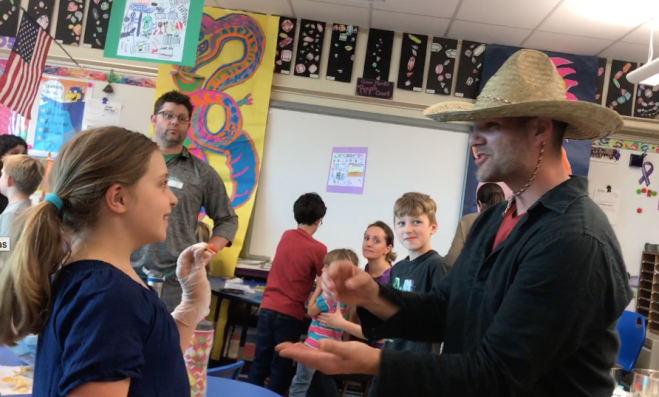

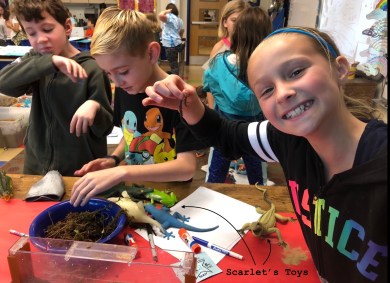


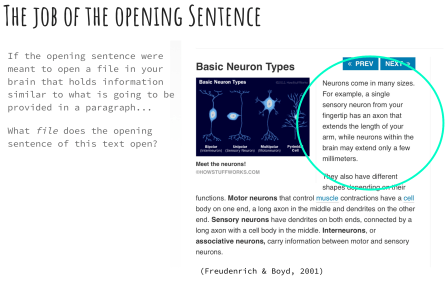
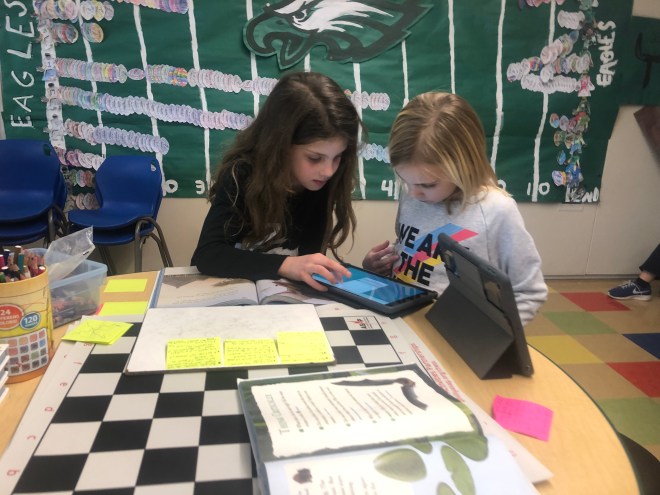

 When new information comes into your brain, your mind tries to make sense of it. Your brain looks for information that is related to the new senses being stimulated. It is sort of like looking for a code or translation that can make sense of the new information. If no translator or decoder is found, the information will most likely be deemed useless and get deleted. It may even be found incompatible immediately. This could have happened with the neuron information that I presented to my students at the beginning of this lesson. If I hadn’t talked to them a little about cells and brains, they wouldn’t have anywhere to put this information. I may as well have been speaking Greek to them. This is probably how many people feel when reading or listening to specialized scientific texts and talks.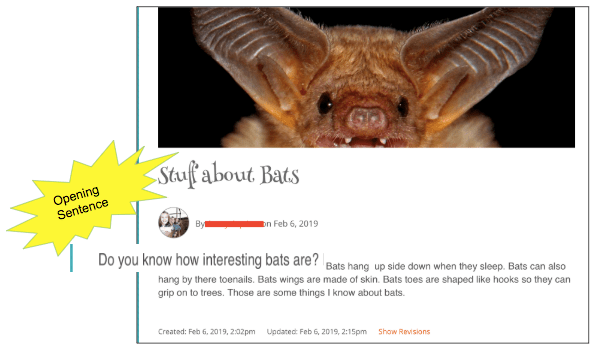


 The exciting and informative live chat #MasteryChat that takes place on Twitter between 8 and 9PM on Thursdays discussed the topic of “Visual Thinking” on January 10th, 2019. I’ve always held the belief that the more connections students make to a lesson, the more they will remember. Also, the more emotionally attached they become to their learning, the more they will get out of it.
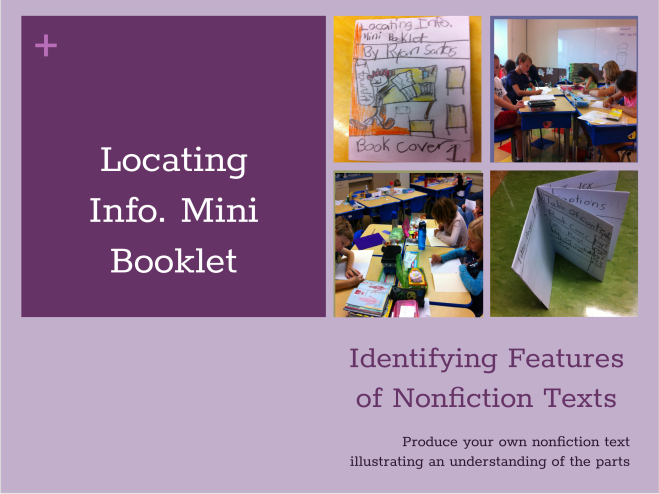 Here’s how it works. First, I spark the class’s excitement by showing telling them they are going to make books. Then I show them a mini book. Everyone loves that! They begin
  antsing to make one. That is when I share a unique style of nonfiction text; The “instructional text” that tells how to make a mini book. I point out the sequence words, and we picture in our minds what is happening to the paper.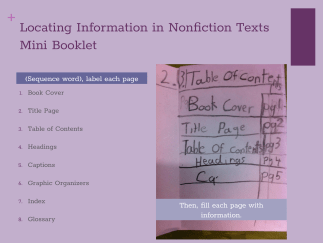
 When we work on the mini booklets again, I have students label each page. They look at the list that I post on the board for them. Then we make a “Table of Contents”. Finally, students write explanations for each text feature on its page. Some of them, like the “Title Page”, are virtually self-explanatory. Others, like “Graphic Organizers”, require many examples. Students are only permitted to decorate, which they are all iching to do, AFTER all of the information is completed.

 The class is broken up into two equal groups. I’ve done girls versus boys, odd student numbers versus even student numbers, and broken the class up according to desk arrangements; Doesn’t matter how you do it. The NFL teams that are entering the playoffs are listed on the board. Kids get the lunch/recess time to decide on their group’s team. Then the players are passed out. I usually project a few pictures of each team’s jerseys on the wall for kids to model the coloring of their figure after.
 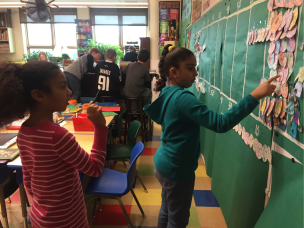 I got this idea from John Burger, my mentor in 2010 at Willow Lane. It was his last year, and we were teaching second grade. I wouldn’t be surprised if he got the idea from someone else. That’s how teaching works. If you like the idea, use it, go for it. Good luck!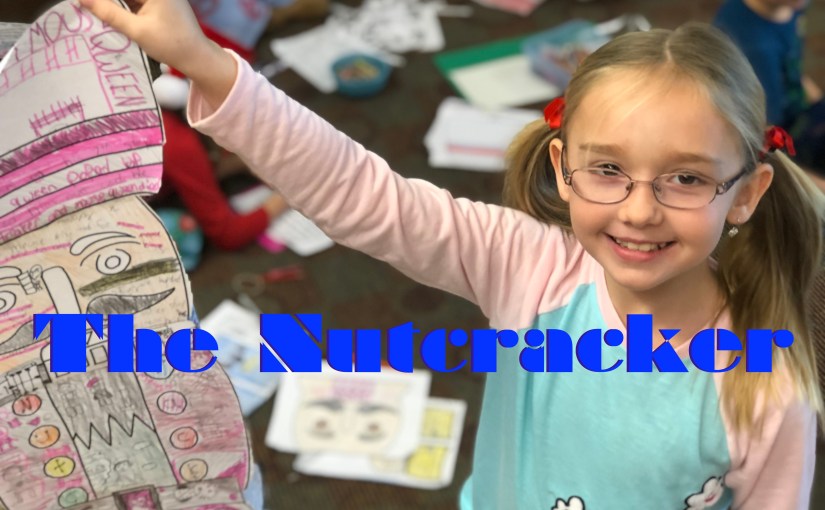


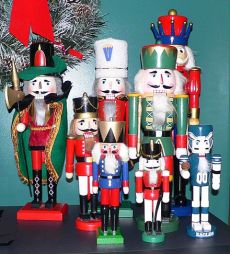 Thanksgiving, an army of nutcrackers marches into the American commercial and decorative landscape. They are everywhere, decorated in every imaginable theme. There are Philadelphia Eagles nutcrackers, stormtrooper nutcrackers, teddybears, ninjas, knights, historical figures, bright pink Breast Cancer Awareness nutcrackers, etc. There is no limit. Where does this army come from? There is a famous, seasonal ballet with a terrific Tchaikovsky score. There are mountains of books. Where did it all begin, and why is it so popular?


 Now, these third grade students have a tool that they can use to retell the real story (or at least, the original story) of The Nutcracker. They are also beautiful decorations!
  The Nutcracker might maintain its popularity because of its foreignness. Winter swoops in, bringing cold and snow and holidays. Initially, it is fun and exciting because it is so different from summer and fall. Similarly, Nutcrackers take over the turkey, Pilgrim, and Native American displays. They often have an Eastern European aura to them. Also, the ballet was produced by Russians; The story written by a German.
  PDFs of Scanned Nutcracker Papers:
 The only reason that I knew about this interaction was the hurt child came over and told me about it. It almost seemed like she wasn’t sure if she should be upset or not. As she told me her story, others, overhearing the tale, chimed in with their two-cents. This additional commentary seemed to spin the story into a negative frenzy, so that I put an end to the retelling in order to address the class.
  What the boy did when he pointed out the way a little girl looked different from himself was a natural thing to do. We humans can’t help but categorize things (Vanderbilt, 2016). We have genres for music, books, movies, art, dance; You name it! It’s much easier to find things when they are labeled. When I’m in the mood to read a mystery, it’s much faster and easier to go to that section of the bookstore, rather than sift through every single shelf. But, what about those books that are very funny true stories about a person’s life that happen to also be highly mysterious? Now what? Often times, we simply create a new category.
  Tom Vanderbilt (2016) goes a step further, suggesting that the more we like something, the more we want to categorize. A person who enjoys candy will separate a bag of treats into several groups of like sweets. How many times has the book-lover rearranged his or her library, recategorizing titles? I have grouped books that I read close in chronology, only to separate them after reading new texts.
 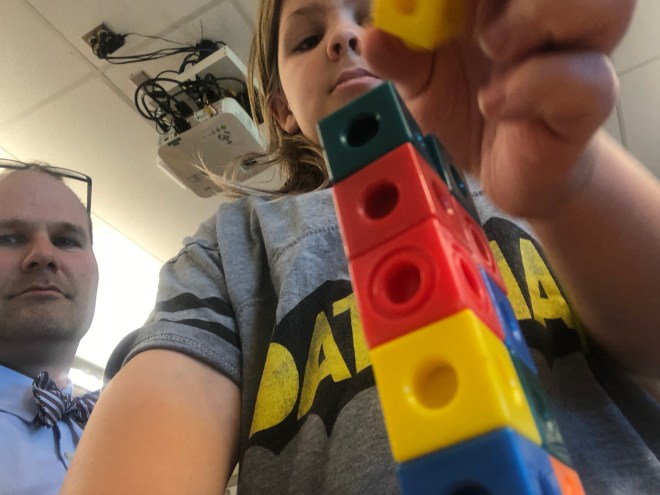 I came up with an activity to help reinforce this concept in my classroom. I call it “Building Bridges”. We have a snack/play time in the afternoons, when we give ourselves a brain break. I instituted a “constructive” play rule, where kids use items that can be connected or built upon in order to make things, rather than just mess around. We have Legos, Lincoln Logs, Tinker Toys, 30+ year-old Robotix toys from my childhood, and we also use the colorful interlocking blocks that came with our math curriculum. Because we have the most of this last medium, I chose to have the whole class use the colorful blocks in a contest. (The competition makes it more exciting.) Groups of kids–I not only let the kids pick their own groups, I didn’t limit the size of groups–arranged and connected blocks to form bridges that spanned distances between desks. I told them that the bridge had to be able to hold and transport a Thymio robot–This is a little robot that students can program to drive. The robot was the trick. Students worked to make their bridges wide enough, thick enough, and strong enough for the robot to use. Rather than drop robots on the floor during trial runs, we measured the weight with a simple scale. The robot was equal in weight to a half-full pencil box.





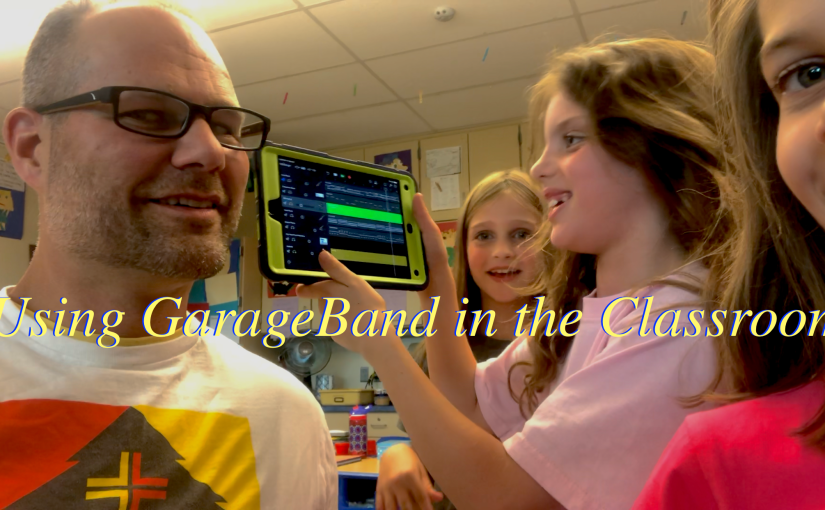





 C is for simple, yet complex. The song is made up of 4 verses with a repeating chorus. The chord progression is E, D, A, E, with the change on the first beat of each of four measures. Dylan Peters (@DylanPetersedu), the brand new Technology Innovator Specialist hired to East Penn School District this past summer (2018) worked with me from the get go to teach my students (and me) how to use GarageBand. We used the “Autoplay” feature to have the instruments play simple rhythms. After guiding groups through creating the same set of four instruments playing the same four measures of music, we showed them how they could change the instruments, altering percussion styles, and fooling with some really funky disc jockey features.
 The Captain of Class