Creativity is one of those things that everyone understands, but has a hard time defining. I think art, and especially music emulates the essence of creativity the best. Musical artists seem to tap heaven when coming up with completely new melodies.
Henriksen, Mishra, & Fisser (2016) use three concepts to build a definition of creativity: novelty, effectiveness, and appropriateness. This is perfectly fine, if we are using creativity solely to solve specific problems within the context of an educational environment. In my opinion, the last two concepts flatten creativity into a two-dimensional word that can be explained away in a paper.


I think that you can stop after “novel”. The authors of “Infusing Creativity and Technology in 21st Century Education: A Systemic View for Change” (2016) take the magic of Willy Wonka and stick it into Henry Ford’s assembly line when they push productivity onto creative people. They, like many, seem to be looking for ways to harness creativity in order to power old machinery. Sticking art in the regular-ed classroom won’t transform it. We need to break down the walls!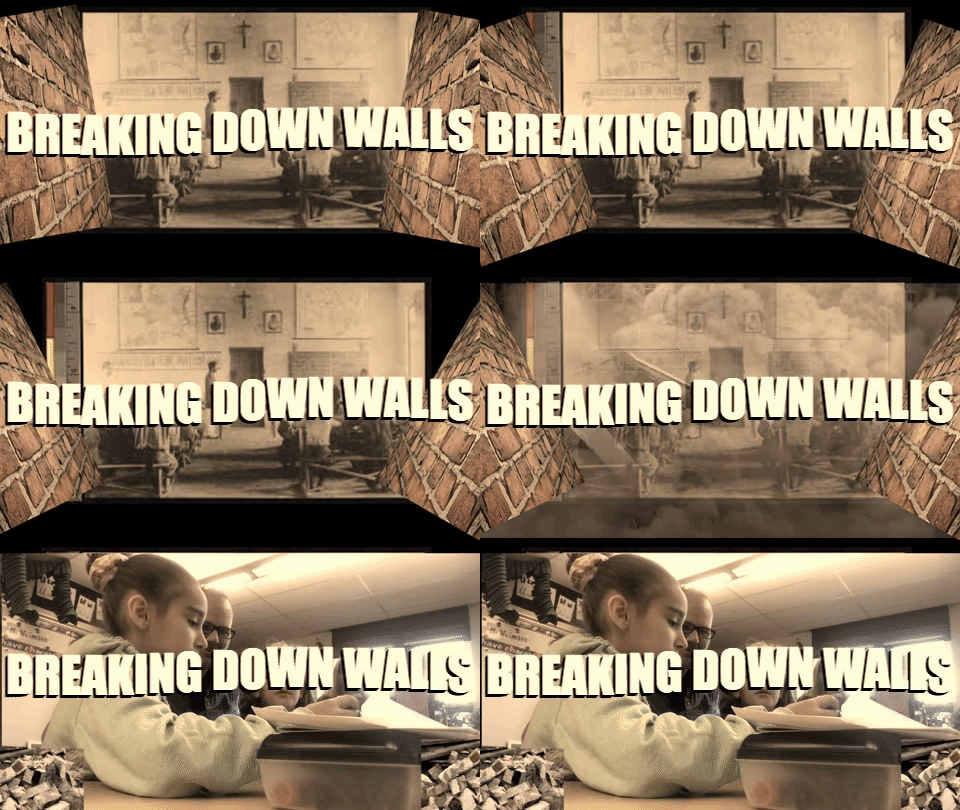
Applying the limiting definition of Henriksen, Mishra, & Fisser (2016) to a problem like making Internet connections faster would make wires carry more and more information, faster and faster. Perhaps there brand of creativity could even think up Wifi. The most creative person might harness the Earth’s Mantle to transport information from one side to the other instantaneously without using energy. This is all super helpful, would benefit society, make money for companies, save money for others, create jobs, foster new research, etc. But, what about the kid who thinks about changing the information from the Internet in general. We praise the kid who builds the most amazing structure with Legos and punish the one who uses the Legos to form a picture. That is not how Legos work. You did not build anything. Another kid makes the Legos dance and sing. They put on a play. Still another builds with the Lego people a structure that the blocks live in. Whoa, that kid is reeeeeaaaally wrong!
Play for play sake. Be creative just to be creative. Come up with new ideas, just cuz.
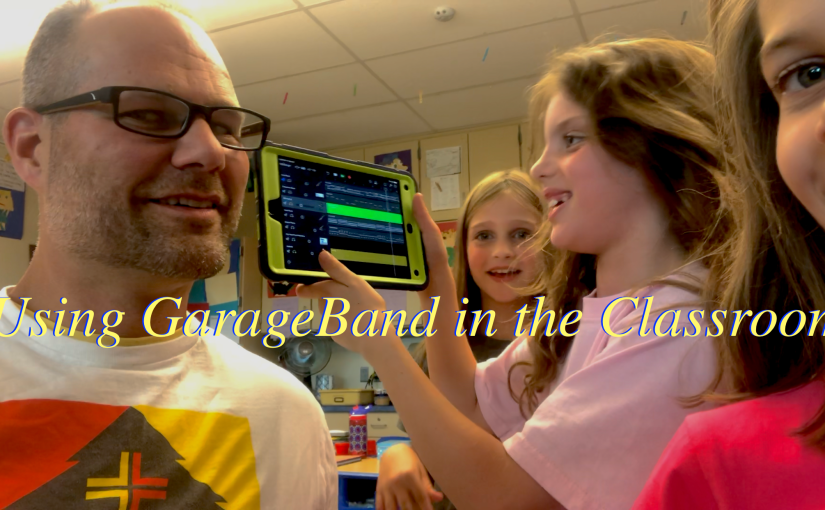
This past summer I decided this would be the year that I explore a program that has evaded me for a while now: GarageBand. I watched a tutorial video that lit a fire in me to make my own music for the videos that I create. (I produce a lot of movies that I post on Youtube.)

I had a cool idea for how to use GarageBand: My class will take a song and change the lyrics, making a classroom song. I chose “Sympathy for the Devil” by The Rolling Stones. I’m sure that you think this is a crazy choice for a 3rd grade classroom. It is, but let me explain with some A, B, Cs… and a D;)
A
A is for A+. I love the song. The music is catchy, singable, memorable, rhythmic, and fun. Also, it uses tons of different instruments. This would be great for my class, because everyone could have a “part” in its construction. If we were to perform the music live, literally every single kid could be playing a totally different instrument!
B
B is for Beginning. The song is sort of a riddle, asking listeners to “Guess my name”. At the beginning of the year (when I had thought about working on this) we are all getting to know one another. I had my students make “Who Am I Riddle Poems” to share things about themselves that are unique from others. We would take this concept and use it “whole group” to distinguish our class from other classes.
C
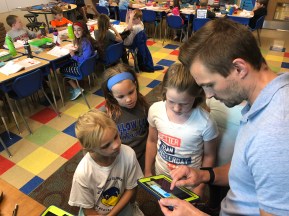
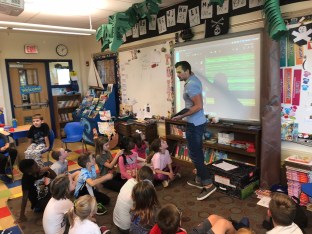 C is for simple, yet complex. The song is made up of 4 verses with a repeating chorus. The chord progression is E, D, A, E, with the change on the first beat of each of four measures. Dylan Peters (@DylanPetersedu), the brand new Technology Innovator Specialist hired to East Penn School District this past summer (2018) worked with me from the get go to teach my students (and me) how to use GarageBand. We used the “Autoplay” feature to have the instruments play simple rhythms. After guiding groups through creating the same set of four instruments playing the same four measures of music, we showed them how they could change the instruments, altering percussion styles, and fooling with some really funky disc jockey features.

D
And, D. is for “dynamic”. [Dynamic was the theme of a recent #livechat I participated in from #masterychat, @teachbetterteam. I looked up the word, and found that it means “change”.] The original song by The Rolling Stones changes throughout, progressively increasing the tempo, number of sounds, and musical involvement. This is not only fun, but would allow for my entire class to be hooting and howling by the end! (Give the song a listen, and you’ll see.)
So far, the groups have been working on changing the instruments within GarageBand to customize their four measures before we piece them all together. The aim is for four totally different styles of the same music to be joined just like the students of my third grade class came from different 2nd grade teachers, possessing very different styles of teaching, personalities, and methods.
This past week I began teaching poetry, in preparation for the class to write the lyrics that will accompany our music. Dylan Peters plans to bring in a professional-style microphone to record the class’s singing once our composition is complete. Check back with me to see and hear the final product.
I mention this GarageBand project not just to share a pretty creative idea, but because of a question my wife posed: What are the learning outcomes for this? At first, I thought about justifying the time, energy, thought, and work by suggesting ELA, Art, or Math standards. Then I thought about explaining to her the camaraderie-constructing merit of the project. I settled on “We are just doing it for fun.” Why does this seem so wrong in today’s educational climate?
Sources:
Henriksen, D., Mishra, P., & Fisser, P. (2016). Infusing Creativity and Technology in 21st Century Education: A Systemic View for Change. Educational Technology & Society, 19 (3), 27–37.
[Sanjay C]. (2018, January 20). GarageBand on your iPad Quick -START TO FINISH! . Retrieved from https://youtu.be/ykGRexBtcXQ
Weimann, M. (2018, September 23). Critical Thinking is Classy. Retrieved October 20, 2018, from https://thecaptainofclass.com/2018/09/23/critical-thinking-is-classy/ [This is the first time that I have ever cited my own work.]
[zwwlg]. (2016, March 12). Ken Robinson – Do schools kill creativity/TED Talks. . Retrieved from https://youtu.be/tQzC7ubJriE

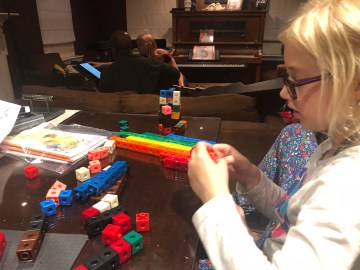
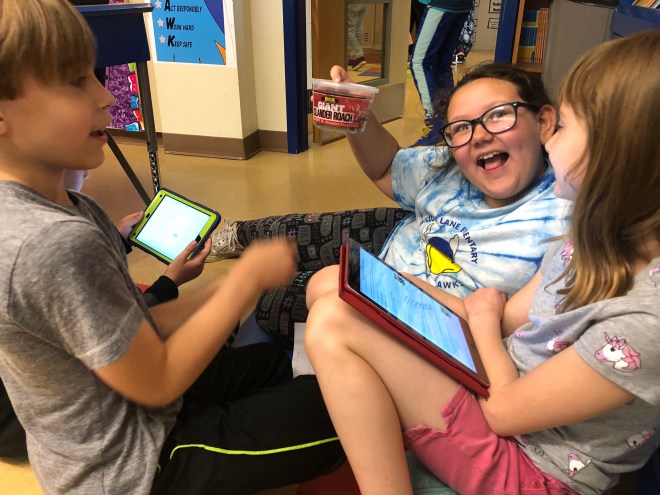
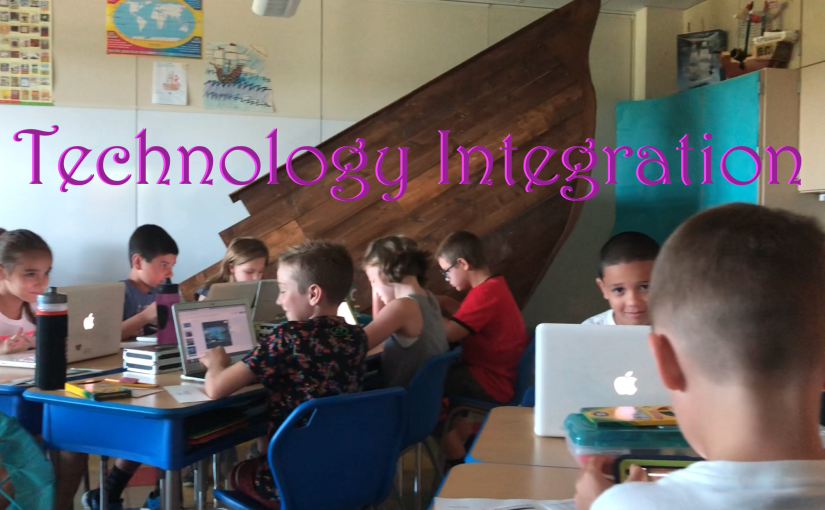
 My classroom has a mishmash of different devices. I literally did not know how they were going to outline their arrays, but I did know that there was more than one way. The iPads are pretty easy. Kids can click on the assigned Google slideshow and immediately start drawing and writing all over the slides, without opening it in the Google Slides App. When students are done they can save/submit the work as a PDF.


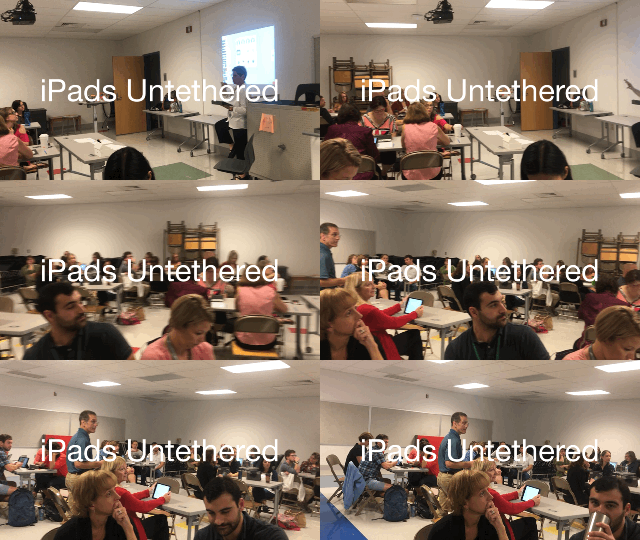


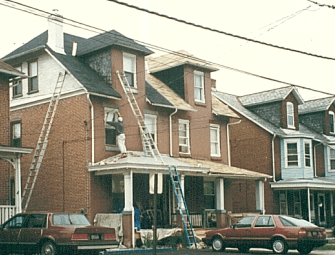
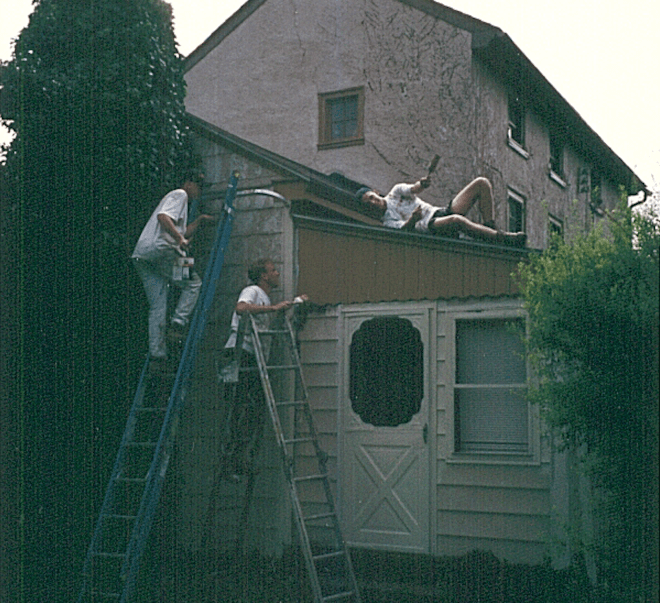
 The ground-breaking technology that made all of this happen back in 1990 was the… ready for this? Telephone. Homeowners called an 800 number to ask for estimates for painting. Because the manager was stuck at home, he was able to check his leads several times a day, calling homeowners back nearly immediately. He scheduled all of his estimates on the same day and back to back, rather than spreading them out. By the end of the summer, the manager who seemed the most limited was able to produce far more painting work than any other manager in his district.

 To be able to critique something, one must have background knowledge. Unfortunately, some teachers focus solely on pouring information into their pupils (




 submit” and “



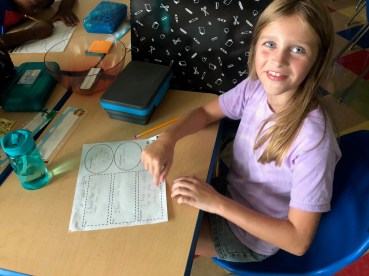 At the beginning of last year I tried telling the students that their pencils were their swords–In this case the pen
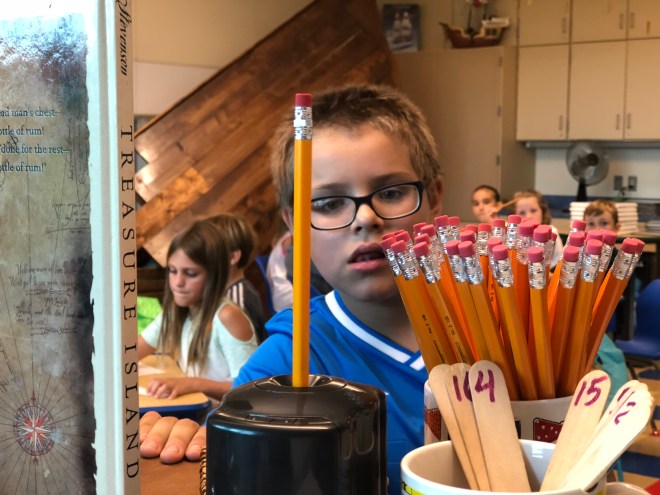
 spent every lunch break sharpening pencils. She provided the pencils for pupils whose pencil broke, free of charge. They would simply go over and exchange the writing utensil. I liked this idea, but never implemented it in third grade.
 Grad students asked Donahue (2016) about kids who might take advantage of the pencil producing professor’s liberalism. He explains that if a kid does want to test the teacher, and he/she breaks or loses his/her pencil on purpose, there will come a point, a magic number–fifty, a hundred–at some point the pupil will get it: there will always be a pencil available. And, guess what… I never developed a habit of dropping my ice cream scoop on the ground as a result of being given a new one for free!
 people to behave certain ways (McLeod, 2018). As each level is met, a human being can concentrate on the next. A person isn’t going to worry about safety when he is starving. When pencils are not freely available in the classroom, student psyche could bottom out in the basement of Maslow’s pyramid. How is a kid supposed to feel good (esteem) about himself if he is being controlled by a pencil-nazi who is hoarding the most basic scholastic tool of all time?
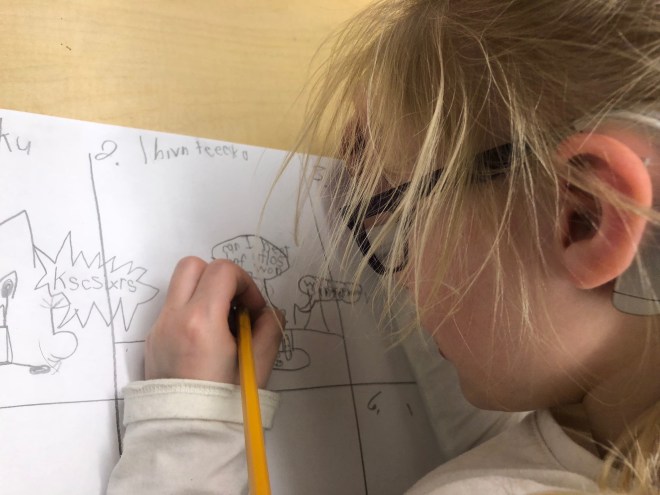 Earlier I equated pencil loss with ice cream spillage, but are kids as fond of pencils as they are of ice cream? Not quite. Replace ice cream with vegetables. A young child doesn’t want to eat his green beans, so he throws them on the floor. Does the parent have the kid get down on his hands and knees to lick the green beans off of the floor? Does the adult send the kid outside to begin tilling a plot of land that will be planted with green beans to be harvested months from now? These scenarios are ridiculous. A responsible grown up simply places more legumes on the child’s plate, explaining and modeling healthy eating. We do this because we want our offspring to grow up to be strong, smart, and live a fulfilled, fun, and productive life.