The Superpower of Naming Things

IMG_8933
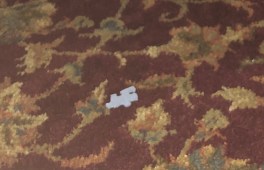
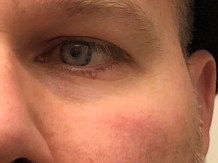
My right eye: Can you see the tiny mole?

I have a small bump under my right eyelid. I’ve always had it, but didn’t notice it until a few years ago.  

What is it? Many people have these kinds of tiny bumps on their faces. Sometimes, but not always, they have some color to them. Some people are famous for them. Cindy Crawford’s is iconic (Brolley, n.d.). Did you know that kids can buy these and stick them on their faces? How many movies have teenagers using markers to add them?

My mom called them “beauty marks”. She had many. She was beautiful. She assumed beauty. We recognized it as such. 

The truth about beauty marks” (Brolley, n.d.) explains that they are all technically moles, but the ones on a person’s face are sometimes referred to as “beauty marks.” This incredibly interesting article discusses some historical facts about our beautiful little bumps. Shakespeare had a thing for them, for one. Did you know that beauty marks have been politically active? And, they are not dangerous… just scandalous… if you were to travel back in time to the 18th century, Great Britain. Be careful, Doctor Who!
What struck me, though, is that simply renaming… branding something differently, completely alters your perception of it. “Mole” doesn’t sound nearly as attractive as “beauty mark”. I witnessed this superpower of renaming first hand when I helped my daughter Scarlet re-see her handicap of hearing impairment as a “superpower”. 

IMG_0206
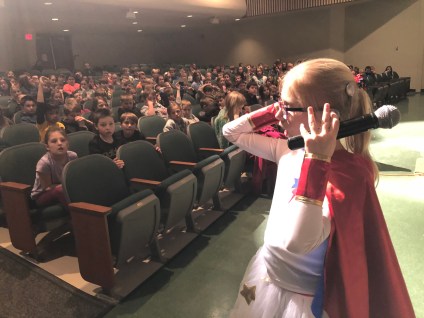
Scarlet shares reasons she would use her superpower to a crowd of 3rd, 4th, & 5th graders.

At the beginning of last year, when Scarlet was beginning first grade, she voiced frustration in the fact that she did not get to experience recess the same way her peers did. When rain was imminent or it was drizzling out, Scarlet was kept inside because it is important that her hearing equipment not get wet. 

Recess is a big deal to an elementary-age kid, and Scarlet liking school and being happy is a big deal to me, so I put my mind to this challenge. The winning idea was to spin Scarlet’s struggle into a positive point of view. Yes, she would have to forgo some fun, but she can do something that no one else can; She may not have the same recess as her peers, but she DOES have a superpower!

The moment I named Scarlet’s hearing impairment a superpower, she became proud of herself and her situation. I previously wrote about a cute story of her telling a dentist “It’s Okay, I Have A Superpower” just before she used it to NOT hear the loud air pump he was about to turn on. The success of this experiment led us to compose a little children’s book, “Scarlet’s Superpower”. 

The experience of publishing our story lead to a school contacting us about sharing our “super message” with its students. Beaver River Central Elementary School in upstate New York was launching a “Literacy Celebration”, and they invited Scarlet and I to help them kick it off. They were attracted to our tale because they were using a superhero theme to celebrate literacy. Their slogan was “I’m a reader, what’s your superpower?” 

IMG_6956.JPG
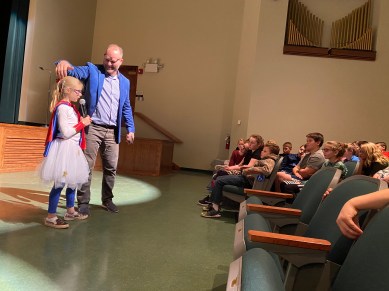
Daddy/Daughter team of presenters; This was so much fun!

In the same way calling a mole a beauty mark readjusts one’s perception of it, this school district was telling its students that readers are super powerful. Here’s a wild fact: Cindy Crawford considered surgically removing her facial mole! Had she done that, who knows whether she would have achieved the stardom she has? The fact is that we don’t always appreciate our greatest gifts. What if Superman wanted to get a little cobweb off of the ceiling, and ended up flying right through the roof! Oh, man! I hope the home owner’s insurance covers that! 
IMG_4150.JPG
Look at the faces of students listening to Scarlet!

Kidding aside, viewing reading as a superpower is a beautiful way to inspire youth to develop this ability. The principal at Beaver River Central told her students that it is a power that no one can take from them. What a powerful message!

In preparation for sharing “Scarlet’s Superpower” with the audience at Beaver River Central, I thought it would be neat to act it out in a short play. In this way the audience would have more to experience, it would involve Scarlet, and I could get kids from the school to participate. I wrote the story into a short skit, complete with stage directions. A group of fifth graders worked on practicing it, and I rehearsed it with Scarlet at home. 

You should know that Scarlet has never spoken in front of a group of people this size, let alone acted out a play! She began voicing her concerns the night before the performance. I could have explained to her that it was natural to feel nervous, and then tried to console her. Instead, I told her that what she was feeling was “excitement”. We get excited about all kinds of things, and it isn’t perceived as negative. Why let Scarlet see this wonderful experience through a negative lense? 

IMG_6507.JPG
Those moles you are feeling are really beauty marks. 

She did great. We did great. The 5th graders from Beaver River Central did great. Interestingly, the students seemed to be much more excited to meet Scarlet, because they were actually part of her story. Incidentally, I didn’t call the drama that I composed a “play”, either. I labeled it a “Readers’ Theater” because I allowed the students to have their scripts with them. This cuts down on nervous feelings. Renaming things can be super helpful!

Thank you Beaver River Central, for inviting us to be part of your literacy celebration. 

What have you “renamed” in order to infuse superpowers?

Source:

Brolley, B. (n.d.). The truth about beauty marks. Retrieved January 19, 2020, from https://www.thelist.com/130854/the-truth-about-beauty-marks/ 
Mountain Biking Text

IMG_0312
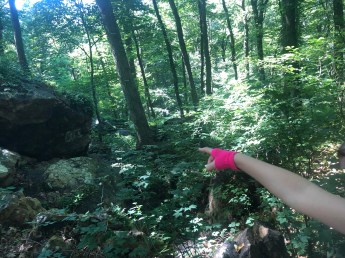
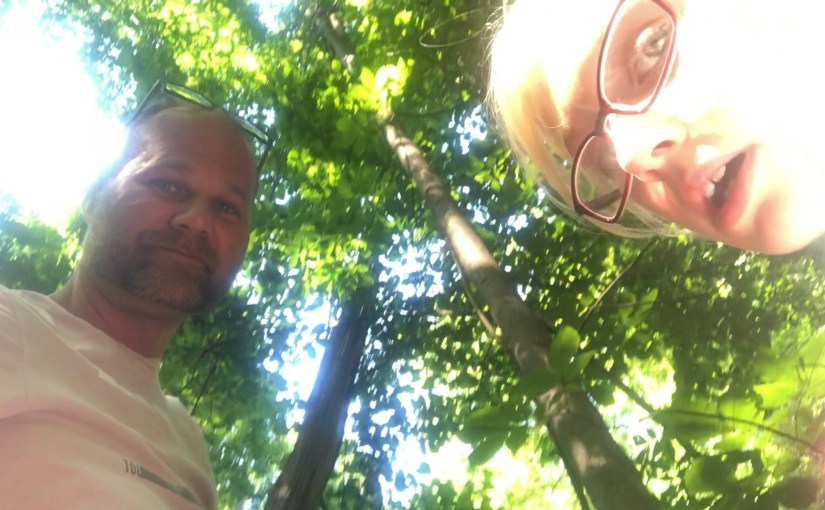
A trail Scarlet and I hiked last summer

A person wants to get from point A to point B. Point B is on the other side of a forest. The first time that the person finds his way to point B, it takes a while. He gets scraped up. Some frustration may be involved. There will definitely be corrections in direction. He might use tools like GPS or a compass. Probably, the person will mark his travel. On the way back to point A, he will have an easier time of it.

The next time that the person wants to travel from point A to point B, it will take far less time and work. Plus, the person will not get as beat up, because he will know where the briars and boulders lie, and he will avoid them. He might even cut them back or move them, if he plans to travel this way regularly.

IMG_9674
These boulders are unforgettably huge!

Now that there is a trail to follow, getting from point A to point B is easy, fast, and thoughtless. You know what to expect. You look forward to the natural outcroppings of rocks and groupings of trees that mark your progress along the route.

Technology has developed to the point that mountain bikes are available and in vogue. You get one and begin using it on your favorite trail.Getting from point A to point B evolves into a recreational activity. While you use the trail to get from one place to the other, the journey has become the entertaining part of the trip. You even invest some time in building parts of the trail to make them more fun. A straight path up a hill becomes a switchback with berms. Maybe you search out gnarly terrain to shred instead of racing directly to the end of the trail. 

Eventually, your passion and excitement is communicated to others, and they want to try your trail. It morphs from a singletrail to a wider path.

IMG_2147
You’ll need to move that fallen tree for convenient travel.

Next, people who don’t mountain bike find that your trail is a convenient path from point A to point B, and they begin using it. Now, there are bikers and hikers. The hikers don’t need the entertaining gnarl of the mountain biking trail. They level portions, clear your favorite bunnyhopping logs, and widen the path.

As more and more people use the path for traveling, the importance of getting from point A to point B in less and less time with fewer distractions becomes valuable. It gets leveled, and then paved. It grows wider and marked. Eventually, your entertaining path turns into a rode.


Why does the last word of the previous paragraph look rong? Wait. What is happening hear?! Why are these homophones being spelled incorrectly?

This entire blog is an analogy for learning to read. These supposed misspellings at the end are obstacles for you to mentally bunnyhop over. If you have made it to this point*, you are a masterful reader who uses sounds, spellings, and can identify common letter groupings unconsciously. 

Hopefully, you didn’t “yardsale” when you red (I just did it again! Ha ha) the word “rode”. It is ironic that the past tense verb for mentally travelling through this text would sound the same as the noun for the symbol of the text itself! Daniel T. Willingham rights (Sorry, I can’t help myself! Last time, I promise) about how our mind translates text when we read in “The Reading Mind” (2017). With wildly entertaining (at least for a geek like me) examples and figures, he explains the way we interpret sounds, decode meanings, and relate commonly used letter groupings. Reading this book shows how technical this seemingly simple task is, as well as how natural it becomes once we figure it out. Chapter 3 “Reading At A Glance” was the inspiration for this blog. 

And now to wrap it up. The point** I was trying to make was that the process of reading evolves in each of us, and we get better at it by doing it. As adults, we read many texts that get us from point A (ignorance) to point B (knowledgeable) with the goal of speedily fixing our ignorant situation. This is often necessary and important. It is the goal of teachers to train students to be able to read well, so that they can also easily traverse the distance between point A and B. Given that this skill is refined by much repetition, wouldn’t it behoove the practicing reader to enjoy the process? 

I am composing this blog to challenge adults to model mountain biking through text, so that others see your example and want to try out the trail for themselves. I suggest you find something fun to read, and make it visible, modeling your performance to inspire others. If you are a teacher, show your students. If you are an administrator, spur on your teachers. If you are a parent, show your child how useful reading is. 

There is an adult reading challenge that I threw together for Twitter users that you might enjoy using. I made this in order to inspire a game/social angle for sharing our mature reading habits publicly. Feel free to join me and other grownup readers as we share our mental mountain biking! 

Screen Shot 2019-12-31 at 7.52.18 AM.png
Include #TeacherReadingChallenge with your tweets.

Source: 

Willingham, D. T. (2017). The reading mind: A cognitive approach to understanding how the mind reads.

*Congratulations on successfully finding point B; the place where all of this is explained.

**Point B, throughout the analogy was never a tangible place, but rather reading, itself. 

The Reading Super Bowl

This blog was originally published under the title “Competition is Classy”. I decided to retitle it “The Reading Super Bowl” as I reblog it because it isn’t actually about the concept of competition being classy. The article is all about a classy competition that motivates students to read.
This past fall I finally read Daniel Pink’s seminal work, “Drive”. This has caused me to rethink the idea of using extrinsic motivations like this competition to impassion attitudes and habits. I’d like to write a blog in the future that explores whether competition is or isn’t classy; or, the classy aspects of it. This one is just about a fun competition The Polite Pirates have been conducting for years. “The Reading Super Bowl”!

Matt Weimann's avatarThe Captain of Class

Every year, on the first day back to school after the winter break, I initiate a competition between two teams in my classroom. The contest is to see who reads more, but the purpose is to make reading a habit and instill an excitement for text consumption. I call it “The Reading Super Bowl”, and it lasts until the actual football game.

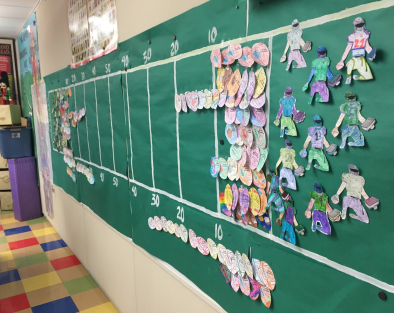
Screen Shot 2019-01-01 at 8.56.16 PMThe class is broken up into two equal groups. I’ve done girls versus boys, odd student numbers versus even student numbers, and broken the class up according to desk arrangements; Doesn’t matter how you do it. The NFL teams that are entering the playoffs are listed on the board. Kids get the lunch/recess time to decide on their group’s team. Then the players are passed out. I usually project a few pictures of each team’s jerseys on the wall for kids to model the coloring of their figure…
View original post 312 more words

Puzzling a Positive Attitude of Acceptance

IMG_9570.jpg
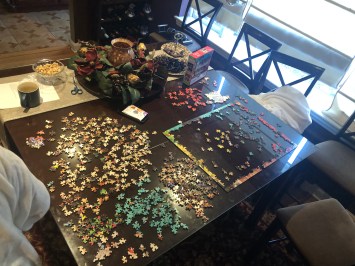
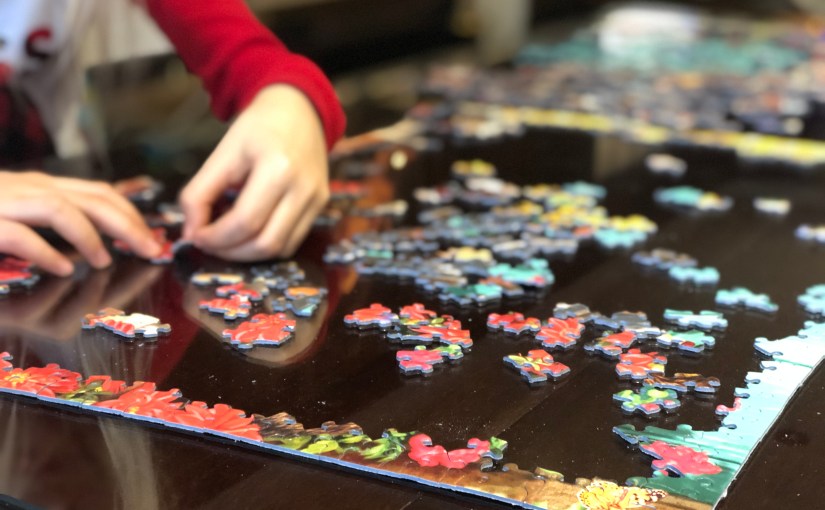
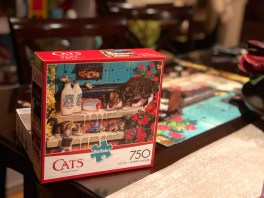
This year’s puzzle, “Cats” (2019)

I grew up working on puzzles with my family during the winter holiday breaks. Every year between Christmas and New Years, every member of my family could be found hunched over a temporary card table set up in the middle of the living room. Never-mind Santa Claus; The main source of magic in those days was waking up to find a gigantic portion of the puzzle completed. Sometimes, feelings of gratitude flooded the soul, since a piece that had eluded me was found and locked in place. Other times, I would feel cheated, because a large portion of the puzzle was no longer available for construction. 

The purchaser of puzzles was my mom, and she wasn’t very picky. She brought home pictures that she liked. They were typical interlocking jigsaw puzzles consisting of anywhere between one and two thousand pieces. 

Mom was the best at finding matching pieces. I remember puzzling over a section for a long time, only to have mom visit the project, survey the available pieces, and pick the most random-looking one out of the mix. Not every time, but often, she’d have flawlessly, and seemingly effortlessly found the missing piece!

IMG_9488
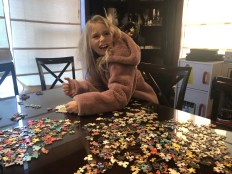
Dawning her new fuzzy, pink coat, Scarlet connects pieces that have words on them.

Now, I am teaching my daughter Scarlet how to assemble puzzles. My wife and I have given Scarlet puzzles for years, but this Christmas is the first time that she is really engaged in puzzling through a 750-piecer, independently. I came downstairs yesterday morning to find her hunched over the colorful enigma, piece in hand. As I began explaining that sometimes it isn’t enough to look at the colors of the pieces; “You have to examine the negative space to find a matching piece;” I thought about the ways people interact with one another. 

When Scarlet and I first dumped out the 750 pieces, I instructed her to turn all of the pieces over, so that the glossy, colored sides were facing up. As we did this, we placed any pieces that had straight edges into a separate pile: Those were the edge pieces. We also began forming a few other distinct piles of pieces during the flip over process. Any pieces with blue on them went into a pile separate from the pile of red pieces. 

IMG_4588
Puzzles prepare people for finding commonalities.

Anyone familiar with putting together puzzles knows that you first assemble the border, so that you have a literal frame. This also provides a frame of reference for where to place increasingly connected groups of pieces. Sometimes you have to open up the border to allow large sections of connected pieces to slide into the middle of it. Other times, you can pick up a handful of attached pieces and drop them into their spot. Then there are times when you work on bringing individual pieces into the frame to fill gaps and complete sections, all the while you are hunting relationships between interlocking, individual, man-made masses of color and shape that are meant to be together

Scarlet, Mommy, and I are only about a quarter done assembling our family puzzle, when it hits me: What if people had the same attitude about other humans that a person putting together a puzzle possesses? The whole time you work on a puzzle, you are only thinking, where does this piece in my hand belong? Who does it connect to? What spot in the puzzle is its home? How does it relate to the rest of the puzzle?

The puzzle that we are working on is tricky, in that the pieces seem to be cut right on the cusp of varying colors. I am working on assembling a section full of poinsettias and looking for an adjacent piece. I first try pieces that look similar to those adjacent the vacancy. None of those fit. Next, I examine the opening that the missing piece forms; the negative space. Are there any pieces in the pile of red that possess a similar shape? Eventually, I go ahead and try sticking red pieces into the gap, just in case there is a geometric abnormality that I am not seeing. Perhaps one will work, even though it does not look like it. That’s happened before. No success. I widen my scope of potential pieces to include ones that share the colors of surrounding pieces; greens and browns. When finally I do find the piece, I notice that the cut followed the line of red color, seeming to purposefully fool anyone relying on that. 

IMG_7177.JPG
The important thing to understand is that the entire time you are putting together a puzzle, you are being inclusive and accepting.

This story goes to show that while it may be advantageous to categorize puzzle pieces into separate colors, initially, this reliance on related pigments can eventually cause frustration. I would have found my missing piece faster, had I looked at the picture of the puzzle on the box, and included any piece that had red AND leaf colors/designs in my pile of poinsettia pieces. And, really, if you want to get really figurative and technical, poinsettia petals actually are leaves that turn red! 

The important thing to understand is that the entire time you are putting together a puzzle, you are being inclusive and accepting. Every single one of the 750 pieces is a potential fit for any opening. They all belong somewhere. I think it was the experience of this particular puzzle’s play on color that brought this to my attention. Time after time, I found myself needing to open my mind to accept the possibility that pieces I never would have imagined going together actually did! 

A coping strategy for dealing with frustration when assembling puzzles is to step away from working on a difficult relationship, in order to focus on another part of the puzzle. When I am not finding the elusive connecting pieces between poinsettias and chipmunk, after searching for tens of minutes, I must move on to the yellow section of flowers on the other side. Often times, I will eventually stumble across a piece that I recognize belongs to a foreign part of the puzzle. The satisfaction felt when dropping it into its home is immense. 

Each piece has a home; Has a purpose; Has a special function. The piece that you hold in your hand belongs somewhere, even if you aren’t sure where that spot is at the moment. You can put it down, but don’t lose it! It has immense value. They all do!

IMG_7507.JPG
One missing piece ruins the whole puzzle! Every single one is important.

The most important dangers of a puzzler include: Do NOT lose even one piece! In fact, if you lose even ONE, you may as well throw the whole thing away. Or, if you are creative and graceful, you could make a substitute piece, but if there are more than one or two missing, it does not matter how creative or full of grace you are, the puzzle will look wholly unfinished; not holy. Never force a piece. If you do this, you could ruin its shape, so that it won’t fit nicely into the relationship it was meant for. Also, if you leave a forced piece in place, it warps the whole puzzle. You might attach a few more pieces to this wrongfully placed piece, but eventually there will be a line of unrelated-ness, like a saltwater tide infringing on brackish water in a bayou. 

IMG_2929Before I leave you to chew on this metaphor, I must mention some of its limitations. First of all, Life has no borders; It has a beginning and an end, but there is no ceiling or floor. Sore as high as you can, and be careful of exploring its depths too far. Understand that experiences, places, and people are all part of your puzzle. Also, it is more like a three-dimensional puzzle. Build out wide on either side to support potential experiences that could attach to your life. Then, watch piece after piece fall into place, grow, and assemble. Finally, but not conclusively, it is ever changing. The piece you hold in your hand may not fit now, but in a few minutes, it could be exactly what you need! Life is like a coral reef; a puzzle of plant, animal, and rock… Living rock
 

Appreciating the Past is Classy

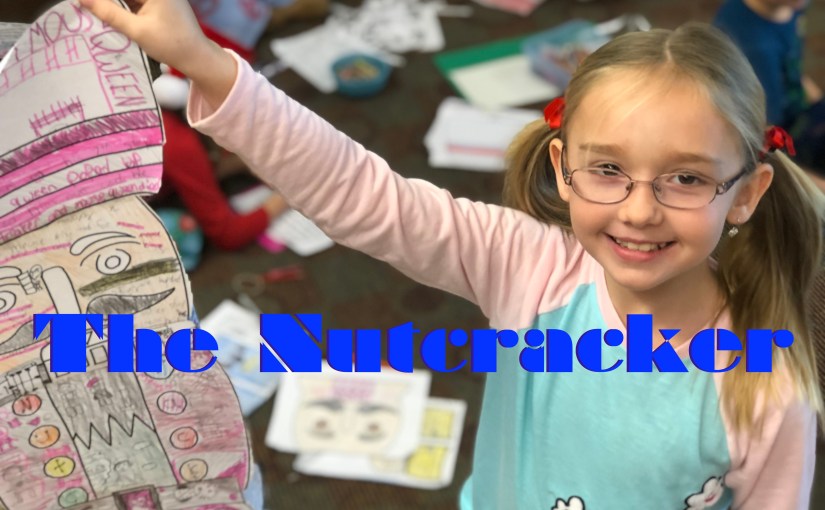
Now that I have the Nutcracker read alouds posted in the Willow Lane Read Alouds Youtube Channel (https://www.youtube.com/channel/UCgo7q67pdVRkW2utB6Nnh8Q), I can have students work on this more independently. They can do it from home, and catch up easily if they miss a class. Also, I can differentiate by reading leveled books of the Nutcracker to some kiddos, while others listen to the original.

Matt Weimann's avatarThe Captain of Class

Appreciating the past is classy. That sentence was worded carefully. Being stuck in the past is not classy. In fact being stuck in general is not classy. Glorifying the past is not classy, either; It says, “Those times were far better than today.” With advances in medicine, technology, and transportation, no time in history can compare to modern times.

To appreciate something is to recognize its worth. 

The opposite of “Appreciating the Past” is when a person thinks that things are the way they are because of his or her efforts alone. If you make a scientific breakthrough, that is great, but I guarantee that there were hundreds, if not thousands of scientists and scientific works, not to mention your teachers, parents, and even environmental situation that all lended to you being able to perform your accomplishment.

On the other hand, while age isn’t everything, the older the wine or…

View original post 839 more words

Trust Two-Point-0h: The Heart’s Strings

Spool_of_stringI have a new trust metaphor for you: String

When you meet someone for the first time, you might find that you have some things in common. These similarities tie the two of you together. They are usually thin threads of thought that help you relate to one another. “I also have a dog. What kind of dog do you have?” … “Does your dog chew things, too?” Connection, connection, connection= thread, braided-thread, forming string.

If there was something uniquely interesting about the acquaintance; This is a person whom you’d like to meet and spend time with again, you may choose to firmly attach a stronger string to the person, tying it to their garment before parting ways. Then, as you swim through the cave of your life, you may follow that string back to the person. 

Perhaps you saved his/her information as a contact in your phone. Maybe you got a business card that you put in a special place. People who spelunk, especially in 22031066109_9ffd96dff6_bunderwater caves, know that there are two paths of every caving expedition (Bernstein, 2017). The one from the entrance of the cave into the earth is the first. And then, there is the path from the end returning to the place you entered. Cave divers will often have a bright nylon string attached secularly to something outside of the cave and to themselves. Legendary cave diver Thomas Iliffe explains that in addition to losing the path to the exit by forgetting the turns one has made through a maze of tunnels, it is possible to kick up sediment that will blind a diver (Grundhauser, 2015). With the multitude of distractions of life swirling around us, how could we ever find our way back to conversing with an interesting person whom we connected with? Sometimes we must carve out; forming our own cavern of time in our schedules. Even if we do, will that person be able to meet you? Pull them in by reminding him/her of all the many connections that you had formed when initially speaking. You may have to string them along a little, but how much will they thank you when you get together and realize that those threads were the beginnings of relational ropes that you can count on? 
DSC_7538.jpg
Trust is a give and take.

While the trust forged in an informal meeting is thin, a measure of how deep it is felt could be found in how many threads there are. You are both human. That is a teeny weeny thread. Perhaps you’d trust this person more than the house plant next to him, but it is very limited trust. Were you to learn that, although you now live hundreds of miles away, you both grew up in the same town, and then you begin remembering with the new acquaintance all sorts of things that the both of you independent of one another experienced that are the same! The shared location of growing up is the source of the threads, but now many are shooting out and attaching, some weaving, some solo, and some loose, maybe even unattached (an experience that only one of you had that doesn’t make a mark on the other). You both frequented the same bookstore. The same memorable clerk sold the two of you books. There was a place in the bookstore where you liked to sit and read; You both did this! It’s possible you sat across from each other at some point in what feels like a parallel universe. What?! Wild. I may not have this person babysit for me, but I’d definitely check out a book that he/she recommended. I would trust their opinion over a person whom I’ve known for years, but does not share my affinity for reading.

download-1How can we make this metaphor useful?

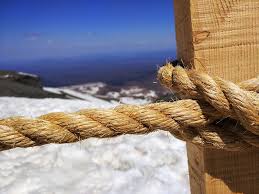
When forging relationships, look for and celebrate similarities. Rope is a bundle of flexible fibers (How Products Are Made, n.d.). If you want a student to trust you, tie him or her to you as you lead them through a windy, dark cave of learning. Make sure that the rope of trust is tight and strong. If you dive into teaching with an un-secure knot, the kid could come loose and drift away. They may need constant reminders to find the rope, hold onto the rope, don’t lose the rope… If the rope is not strong enough, the student could get snagged on an idea and the tension could cause the string to snap. Do not assume that a teacher-to-student relationship automatically forms and ties knots of strong string. That is merely a thread, and the end is stapled to the student. If you don’t work on it, the thread will slip right through that staple. 

A mountain climber will have safety lines attached to him/her when scaling the side of a cliff. If a rope breaks or comes loose, the secondary string keeps the climber safe. He/she reattaches the primary rope and continues. When building trust with students, have many lines. Attach them all over your pedagogical pinnacle. Make connections between lessons, and connect those to the backgrounds of your kiddos. Weave a whole safety net of trust so that students feel comfortable performing trapeze tricks of practicing newly learned skills, swinging from concept to concept. They should behave as if they will just bounce if they were to fall. Falling (failing) could very well be even more fun than completing a trick! But, if they stick that tough trick, the whole world will know, because friends will shout from the mountain sides. 

Perhaps there’s a pupil whom you have a hard time making connections with. There just doesn’t seem to be much that the two of you have in common, or maybe he is not interested in forging a bond with you. Find one thing that you can hold onto; one thread; and coat it with additional flexible fibers of support every time you see the student. If they play a sport, learn everything you can about the sport and mention one thing each time you see this person. Don’t over do it: That could strain the thread and it could snap. If the student feels like you are stringing him along, he could pull away, breaking the thin thread of trust. Add a new fiber, one at a time, and eventually you’ll have a colorful, strong mountain-climbing rope attached to that student. When he finally realizes all of the work that you put into researching the thing that matters most to him, he’ll know how much you care about him.

Screen Shot 2019-11-14 at 6.11.31 AMIn a previous blog about trust (“Super Highway”) I had mentioned the connection

8210762750_7642b21e39_b
This reminds me of the old can and string phone.

between neurons. Myelin coats the axon that sends information between connected neurons. The myelin acts as an insulator. The more there is the faster the information travels between the two brain cells. Your brain wants to send information speedily. That helps you think successfully. It can’t coat every connection with extra myelin, and you wouldn’t want it to. The best is for the brain

zip-line-896830_960_720.jpg
Zip Line of Trust

to choose the most helpful pathways of thinking and coats those with extra myelin. It’s your job as a communicator in the classroom to figure out the best connections to have with students and coat those connections with extra attention, understanding, and interest. If you do this, you will be able to communicate learning experiences more clearly and quickly with your students.

Before I end this analogy, I want to mention the problem of misplaced and broken trust. First of all, the thickest rope has its limits. In fact, mountain-climbing rope has many styles, gauges, and types (REI co-op). Is it possible that you were putting too much trust in a connection? Were you counting on a shared similarity with a student too much? Perhaps you need to attach some safety lines. Here’s another idea: When mountain climbing, you DO want strong rope, but you don’t want to have to carry a million pounds. You have to balance being trustworthy without burdensome.

I like the metaphor of rope for trust, because it has a lot of give. It takes quite a lot of force for even a little thread to break. The trust can snap, but it withstands pressure. One thing that will cause a string to break is when it wears down. This would happen if it were rubbing on a sharp edge. Trust will wear down if there is too much friction, also. Keep this in mind; The heavier the weight, the more friction and faster decay of the line of trust.

This thread/string/rope analogy for trust can go on and on. I would love to hear what you think of it. Please, add to it by commenting below. Share personal experiences, insights, additional metaphors and symbolism, and also diverging thoughts. 

Sources:

Bernstein, D. (2017, June 23). Under the Mountains: An Idiot’s Guide to Caving. Retrieved December 9, 2019, from https://www.theoutbound.com/dan-bernstein/under-the-mountains-an-idiot-s-guide-to-caving.
Grundhauser, E. (2015, October 23). Cave Diving Is Every Bit As Dangerous and Wonderful As It Seems. Retrieved December 9, 2019, from https://www.atlasobscura.com/articles/cave-diving-is-every-bit-as-dangerous-and-wonderful-as-it-seems.
How Products Are Made. (n.d.). Rope. Retrieved December 9, 2019, from http://www.madehow.com/Volume-2/Rope.html.
REI co-op. (n.d.). How to Choose Climbing Ropes. Retrieved December 10, 2019, from https://www.rei.com/learn/expert-advice/ropes.html.

Card Games Can Be Controversially Classy

IMG_6807
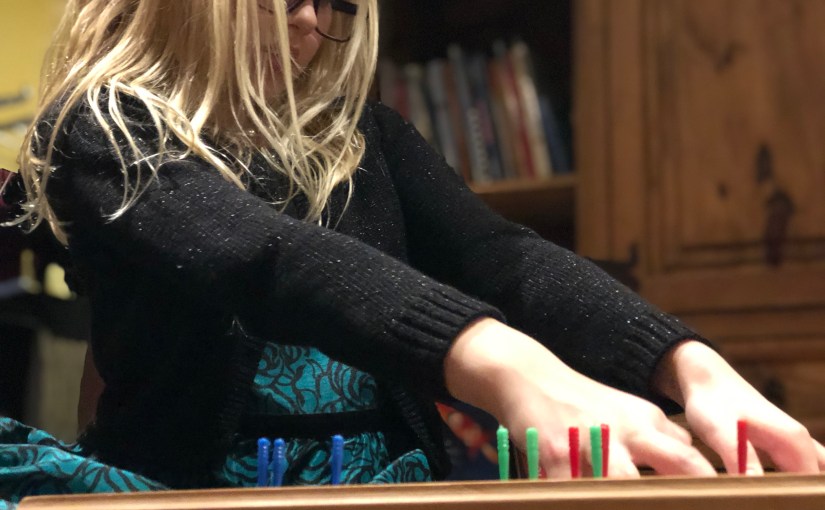
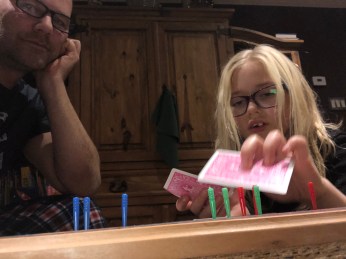
Who do you think won?

Thanksgiving night 2019 my daughter Scarlet, wife Sonia, and I all sat down to play a game together. Scarlet was interested in learning Cribbage. This is a card game where players move tiny pegs that stand in holes drilled into a wooden board. Each players’ line of holes goes to 150 points. You leapfrog the pegs, so that one keeps the place of the previous accumulation of points, while the other counts out the new total. The player to get her pegs to the finish first, wins. 

I wasn’t sure how Scarlet would do with this game of many rules. There were many firsts: I taught Scarlet how to shuffle the deck. She did pretty good. I showed her how to deal the cards. Then there were the instructions of how to play.

Cribbage is all about points, and there are many ways to earn them. One of the ways to earn points is to form groupings of cards whose combined value total 15. When I witnessed Scarlet, who just turned 8 one week ago, working out the different combinations of 15, I was not only impressed with her math skills. It hit me that she was analyzing the cards and evaluating the future potential they held. 

This is a little tricky to communicate via text. Without describing the entire game, let me try to convey what Scarlet had to think about when it came to the 15s. It takes several rounds to accumulate 150 points and win a game of Cribbage. Each round begins with all of the (3) players getting 5 cards. The first thing that you do is try to decide which 4 cards you keep, for you are to give up one of them. It can be a challenging decision to make. 

See, you don’t just record the points represented in your hand. You play your cards against opponents’ cards. And then, there is a starter card that you use over and over, too. Finally, there is a crib that goes to the dealer. This is what you contribute to when you discard a card at the beginning of the round. If you’re not the dealer, you don’t want to place cards into the crib that will easily form combinations of 15, giving your opponent more points. 

IMG_2915So, it’s Thanksgiving. The dinner is cooked, consumed, and cleaned up. I’m watching my daughter wrestle with the cards in her hand. Of the five she is holding, which should she throw in the crib for someone else to use? 

Sometimes it is simple. The starter is a five, and you have three face cards (valued at 10, each), a five, and a four. Throwing the four into someone else’s crib is a no-brainer. It won’t make any points for you. How many different combinations of 15 are you looking at without the four? Try working it out.

The answer is six different combinations of 15 can be formed (3 combinations using your “5” + 3 face cards & 3 combinations using the starter card which is a “5” + your 3 face cards). What if rather than a five, you had an Ace (valued at one in Cribbage)? Now you have 3 face cards worth ten each, an Ace, and a four. And, don’t forget the starter, which is a five. If you give away one of your face cards, you would have four combinations of 15. If you gave away the four this time, you would only have three fifteens: Your 3 face cards, combined with the starter. 

IMG_4017It’s extra hard when you have to add the numbers to make fifteen. Let’s say the five cards that you are dealt are 4, 5, 6, 3, & Ace, and the starter is an 8. You have to discard one of those cards to someone else’s crib. 
  • Ace, 3, 6, 5 = 15
  • 4, 6, 5 = 15
  • Ace, 6, 8 = 15
  • 3, 4, 8 = 15

Am I missing any? It takes time and is pretty tricky finding all of the combinations. You can’t overlap any, using the same grouping in a different order. 

As I’m sure you can imagine, this is great for developing number sense. It also helps grow critical thinking skills. Scarlet was doing all of this math in her head. Once in a while, she would ask for some help. We worked through all of the different combinations to make the best decision possible. She ended up winning, surprise/surprise! 

What struck me most about this experience was the inner conflict centered on deciding which card you would choose to relinquish to the crib each round. I knew this to be an important part of the game, but watching my daughter wrestle with the decision, round after round, brought new light to the fact. With practice, she got better and more confident at choosing the card that she would let go. 

The inner conflict of choosing the best cards to keep and which to get rid of reminded me of using controversy in the classroom. Making topics controversial by providing students with opposing, nearly equal in value concepts that they must analyze and evaluate to decide which is better or more appropriate for a given situation would develop the skill of critical thinking. Cribbage could be a great way to grow this higher order thinking skill, while also developing number sense. 

This got me thinking about other card games. How might a teaching style be analogous to these card games:

“Go Fish” — Students ask for information. If you know it, you hand it over. If you don’t, the students fish for it online (ask Siri). What are students learning when you use this style of teaching? Education is a take/receive, skill-less process. During the card game, only conflict comes in deciding how honest you want to be;) The controversy lies solely in morals. 

“Rummy” — Players work at making connections between like cards. They collect as many pairs, three & four of a kind, and make runs. The player who has accumulated the greatest value in cards at the end of play, wins. Analogy to teaching: Making connections is great! Each time you find two like ideas, you group them in your head. You categorize thoughts and store them away. Furthering this game’s message, however; If you’ve played this game much, you’ve probably learned that runs are where the play is. You can play one of your cards off of someone else’s run. You only get the points that your card is valued, but at least you get to play it! This symbolizes a group or team-learning approach. Students must decide which information they want to keep, and which to discard. This decision will be based on how valuable it could be in the future or how useful it is right now. A potential drawback to this approach is that it teaches students that the kid with the most knowledge in the end wins at life. 

“Poker” — Kids play this when they try to get away with not completing assignments that they think won’t be checked or graded. The lesson students learn from this teaching style: Life is all about tricking people into thinking you are smarter than you really are, have more knowledge about something than you really do, and/or are able so do something when really you are truly incompetent. 

“War” — Without consciously choosing, each player places the top card from their pile face up. Highest card value wins all. When there are ties, War ensues, and only one winner gets tons of cards. This is the opposite of equitable teaching. You teach everyone the same, period; Zero differentiation. Some kids greatly benefit. Everyone else plays along, losing in the end. It should be stated that early on in War, one person begins accumulating the aces and face cards. The other player(s) know that they are going to lose… Unless, they cheat. And, even then, it is hard to come back when you don’t know what card your opponent is playing. 

“Solitaire” — “Go practice what I taught you.” Players become familiar with the cards and some relationships between them. They may practice shuffling. An element of racing a time could make this game more challenging, but you might as well be marooned on a literal island! 

The thing is, we use each of these styles in our teaching. As teachers, we cannot assess everything, and sometimes we have to use a poker face. Sometimes we need to have students play quietly on their own, and there are times when it is good for a kid to repeat the same action over and over, in solitary practice. When a student does not know the definition of a vocabulary word in the middle of a lesson, it is appropriate for them to

IMG_2737
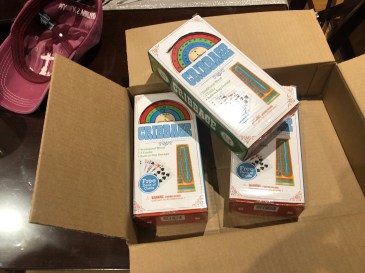
Black Friday found me ordering some Cribbage sets for my classroom.

ask, and there are other times when we tell them to “go fish” for it in their text. Everyday, all day long, students are making connections, building relationships between concepts and accumulating knowledge. Hopefully, there isn’t too much “Rummy” being called out in your classroom;)

When the profession of teaching seems to be swimming in data and everything seems like a numbers game, I suggest injecting life into it by making a topic controversial: Give it an element of inner conflict through pitting two or more opposing ideas against one another. This will require some creative thinking on your part, but the critical thinking through cognitive productive struggle that students will be engaged in will far outweigh the work you put into it. Good luck, and let me know what you do and how it goes through tagging me and my research partner James Norman on Twitter and/or using #ControversyCanBeClassy when posting. Also, feel free to leave a comment, here;)

The Superhighway of Trust

The other day, I was reading a blog about trust, written by Thomas Murray (2019), and it got me thinking. And, this got me thinking even more…

Screen Shot 2019-11-14 at 6.11.22 AMSee, I was thinking about relationships being analogous to the connections between neurons in the brain. Neurons or brain cells communicate with one another through conversations called synapses. The messages are sent via an arm called an axon. You could think of this like an old fashioned telephone line or wire. These axons are coated with a material best thought of as an insulator, myelin. What this material does is it strengthens the axon, making it more useful for sending signals between the two neurons. The more two brain cells communicate with one another, the more the brain will coat the telephone line with myelin. It sees this connection as valuable and worth strengthening, speeding up, and reinforcing. 

As I thought about neurons communicating via this thread of an axon, I imagined two people’s relationship growing stronger via trust. At the outset there is an initial contact, but then with common interests and shared experiences the connection grows stronger. If the two people were to depend on one another, they would need to talk more. This might make getting in touch with one another through various means necessary. In other words you speed up the way you can contact one another. You are texting, instead of emailing. 

Screen Shot 2019-11-14 at 6.11.31 AMWhile you and the person you are building this relationship with forge an increasingly strong, resilient, efficient means of communication, the two of you insulate the bonds between you. This happens a hundred ways, and it causes you to feel more safe around the person, because they know where you are coming from. You feel like they understand your feelings. They are less likely than a stranger to inadvertently do or say something that could hurt you. 

In addition to safety, this relational myelin speeds up communication. Something as tiny, fast, and simple as “a look” can say a lot–and fast! A tiny touch might tell you tons without any words. 

38116093515_4b25310fe4_bTom Murray attributes the success of collaboration, leadership, transformation, and even progress to the “speed of trust” (2019). With the popular warning of trust being easily broken, after taking so long to make, I’ve been guilty of thinking of it as a Ming Vase. The tiniest slip up could shatter the whole thing. Murray does not suggest that trust is anything like this, but it is what I have imagined for years; A once and done breaking of trust. 

Rather, Murray’s idea of trust affecting speed got me thinking about it building and maintaining a highway of information. More than just pavement, trust is both the work of building the road, and the process of maintaining the smooth surface that lends to the speedy communication needed for all of the positive benefits Murray suggested educators would reap. 

In this model, the road of trust takes a lot of work and investment, and an earthquake could completely devastate it, but if built well, it would withstand many travesties. A trust crew could clean up a crash in the morning, so that the afternoon rush hours doesn’t even know it happened!

2018-Road-Construction-Excavation-cmp-for-webBefore we get too excited about our trust highway, you should know that there are some pains in making it. If you want a really fast thoroughfare, it needs to be straight and level. Hills and sharp turns will slow down transportation. Believe it or not, there is something even more troubling than blasting or tunneling through mountains and building bridges over valleys. While that will be a lot of work, you first have to come up with the land to make your highway. 

In the Philadelphia area there is a highway affectionately termed “The Blue Route”. I haven’t heard it called this as much lately, but when I was in college, that was its only name. Nowadays, it is simply the southern part of the Northeast Extension of the Pennsylvania Turnpike; the vertical highway (476) that runs South to North. James Wyatt (2016) tells the colorful history of this helpful highway. Any understanding of city traffic will point to the absolute necessity of quick transportation around the outskirts of town. The idea for The Blue Route was born in the 1920’s. There were a few routes that were mapped out, and all of them had to navigate around iconic properties and places. Each had a different color. The one that was finally decided to build was the color blue. 

Here’s the thing. Many people and businesses were moving to the Philadelphia suburbs (Wyatt, 2016). This meant that a means of quick transportation was increasingly needed for decongesting local roadways. But, it also meant that property value rose significantly. In order to build this highway, private citizens would have to give up their property. It isn’t difficult to imagine that no one wanted to do that. There is a law that the government can use to seize property from private citizens for public use (Find Law, n.d.). It is called eminent domain. Citizens get compensated for the land that is taken from them. The property owners and townships that The Blue Route was to cut through protested and held up construction for nearly thirty years! 

Trust requires letting go of things. When we are building superhighways of speedy trust between ourselves and others, it will be necessary, albeit painful, to give up the rights of security and privacy. When you trust someone, you are making yourself publicly available. 

Once this happens, you then have blasting, borrowing, and bridging to construct to make your highway of trust straight, smooth, and level. Returning to my initial concept of myelin and axons, each trustworthy action sheathes your line of communication with more insulation that makes it that much stronger and faster is like laying final coats of asphalt, erecting guard rails, and providing express lanes on a trust highway. 

In conclusion, I propose we view trust as something to build upon, in order to speed communication, help, and support. Tom Murray calls trust an “unwavering thread of classroom culture” (2019). That phrase is what first got me thinking about axons, which then turned into superhighways. He warns us to take care of ourselves so that we can effectively trust others. Perhaps we ARE the highways, and our relationships with others are the exit ramps where traffic comes and goes… 

Pennsylvania_Turnpike_eastbound_at_I-276_exit3

How do you view trust? I would love to hear from you in the comments.


Some Sources:

Find Law. (n.d.). The Taking of Property for Public Use. Retrieved November 14, 2019, from https://realestate.findlaw.com/land-use-laws/the-taking-of-property-for-public-use.html.
Khan Academy. (n.d.). Overview of neuron structure and function. Retrieved November 13, 2019, from https://www.khanacademy.org/science/biology/human-biology/neuron-nervous-system/a/overview-of-neuron-structure-and-function
Murray, T. (2019, November 9). Retrieved from https://www.thomascmurray.com/blog/buildingtrust 
Wyatt, J. (2016). The Encyclopedia of Greater Philadelphia. In The Encyclopedia of Greater Philadelphia. Retrieved from https://philadelphiaencyclopedia.org/archive/blue-route/

Mission Impossible: The Engineering Process with SpheroEDU

IMG_8638
Is your “mission” to get kids excited about learning, or is it testing?

“I have a math test to give you, but I thought we could program some Spheros instead,” I said Friday morning to applause from the Polite Pirates of Room 207. Students’ cheers gave way to music… Mission Impossible Theme Music! 

“Your mission, should you choose to accept it… And, you’re going to want to accept it… is to rescue people from certain peril,” I proposed. With everyone on the carpet, I explained that before a rescue, engineers would set up models that they could use to plan out their efforts to minimize loss of equipment and life. Their mission was to program Spheros to make it through a model of obstacles, getting to someone or group of people who needed help. The Sphero couldn’t stray from the path or touch the walls because it would be damaged and not be able to complete its mission. 

Screen Shot 2019-11-09 at 7.19.04 AM
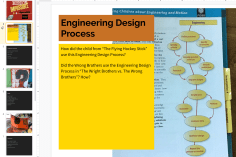
I walked them through what they would experience.

The students were riveted to my instruction as I taught the “Engineering Process” that they would need to use while figuring out the most effective code for completing their rescue. This was the real reason for the lesson, but simultaneously they would get so much more out of learning/practicing coding, problem-solving, and working together in a team. 

I went over each scenario, pointing out the “criteria” and the “constraints”, two vocabulary words from the “Engineering Process” model from Foss Science. Students whispered with neighbors about which they were more interested in trying. I told them that if they mastered one, they may move onto another “Mission”. 

Students then returned to their seats to get out their math spiral notebooks for taking notes about how they used the “Engineering Process” while solving their missions. They opened the Google slideshow that had all of the missions, as well as an image with the Engineering Process in it. I had “made a copy for each student” through Google classroom. 

I pulled popsicle sticks with student numbers on them to pair kids. As numbers were drawn, pairs came to the carpet to redeem their Sphero robot. Then they chose whatever mission fancied them most. With two pairs per mission, the class was a buzz of engineering within moments.

IMG_8633
“The Medic was difficult, but a lot of fun,” one student told me as I circulated the room.

 No one got to complete more than one mission, and most did not completely finish every parameter I had set for them, but every single student was 100% engaged in a learning activity full of purpose. 

IMG_8622
The problem-Solving was explosive!

I want to back up to the beginning of the day, before I tell you how this memorable lesson came to a close. Students entered my room to find me painting posters. They asked what I was doing. Because I didn’t know exactly what to call it, I didn’t give them a straight answer. That drove them crazy. They asked to help. “Sure,” I answered, getting out more paint brushes, cups and paints. All I had to do was outline things, and kids would fill in. When I told them that the white was snow or that the red was fire, it fueled their curiosity all the more! Dave Burgess calls this “Preheating the Grill” (Teach Like a Pirate, 2012). My students were so hooked on this upcoming lesson, they hardly wanted to go to gym! Have you ever heard of such a thing? 

While students were at their special, I made some finishing touches and turned a fan on to help the paint dry quickly. Then I came up with names, stories, and varying parameters for each mission. I took pictures of the maps, typed up the scenarios, and threw together a slideshow to share with the class.  

Back to the lesson. Throughout the “Engineering Process”, while students were working on coding Spheros, I stopped everyone a couple of times to instruct them to take screenshots of their code. That way they could have snapshots of different levels of success. It would help them describe their problem-solving, later. Finally, I put together a Flipgrid for students to make selfie-videos describing how they used the “Engineering Process” to solve (or come close to solving) their mission. If they finished, they could watch their peers’ videos and comment. 

IMG_4422
I didn’t even realize that this was National STEM day! (November 8th, 2019)

We DID take the math test, but in the afternoon. They did fine. I’m sure they will remember that forever;) 

Monsters Inc SpheroEDU Lesson

If you are a teacher and you are alive, you have heard about the importance of teaching computer science to students. “Code, code, code!” is shouted from the pedagogical rooftops.

Don’t hate me, but I haven’t been excited about this concept. I tried Scratch many years ago, but between wrestling with the failing tech in my school’s computer lab and less than perfect early-in-teaching-career classroom management of 8 year olds, I was unimpressed with the outcome of learning. I scratched my Scratch plans. 

Over the years, I’ve grown increasingly comfortable with integrating creative use of technology in my lessons and classroom. We make movies, video games, and are Google gurus! But, still no coding. 

Until…

Sphero rolled into my pedagogical practice. My school district is training teachers to roll out a computer science program, and I was chosen with several others to pilate some lessons. Among other things, we will be using SpheroEDU to share the coding experience with the students of East Penn. Spheros are exactly that; balls. They have mechanical parts inside of them that follow the commands that you input in an app on a device. They can roll, turn different colors, and make sounds. (Although the sounds come from the device, not the actual robot.)

When my teacher friends and I were initially introduced to the Sphero robots we were instructed to try to get it to do some tasks. We used a variety of coding methods and tried out several styles of lesson genres. It was fun, but I wasn’t completely hooked, yet. 

A recent get together of this team was assembled to begin creating lessons that would introduce and begin teaching coding to the 4th & 5th graders of East Penn. We were to come up with 3 lessons. A brainstorming session was followed by some discussion and voting. In the talk a theme emerged where we would introduce a narrative of insect study to the students. They were all going to experience the joys and difficulties of entomologists. The students would get their robots to study insects and eradicate invasive bugs: Debug. (One of our lessons is to clean up code of problems.) Notice how the targeted study focuses on a positive term for the animals: Insects, while the animals that are a problem (Spotted Lantern Flies have become a nuisance around Pennsylvania) are labeled negatively. Also, an obvious dual purpose of the storyline is to reinforce the necessity of clean coding, devoid of bugs. IMG_2721

This idea of purpose-driven instruction helped me see the coding lesson in a new light. Rather than tell my students to get the robot to make a square or go from an arbitrary point A to a pointless point B, I would be helping kids learn how to tackle real world problems. 

With new inspiration and vigor, I returned  to my third grade classroom where a case-full of unused Spheros sat in the corner. Let’s get to work, I thought, as I tore poster paper, uncapped markers, opened up bags of cups, and pulled out piles of pipecleaners. It was the day before Halloween, and an idea hit me: Monsters Inc. I would make grids with a door in one square and a kid sleeping in another. Students would dress up cups to look like monsters. These cups would float on top of a programed Sphero robot. They would need to get from the door to the bed and back to the door again. Also, the Sphero would need to create a scary sound. (This was attempted after figuring out the code for travel.)

Prior to the lesson, I got out all of the supplies. I made one more poster than I needed for 9 groups of 3 to have their own. Each poster had the door and bed in a different location. I did this incase an outstanding group had solved every coding combination for the map they were initially given. They could try a new one. (Another way of creating challenge would be to place items on the map, like wardrobes or piles of clothing, that the robot  would have to avoid.) 

To begin the lesson I placed one poster on the board to show students. I explained that they would be “playing” Monsters Inc. They were going to get monsters to go from the door to the sleeping child. Most students were familiar with the concept from the popular movie. I explained that the monster world was powered by an electricity that ran on the screams of kids. In the movie, monsters were trained and worked hard at sneaking into bedrooms and scaring children. I reminded everyone that it was important that the monster get back to the door, so that it could get back to the monster world. Otherwise it would be trapped in the human-parallel universe! “Aaaaahhh!”

IMG_6015Before leaving the carpet, I showed the students how the block-coding in the Sphero app worked. I drew the “Roll” command on the board with labels explaining/reminding what each bubble was for: Direction, speed, and duration (time).

While student groups decorated their cup/monsters with pipe cleaners, I had one kid at a time get a robot. Teams were separated around the room. The only parameter was for student groups to try to keep the robot on the paper. Needless to say, there were varying levels of success. One group figured out how to introduce changing the light of the Sphero. I didn’t bother telling them that the sleeping child (drawn on the paper) might not see the light change under the monster cup;) I was happy for the intrigue-guided discovery! 

I only had to get everyone’s attention once or twice. One time I wanted to mention only changing one variable at a time when adjusting the rolling command: Rather than changing both speed and duration, just alter one or the other. After giving the change a try, make another adjustment. Keep going until the movement is just right. After I witnessed one group make the discovery that you should “Aim” the robot before placing the cup over it, I shared that with everyone, adding that they must “practice-run” the Sphero with the cup, because the drag of the “monster” might affect its movement.

The whole experience was a smashing success. Everyone wanted to keep working on it, but recess time dragged us all outside. We put everything away, until the next day. 

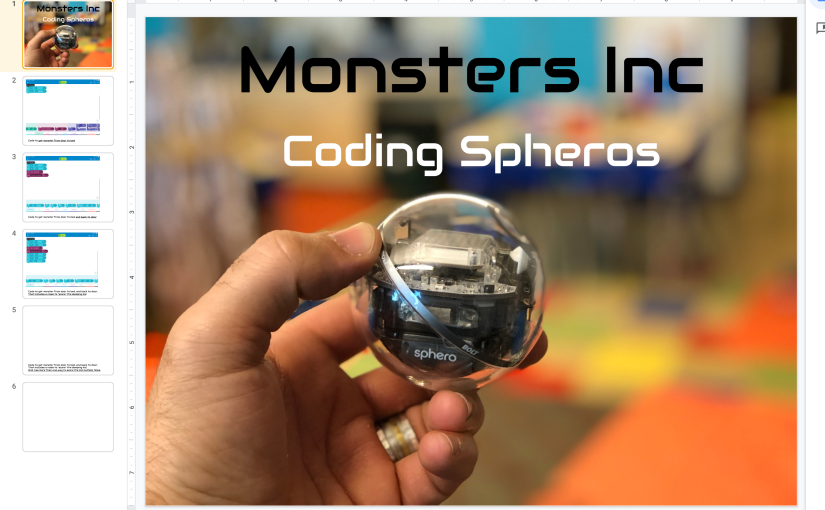
The morning of Halloween, I had students get the Spheros out again. This time, I wanted to know exactly what they were coming up with. Students did not have to use a “monster”. (Because having a Sphero roll up to you, while you are sleeping and growl, was scary enough;) I put together a slideshow that I pushed out through Google classroom, much like I did recently with the Plural Noun BloxelsEDU maze video game lesson. Students were to take screenshots of their successful codes that got the Sphero from the door to the bed and back to the door. The screenshots were then imported into the slideshow for me to view. 

The room erupted in coding. 

Students nearly lost their minds when, halfway through the experience, I showed them that they could get the Sphero to say anything you typed into a speech command. From that time forward, “Hey, kid, aren’t you scared!” was heard, among other ridiculous phrases, uttered in a robotic, honestly less-than-scary voice, all over the room. It was both hilarious and exciting.

Again, recess, and then a costume parade, ruined our robotic fun:) 

The takeaway lesson for me was the creation of a narrative, giving coding a storyline, helped me present the tasks in a way that gave meaning and purpose. The plot of Monsters Inc provided the jolt of electricity that animated the previously lifeless lesson. What have you used to give life to your lessons?

via GIPHY