Teaching Cribbage, Lesson 2 “Muggins Keep Players on Their Toes”

“The last time we got together, I told you that cribbage has many ways to make points. I showed you a couple. Who remembers how to earn points?”

I allow students to remind me of pairs and fifteens. Good. I review a few other details like face cards having the value of ten, and a pair has to be two of the exact same card; not just the same value.

“A king and a queen are not a pair, even though they are both valued at ten. Only two kings or two queens will get you two points. Everybody got it?” Yup.

“Let’s practice.” I pretend to be playing against the students. I pretend to shuffle the deck, but the cards I want to use are isolated on the bottom or top of the deck.

I give them two aces, two fours, and place a king on top of the pile of cards. I place their cards down on a table or the floor, so all can see.
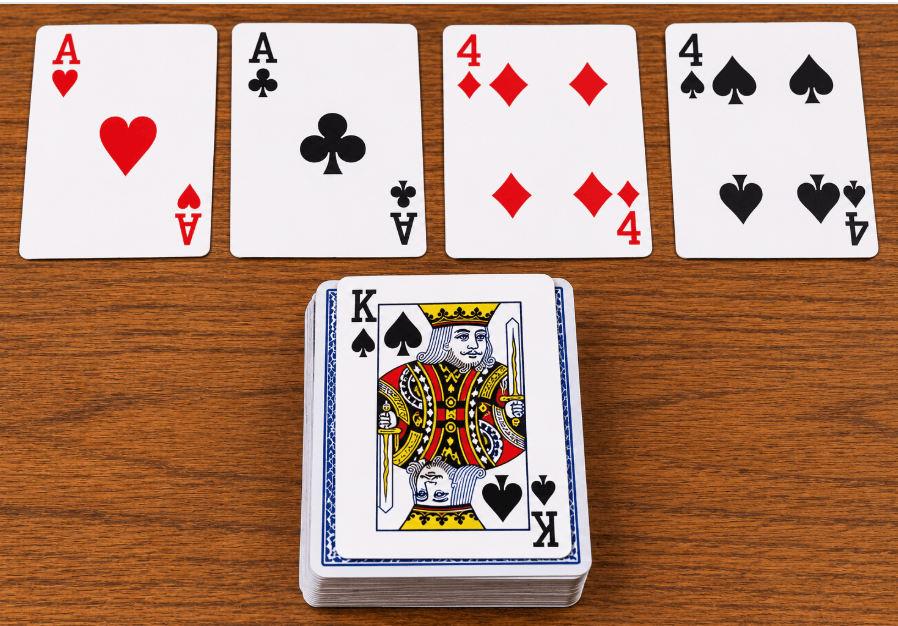
“Oooh. That’s a pretty good hand you have there. See if you can figure out how many points it’s worth. Just so you know, in cribbage, aces are always valued as one. In some types of games they are considered a court card, connected to royalty, but not in cribbage. Also, don’t forget about the king. He is valued at ten.

“Consult with the person sitting next to you. Discuss how many points you think you have.”

(I might try to have the cards available for students to be able to move around. It could be fun to make cards using index cards. I can also picture having laminated cards, so that students can make and change practice hands. They could also draw the cards on paper or mini, personal size dry erase boards.) After going over the answer and discussing the idea of counting the pips (symbols on the cards), I will demonstrate how a cribbage player would count the points.

“Pair for two. Another pair for four. Fifteen for six. Another fifteen for eight…” I will place the cards near the king showing that different cards were used for each combination of fifteen. That is how cribbage players do it. The final tally ends up being 12 points.
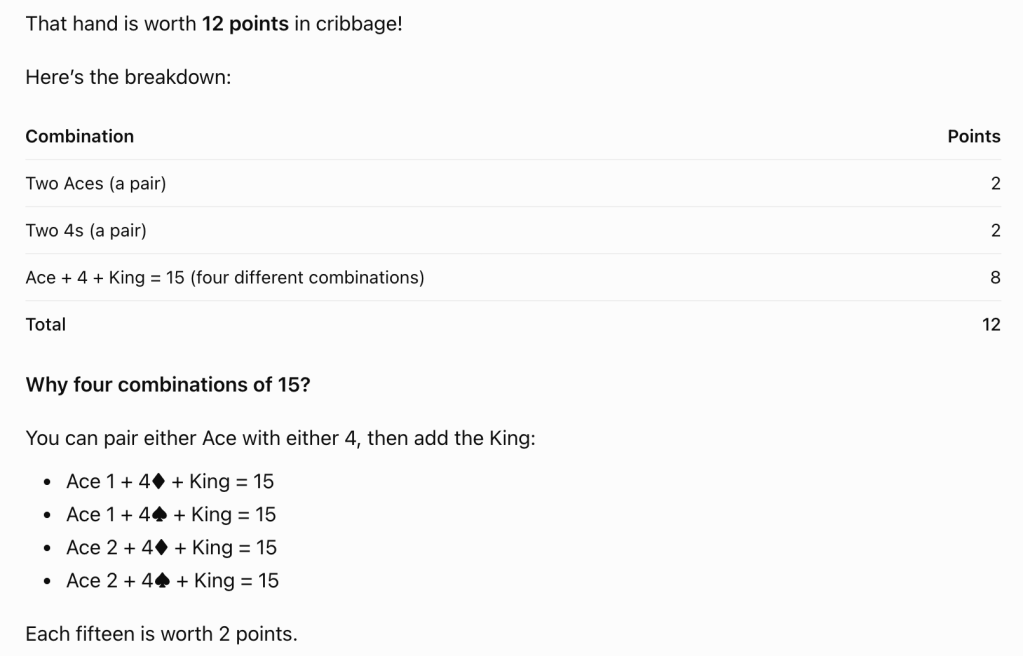
“You want to count up all of the points from pairs before moving on to the fifteens, or vice versa. Do all of the fifteens, and then the pairs. This is called working systematically. If you organize the point collection into categories, it will be easier to remember to count them all. This will be a very important feature for what I am going to teach you today.”

After writing the new vocabulary word on the board and having students write the word plus its definition into their learning journals, I return to the mock game. It was all of the students verses Mr. Weimann. They did great, but what do I have?

“Congratulations. That was a very good hand. Unfortunately, I also had a very good hand. Let’s see what I got.” At this point, I will reveal two fives and two jacks. These,  combined with the starter king, produce many points.
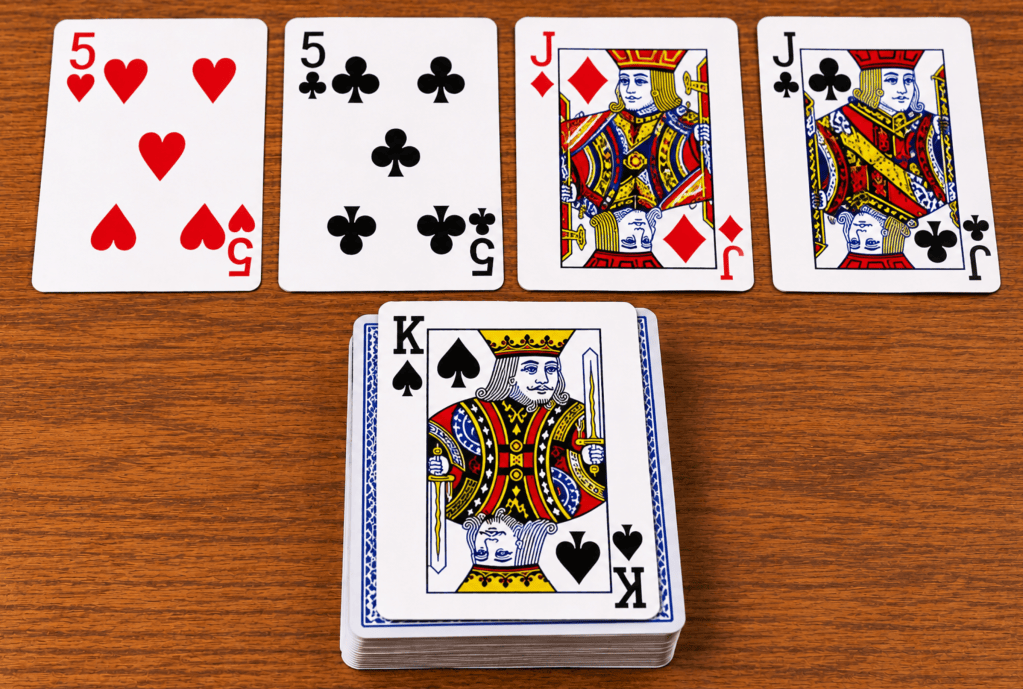
I pretend to count up the points in front of the students. The problem is that I forget to use the starter card to make my combinations. Because of this, I lose out on capturing many points that are due me.

After modeling systematically counting the pairs and then the fifteens, I suggest that I’m done. I might model pretending to accidentally miss counting something through bouncing around between fifteens and pairs. “Oh, I forgot about this fifteen. That’s two more points for me! We are tied. Twelve and twelve. Yeah! Okay. I think I got everything.”

Someone may recognize that I didn’t use the starter king, but normally everyone is so caught up with what I’m doing and don’t have enough experience to notice it. Whether they do or don’t, it doesn’t matter because I’m going to point it out.

“I know that I told you there are many ways to earn points in cribbage, and I haven’t even shown you all of them, yet. But, what would you think if I told you that you can also steal points from your opponent?” This idea drives students wild!

Enter Muggins.

“There is a special rule in cribbage where if someone misses counting points from their hand or the crib; I’ll explain what that is later; and their opponent notices it, they can claim those missed points for themselves! This is called muggins, and you have to actually say ‘Muggins’ when you do it.”

I write the word muggins on the board. Students will copy it down in their journals and prepare to take some notes about the new vocabulary word. It is good to teach this in connection with working systematically, because the two go hand in hand. You can prevent creating muggins by carefully counting up all of your points.

“Now, not everyone plays cribbage using this rule. When I first learned how to play as a kid with my parents and extended family members, I never even heard of it. It is an optional rule that more competitive cribbage players use. You will want to agree to use or not use muggins before beginning a game of cribbage. That way all of the players are prepared for its appearance.”

If my students are familiar with the game of chess, I will share that the use of muggins in cribbage is like the touch rule in chess. During competitive chess playing, if you touch a piece, you must move that piece. I never use that rule with my students, because it limits their thinking. They get all stressed out about touching pieces and can’t focus on good moves.

Even though muggins could become a distraction, I like to use the concept as a motivator from the very beginning of teaching cribbage. It is easy enough to tell students, “We aren’t going to use muggins in play today,” if the practice instigates arguing or hurt feelings. But, its presence can provide growth-rich material for practicing social/emotional learning (SEL), as long as students are properly prepared.

Sometimes I will hold the threat of no muggins over their heads to motivate them to be more focused and nicer. Essentially saying, “If you guys don’t stop chit chatting and start focusing on the game, I won’t let you steal points from your opponents. No muggins is comin’s!” This usually works quite effectively.

“There are several very important laws governing the use of muggins,” I share with my students. “You need to use this rule correctly, or else it can backfire on you,” I warn my students. The following idea is as much a safeguard for me running my cribbage show as it is helping my students be good sports.

In the past I taught my students about muggins, but failed to set up these guard rails. Students were interrupting one another and calling muggins on every counting. It became disruptive and unfun, not to mention fostering bad sportsmanship. The way I use muggins these days, it helps everyone stay on their toes.

Drawing everyone’s attention back to the cards that I had in my hand, I say, “You may or may not have noticed that there are more points that I could have counted from the cards that I possess. I counted the pairs and fifteens that I have in my hand, but I never used the starter card. That is the card that is placed face up on top of the unused deck. In this case it is a king with a value of ten. I missed two different fifteens! Oh no!

“Guess what. These points aren’t just lost to me. If we had agreed to use muggins before playing, and if I had moved my peg twelve points, demonstrating that my turn was over, you could call ‘Muggins!’ and retrieve my lost points. Anybody want to do that?”

Inevitably, someone will yell out, “Muggins!”

“I should tell you that when you call ‘muggins,’ you need to say how many points you are claiming. If you see four missed points, you say, ‘Muggins for four.’ If you see six, say, “Muggins for six.’ Everyone got it?”

They do. I allow the students time to figure out how many points I missed and adjust their call. It should be “Muggins for four,” since I missed two fifteens for four points. If they say something else, that will be another learning experience. They will either forfeit points if they didn’t count enough, or they will lose some of their own points, if they claim I missed more than I did.

Let’s imagine that they say, “Muggins for four.”

“Oh no!” I dramatize. “You have got to be kidding me,” I act out my disappointment of missing points. My turn is over, and I can’t claim any more points. “What do you see?”

If the students accurately identify the two fifteens I missed when I didn’t use the starter card, they get the four points, no qualms. I can’t argue or fight with my opponents. They saw what I missed. We are playing muggins, and they earned my missed points, fair and square.

Whether the students claimed more points than four or not, I will teach them what happens when muggins is called incorrectly.

“You have all been great listeners, and you are smart enough to remember that even though all of the face cards are valued the same, you have to have the exact same kind of face card in order to make a pair,” I begin. “But, what if I were playing a group of students who didn’t remember that detail. They might see the jacks and the king, and think that there are extra pairs that I missed counting. Perhaps they think that, in addition to the fifteens I missed between the two fives and the starter king, there are two pairs from combining each of the two jacks with the starter king.”

There will be scoffs from the students. “I know,” I quell the crowd. “I know that none of you would ever do this, but someone you are playing could accidentally do something like this. I want you to know what happens. Pay attention. You might want to write this down.”

I wait until everyone is ready.

“Let’s say that someone else; not you; says, ‘Muggins for eight!’ thinking that there are two missed pairs as well as two missed fifteens.” I pause to make sure everyone is on the same page. “Because I’m a good sport, I let them show me what I missed without complaining; other than my minor outbursts of disappointment in missing points,” I reference my over-dramatization from moments before.

“My opponent will count out the points just like they would if it were their hand or crib. I need to watch very carefully to see if what they are counting was already mentioned or if it is accurate. In this case my opponent was trying to make pairs from jacks and a king. That is not correct cribbage play, so I politely say, ‘Now that you mention it, I do see that I have missed the fifteens between the fives and the king.’ See, you want to affirm what is correct before pointing out any mistakes. This will help prevent arguing or hurt feelings.”

I like to prepare my students to have a nice time learning the game. I want them to get along well with one another.

“Since my opponent was correct about my missing the two fifteens, they are awarded the four points that they uncovered. Get this, though. Since they were wrong about the other points that they thought I missed, not only do they lose those four points, but they have to give them to me!” My learners’ audible incredulity can be heard from far away.

“That’s right. An inaccurate call of muggins can cost you dearly. Because of this, you have to be very sure of yourself before using this rule.

“To recap, you have to wait until your opponent has pegged their points and their turn is concluded before calling muggins, but the call has to be made before play resumes and the next person begins counting points. Remember, if you call muggins in correctly, and the points are wrong, you end up forfeiting that number of points, and the person you were accusing gets them.

“The way I play cribbage; and I encourage you to play this way; each person or team will carefully count up all of their points not only to themselves, but for their opponents, as well. Then, when they are satisfied, they peg their points. If you are not counting your points, you are diligently watching your opponent count theirs, hoping that they will miss something. Some hands are so complicated and full of points that it is very difficult to catch every single way to make points. Just you wait and see!

“While your opponent is counting, don’t say anything. When they are wrapping up their business and preparing to peg their points, don’t show your obvious excitement. You need to try to feign indifference. That means pretend that they got everything, and you don’t have anything to add. The moment their hand is off of the peg that has been placed in the number that they claim they earned, you come alive with a call of muggins. Make sure you are accurate, lest you lose some points, yourself.”

Even after explaining all of this, I coach my students through this procedure a lot. If I am playing against some students, and my lead has grown too high, I might call an inaccurate muggins in order to get everyone to pay close attention, and even out the playing field.

In conclusion, muggins can be a powerful tool. But, as a wise man once said, with great power comes great responsibility.
Teaching Cribbage, Lesson 1 “Pegs, Pips, Pairs, and Points”

“Today I’m going to teach you how to play a new game,” I tell my students as I pull out a typical deck of 52 playing cards. If the word game doesn’t get them fired up, the cards do.

Unable to contain their excitement, few students burst with questions. “Is it poker?” someone asks. Inevitably one of my students will have a cool uncle who’s talked to them about the gambling game. Or they’ve seen it in a movie or show.

“No. Sorry,” I tell them. Or, I dodge the topic altogether by reminding them all to raise their hands and don’t interrupt.

“This game has a funny looking board that displays the points,” I share as I unfold the cribbage board. It’s so small. Students always want to get a closer look, and they crowd around or lean forward.

They nearly fall over one another when I turn the board as I share, “Every cribbage board I’ve ever seen has a secret compartment on the back; a little sliding door that hides the pieces used to play the game.” I make a show of being very careful when I remove the pegs.

“These tiny thin lines are called pegs,” I tell them. “Their purpose is to show how many points you have. You use them to count your points as you play the game.” I hold the pegs in my hand, illustrating the small size. They are different colors. There are two red ones and two blue ones.

“Sometimes they are wooden. Sometimes they are plastic. But they are always teeny tiny and very easy to lose. It is very important that you are extremely careful to keep track of the pegs.” After everyone gets a good look at the pegs, I put them back into their hiding place. “We won’t use the pegs or keep track of our points until after I explain some of the basics of the game.”

There is always a sigh of disappointment at this point, but students are motivated to do whatever it takes to get their greedy little digits on those tiny little pegs at any cost. The price is points. They have to learn how to make points before we can keep track of them. “In cribbage you get points for everything. You practically get points for breathing,” I tell students. I always start out this way, because everyone always wants to earn points. Students think they ought to earn points for everything.

“I wrote my name on my paper! Do I get a point?”

“No. You’re supposed to. How else will I know whose paper it is?” Some teachers award points for putting your name on your paper. Some students earn nothing more than the points for their name.

The idea of easily earning points is appealing. It keeps the current of cribbage curiosity alive and well as I prepare to share a lot of rules which can be dry and boring.

“One of the main ways to earn points is by making combinations of fifteen,” I tell the students. Before getting into having hands, selecting cards to put into the crib, or playing rounds, I introduce using several cards to make various fifteens.

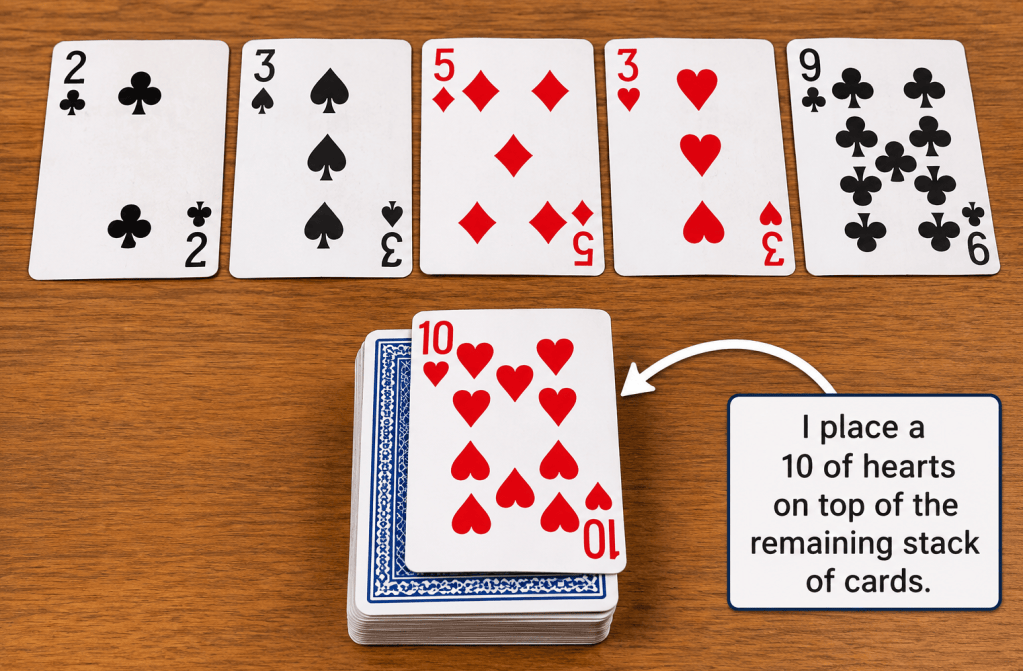
I already pulled out a few number cards to work with. I display a 2 of clubs, 3 of spades, 5 of diamonds, 3 of hearts, and 9 of clubs. Then, I place a ten of hearts on top of the remaining stack of cards. “How many different fifteens can you make using these cards?” I ask my students.

Everyone instantly sees the five and ten combination. Hands shoot into the air. If I have access to a dry erase board, I might draw the two cards on the board. After their illustrated, I explain, “Now that we have used the ten of hearts and five of diamonds together, we can’t use them as a team to make fifteen again. They are done. Even though we know that the commutative property tells us that you can change the order and add them, ten plus five, to get the same sum of fifteen, they are spent.”

This principle will have to be taught several times, because when you get into using many cards to make fifteen, it is tempting to simply move the cars around in order to get a different fifteen.

Additionally, it gets hairy when you show them that you can swap just one of a set of three or four cards with a card of the same value to make a totally different combination of fifteen! The teaching becomes a bit of a balancing act.

“Even though we have used the five and ten together to make fifteen, they are not all used up. We can use them with other cards to make fifteen again.Can anyone find a way to make fifteen using the ten and any of the other cards?”

Some smarty should see that you can add the two of clubs and one of the threes to the ten for fifteen. “Nice, and I have news for you.” I shroud my message in mystery as I take away the three and hold up the other three. “This presents a whole new way of making fifteen!” Gasps from the crowd.

“That’s right. We can’t move the cards around, so that they are in a different order to make a different fifteen, but if you introduce a new card, and it totals fifteen, you get two more points.”

I drop my hands and change my countenance as I rhetorically ask, “Did someone say points?” Then I answer the question that I just planted inside everyone’s skull. “That’s right. Every time you make a new combination of fifteen, you get two points.”

Oprah-style, I dramatically say, “You get two points! You get two points! You get two points!” pointing out the ten and five, the first combination of 2, 3, and ten, and finishing with the most recent combination of two, ten, and a new three.

“What is it called when you take the same numbers, and you change the order of adding them together?” I quiz my students.

If no one remembers, I remind them that it is the associative property. “Unfortunately, the associative property, like the commutative property, doesn’t help us earn extra points in cribbage.”

Drawing everyone’s attention back to the cards, I ask my students if there are any other ways of making fifteen that we haven’t identified yet. “What about that nine of clubs? Can we do anything with that?”

After letting them struggle for a minute, I share, “If you have trouble doing the mental math in your head, you can count the pips on the cards.” This is most likely a new vocabulary word for students, so I might write it on the board. It might help to draw a card, illustrating the pips.

“There are four different suits in a typical deck of cards,” I instruct. “There’s hearts and diamonds, which are typically red. Then there are spades and clubs which are black.” I draw the symbols on the board. “The nice thing about playing cards is that, in addition to the number shown in the top left hand corner, each number card displays its value by providing that many symbols on its face. These symbols are called pips.”

At this point, I lay down a four and a six. “You all know that four and six make ten,” I affirm. “But, let’s say that you are playing cribbage with a younger sibling, and they don’t believe you when you tell them four and six make ten. You can show them the truth by counting out the pips with them.” I might model this, depending on the audience and amount of time available.

While I am sharing this information about pips, someone has inevitably found the combination of the two threes and the nine. “Nine, three, and three!” they shout out.

“What’s that,” I feign ignorance. “How do those numbers make fifteen?”

“Three plus three is six. And, six plus nine equals fifteen,” the rambunctious student points out.

“Are you sure?” I tease. “How can you prove it?” The student has no idea what I’m talking about since he wasn’t listening when I was teaching the word pips. “What’s the name of the symbols that I can count to double-check this scholar’s math?” I ask the group.

If no one wants to answer the silly question, I point to the word pips that I have written on the board. Or, I reiterate the question. “What are these symbols called again?”

Altogether, we chorus-share the word pips.

(When I am teaching younger ages or students who struggle with addition, I have them point to and count the pips out loud. Another idea to consider is using this practice to slow down play. When someone identifies a combination that makes fifteen, everyone has to double-check by counting the pips.)

“I don’t see any other ways to make fifteen with this group of cards,” I say in order to move the lesson along. Often someone wants to explore further, but this will cause others to lose interest. This hand is spent.

“Typically, when playing cribbage, you won’t have this many cards,” I tell the students as I model shuffling the deck. This is always attractive to students. Everyone has stories of how a parent or uncle can do it differently.

“Before we begin actually playing cribbage, we need to learn all about how to earn points,” I reiterate. “You found out that making fifteen will get you points. There are other ways, as well. Remember, I told you that you can get points for breathing.” I laugh. “Well that may have been a little bit hyperbolic. But, there are quite a few more ways to get points.

“We actually missed collecting some points with that last hand!” Collective groan. “There was a pair of two 3s. And, pairs will earn you two points.” I will then pull three fives out of the deck. “How many points do we have here?”

After hearing a variety of answers, I tell them, “The answer is eight. Eight points. Take a look.” Moving the cards around, I show them, “The five of clubs and the five of hearts is a pair for two. The five of clubs and the five of diamonds is a different pair for four.

“…That’s how you count your points. You say what earns them as you add the new amount to your growing tally…

“We haven’t made a pair out of the five of clubs and the five of diamonds yet, so that gives us six points total. But, wait. I said that these earned you eight points. Does anyone see it?”

If they don’t, I’ll point out the fact that all three fives add up to fifteen. This is fun for illustrating how easy it is to get points.

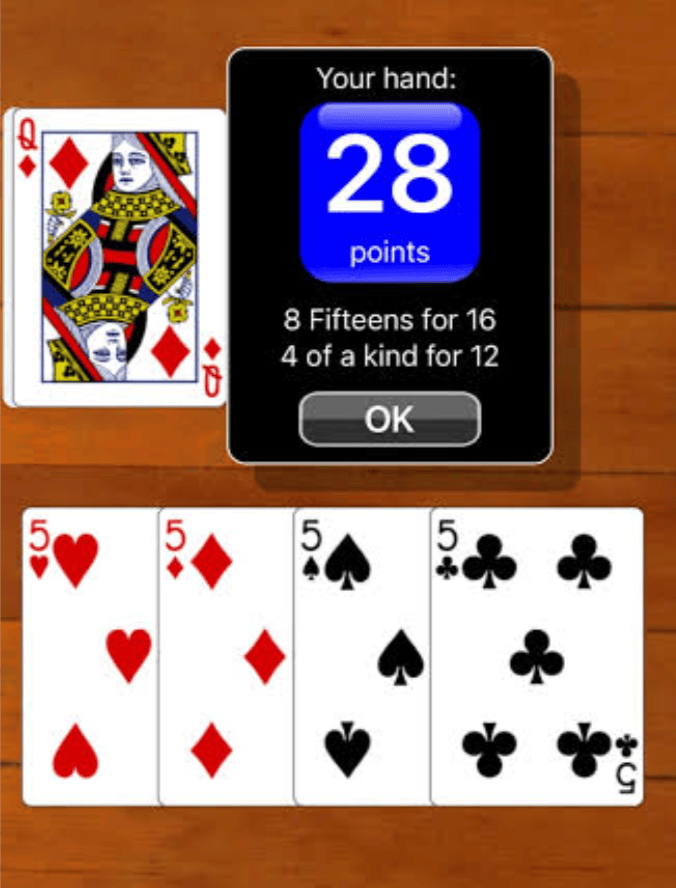
“Whenever you have three of a kind, you earn six points.” I rifle through the deck of cards to locate the last five. “This is going to blow your mind,” I warn my students. “When you have four of a kind, which is very rare, you will earn…” I hold the new five up to each of the previous fives and continue the skip-counting out loud. “Eight, ten, twelve! Twelve points!” I breathlessly communicate.

If the audience isn’t sufficiently awed, I will then flip a face card onto the top of the pile of cards and pretend that it was the starter card. “Wait. What do I see here? It looks like the starter is a face card. Face cards or court cards are the royalty that doesn’t have pips. They are the kings, queens, and jacks. Each one of them has a value of ten. Even though they are worth ten, you can’t put a Queen with a ten and say that it is a pair. It has to be two Queens to be a pair.

“…So, how many points do we have now?”

“Who thinks that you have twenty points?” A few hands might go up. This makes sense because we just established that four of a kind would generate twelve points. Then each five could be combined with the face card to make a fifteen which is worth another two points each. That would be an extra eight points.

“Good,” I affirm. “You recognized that each five can be combined with the face card worth ten to make a total of fifteen which will give you two, points, each!” Holding the face card up to each five, I continue counting on, “Fourteen, sixteen, eighteen, twenty.”

After a dramatic pause, I suggest, “But, there’s more.” This sets them on fire. Kids are calling out. They are verbally walking on one another to be first to figure out the answer.

“Who thinks the total points could be twenty-two? If you remember, these three fives added up to fifteen all on their own.” Heads are beginning to explode.

“What about the new five that we just introduced?”

After they try to figure it out in their heads for a few seconds, I race through demonstrating all of the fifteens, all of the pairs, and write a big 28 on the board. This is done quickly, so that it seems like magic, students remain fascinated instead of flabbergasted, and everyone is excited to earn tons of points playing.

“That’s all we have time for today. Pretty exciting, huh?”

As I place all of the cards back into the deck, I remind students about what they learned during the lesson. “Fifteens and pairs earn you points. You can either add the numbers, or you can count the pips, which are?…”

“…The symbols on the cards.

“Although you can use the same card more than once, you can’t earn extra points by simply changing the order of cards. You have to actually change at least one of the cards to make a new combination.

“And, finally, there are tiny pegs hidden in the back of the cribbage board that you will earn the right to use by paying close attention to these beginner lessons, and proving that you have listened and learned the principles of cribbage.

“…Until next time… Bye-bye.”

Card Games Can Be Controversially Classy

IMG_6807
Who do you think won?

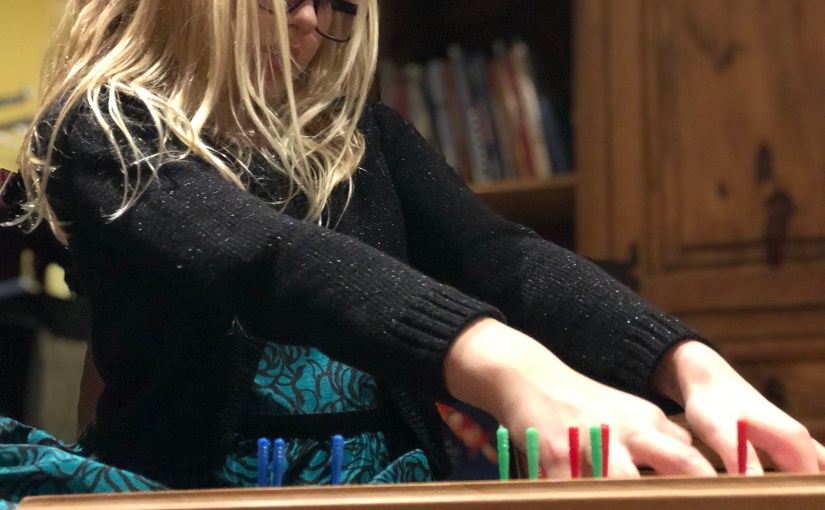
Thanksgiving night 2019 my daughter Scarlet, wife Sonia, and I all sat down to play a game together. Scarlet was interested in learning Cribbage. This is a card game where players move tiny pegs that stand in holes drilled into a wooden board. Each players’ line of holes goes to 150 points. You leapfrog the pegs, so that one keeps the place of the previous accumulation of points, while the other counts out the new total. The player to get her pegs to the finish first, wins. 

I wasn’t sure how Scarlet would do with this game of many rules. There were many firsts: I taught Scarlet how to shuffle the deck. She did pretty good. I showed her how to deal the cards. Then there were the instructions of how to play.

Cribbage is all about points, and there are many ways to earn them. One of the ways to earn points is to form groupings of cards whose combined value total 15. When I witnessed Scarlet, who just turned 8 one week ago, working out the different combinations of 15, I was not only impressed with her math skills. It hit me that she was analyzing the cards and evaluating the future potential they held. 

This is a little tricky to communicate via text. Without describing the entire game, let me try to convey what Scarlet had to think about when it came to the 15s. It takes several rounds to accumulate 150 points and win a game of Cribbage. Each round begins with all of the (3) players getting 5 cards. The first thing that you do is try to decide which 4 cards you keep, for you are to give up one of them. It can be a challenging decision to make. 

See, you don’t just record the points represented in your hand. You play your cards against opponents’ cards. And then, there is a starter card that you use over and over, too. Finally, there is a crib that goes to the dealer. This is what you contribute to when you discard a card at the beginning of the round. If you’re not the dealer, you don’t want to place cards into the crib that will easily form combinations of 15, giving your opponent more points. 

IMG_2915So, it’s Thanksgiving. The dinner is cooked, consumed, and cleaned up. I’m watching my daughter wrestle with the cards in her hand. Of the five she is holding, which should she throw in the crib for someone else to use? 

Sometimes it is simple. The starter is a five, and you have three face cards (valued at 10, each), a five, and a four. Throwing the four into someone else’s crib is a no-brainer. It won’t make any points for you. How many different combinations of 15 are you looking at without the four? Try working it out.

The answer is six different combinations of 15 can be formed (3 combinations using your “5” + 3 face cards & 3 combinations using the starter card which is a “5” + your 3 face cards). What if rather than a five, you had an Ace (valued at one in Cribbage)? Now you have 3 face cards worth ten each, an Ace, and a four. And, don’t forget the starter, which is a five. If you give away one of your face cards, you would have four combinations of 15. If you gave away the four this time, you would only have three fifteens: Your 3 face cards, combined with the starter. 

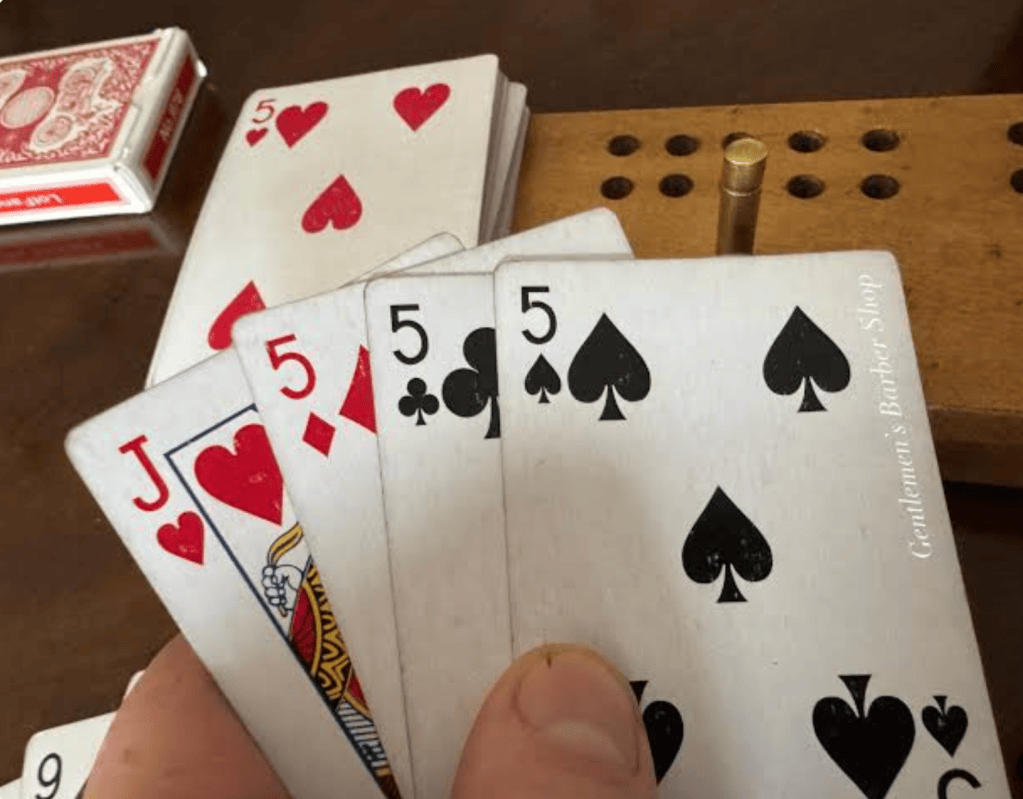
IMG_4017It’s extra hard when you have to add the numbers to make fifteen. Let’s say the five cards that you are dealt are 4, 5, 6, 3, & Ace, and the starter is an 8. You have to discard one of those cards to someone else’s crib. 
  • Ace, 3, 6, 5 = 15
  • 4, 6, 5 = 15
  • Ace, 6, 8 = 15
  • 3, 4, 8 = 15

Am I missing any? It takes time and is pretty tricky finding all of the combinations. You can’t overlap any, using the same grouping in a different order. 

As I’m sure you can imagine, this is great for developing number sense. It also helps grow critical thinking skills. Scarlet was doing all of this math in her head. Once in a while, she would ask for some help. We worked through all of the different combinations to make the best decision possible. She ended up winning, surprise/surprise! 

What struck me most about this experience was the inner conflict centered on deciding which card you would choose to relinquish to the crib each round. I knew this to be an important part of the game, but watching my daughter wrestle with the decision, round after round, brought new light to the fact. With practice, she got better and more confident at choosing the card that she would let go. 

The inner conflict of choosing the best cards to keep and which to get rid of reminded me of using controversy in the classroom. Making topics controversial by providing students with opposing, nearly equal in value concepts that they must analyze and evaluate to decide which is better or more appropriate for a given situation would develop the skill of critical thinking. Cribbage could be a great way to grow this higher order thinking skill, while also developing number sense. 

This got me thinking about other card games. How might a teaching style be analogous to these card games:

“Go Fish” — Students ask for information. If you know it, you hand it over. If you don’t, the students fish for it online (ask Siri). What are students learning when you use this style of teaching? Education is a take/receive, skill-less process. During the card game, only conflict comes in deciding how honest you want to be;) The controversy lies solely in morals. 

“Rummy” — Players work at making connections between like cards. They collect as many pairs, three & four of a kind, and make runs. The player who has accumulated the greatest value in cards at the end of play, wins. Analogy to teaching: Making connections is great! Each time you find two like ideas, you group them in your head. You categorize thoughts and store them away. Furthering this game’s message, however; If you’ve played this game much, you’ve probably learned that runs are where the play is. You can play one of your cards off of someone else’s run. You only get the points that your card is valued, but at least you get to play it! This symbolizes a group or team-learning approach. Students must decide which information they want to keep, and which to discard. This decision will be based on how valuable it could be in the future or how useful it is right now. A potential drawback to this approach is that it teaches students that the kid with the most knowledge in the end wins at life. 

“Poker” — Kids play this when they try to get away with not completing assignments that they think won’t be checked or graded. The lesson students learn from this teaching style: Life is all about tricking people into thinking you are smarter than you really are, have more knowledge about something than you really do, and/or are able so do something when really you are truly incompetent. 

“War” — Without consciously choosing, each player places the top card from their pile face up. Highest card value wins all. When there are ties, War ensues, and only one winner gets tons of cards. This is the opposite of equitable teaching. You teach everyone the same, period; Zero differentiation. Some kids greatly benefit. Everyone else plays along, losing in the end. It should be stated that early on in War, one person begins accumulating the aces and face cards. The other player(s) know that they are going to lose… Unless, they cheat. And, even then, it is hard to come back when you don’t know what card your opponent is playing. 

“Solitaire” — “Go practice what I taught you.” Players become familiar with the cards and some relationships between them. They may practice shuffling. An element of racing a time could make this game more challenging, but you might as well be marooned on a literal island! 

The thing is, we use each of these styles in our teaching. As teachers, we cannot assess everything, and sometimes we have to use a poker face. Sometimes we need to have students play quietly on their own, and there are times when it is good for a kid to repeat the same action over and over, in solitary practice. When a student does not know the definition of a vocabulary word in the middle of a lesson, it is appropriate for them to

IMG_2737
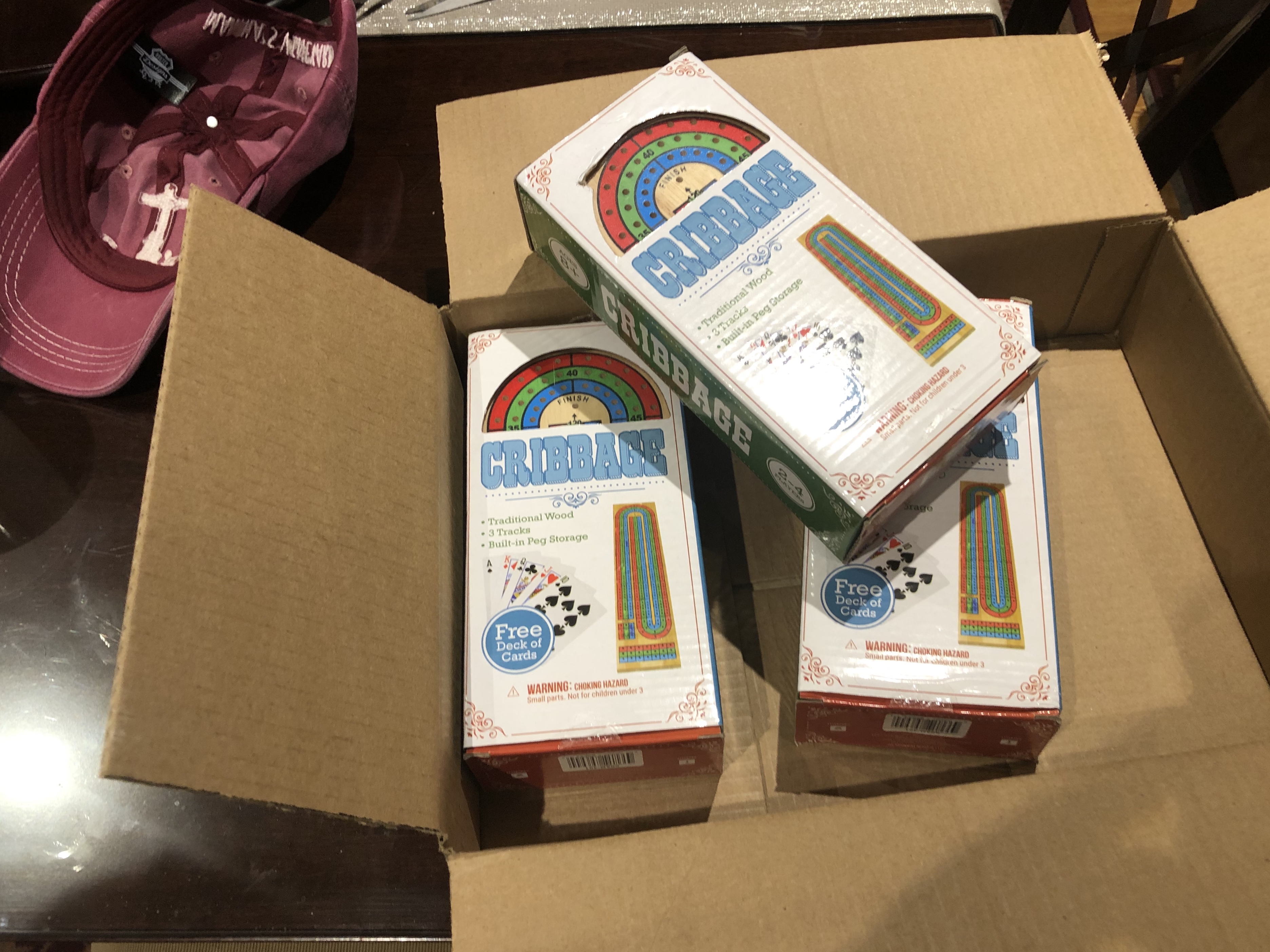
Black Friday found me ordering some Cribbage sets for my classroom.

ask, and there are other times when we tell them to “go fish” for it in their text. Everyday, all day long, students are making connections, building relationships between concepts and accumulating knowledge. Hopefully, there isn’t too much “Rummy” being called out in your classroom;)

When the profession of teaching seems to be swimming in data and everything seems like a numbers game, I suggest injecting life into it by making a topic controversial: Give it an element of inner conflict through pitting two or more opposing ideas against one another. This will require some creative thinking on your part, but the critical thinking through cognitive productive struggle that students will be engaged in will far outweigh the work you put into it. Good luck, and let me know what you do and how it goes through tagging me and my research partner James Norman on Twitter and/or using #ControversyCanBeClassy when posting. Also, feel free to leave a comment, here;)