
Just over a week ago I produced the coolest off-the-cuff formative assessment using Google Slides. Students accessed a slideshow that I threw together right before getting them from recess. There was a picture in it that I wanted them to use to identify arrays.
My 3rd graders have struggled with learning multiplication at the very beginning of the year, as I have struggled teaching it right out of the gate. See, my district just signed on to use iReady math, and everyone is experiencing some growing pains.
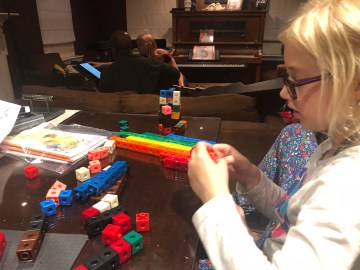
We have been looking at arrays, frontwards and backwards. I had brought some connecting blocks home to take pictures for a quiz I would administer, when an idea hit me. My daughter Scarlet was enjoying constructing shapes with the blocks, and she built a robot. Rather than making nice neat rectangles for my students, I’d have them find the arrays that lay hidden in this robot. I love combining life experiences and teaching moments, so I told my students about the robot’s inception and their assignment. They loved it and jumped right in.
I had taken a picture of the simple combination of blocks and uploaded it to a Google slideshow. Students were to find the slideshow (a copy per student) waiting for them in their Math Google Classroom. They were to identify different arrays by circling them. I also told them to label the arrays appropriately; Putting the number of rows first, and then the number of columns.
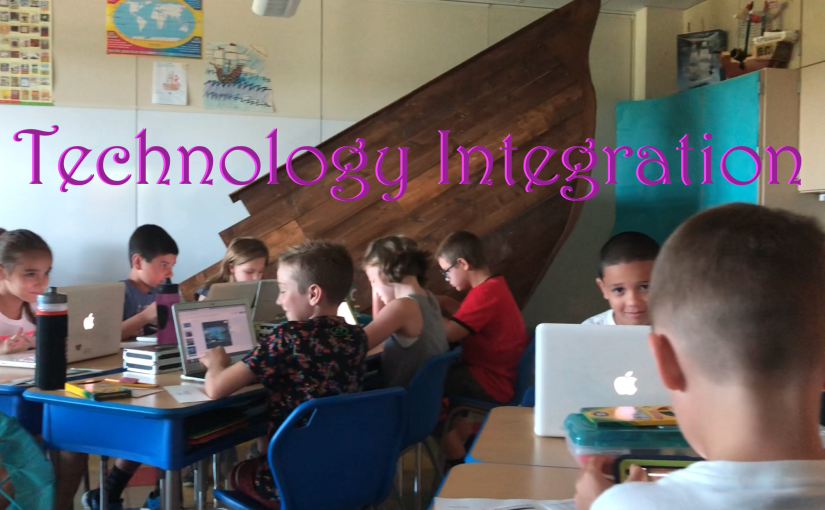
 My classroom has a mishmash of different devices. I literally did not know how they were going to outline their arrays, but I did know that there was more than one way. The iPads are pretty easy. Kids can click on the assigned Google slideshow and immediately start drawing and writing all over the slides, without opening it in the Google Slides App. When students are done they can save/submit the work as a PDF.
On the Chromebooks and Macs, students could put shapes on top of the arrays, but then they would have to adjust the shape to be transparent. Students found a tool called “Scribble” under the “Line” icon within slides that worked the best. They could draw (using two hands) a rectangle around the arrays they found. Then they used the regular “Line” to connect the array to a “Text Box” that they typed the array inside. These lines were very thin and black, so students worked out a way to change the color and thicken up the lines. They also used this experience to find out how to change the font size, color, etc. of text. I witnessed my students teaching themselves the technology, problem-solving in many more ways than one, using creativity for practical reasons, and experiencing tremendous success, both practically and mathematically!


All in all, the lesson was a smashing success. I was very happy with how well my students did identifying the arrays. And I was incredibly impressed with the ingenuity they showed in figuring out the best ways to show their work, using the tools at their disposal.
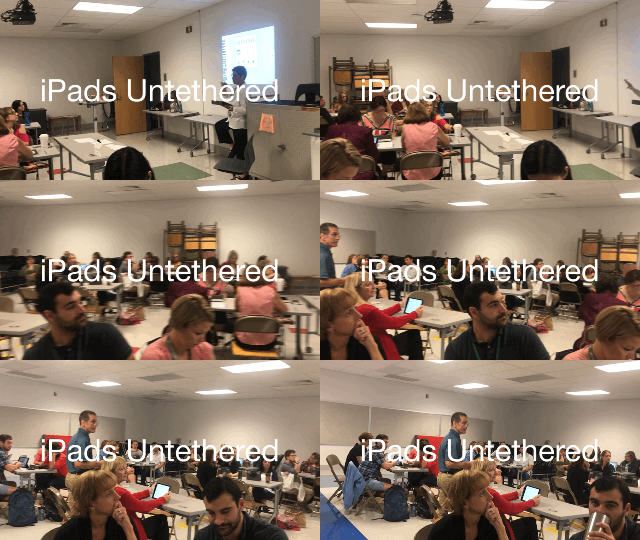
Now, this is where the title of this blog comes into play. The aforementioned lesson took place on the Thursday before Columbus Day Weekend. On Monday (Columbus day) my school district had a professional development inservice. I attended an incredible session titled “iPads Untethered”, taught by East Penn Tech Instructional Assistant, Heather Moser. She started out the teacher learning time with an app called “Sketches”. Kids can use this app to easily draw all over images that are either shared with them or they generate from taking a picture. The sketches can be saved in organized folders, shared, or submitted. We then moved on to doodling all over images in Notes, another easy to use app that comes preinstalled on iPads. It was as though Heather knew about my lesson and was saying, “Gee, Captain, you could have simply used one of these.”
The catch is that both my students and myself grew threw our productive struggle. Problem-solving ways to show arrays within Google Slides helped us learn all kinds of things. Also, I liked my ability to link comments to student work when it came time for me to provide feedback and grades for this assessment on the fly. In the future, when my students have one iPad/kid I can use the awesome apps that Mrs. Moser showed teachers during professional development. 
Those simple-to-use drawing tools would make it much easier and faster to perform an assessment like the one I had planned, but would this rob my students of the opportunity for productive struggle? As digital tools make life easier and easier, we teachers will have to be creative in finding ways to make tasks challenging.



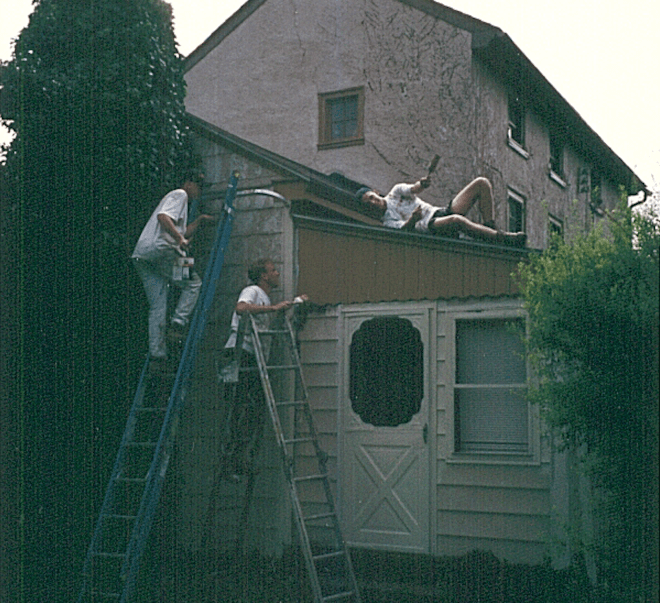
 The ground-breaking technology that made all of this happen back in 1990 was the… ready for this? Telephone. Homeowners called an 800 number to ask for estimates for painting. Because the manager was stuck at home, he was able to check his leads several times a day, calling homeowners back nearly immediately. He scheduled all of his estimates on the same day and back to back, rather than spreading them out. By the end of the summer, the manager who seemed the most limited was able to produce far more painting work than any other manager in his district.
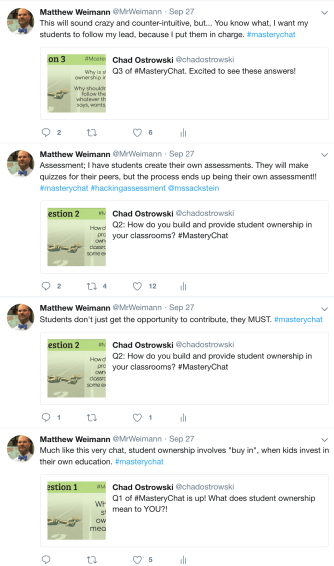

 To be able to critique something, one must have background knowledge. Unfortunately, some teachers focus solely on pouring information into their pupils (




 submit” and “



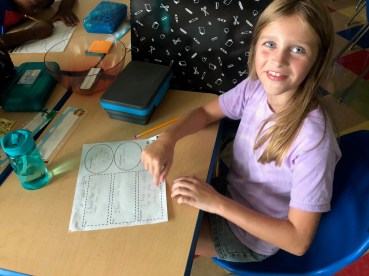 At the beginning of last year I tried telling the students that their pencils were their swords–In this case the pen
 spent every lunch break sharpening pencils. She provided the pencils for pupils whose pencil broke, free of charge. They would simply go over and exchange the writing utensil. I liked this idea, but never implemented it in third grade.
 Grad students asked Donahue (2016) about kids who might take advantage of the pencil producing professor’s liberalism. He explains that if a kid does want to test the teacher, and he/she breaks or loses his/her pencil on purpose, there will come a point, a magic number–fifty, a hundred–at some point the pupil will get it: there will always be a pencil available. And, guess what… I never developed a habit of dropping my ice cream scoop on the ground as a result of being given a new one for free!
 people to behave certain ways (McLeod, 2018). As each level is met, a human being can concentrate on the next. A person isn’t going to worry about safety when he is starving. When pencils are not freely available in the classroom, student psyche could bottom out in the basement of Maslow’s pyramid. How is a kid supposed to feel good (esteem) about himself if he is being controlled by a pencil-nazi who is hoarding the most basic scholastic tool of all time?
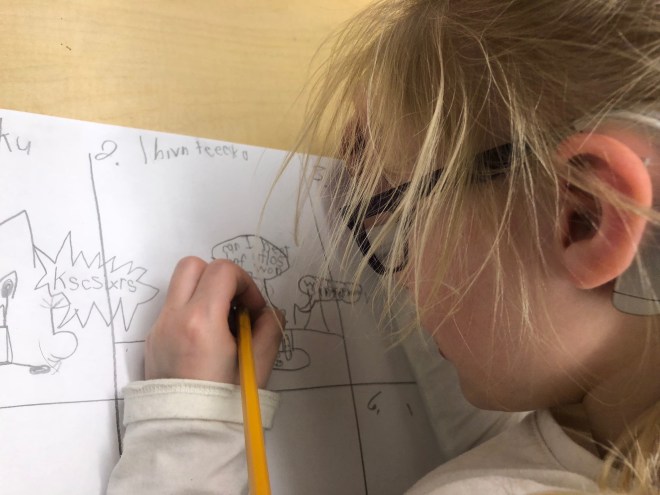 Earlier I equated pencil loss with ice cream spillage, but are kids as fond of pencils as they are of ice cream? Not quite. Replace ice cream with vegetables. A young child doesn’t want to eat his green beans, so he throws them on the floor. Does the parent have the kid get down on his hands and knees to lick the green beans off of the floor? Does the adult send the kid outside to begin tilling a plot of land that will be planted with green beans to be harvested months from now? These scenarios are ridiculous. A responsible grown up simply places more legumes on the child’s plate, explaining and modeling healthy eating. We do this because we want our offspring to grow up to be strong, smart, and live a fulfilled, fun, and productive life.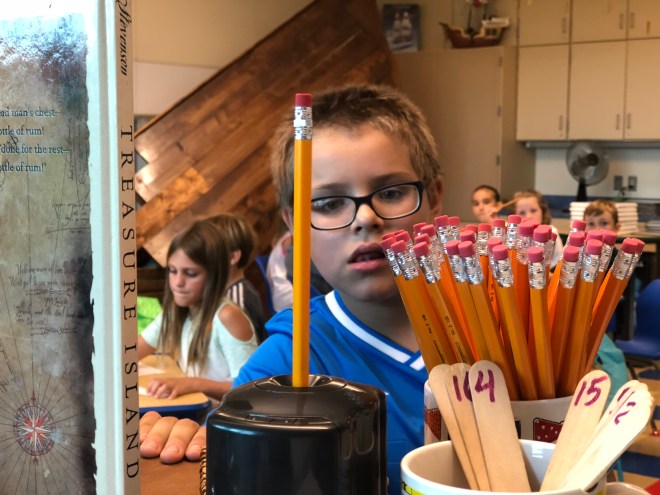



 The Captain of Class