Balderdash: Gamify Vocabulary

We all know that selective word-choice can enrich writing (Academy, 2021). It will lend clarity to a story, deepen emotional attachment to a character, and broaden the understanding of a topic. Contrastingly, misused vocabulary can harm the message of a text. And, weak words will water down its substance. Therefore, building a thorough understanding of a wide array of words will prepare students for increasingly effective communication. As it turns out, I have a game that will make your learners crave vocabulary-building. 

Would you like your students to beg you to learn new robust vocabulary? Try Balderdash.

I call the game “Balderdash.” (There is a board game version, but I’ve never used it. From the description, it seems to contain the gist of what I present here.) The name is unique enough to spark interest and be memorable. It also lends itself to the core of the game; Playing with unknown words. 

I’ve used Balderdash to introduce vocabulary, deepen background knowledge, and explore literature concepts for years.

This is how I introduce the game to my students. I start off by explaining that this is a game of definitions

“How many times have you been reading an entertaining story, and really enjoying yourself; Then you come across a word that trips you up? All of a sudden, you don’t know what is happening. Why are the characters acting so weird? What did you miss? They aren’t always big words, but misinterpreting the meaning of a word can turn a heretofore simple tale on its head (irony in italics;)

“In this game, you will be presented with a word that you probably don’t know. That is okay. You aren’t supposed to know what the word means. If you DO know what it means, or if you think you know what it means, that is okay, too. But, don’t tell anyone. You can earn points by writing down a definition that is really close to accurate.”

Here’s how it works

Sometimes, the game originates organically. In the middle of conversation with my students, I might use a word that they don’t know. Rather than simply telling the Polite Pirates what it means, we break out Balderdash to have fun learning its definition.
  1. Have a list of your students handy.
  2. Hand out index cards or sticky notes. Tell students to keep the papers UNFOLDED. Also, do not write on the cards until instructed. (They must look the same.)
  3. Have your students write their names on the top. Everyone should use pencil, and don’t do anything to your card to make it appear unique. (You will understand why in a minute.)
  4. Next, come up with a word that students will not know. You could begin with “balderdash.” This would make the game that much more memorable! You could use a vocabulary word from a list of words you want the class to learn. You could even flip through the dictionary, looking for tough words.
  5. Write the word on the board, so that everyone spells it correctly. You may want to write down some phonetic tips. I will sometimes explain what part of speech it is; perhaps even a hint. (i.e. This is a noun; and although this game might be named “Balderdash,” that isn’t what it means.)
  6. Tell the students to make up a definition for the word. Explain to them that their peers are going to vote on which definition sounds most likely to be true or accurate. 
  7. While the students are writing their definitions, you look up the true definition of the word. (I don’t recommend relying on your own interpretation. Even if you do understand the word, it is best to deliver the scholarly definition first.) You will need to put the definition into kid-friendly language. Your definition will need to match the ones that students hand in.
  8. Walk around and collect everyone’s index card. I recommend using a bucket or top hat for this. 
  9. Read through the definitions to yourself, making sure that you understand what they say and are able to read them fluidly. You don’t want to supply any “tells” that one is NOT the accurate definition. If there are any that are similar to the actual definition, provide that student a point and remove the definition from the pile. (Reading 2 of the same definitions would let them know they are the true definition.)
  10. Next, place them back into the hat or bucket. Pull one at a time and read it. Do this once through without any voting. 
  11. Then, repeat the process, but after each reading, have students raise their hands if they think it is the correct definition. You can only vote once, and you can’t vote for your own definition. 
  12. Give the pupil who produced the phony definition a point for each vote. Whoever votes for the true definition also gets a point. 
  13. After each round, share who earned the most points and the real definition.

In the same way a serious athlete might take creatine supplements to boost muscle-building ability in the body during intense exercise (Creatine, 2021), using games to increase enthusiasm for definition development can motivate kids to grow their vocabularies. Rather than get fatigued when faced with unknown words in texts, your students will view these as opportunities for growth. 

An athlete takes creatine supplements to prepare their body for doing a little bit extra in each exercise, making the workout that much more beneficial. Balderdash is a reason for collecting large, complex, unfamiliar words, and tucking their meanings into memory banks for future use. Plus, it’s a lot of fun! game

Sources

Academy, E. (2021, November 12). Word Choice in Academic Writing: Tips to Avoid Common Problems. Enago Academy. https://www.enago.com/academy/word-choice-in-academic-writing-tips-to-avoid-common-problems/ 

Balderdash Board Game – the Game Of Twisting Truths. (n.d.). Mattel Shop. https://shop.mattel.com/products/balderdash-cfx43 

Creatine. (2021, February 9). Mayo Clinic. https://www.mayoclinic.org/drugs-supplements-creatine/art-20347591 

This 4th grader got to wear the “Balderdash hat” for our photo as prize for collecting the most tally marks.

Show Your (Math) Work (Part 2)

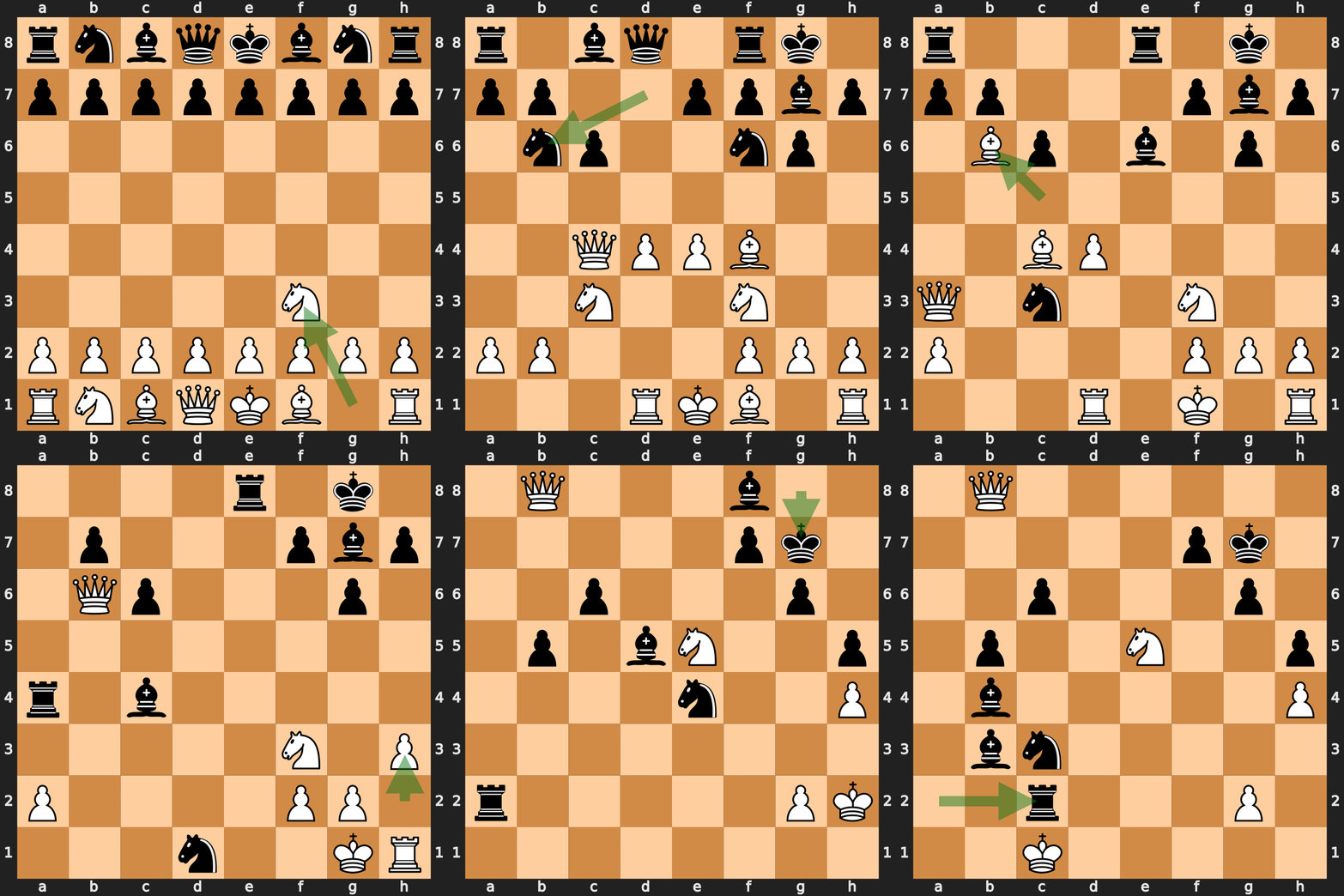
Algebraic notation in chess shows each move that a player makes. Ranks (rows) are notated with numbers, while files (columns) are designated a letter. Thus each of the 64 squares on a chess board has a name, the letter first, followed by the number. For example, the most popular opening in a game of chess is to place a pawn on the square e4. This square is located within the “e” file and on the fourth rank.

Chessgames.com provides the algebraic notation, along with some commentary, for “The Game of the Century.”

In order to show what happened during a chess move players write down not only the square that a piece was moved to, but also what piece was moved and whether something was captured, checked, or checkmated. (There are a couple of other symbols, but these are the major ones.) Abbreviations are used in order to save time. The moves are recorded so that the game can be analyzed and studied afterward. Most chess apps online and on phones will create the notation for you.

The algebraic notation of a chess game looks a lot like code. That’s because it IS! It is a string of commands. If you know how to read it, you could recreate a chess game, move by move. You could plug the code into a computer, as chessgames.com did for “The Game of the Century” between 13 year old Bobby Fischer and International Chess Master Donald Byrne originally played during the Rosenwald Memorial Tournament in New York City, October 17, 1956. 

For several years I have been teaching elementary-age kids (7-11) how to play chess. I’ve run a chess club that meets after school. While I always share information about how to read algebraic notation, I don’t require them to use it during play. I want them to learn the game and have fun. 

As students get better and begin playing in tournaments, however, they will need to learn to use notation. During competitive play, they will be required to write down the code for each move on a piece of paper. Next to their move, they will also write down their opponent’s moves. In this way, they will be able to “view” the game after its completion. Serious players do this to evaluate each move. Which ones were better than others? Where did I or my opponent falter? What was the critical move? What could I have done differently? 


When solving a math problem, it can be valuable to write down some notes. Why? Sometimes you do this to keep short term memory space available. If there are a lot of numbers and a lot of computation is going on, there might be too much to remember in your head. Along the route of figuring out the answer, you write down what you have so far. 

Another reason for taking notes can be showing the steps you took to solve the problem. This might help someone else see a path from beginning to end of the math problem, demonstrating how the answer was achieved. They could “replay” the action of solving the problem by reading the steps taken.

In school, this last “reason” is usually proposed by teachers who want to “see” how you did your work. They say, “Show me your work,” so often that it becomes grating. And, writing down each step of computation can become tedious for a student who just knows the answer. Back in January (2024) I wrote a blog (Part 1) about students communicating their math work creatively. Learning to write down the steps involved in solving a math problem has value, however.

Here are a couple of ideas.

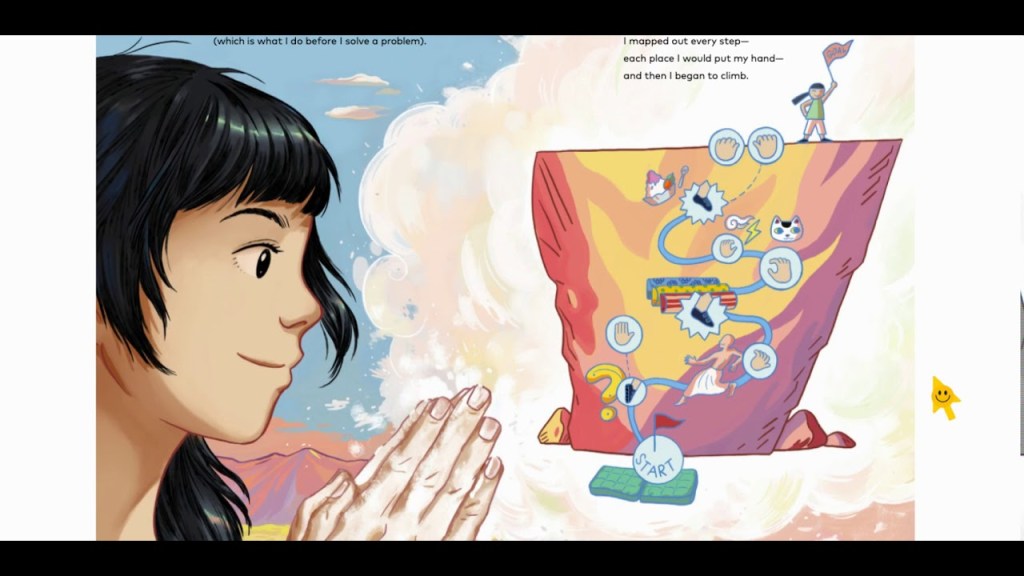
First, instruct students to treat each math problem as though it were a rock-climbing problem. Ashima Shiraishi is a champion of solving problems. She wrote a book about it. “How to Solve a Problem: The Rise (and Falls) of a Rock Climbing Champion” tells the story of 13 year old Ashima figuring out a map that will guide her to the top of Golden Shadow, a V14 boulder in Rocklands, South Africa. The story is an excellent metaphor for not giving up. It also shows how Ashima uses imagery to map out a doable path up the face of a difficult climb. She assigns symbols to the holds and footings that she uses. As she ascends, time after time, for it takes many tries to successfully conquer a difficult problem, she creates a story in her head, using the beneficial symbols (holds), so that she can find her way. The book, illustrated by Yao Xiao, shows (on paper) what Ashima does in her head. 

I often see students erase their math when they have tried a set of steps that did not accurately solve a problem. “Don’t do that,” I tell them. “You could very well make the same mistake again. It’s helpful to see what didn’t work, as well as the correct answer. I (and your math teachers) want to see the journey you took, including the fruitless paths.” 

Second, teachers ought to present problems that are worthy of their students’ struggle. Ashima Shiraishi has an amazing story of being the youngest person to successfully climb very challenging problems. At the age of 14, she was the first woman (and second person ever) in the world to climb a V15 boulder problem. She has crushed youth competitions, winning several years in a row. When she and illustrator Yao Xaio chose a problem to use for the basis of producing a picture book for kids, they decided on one that was very challenging. Ashima fell many times, having to start over at the beginning. The text shares her process of imaging each place that her fingers or toes would hold as something specific. One was the dot at the end of a question mark. Another was the crook of her dad’s elbow. 

What if Ashima used a simple boulder to illustrate her problem-solving skills? One of the most important themes of the short book would be lost; The idea of developing and practicing persistence couldn’t very well be shared if there were no falls. 

Create fewer math problems that are more challenging. Cause students to have to struggle to conquer each one. If they are required to make memories, it will mean more. If you want your students to “show their work,” give them a problem so complicated that they need to write down notes to get all the way through it. 

The math problem should be a challenging chess opponent in a tournament. Your students should have to show each “move,” as they progress through the solution of the problem. 

There will be practice problems. These are like the rock-climbing walls that Ashima climbs to stay in shape and hone her skills. She will climb the same wall over and over. She will challenge herself to complete the climb faster with each ascent. A story may be imagined for the short climb, and it could be repeated in her head a hundred times, giving the climb life and familiarity. 

This is like memorizing an opening for chess. Increasingly good chess players will learn a variety of initial moves that great players have developed over the years. They will memorize these opening moves through many steps, so that they can anticipate and prepare for potential rebuttals. 

In conclusion, if you want your students to show their work, give them something worthy of writing down the steps it took to complete. Teach them how to make the sharing of their math into a story. In the same way that each move in an important chess game is vital to its end, have students think about what they are doing and share the most important parts of the process. You could even have them try to identify the most crucial part(s) of the problem-solving process. With each boulder of a math problem you give them that challenges their minds and they successfully solve, they should develop a hunger for tackling more and more formidable ones in the future. 

The Power of Contrast

You take a photo. They never capture what you see! You want others to identify something in the photo, so you try to edit it. The subject in the photo is dark, so you lighten the image. This makes the whole thing brighter. It is still difficult to make out the significant features that separate your subject from others. 

Contrast 

“Contrast in photography is the visual ratio of different tones in an image. This difference is what creates the textures, highlights, shadows, colors and clarity in a photograph” (Shramenko, 2017). Contrast is what sharpens the features. When you increase the contrast, you make lines darker and lighten the spaces around them. They stand out more. 

Contrast “means more than just a play of light and shadows. It’s the difference between the tones, colors, and textures of a photo. This technique can convey interesting and deep stories in the frame in the best way” (Shramenko, 2017).

Contrast is found in literature, as well. It’s what gives stories their life. It’s the spark that animates Doctor Frankenstein’s assembly of dead flesh, and turns it into a monster. Contrast energizes narrative. The dryness of Oklahoma, contrasted with the imagined juicy grapes of California, spurs the Joads to sell nearly everything and hit the road. Contrast shows action. It identifies what to pay attention to. There are many things happening in any given text, but the friction between two opposites will heat-up a story. The conflict between light and dark, colorful and colorless, strong and weak, dull and exciting, good and evil, rich and poor commands attention! (Literary Devices, 2013)

I’ve been reading a smart and funny book with my fifth grade gifted students; “The Strange Case of Origami Yoda” (Angleberger, 2010). In it, a seemingly half-witted 6th grade boy provides what usually turns out to be incredibly wise advice, albeit through a weird, hand-made finger puppet and silly voice. The boy’s name is Dwight. His finger puppet is Origami Yoda.

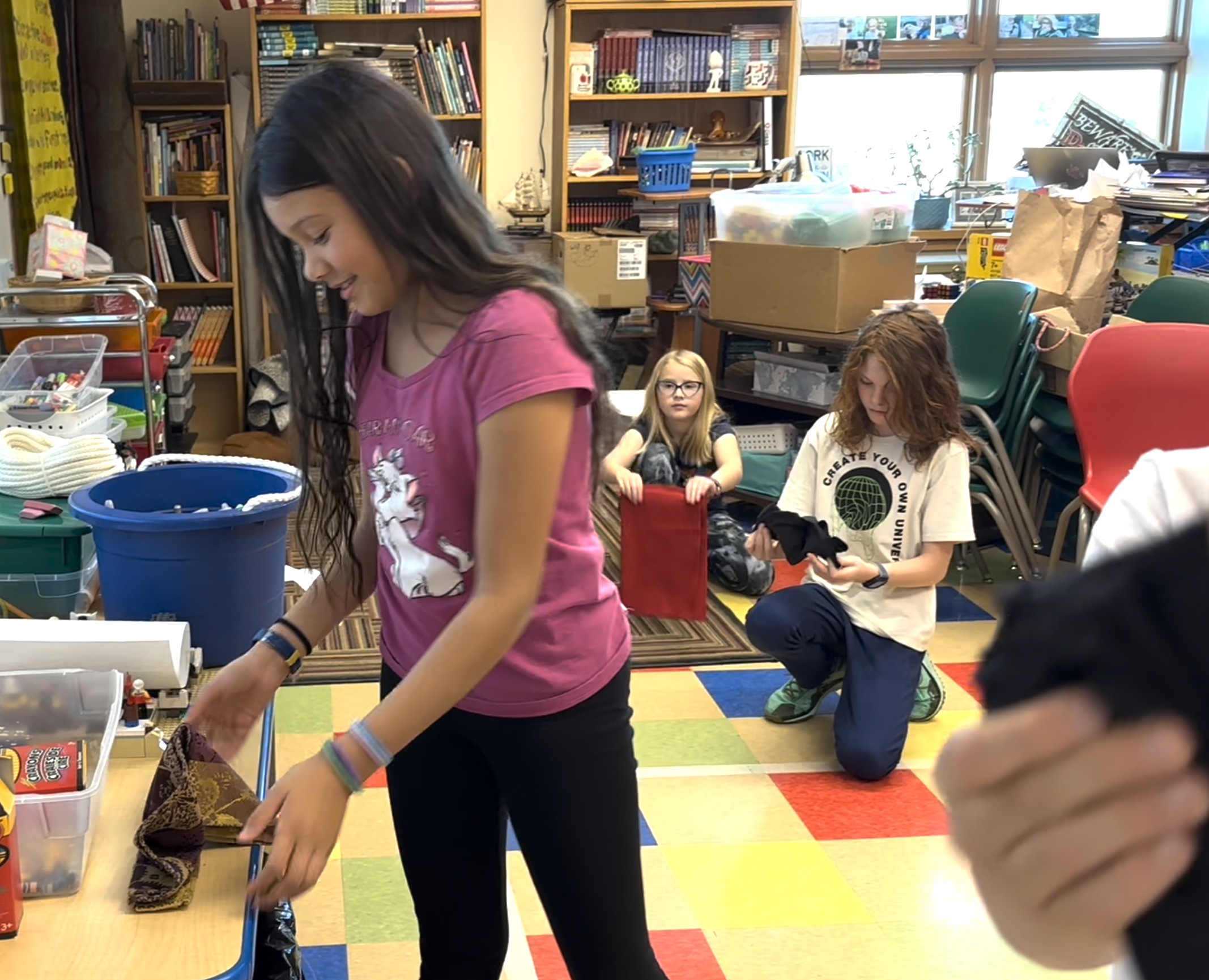
5th Graders apply their origami skills to napkin-folding.

In addition to learning some of our own origami, I had my students research the history of the ancient art form. I didn’t know this before, but the art of paper folding used to be limited to the wealthy, due to the high price of washi (origami) paper (Georgia Tech, n.d.). It was used in religious rituals and formal ceremonies. Eventually, as paper became more affordable, origami became an increasingly available activity. Still, people needed the time, intellect, and patience to learn the art. 

This got me thinking about Dwight and his origami finger puppet. At the beginning of the story, it is explained that Dwight made up his Yoda origami on his own. He took one of the most common materials from the school setting and turned it into something extraordinary. No one else in the text produces any artwork, let alone origami! And, Dwight doesn’t stop with a paper figure; He places it on his finger and gives it life. 

Dwight is the opposite of popular, but through Origami Yoda he is extremely influential, and therefore powerful. Many students who wouldn’t give Dwight the time of day want to talk to Origami Yoda. They present questions and respect Yoda’s answers. The same characters look down on Dwight as king dweeb. 

Toward the end of the book, an adversarial character (Harvey) makes his own Origami Yoda. In contrast to Dwight’s, Harvey’s is well-made. That is because Harvey, unlike Dwight, looked up professional directions online. Supposedly, Harvey’s imitation of Yoda’s voice, from the Starwars movies, is a better imitation, too. But, Dwight’s Yoda is truer to the spirit of Yoda. Dwight’s Yoda uses the force… the force of creativity and originality. Harvey’s is more closely related to the clone-like, clean, black and white storm troopers from the movie series than the swampy, wrinkly, green, old creature of the planet Dagobah! 

In addition to this obvious contrast between two characters and their crafts, there lies several more subtle contrasts. Harvey constantly pushes his opinions onto everyone else, whereas Dwight has people approach him, imploring his. Dwight does not seem to try to get others to believe in his Yoda. Harvey needs to kill everyone’s belief in the finger puppet. While Harvey narcissistically uses his Yoda to hurt Dwight, the true Origami Yoda is primarily concerned with helping people. Harvey freely admits to giving his origami voice, but Dwight pretends that it isn’t him talking; Origami Yoda is a separate entity from the person whose finger he rests. The differences go on and on! 

As I reflected on all of the subtle and overt contrasts within the story, the idea of origami being a pastime of the wealthy contrasting with Dwight’s social poverty hit me. I thought about contrasting elements of everyday life. Why are holidays special? They are “holy days,” set apart from others. They are only as special as we make them. For some, all we do is acknowledge that it is a special day; Flag Day. Others demand time off, arts and crafts, and even parades! A meal is made special when we cook food we normally wouldn’t, or too much food, or invite special guests to share it with us. Do you use unique dinnerware to serve the food? (As I write this, Thanksgiving is right around the corner!) 

When I was in college, I worked at a fine-dining restaurant. Among other things, we folded white cloth napkins into fans for every place setting. When patrons left the table, we would replace napkins with folded, clean cloths. It was that kind of establishment. 

I was remembering this art of napkin folding while researching origami. I brought some cloth napkins into the classroom to show students how to fold them into fans, so that they could dress up their next holiday meal. 

As I folded the napkins to display on a cheap, plastic table for my students, it brought to mind a picnic lunch in a park. What makes that kind of activity so romantic? It is the contrast between eating a well-prepared meal, complete with plates, silverware, folded napkins, and drinks on the ground with nothing but a blanket shielding you from dirt, insects, and nature. The meal is out of place. You are bringing two otherwise foreign entities together. That is romantic. The greater the contrast between the elements, the more romantic. 

Explanation

When you are attempting to bond two surfaces together, it is often recommended that you rough up one of or both surfaces before applying adhesive. Why? This is because when you “unsmooth” a surface, you provide more surface space for the adhesive to attach. You may not be able to see them, but tiny ridges are produced all over the surface; microscopic mountains and valleys that almost double how much area there is for the bonding agent to grab onto. 

This is a metaphor for what happens when authors create contrast between their characters, settings, conflicts, eras, etc. By roughing up the character with differing, even exaggerated traits, appearance, name, hobbies/interests, the author helps the character stick in the reader’s mind. It deepens the essence of the character. The more contrast, the more powerful this bond becomes. 

Warning

Of course, you must make sure that there are enough common elements for a reader to cognitively grab onto. If you rough up a surface to the point that the thing you are gluing has been sanded away, there won’t be any point in gluing. Likewise, if you make your character or setting so different that no one can even imagine it; as in it does not have enough things in common with what readers are familiar with; they can’t mentally grab hold of the idea. It will slip through their cognitive fingers and be lost. Provide enough connections to real life; experienced life; but cut deep lines where the character looks different from everyone else in one or two features, walks with a limp, smells like formaldehyde, snaps his fingers constantly, greets every single person with a high five, wears flip flops even in the snow, has an affinity for bugs, and so on. 

The napkin folding that I brought to the classroom was connected to origami in that it was folding, and it produced a work of art. The folded napkin is unnecessary. And, you are more likely to see it in a fancy place. It was different from origami in that the napkins do not hold their shape the way paper does. But, because of this you can easily fold and refold the napkin without a crease affecting it. Paper is plentiful, but a cloth napkin is more rare. There is a balance between contrast and familiarity.

Students ought to remember the napkin-folding experience (it will stick) because it was similar to creating origami, and it will be extra memorable (the bond will be stronger) because folding napkins during school was a weird activity. 

Dear Students,

And now, having read this lengthy explanation for why I brought cloth napkins to school and taught you how to fold them into fancy fans for food decor, I hope I have provided the adhesive that will make this activity not only stick in your mind, but become useful as a tool for teaching the power of contrast. Good luck creating just the right amount of it in your writing.   

Sources

Angleberger, T. (2010). The strange case of Origami Yoda . Amulet Books.

Georgia Tech. (n.d.). Kinetic Joy: Basic Principles of Paper Engineering. Robert C. Williams Museum of Papermaking. https://paper.gatech.edu/kinetic-joy/history-origami  

Literary Devices. (2013). Contrast. Retrieved November 16, 2023, from https://literarydevices.net/contrast/ 

Shramenko, S. (2017, May 29). Understanding Contrast in Photography. Skylum. https://skylum.com/blog/understanding-contrast-in-photography

Wrestling With the Beginning

When preparing to bring the original “Scarlet’s Superpower” from 13 pages to 26, I was thinking of ways to beef-up the story. While I liked the simple story line, the text needed a little more meat to it. Should I develop characters more? Could we include additional ways that her superpower was utilized? My favorite idea was to show ways in which Scarlet’s ability to shut out noise by removing her coils could benefit her. 

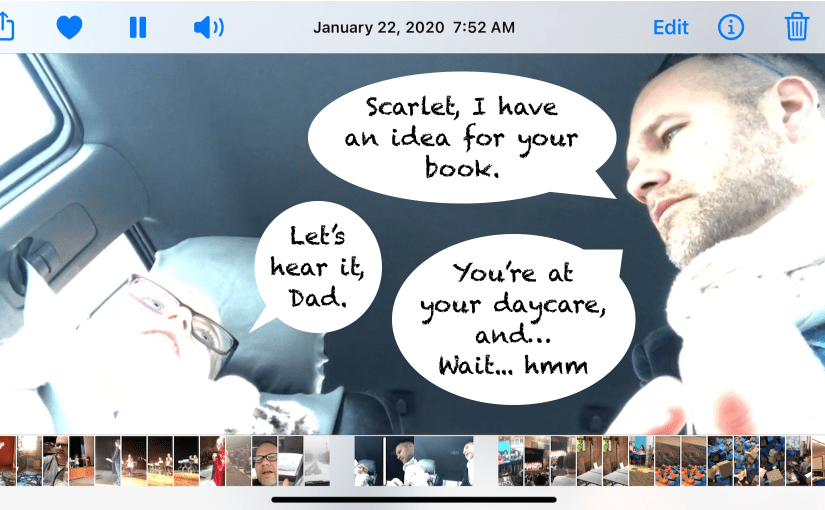
One morning, several years ago, I was driving Scarlet to her before school daycare when an idea hit me: What if Scarlet used her superpower to avoid hearing bullies belittling her? We could begin the book with her wanting to take a nap. She could query about sleeping on a mat in the infant room of her daycare, at the end of the first day of school. Older kids; kids Scarlet’s age; could see and hear this, and they would tease, “Look at Scarlet. What a baby.” 

Scarlet would NOT hear this teasing, though. She would have already removed her coils. She can’t hear anything–nothing–when she takes her coils off of her head. So, exhausted Scarlet lies down, innocent and thankful for peace and quiet. 

The teacher, on the other hand, hears these older kids teasing Scarlet. Because the facility has a “Zero Tolerance” (no teasing) policy, the teacher reports the miscreants to the person in charge of the daycare. They get in trouble. 

I’m not sure if Scarlet finds out about the bullying behavior or not, but by the end of the book she helps these kids, using her superpower. They admire both her ability to forgive and the power to NOT hear. 

Here are a couple of the problems with this beginning.

Scarlet’s mom and I looked at tons of daycare facilities to determine which would be best for our only child. In addition to staffing, cleanliness, and the usual concerns, we had to consider how noisy the place was. Luckily, our area had many to choose from.

While I like using more than one setting for the story, having Scarlet attend a daycare could paint her as privileged; Her family is wealthy enough to send her there. 

I could explain that Mommy and Daddy make just barely enough money to have her attend, and need her to, so that they can work the jobs that pay for her attendance, basically breaking even. This circumstance would explain away the idea of private child care being a symbol of wealth; It is a shackle (Fetters, 2020). A surprising 57% of the working population of America pay more than $10,000 a year for child care (30+ Essential US Child Care Statistics [2022]: Availability, Costs, and Trends – Zippia, n.d.). 

Additionally, Scarlet attending a daycare categorizes her as lucky. According to 30+ Essential US Child Care Statistics [2022]: Availability, Costs, and Trends – Zippia, “51% of Americans live in communities classified as child care deserts“ (n.d.). I do not want someone to come across “Scarlet’s Superpower,” and think to themselves, what an entitled, lucky, rich brat

Obviously, I am totally overthinking the situation. Some kids go to daycare. Some don’t. The kids who don’t go to daycare know about others who do. Is the situation relatable? That is the question. Can readers visualize kids making fun of Scarlet for wanting to take a nap? I think so.

Sources:

30+ Essential US Child Care Statistics [2022]: Availability, Costs, And Trends – Zippia. (n.d.). 30+ Essential US Child Care Statistics [2022]: Availability, Costs, and Trends – Zippia. Retrieved January 10, 2023, from https://www.zippia.com/advice/us-child-care-availability-statistics/

Fetters, A. (2020, January 18). The Working-to-Afford-Child-Care Conundrum. Working to Afford Child Care so You Can Work – the Atlantic. Retrieved January 10, 2023, from https://www.theatlantic.com/family/archive/2020/01/working-afford-child-care-so-you-can-work/605206/

U.S. Department of Education, National Center for Education Statistics. (2021). Early Childhood Program Participation: 2019 (NCES 2020-075REV), Table 1.

License to Poetry


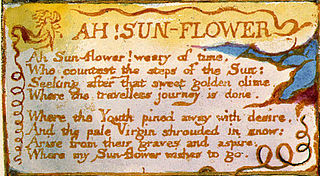
Sunflower
William Blake’s Ah! Sun-Flower: Poem Analysis. (n.d.). Retrieved from https://schoolworkhelper.net/william-blakes-ah-sun-flower-poem-analysis/

In my youth poetry was as elusive to me as calculus. It seemed unnecessarily complex and celebrated by the elite of literature. I wasn’t fond of reading in general back then. I definitely wasn’t going to champion wrestling over the hidden meaning of a poem.


And, really, if you want us to know that the sunflower symbolizes the afterlife, William Blake, just say so! Are poets trying to be annoying? In the same way no one imagines ever actually using calculus, poetry seemed worthless to me.

Songs_of_Innocence_and_of_Experience,_copy_AA,_1826_(The_Fitzwilliam_Museum)_object_43_My_Pretty_Rose_Tree_(cropped).jpgThen I became an elementary teacher. Poems are everywhere! Teachers begin the day with them. They are read on the morning announcements. Magazines end with them. Children’s literature is littered with them. Come to find out, some of my favorite authors celebrate poetry throughout their texts. Roald Dahl’s novels are packed with poetry. How did I never see this?
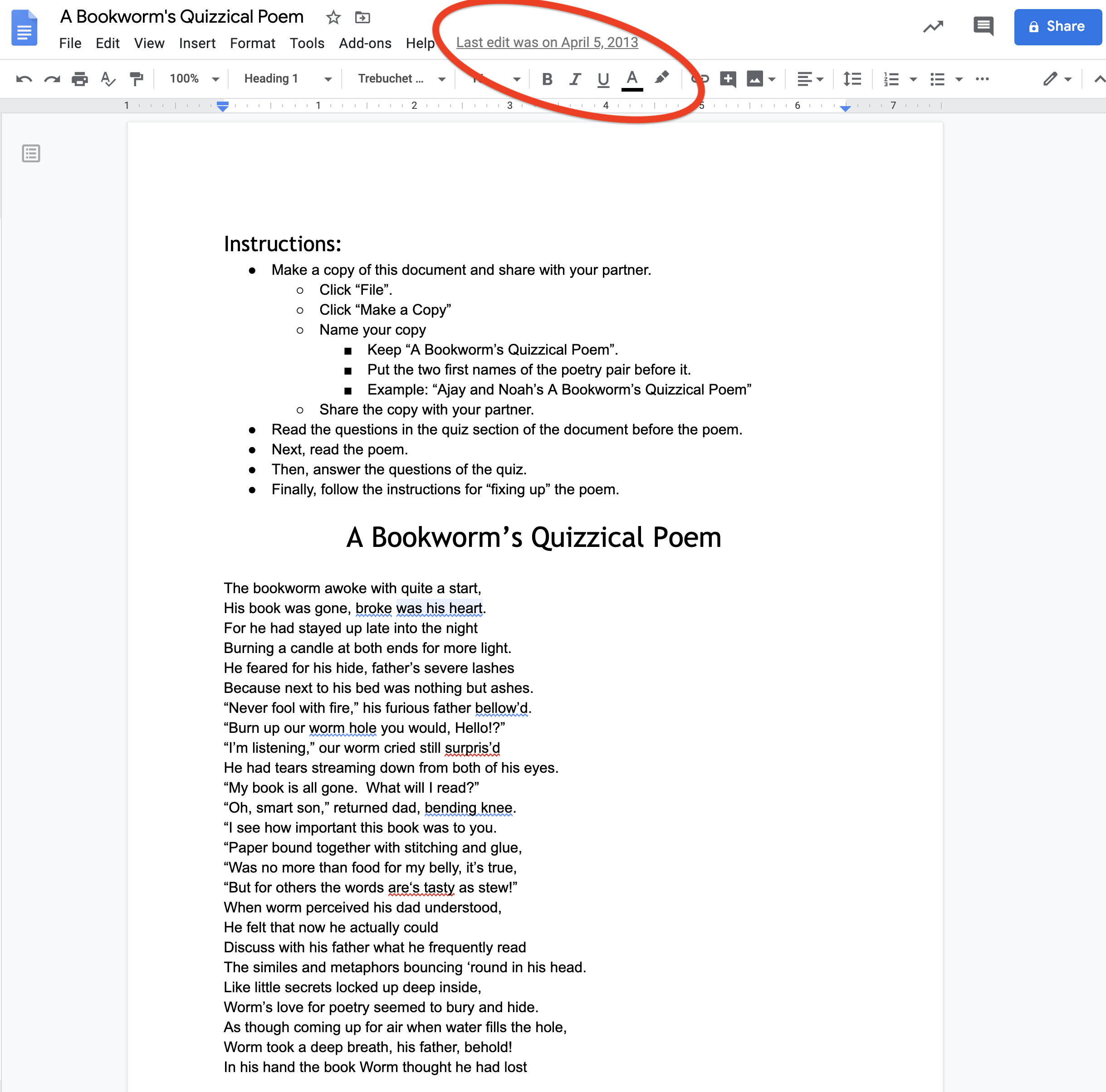
 

Screen Shot 2020-05-05 at 11.29.41 AM
Searching my Google drive revealed this poem I wrote in 2013!

Beyond the fact that I wouldn’t be escaping poetry, two things happened. I realized that this was a weakness. If I were a musician, I was playing rock and roll, ignoring the tendon of blues music that connected the muscle of contemporary privilege culture to the soul of bone-crushing hardship. Disregarding poetry would leave my students malnourished in the area of literary arts. The second realization I discovered was how interesting poetry can be. Come to find out it was fun to read and surprisingly easy to write!


I will say that before delving into this topic, I had to let go of the idea that only smart people can understand or read poetry. The fact that I might not “get it,” and would therefore feel dumb was holding me back from reading poetry. The concept that if I couldn’t write great poetry it would reveal a deficient intellect had to be released. Had I been defensively shielding myself from feelings of inferiority by purposefully ignoring this artful literature? Coming to grips with this possibility was the key for unlocking a love of poetry. 

Screen Shot 2020-05-05 at 11.11.28 AM
The librarian pulled a ton of poetry books for kids to hunt the styles after learning about them.

Screen Shot 2020-05-05 at 11.15.01 AM
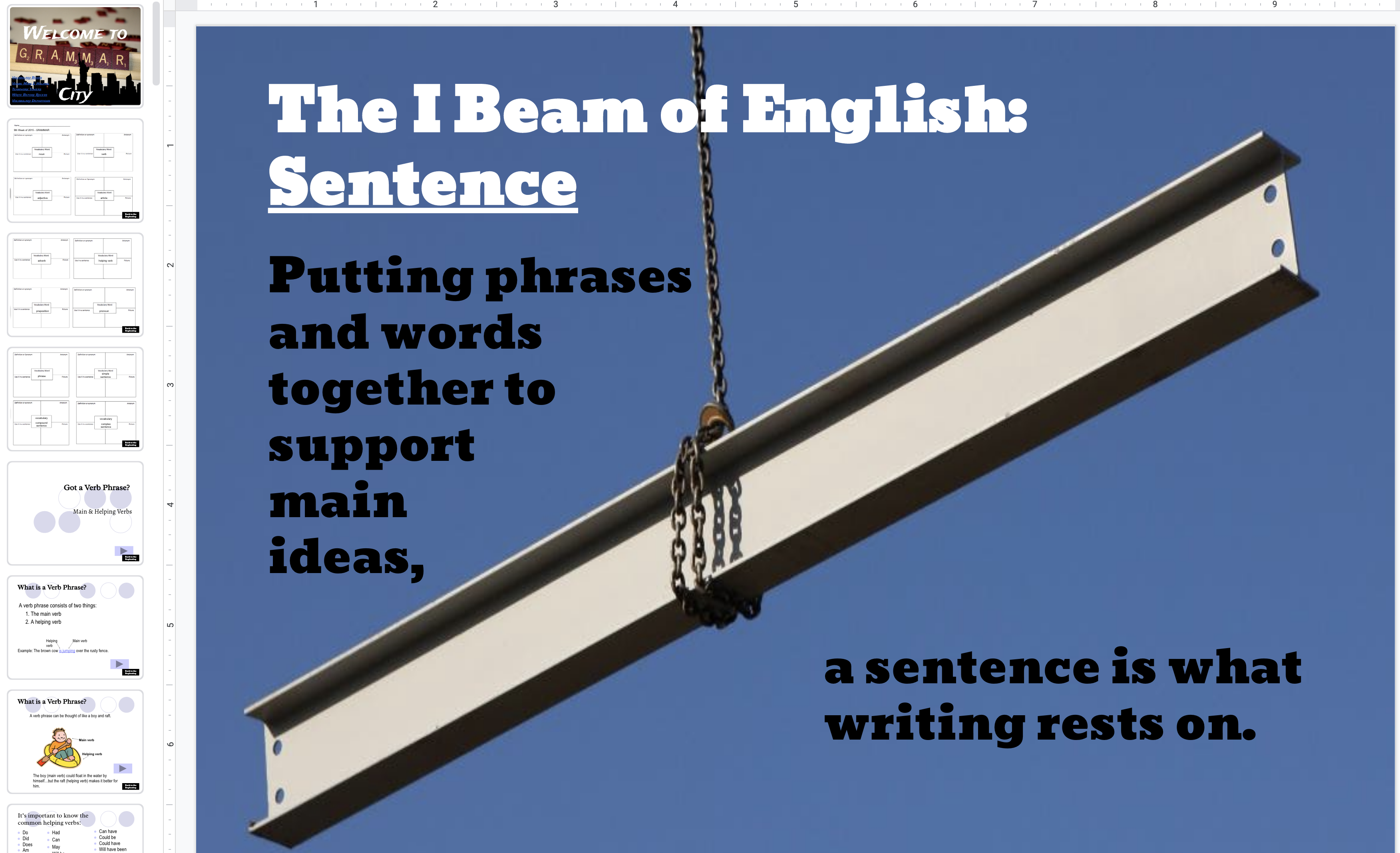
These screenshots show comments between the librarian and I in 2014.

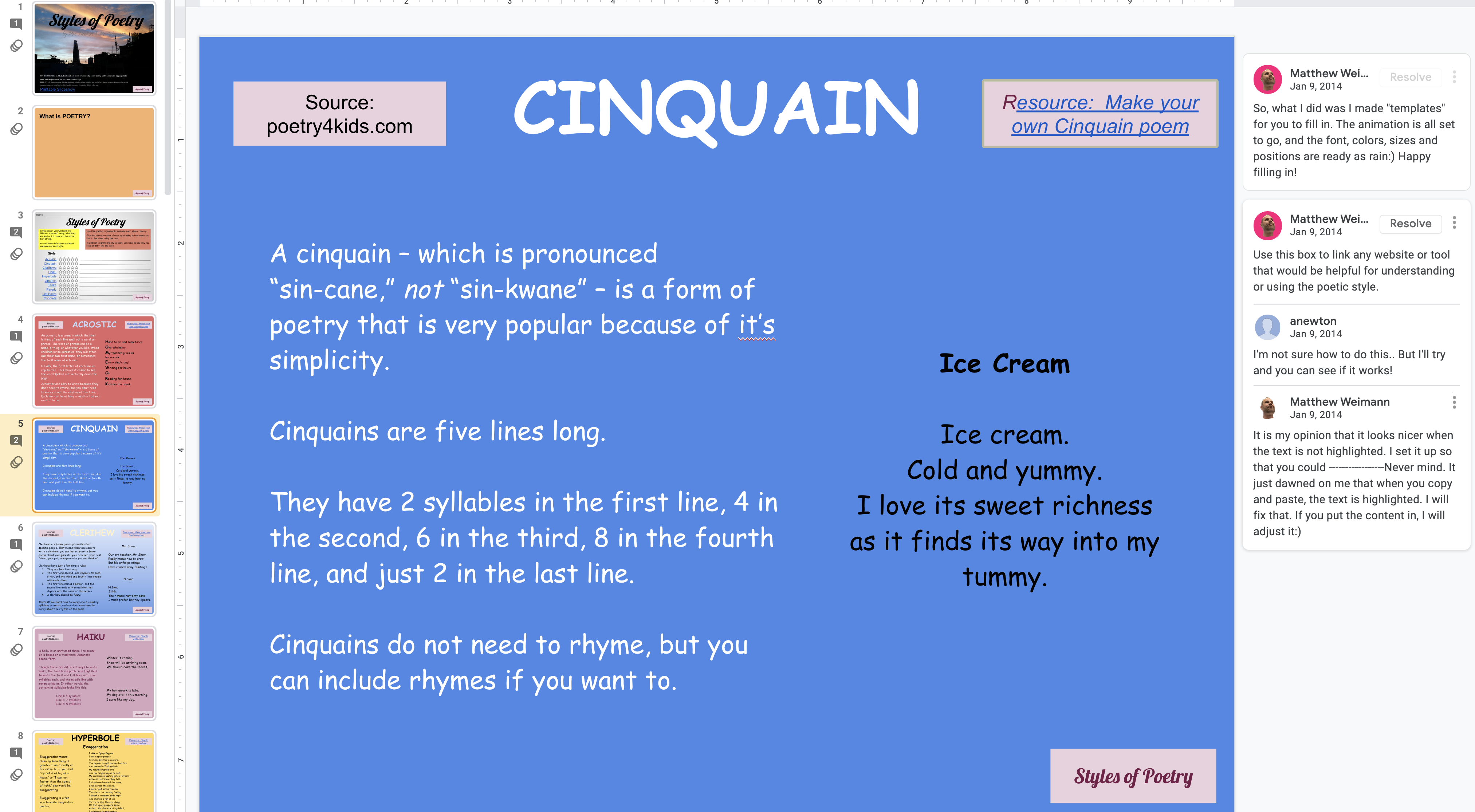
The first thing I did was prepare to teach the subject that I knew precious little about. I find that teaching helps me learn. I shared this idea with my school librarian, and the two of us planned to collaborate on a fun project of teaching several styles of poetry to my class. I convinced the librarian to use Google slides to make a slideshow that we could both add information to simultaneously and from any device. She hadn’t used this tool before. Sharing the same love of learning, my librarian jumped right in to figuring out this great collaboration tool.

Screen Shot 2020-05-05 at 11.07.27 AM
Link to Styles of Poetry slideshow for anyone interested to use, copy, and share

I learned poetry. The librarian learned Google slides. And, together we developed an exciting and fun interactive lesson that I still use to this day! Students are given a graphic organizer that has the names of the styles of poetry that they are about to learn on one side, five empty stars next to the name, and lines for writing. As they learn about the styles, they rate how they like them. In addition to coloring in stars, students are to write down a reason as to why they like or dislike  a style. I guide them through this activity, sharing some of my own opinions. We explore examples of the poetry, and even try writing some of our own. 


Screen Shot 2020-05-05 at 12.18.18 PM.png
Blog post “Poetry is Classy” has a poem (“Spelling Story”) about the homonym spell. It teaches the importance of spelling while demonstrating poetry’s liberty for misspelling. 

I by no means consider myself an expert on poetry. I have not read very much of it. The main change is that I am not afraid of it anymore. I’ve even tried writing some.

It helps that my audience is eight and nine-year-olds! By penning my own poetry and sharing it with my class, I am modeling giving it a try, even if you’re not good at it.


Not only that, but it is truly fun. One of the things that I like about poetry is the ability to break the rules. Like many things, it is important to know the rules, before breaking them. And then you don’t destroy grammar as much as bend it. My third graders are still a little young to truly understand “poetic license,” but they get the idea of bending rules. That’s for sure!


Screen Shot 2020-05-05 at 1.08.34 PM
I devised this “Grammar City” two week lesson in 2015, making metaphors of constructing buildings to symbolize the structure inherent in writing.

How do you share poetry? Why do you teach it? Why do you think poetry is important?


Inspired Writing With Kidblog

What’s the best writing activity you’ve ever done with your class? Have you ever tricked your students into wanting to write a ton? How’d you do it? What do you use to inspire creative writing?

Screen Shot 2020-04-04 at 6.57.23 AM.png
I’ve never witnessed more passionate writing before or since.

The most entertaining writing I ever witnessed my students perform came as a spur of the moment activity. Completely unplanned, an explosion of blogging happened in my class, thanks to Kidblog and creativity. 

There are so many reasons that I love teaching third grade! One is that this is oftentimes the last year that personification is more than just a literary element. Leprechauns actually hide gold. There is a Tooth-fairy; “How else do you explain the money under my pillow–and, my tooth was gone!” I can get away with using puppets. Santa totally has a list, and he sends elves to check on things immediately after Thanksgiving.

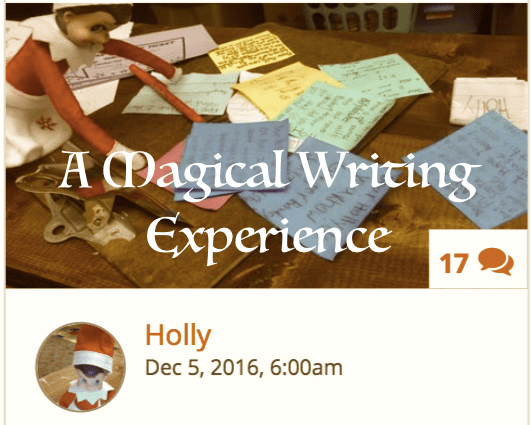
Screen Shot 2020-04-04 at 7.18.40 PM.pngHolly is my classroom’s Elf on the Shelf. She appears every year on the first day of school after Thanksgiving. Most students know the rules already. Many have their own elf at home. Each year’s students behaves differently. One year the Polite Pirates (my students) absolutely fell in love with Holly! 

Throughout the day, while I was trying to teach, students were writing notes to Holly. They knew they couldn’t touch her, so they snuck the notes as close as they dared. There was an impressive pile at the end of the day.

What did I do with all of these notes? The tiny papers were full of love, teeming with curiosity, and fueled by Christmas magic. I brought them home, and Holly began a Kidblog profile within our classroom account. 

At 5AM Tuesday morning she began to type. She shared good tidings from Santa, whom she had visited during the night, as she does every evening between Thanksgiving and Christmas. Then she jumped right into thanking the Polite Pirates for all of their enthusiastic writing to her and began answering their questions.

IMG_6445
By making blogs “Public” parents and others without accounts can access Kidblog writing.

I don’t know how she did it, because you have to have a teacher profile to make your blogs in Kidblog “public”. Holly must have used some Christmas magic in order to foster faster reading of her blog. The students didn’t even have to log into their accounts before reading Holly’s message. 

The class had already been using Kidblog, so they were actively checking to see if friends had left comments when they found Holly’s new blog. Before morning announcements began the room was already a buzz with imaginative play. 

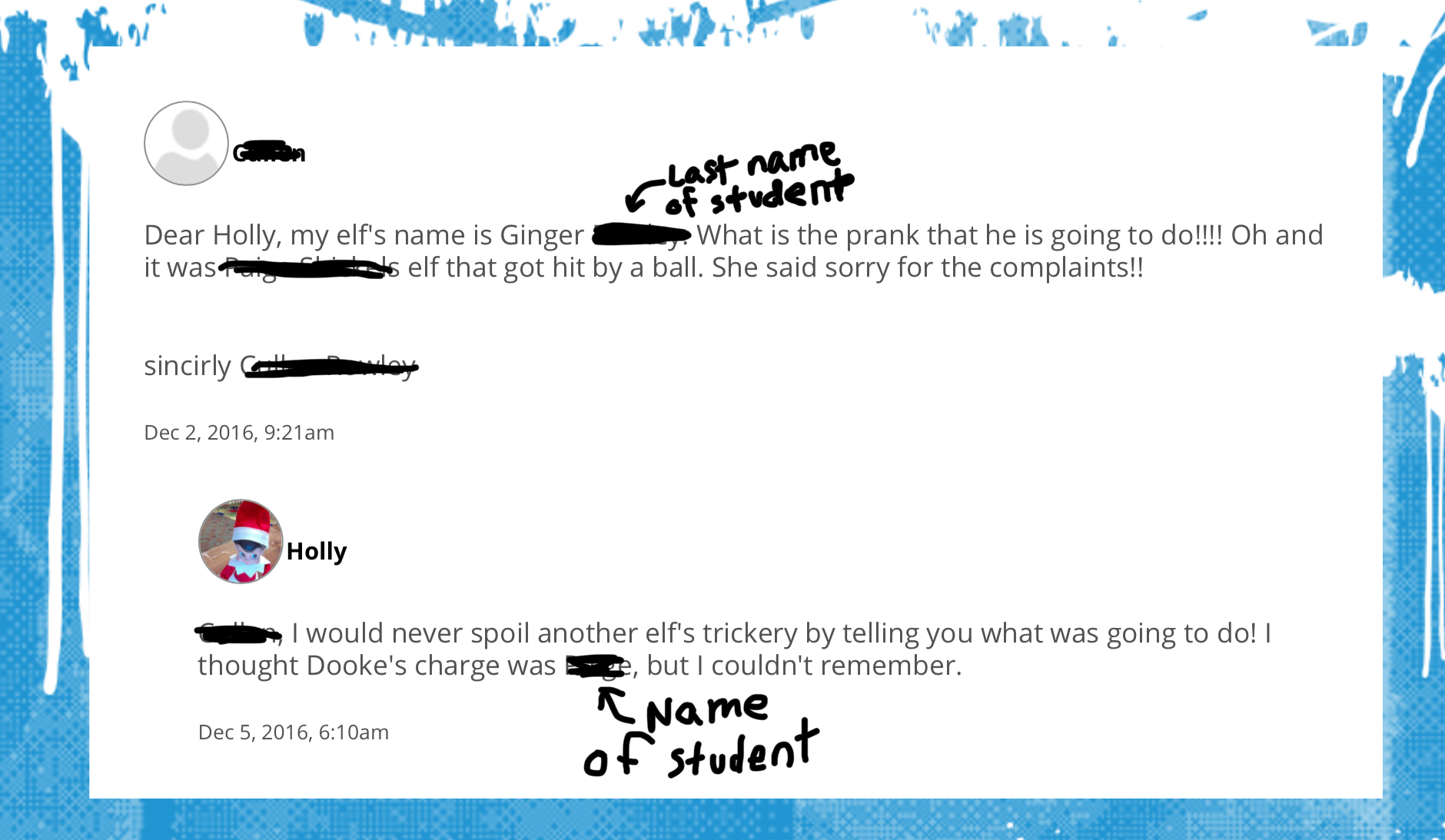
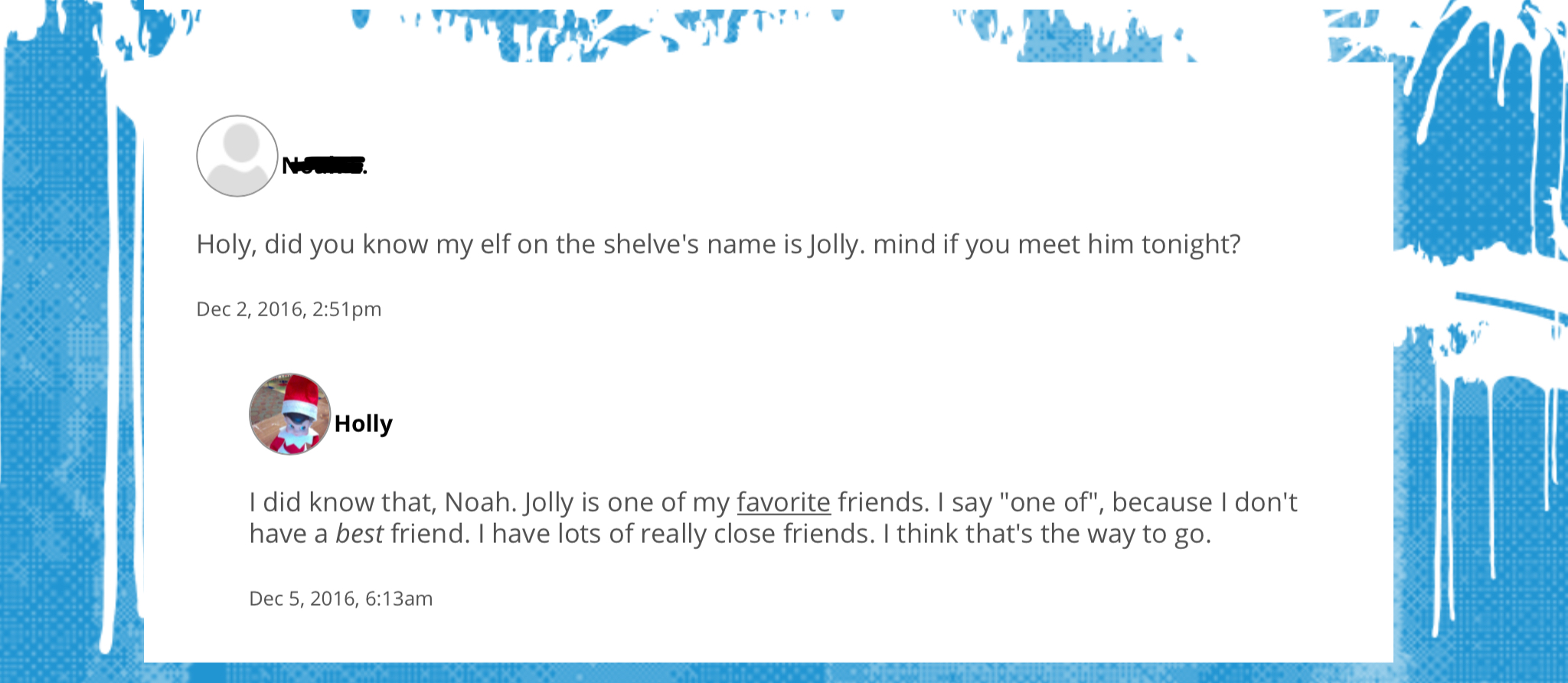
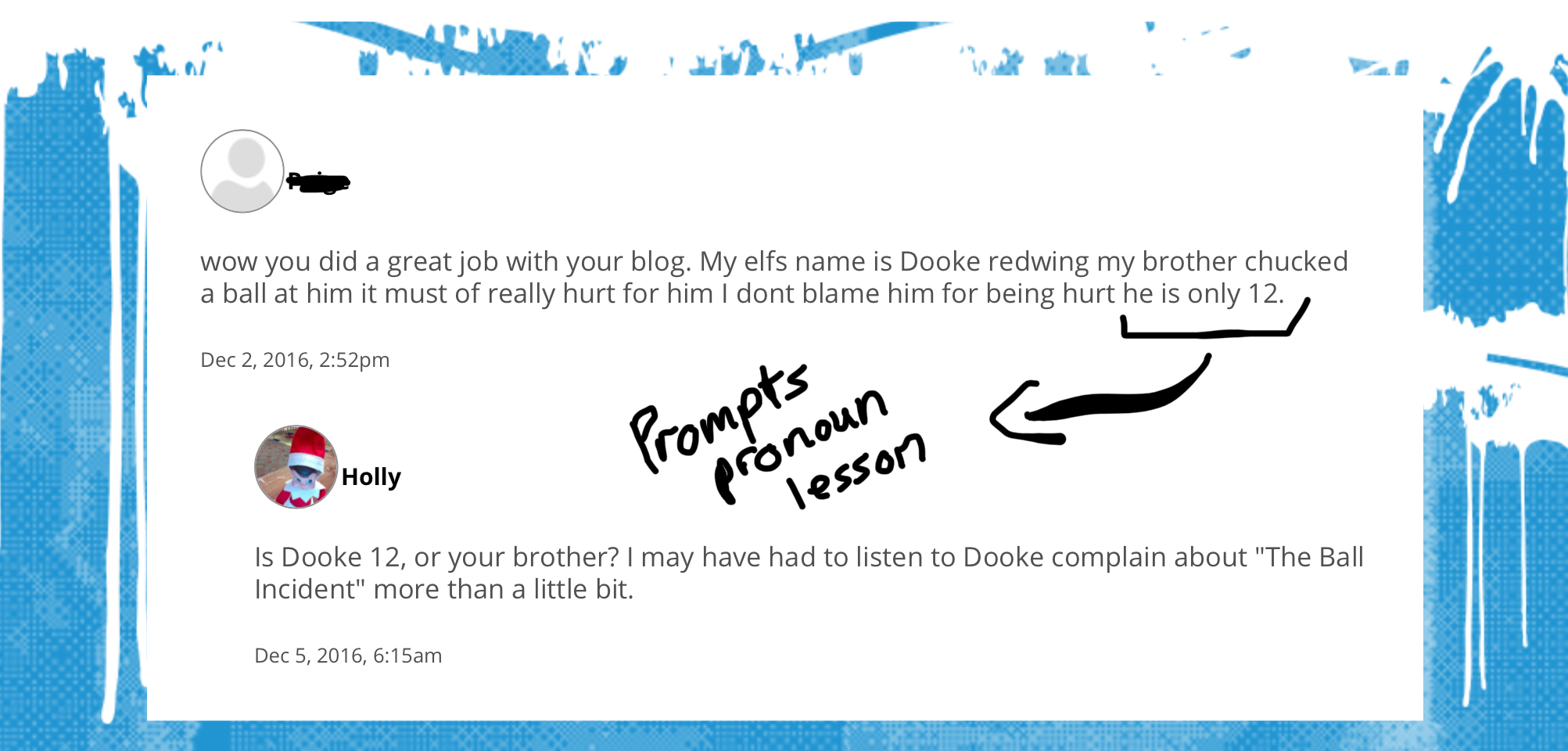
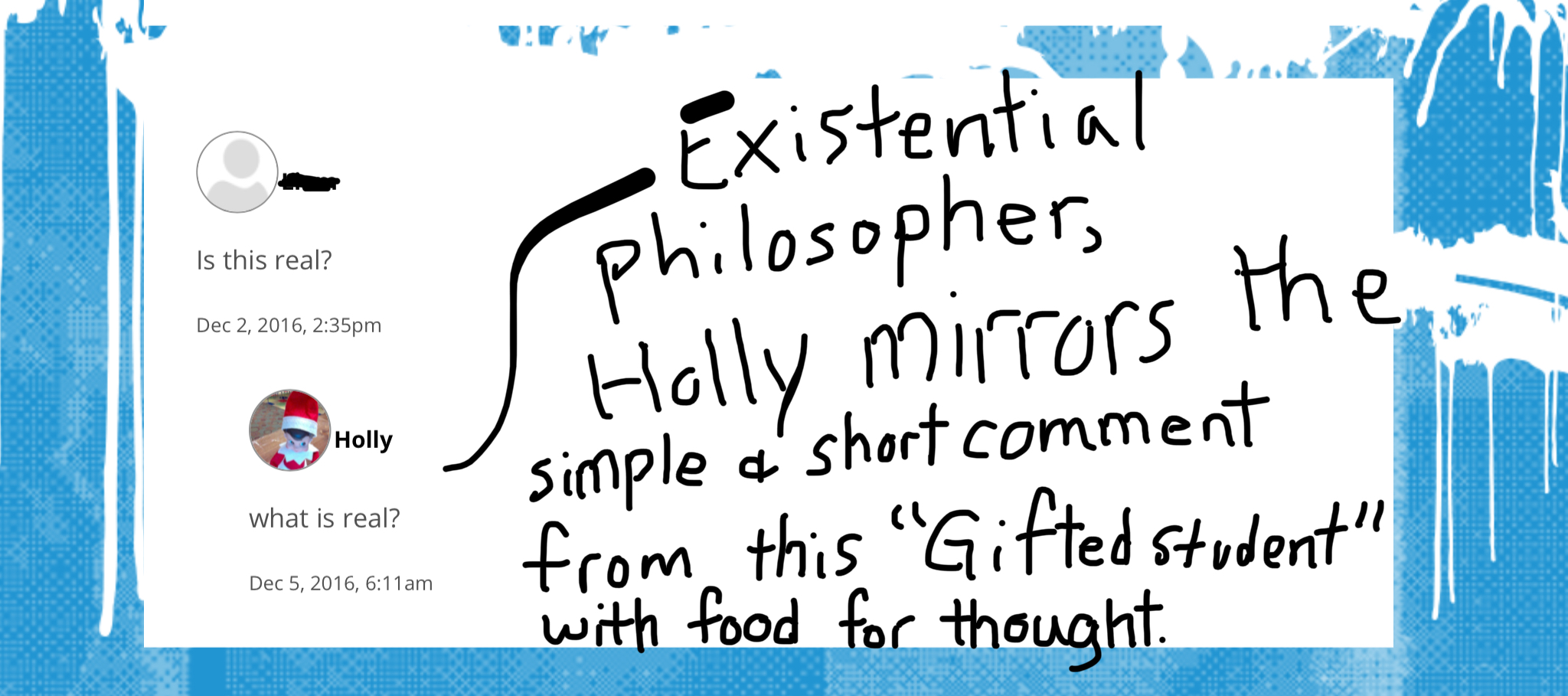
All in all, Holly wrote only nine blogs, but she replied to hundreds of comments! The variety of student writing was interesting. Some students wrote lengthy diary-style entries from home. Others had to jump right into their kidblog accounts right then and there to ask Holly, “How’d you do it? Are you real?” among other pertinent questions. Holly tended to reward students’ writing by mirroring their compositions with a similar amount of text, thought, and imagination. She was classy, creative, communicative, and caring. 

IMG_6439.jpg
Holly modeled friendship, as she became the students’ friend.

IMG_6442.jpg
Holly taught the students how to be friends.

IMG_6443.jpg
At times impromptu grammar lessons were shared.

IMG_6444.jpg
Holly took on the role of listening ear for some journaling writers.

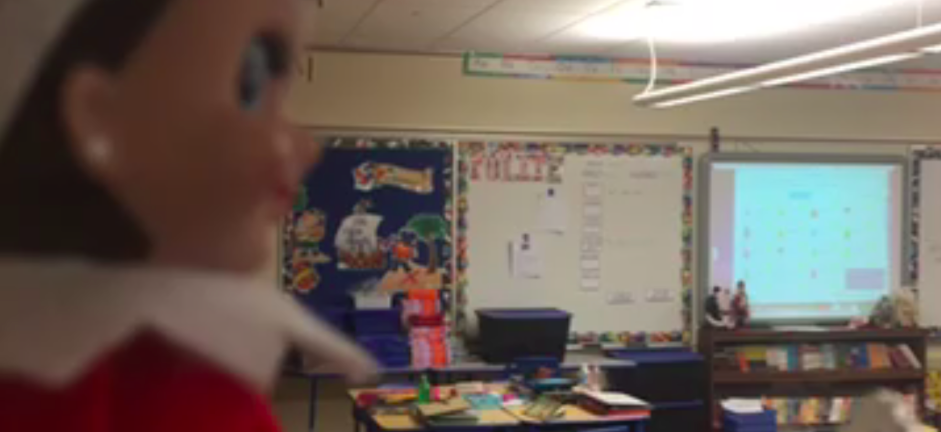
In addition to her writing, Holly enjoyed taking pictures of her hiding spots. She’d leave clues in the header of her blogs as to where she was camped out for the day. 

Screen Shot 2020-04-04 at 7.38.49 PM.png
Viewing the classroom from an alternative perspective, Holly taught the Polite Pirates empathy.

The International Society for Technology in Education (ISTE) sub-standard 3.A reads, “Create experiences for learners to make positive, socially responsible contributions and exhibit empathetic behavior online that build relationships and community.” This falls under the category of Citizen. Not only did the Polite Pirates welcome Holly into the classroom as a legit member of the crew, but Holly helped eight and nine-year-olds see life from a different angle… It was new every day, in fact, whether she blogged or not! Also, Holly’s positive relationships with the shelf-elves of the students, modeled through her commenting on Polite Pirate inquiries, were lessons in themselves. 

Boys beg Holly to blog.png
A passion for writing comes from passionate writing.

When Christmas vacation took Holly from us, the joy of winter break was bitter sweet. I don’t think I’ve ever witnessed more passionate writing before or since. What have you used to inspire imaginative writing?

IMG_6441.jpg
This was a really fun and exciting teaching experience.


Problematic Writing

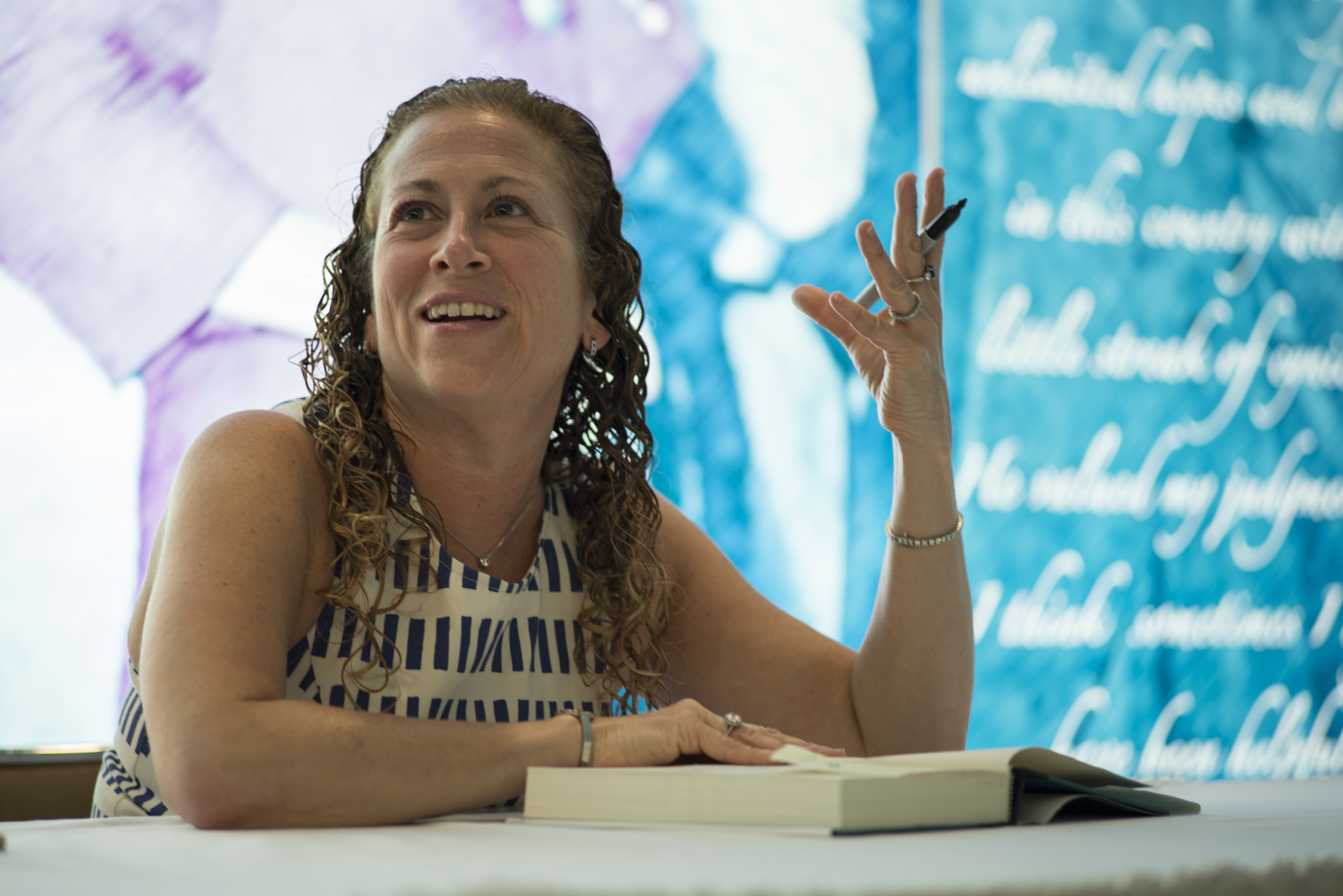
Jodi_Picoult_as_the_2013_Harry_Middleton_Lecturer_DIG13478-016.jpg
Jodi Picoult

Have you ever heard of the Problem Novel? According to Amy Pattee’s (n.d.) blog about Problem Novels, this genre presents a hot button social issue, explores it from various angles and leaves the reader to make his/her own judgements in the end. Jodi Picoult is a master writer in this field.

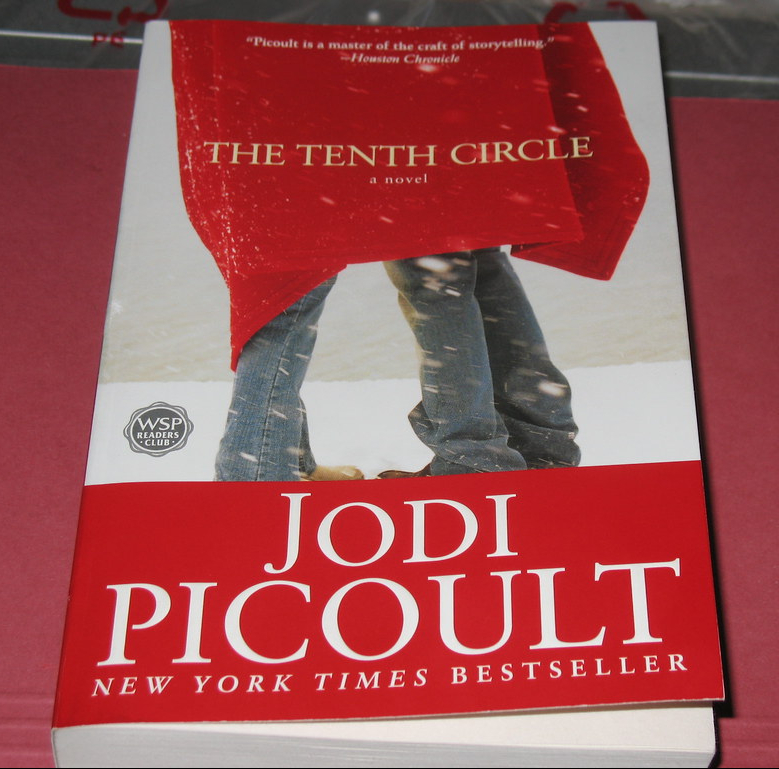
I have read many Jodi Picoult books that would fit this definition. “The Tenth Circle” deals with sex. It’s hard to imagine a more touchy teenage topic! Picoult has you squirm in your seat as she wields her words, weaving a web of deceit and mistrust. What causes what in this seemingly cause/effect story? The problems paramount as infidelity matures into murder. Where does it stop? 

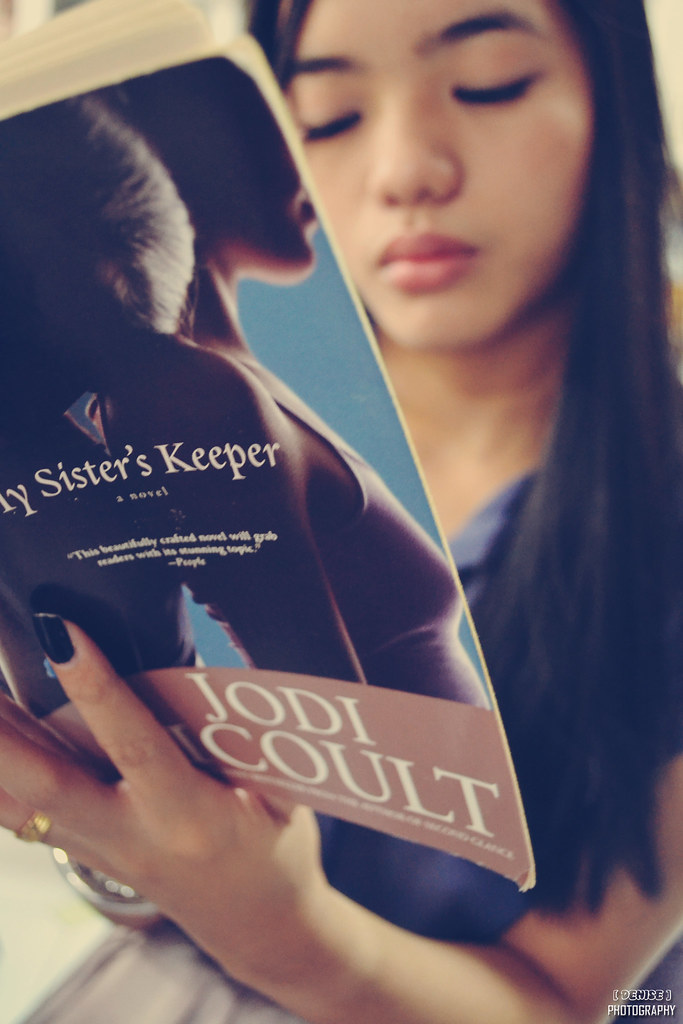
Another Picoult book, and one that made her mainstream, is “My Sister’s Keeper”. Made into a movie, this story is about a girl, Anna, entering her teen years having lived, it seems, only as a surrogate for her older sister, Kate. Kate has had Leukemia for years. She requires Anna’s help to stay alive. In fact, it feels like Anna was conceived in order to keep Kate alive! This life or death problem goes deeper as Anna tries to wrestle with her own identity. 

Problem writing can be dark. Picoult brings the reader to death’s door, and sometimes even allows you a peek inside. Amy Pattee mentions the book “The Girl in the Box” (1988, Joy St. Books) as an example. In this story a girl is kidnapped and placed in a cement cell. She never sees her captor or anyone else, is given water and only barely enough food for sustenance, has to use the bathroom in a plastic bag, but [apparently] has a typewriter and plenty of paper to document the whole experience. As I read Pattee’s description of this problem novel, I thought it was the perfect metaphor for authors exploring the deepest corners of thought. Ouida Sebestyen, author of “The Girl in the Box”, created this cement cell in his mind. Then he lived the horrors of this girl by imagining her feelings, fears, hopes, and actions. 

2319392409_0222e7006c_bWhat makes problem novels riveting is their realistic nature. The events and situations within these tales are only as captivating as they are imaginable. In Picoult’s “The Tenth Circle” the daughter of an adulterer is date-raped. As it turns out, the perpetrator is the young girl’s ex boyfriend. The teacher of story-telling knows that every tale must present a problem. The line between “Realistic Fiction” and a text being a “Problem Novel” lies in the intent of the text. While a Problem Novel would fall into the category of Realistic Fiction, in that it is believable, the all-consuming problem of the story has the reader completely wrapped up in constant conflict. You are  reading ONLY to find out the answer to the problem. And, be forewarned, the better the Problem Novel, the less likely you will be provided a solution!
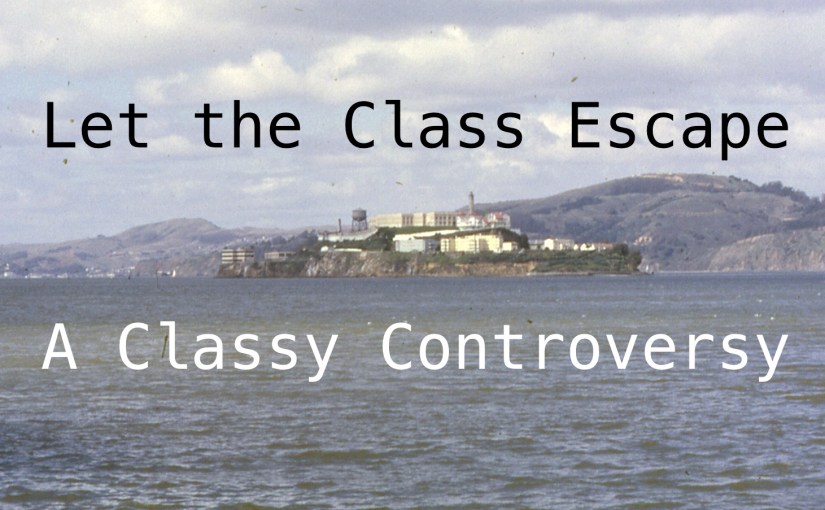
This reminds me of my “Controversy Can Be Classy” project. The concepts that Picoult presents would be considered controversial, because of their reasonableness. Yacek speaks of a controversy as being “alive” when it is believable in his paper, Thinking Controversially: The Psychological Condition for Teaching Controversial Issues (2018). He explains that both sides of a problem must be a realistic solution. This is where the masterful writing of a good Problem Novel comes into play. The more realistic the problem, setting, and characters, the more empathetic the reader will be. 

6574157971_97ffd06208_b.jpgHave you read any good Problem Novels? What might attract someone to read this genre? Why would an author choose to write this type of book? How does reading a Problem Novel help you? 
Sources:

Pattee, A. (n.d.). YA or STFU: Got a Problem with Problem Novels? Retrieved March 22, 2020, from https://www.kirkusreviews.com/news-and-features/articles/ya-or-stfu-got-problem-problem-novels/#continue_reading_post

Yacek, D. (2018). Thinking Controversially: The Psychological Condition for Teaching Controversial Issues. Journal of Philosophy of Education,52(1), 71-86. Retrieved August 5, 2019.

Breaking Out the Controversy


IMG_0485.jpg
Use controversial opinion-writing to promote acceptance of feedback.

I am halfway through scoring and writing feedback for my third grade students, and it hits me: Writing opinions can be “controversial”. When you state what you believe, as opposed to a proven fact, you are providing a point of view that others may refute. 


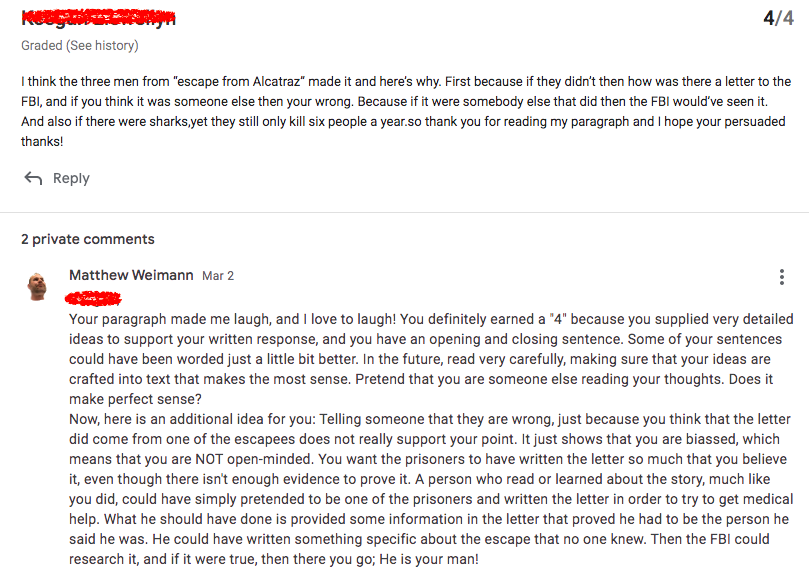
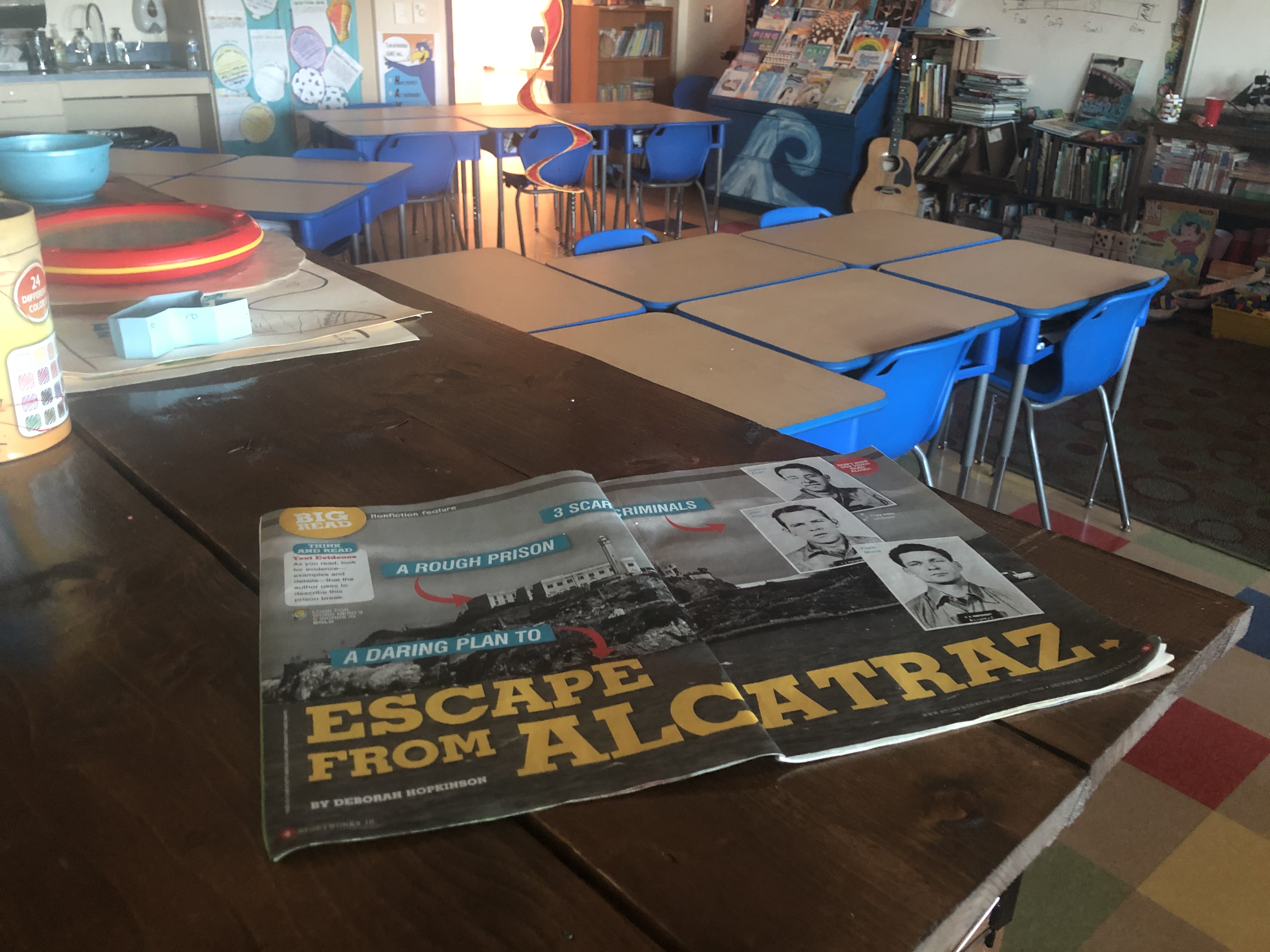
Having finished typing feedback for all 27 kiddos, I am impressed with the arguments that my students used. The assignment was to share whether or not you thought the men who escaped Alcatraz in 1962 survived their daring prison-break. The December (2016)/January (2017) issue of StoryworksJr magazine had an article about the amazing true story of the one successful escape from the infamous “Rock” (Hopkinson, 2016). This article ends by telling students that no one knows if the prisoners survived the treacherous swim across the San Francisco Bay. It asks, “Do you think (they) made it out alive?”Screen Shot 2020-03-04 at 8.25.24 AM.png

Controversy

How is this controversial? David W. Johnson and Roger T. Johnson of the University of Minnesota published a landmark paper in 1979 titled “Conflict in the Classroom: Controversy and Learning.” In it they define controversy as an incompatible conceptual conflict that craves reconciliation. What question is more in need of answering than survival? Did the men make it? And, the two answers couldn’t be in more contrast with one another. 

The beauty of this particular assignment is that, although my students were asked a “Yes or No” question, they were required to back up their opinions with facts from the text. In this way, the kids invest in their answers. It causes them to interpret the text, seeing the trials of escape from the perspective of the prisoners. Students assumed a more active role in reading the text. Rather than looking back at the text to find answers to boring multiple-choice questions, students are hunting for ammunition to do battle against their idea-opponents.

This was a great assignment because it could go either way. There is plenty of evidence for both sides of the argument, which makes the cognitive fight even. And, because this assignment is so rich with ideas, it is extra easy to turn feedback into a communicative conversation, instead of straight “You did this well/You need to work on this.” I find myself writing things like “Have you thought of this angle?”

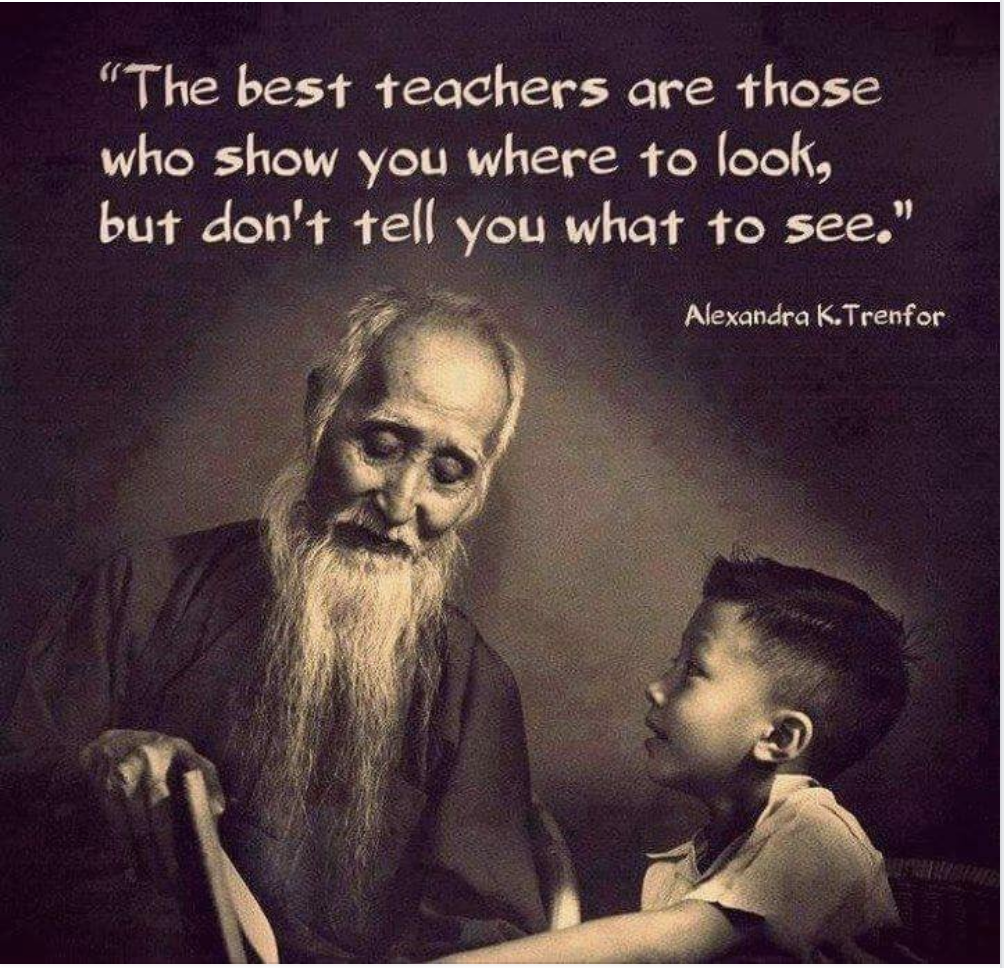
By conversing with students about what they wrote, an educator can ensure the acknowledgement of ideas for writing improvement. Instead of “You did this wrong” the educator can suggest, “If you want to persuade me to believe this, you should word it this way; You should include information from the text; You might want to explain yourself more.” 

IMG_9186.JPG
Best “Respond to Text” ever: So, did they survive or not?

With each new paragraph to grade, I look forward to seeing where my student stands on the issue. Sometimes, when I use controversy to teach, I will assign sides. I want the opposition to be even. A question will be posted in the Google Classroom. I make it so that students may be able to edit their answers, and they can read/reply to others. If you do this, you want the sides to be fairly even, so that no one feels overwhelmed with opposition. This particular project seemed to have opinions split down the middle, lending nicely to a balanced battle of wits.

I made sure to show my third graders a balance of points from the StoryworksJr text, too. As a class, we discussed some reasons it seemed unlikely the men survived the escape; They had to swim 1 ½ miles across shark-infested, freezing cold water, and that was after climbing a tall, sharp fence! When you are doing something daring and exciting, though, your body fills with adrenaline that can cause seemingly superhuman strength and endurance. With more back and forth ideas, we constructed a balance of ideas. 

Yacek explains the importance of having opposition on both sides of an argument in Thinking Controversially: The Psychological Condition for Teaching Controversial Issues (2018). He tells of a lesson he thought would spark controversy but fell flat because even the students who argued against the action didn’t truly believe it was a possibility. In order to foster the intellectual disequilibrium that Johnson & Johnson (1979) propose works best to arouse learning, students have to buy into their position. 

IMG_3669.JPG
Time to “break out” the classy controversy. 

For the prisoners, I suggested that these were tough men. The text had mentioned that they had successfully broken out of other prisons. That is why they had been sent to Alcatraz; “The Rock”! Just when you feel like everything is tipping toward a successful escape, however, there is the fact that it doesn’t matter how tough you are against hungry sharks and 1 ½ miles of open water! Also, don’t you think we would have heard of their survival? Everyone craves fame. “But, there was a letter written in 2015!” students exclaim through their essays. Yes, but this was a person who was looking for help paying for medical expenses. There is no proof that he was an escapee. And, the scale goes back and forth. 

We may never know if Frank Morris or the Anglin brothers made it to safety. One thing is for sure, my students’ reasoning and writing skills grew as a result of wrestling with the controversial idea. 

Sources

Hopkinson, D. (2016, December). Escape From Alcatraz. StoryworksJr, 4–9.
Johnson, D. W., & Johnson, R. T. (1979). Conflict in the Classroom: Controversy And Learning. Review of Educational Research,49(1), 51-70. Retrieved August 13, 2019.
Yacek, D. (2018). Thinking Controversially: The Psychological Condition for Teaching Controversial Issues. Journal of Philosophy of Education,52(1), 71-86. Retrieved August 5, 2019.


Critical Thinking is Classy

Screen Shot 2018-09-22 at 9.26.39 PMTo be able to critique something, one must have background knowledge. Unfortunately, some teachers focus solely on pouring information into their pupils (Watanabe-Crockett, 2015).

What Does Critical Thinking Look Like?

I tried something new this year to get kids to introduce themselves to each other. The class visited the art room outside of their typical art time. Kids were told that they were going to make a self portrait. The catch was that they could only use scrap paper and glue; no drawing utensils, no scissors, only their hands and glue. They had a blast tearing the paper and sticking it together. Making shapes round was tricky. Some students made their art three-dimensional. Some used nonconventional colors.

class-e1537672735839.jpg
Polite Pirates of Room 207 Make Self Portraits

After making the self portraits, students composed “Who Am I” riddle poems. They had to write down a list of sentences telling information about themselves that makes them unique from others in the class. They wrote their names on the back of the papers. I attached them to the self portraits. The kids got to read each other’s poems, guessing who fit the characteristics listed. The portraits were little more than clues, since they were not very realistic.

The project was not only presented several facets of critical thinking, but it also dressed up my room for Meet The Teacher Night! Parents loved trying to figure out which portrait/poem combination was their offspring:)

How to Foster Critical Thinking: Don’t Settle

When I have students figure out a math problem, I tell them to solve it multiple ways. This forces them to rethink the math. They are required to analyze the problem. My students are asked to not only “show their work”, but also explain how they arrived at their answers. When they share the process with a partner the two of them evaluate each other’s work. Having to find other ways to solve a math problem causes students to be creative, looking for novel ways to think about the numbers.

A way to inspire critical thinking during a writing assignment is through allowing students to view their peers’ written responses within Google Forms. When I administer an assessment through giving a quiz from Google classroom, I instruct my students to click on “See Previous Responses” upon submitting their quizzes. They are to read their classmates’ writing, evaluating the responses and comparing them with what they wrote. They may go back and add information to their own writing, then, adapting new ideas to the answer.

One More Thing: Call it what it is.

Watanabe-Crockett (2016) suggests actually using the term critical thinking. “How to Develop A Critical Thinking Mindset in Elementary Students” supplies a graphic aid from Andrew Churches that shows Bloom’s Taxonomy applied to technology. It has long lists of verbs under each thinking skill. It isn’t a bad idea to make a poster of this and put it on the wall.me

In order to critique something, one must create an opinion. With this end in mind, educators can work to teach students how to think critically in order to complete the task.

Sources:

Watanabe-Crockett, L. (2015, July 24). The Importance of Teaching Critical Thinking. Retrieved September 22, 2018, from https://globaldigitalcitizen.org/the-importance-of-teaching-critical-thinking

Watanabe-Crockett, L. (2016, May 28). How to Develop A Critical Thinking Mindset in Elementary Students. Retrieved September 22, 2018, from https://globaldigitalcitizen.org/critical-thinking-mindset-elementary-students