
Perhaps you haven’t noticed, but I have a pirate theme in my classroom. Why? Don’t I know what “pirate” means; What it stands for? I do. I also know that the commercial world adores them, their mark is everywhere, and everyone wants to be one!
What are you doing for #TalkLikeAPirateDay?
It’s this Thurs.#tlap #tlapdownunder #ThePolitePirates @ChristineBemis2 @DrCaliGrit @MsHake418 @HeatherJoy001 @burgessdave @henneld_edu @ReneeWellsSTEAM @SJSaragusa @tracyscottkelly @chris_kittredge @Mrs_Alfano @ASMILEwithAnna @ifireup pic.twitter.com/waxay4kN6G— Matt Weimann (@MrWeimann) September 15, 2019

I recently had lunch with Dave Burgess of “Teach Like a Pirate” (2012) fame. When I asked him why he had chosen the pirate theme, his answer surprisingly mirrored my own. He said that in the beginning of his career of speaking engagements he was sharing his expertise on teaching in a way students will remember content, and he felt like he needed something to tie his points together.
Had an inspiring lunch with @burgessdave today! Thank you @dbc_inc for supporting our mission to connect educators! LV get ready to learn some new acronyms in Sept.📚#CoffeeEduLV #Llap #tlap #kindness #passion @attardoa11 @MrsBreidenbach @GiftedTawk @MrWeimann @maria_jude1972 https://t.co/DTtA1YmfDe
— Sally Jo Saragusa (@SJSaragusa) August 22, 2019
[Burgess, Dave. (2012) Teach like a pirate :increase student engagement, boost your creativity, and transform your life as an educator San Diego, Calif. : Dave Burgess Consulting, Inc.,]
Burgess’s (2012) book describes several key characteristics that a successful teacher will want to develop in order to make him- or herself an awesome educator. He unites the ideas with a mnemonic device: an acronym of PIRATE. The very first letter stands for passion. Well, is there anything more passionate than a pirate?

The first grade that I taught was second. The kids were 6 and 7 years old. I wanted something cohesive to make every student feel like part of a team. More than anything, the pirate theme just happened. I liked the idea of the class being a crew, rather than a team. We weren’t going to compete against anyone else. Instead, we would embark on numerous adventures. There wasn’t any winning or losing; Just loving learning, and that is my main goal.
Love of learning is my aim; making school fun is my game.
I think more Ts should approach prepping for the day/lessons as though it were a #game.
What do you think ?@bbray27 @Mind_on_ASaP @tomhudock @awfrench1 @aweninspiration https://t.co/2R9pgmo0hr— Matt Weimann (@MrWeimann) September 19, 2019
While teaching is my job, I have a secondary wish of helping society evolve to a more courteous state. This aim, combined with a love of alliteration, caused me to add the word polite to our piraty theme, to form the “Polite Pirates”. I began writing stories involving characters from an imaginary crew of previous polite pirates (I told you I like alliteration;). These taught academic standards, as well as mannerly themes. The students enjoyed hearing and reading stories about what came to seem like their classroom mascots.

The Polite Pirates are ten years old this year. I have yet to publish even one of their stories. Paradoxically, I share and even beg others to use this Polite Pirate theme. I am the pirate who gives, rather than robs. Last year I even thought of beginning a teaching hashtag of #PleasePirate to encourage others to use things that are shared freely on Twitter. Anyone who knows anything about teaching and teachers knows that we are all pirates! We find, borrow, reproduce, change, and share anything and everything we think could help our students learn better. The idea of good global or online citizenry looms above us, but in the end, we would steal to feed the curiosity and encourage inquiry in our students.
It was this irony of pirates providing provisions for others that birthed their leader, Captain Iron Knee. He knows that it is only through giving that one’s hand can open to receive what he truly needs.
The #polite #pirate steals fear from others. Sometimes it feels rebellious to NOT care about what others think. It is truly #Paradoxical. That’s what makes it so perplexing. It requires #finesse #ThePolitePirates
— Matt Weimann (@MrWeimann) September 20, 2019

The idea of piracy may hold a horrible history, but letting go of the chains of literalism allows me to use its hugely commercial popularity to connect the experience of a super fun year in school to a life-long-love of learning. That is my overarching goal.
Peace of #advice on #TalkLikeAPirateDay for #RunAndRant#ClassroomTheme #pirate#ThePolitePirates#TheCaptainOfClass@runandrant @Mind_on_ASaP @GuidingTeachers @ifireup @DrCaliGrit @Actionjackson @L_Farquhar_IB @vicking02 @BrooklynDreamer @burgessdave @AlanDWilliamso1 @BScholl33 pic.twitter.com/sPAHarbiFw
— Matt Weimann (@MrWeimann) September 19, 2019
And, with that I will leave you to stew. Perhaps you already have a theme. How do you use it? Is it just a way to decorate your room, or does it infiltrate your teaching? I encourage you to weave your theme throughout your pedagogy. Pirate ignorance. Provide knowledge. Prepare skills. And, dare I say preach politeness? #PleasePirate and share your thoughts.
a blessed #TalkLikeAPirateDay unto us all pic.twitter.com/0Rv0rle7BM
— aliassmith (@aliassmith_lj) September 20, 2019

 The class is broken up into two equal groups. I’ve done girls versus boys, odd student numbers versus even student numbers, and broken the class up according to desk arrangements; Doesn’t matter how you do it. The NFL teams that are entering the playoffs are listed on the board. Kids get the lunch/recess time to decide on their group’s team. Then the players are passed out. I usually project a few pictures of each team’s jerseys on the wall for kids to model the coloring of their figure after.
 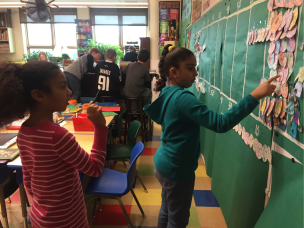 I got this idea from John Burger, my mentor in 2010 at Willow Lane. It was his last year, and we were teaching second grade. I wouldn’t be surprised if he got the idea from someone else. That’s how teaching works. If you like the idea, use it, go for it. Good luck!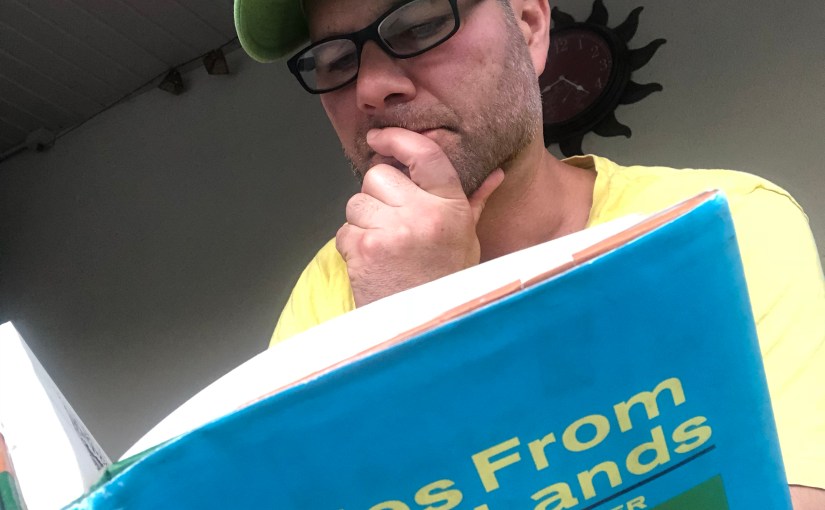

 9, 1925 (according to the information provided on the dust jacket) was a curiosity to me because, rather than a novel, it is a collection of stories collected from the native people living in South America.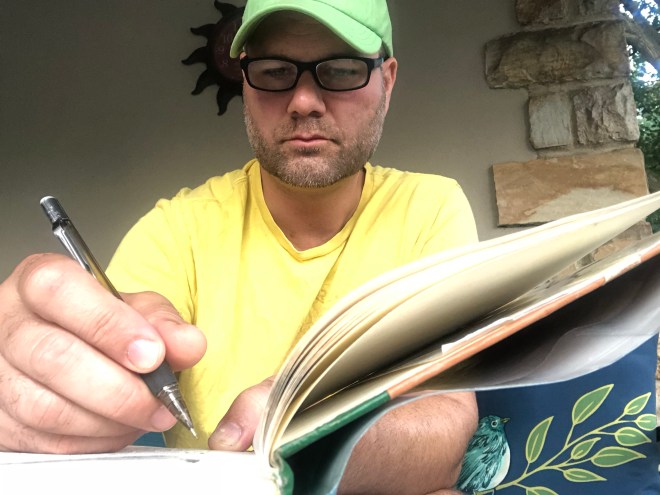
 text to share with my third grade students who are just beginning to learn how to “set a story” in a place and time. The author begins his book speaking of his experience visiting a tiny village in Honduras. Although the buildings and road differ greatly from the homes and streets that his readers of 1925, and even today, know, the children playing in a cool stream on a hot day resonates with all. In fact, I was greatly inspired by the use of the inclusive language, “…as any other little chap of his age, white, brown, or yellow” (p. 2), connecting his readership with the people he was writing about.
 impossible task, who I empathize with, who are set up as the heroes of the tale; or the owl/wizard team who are about to lose their homes. The way the wizard attempts to stop the sons is through turning the father against them. The father is told that his hard-working sons are lazy and not clearing the land. Each time this happens, the father increases the amount of land that they must level. Now, this seems to go against the owl/wizard’s plan, and yet they continue their scheme until the sons are finally asked to do more work than they can handle.
  that I am reading it so carefully. If I hadn’t, I am sure that I would not have been able to shake the spell of the story. I like the hundreds of people who heard the story told by the elderly woman of the Honduras village that Charles Finger visited, who, incidentally, was depicted as smoking a cigar when Finger found her, and then threw it down to tell the tale; I, also, would have been completely mesmerized by the plight of the young men who wanted to please their father, earn their inheritance, and be successful in life. Just like a character in a fantasy fiction who has a spell broken awakens, realizing that his love had been an aberration, I found myself shaking my head at the human-size iguana who helped the human youths by showing them how to harness the power of the forest animals to clear every plant from the land that the very same forest animals use to make their homes, find food, and live.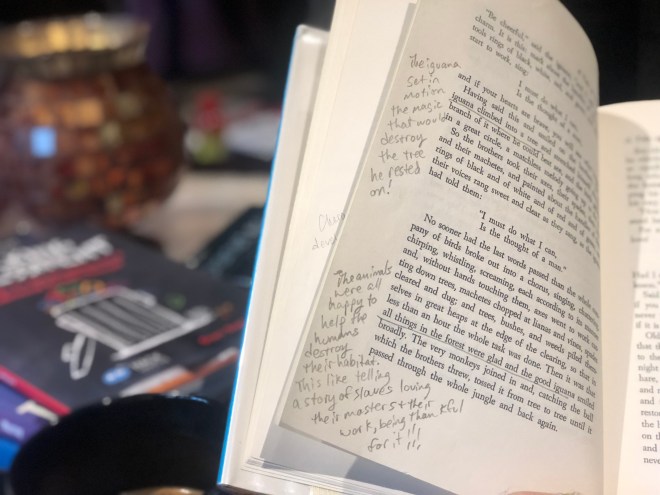
 The Captain of Class