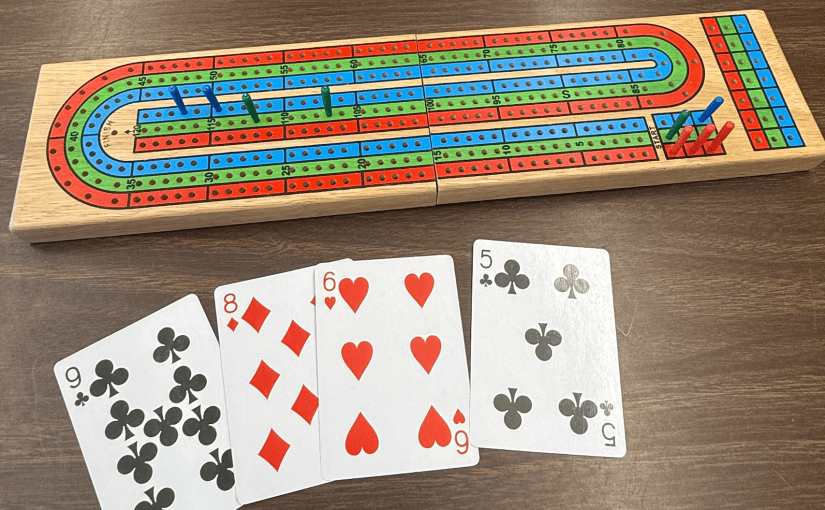
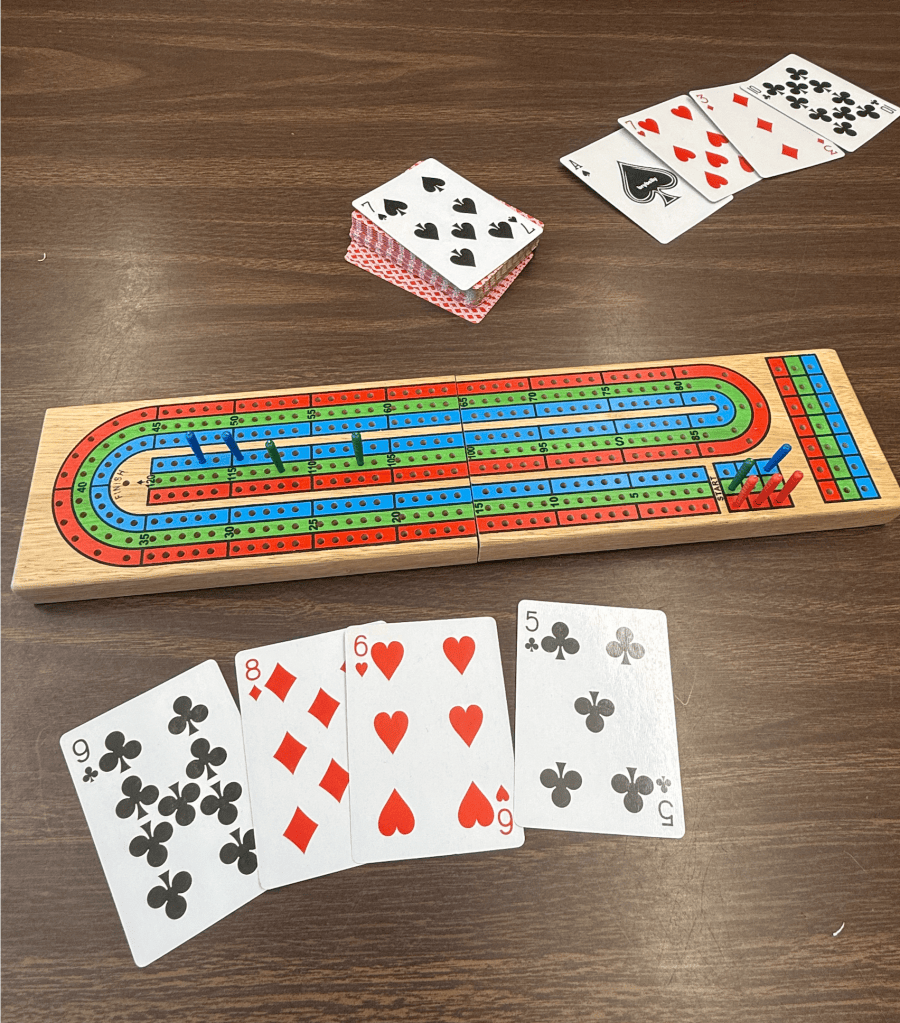
“Here’s a problem for you to figure out. Your opponent has a nine, eight, six, and five in their hand. The starter is a seven. You have an ace, seven, three, and ten in your hand. Your opponent’s furthest peg is in the 112th hole of the cribbage board. Your furthest peg is in the 117th hole. Who wins the game?”
At this point my students understand that in order to figure out the potential of both players, one must analyse the hands for points. How many pairs, runs, and fifteens do they possess? The opponent has a great hand even though there aren’t any pairs. With the seven as a starter, they stumbled into a five-card run for five points. Plus, the seven and eight add up to a fifteen for seven points. Then there are the nine and six for nine points. If they were to peg those points first, they would win the game!
I let students wrestle with what they already know about the game for a few minutes before sharing, “Just so you know, the cribbage board only goes to 120. Whomever reaches 120 first wins.” Renewed fervor ensues.
As soon as a few students seem to have solved the riddle, I check for pointage. “Between the seven your holding and the starter, your hand has one pair. Can you do anything with the ten or three?” No. They are useless. “What about the ace? Can it help you?” Yes. If you combine it with the sevens, it totals fifteen for an additional two points.
“Combined with the two from the pair that you already have, you can peg how many points, total?” Four. “And, if your peg is already in the 117th hole of the board, that means what?” You win… Unless…
“The correct answer to my riddle is… It depends.” What does it depend on?
“What if, even though you have enough points to win, your opponent is pegging their points first? Then what? Their peg is further away from the finish. Do they have enough points to put them over the edge?” Just barely.
“So, the correct answer to my riddle is, ‘The person sitting to the left of the dealer wins’. Or, since only two people are playing, you could say, ‘The person without the crib,’ because the dealer always gets the crib, and whomever has the crib counts last.”
Pegging the Ponts
“In preparation for pegging the points, let’s take a closer look at the cribbage board. In my riddle I specifically told you the pointage of the furthest peg. Why?
“That’s because you use the pegs to leapfrog when tallying up points. You never move the peg that is furthest. That one is holding the line. It tells you your current score. What you do is you count up all of the points that your hand or the crib earns you, and then you use the second peg to show the new score, counting the number of holes that you earned and placing your ped inside the new spot on the board.
“There are multiple ways of figuring out where your peg belongs. The most obvious and easiest is to simply count every hole between your furthest peg and the hole your new score represents. Each hole is one point. Although easy, this can be tedious and take a while, especially if your hand earned a lot of points. Plus, you can lose count and have to start over.
“The traditional cribbage board has a very handy characteristic that helps you skip a lot of counting. Every five holes is marked with a line and the running count. So, the 35th hole has a line right after it, and the board has the number 35 printed on it.”
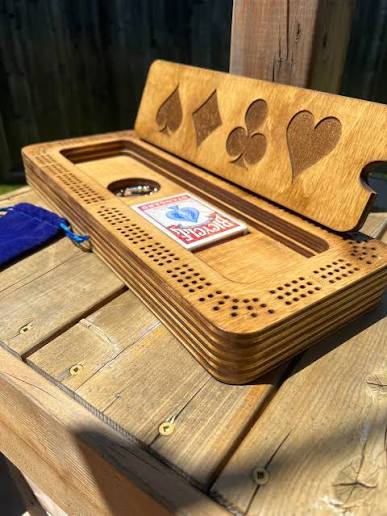
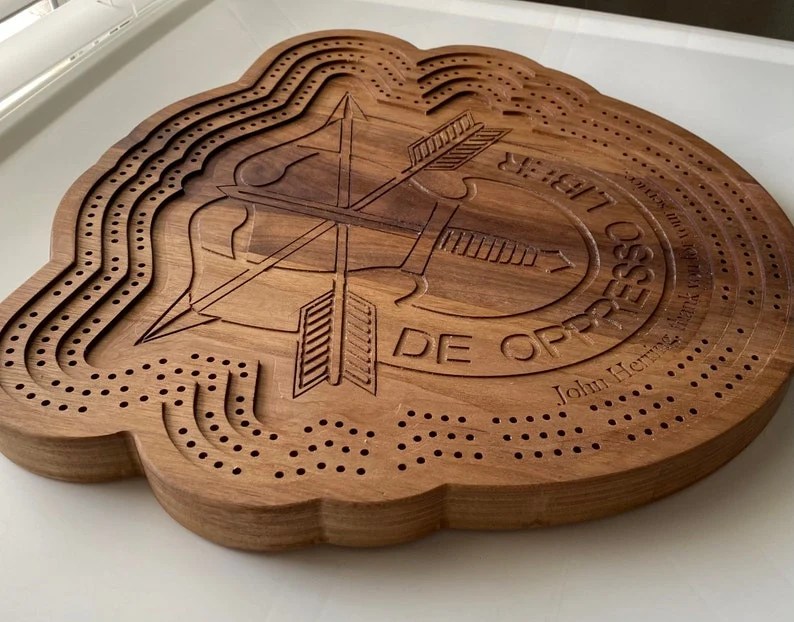
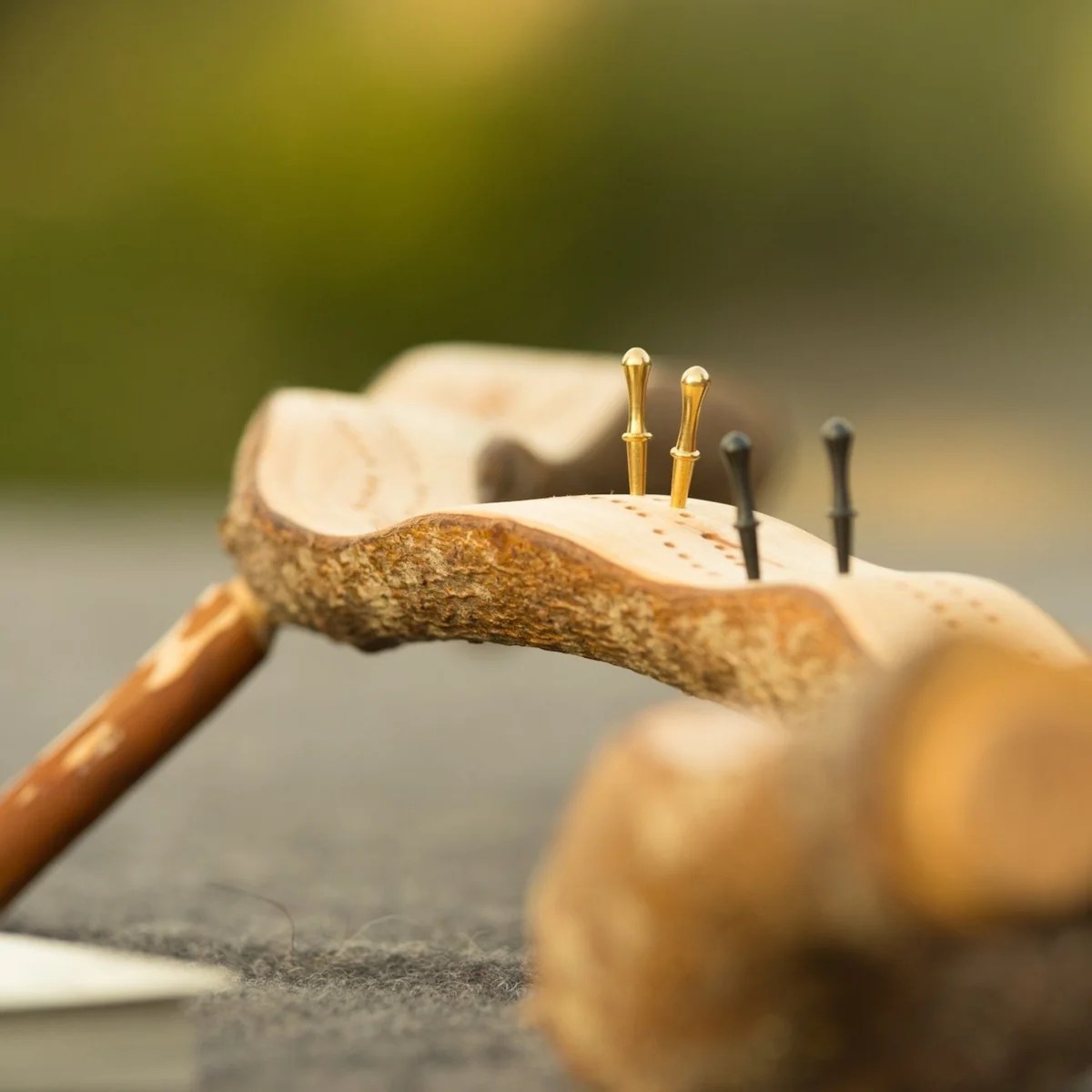
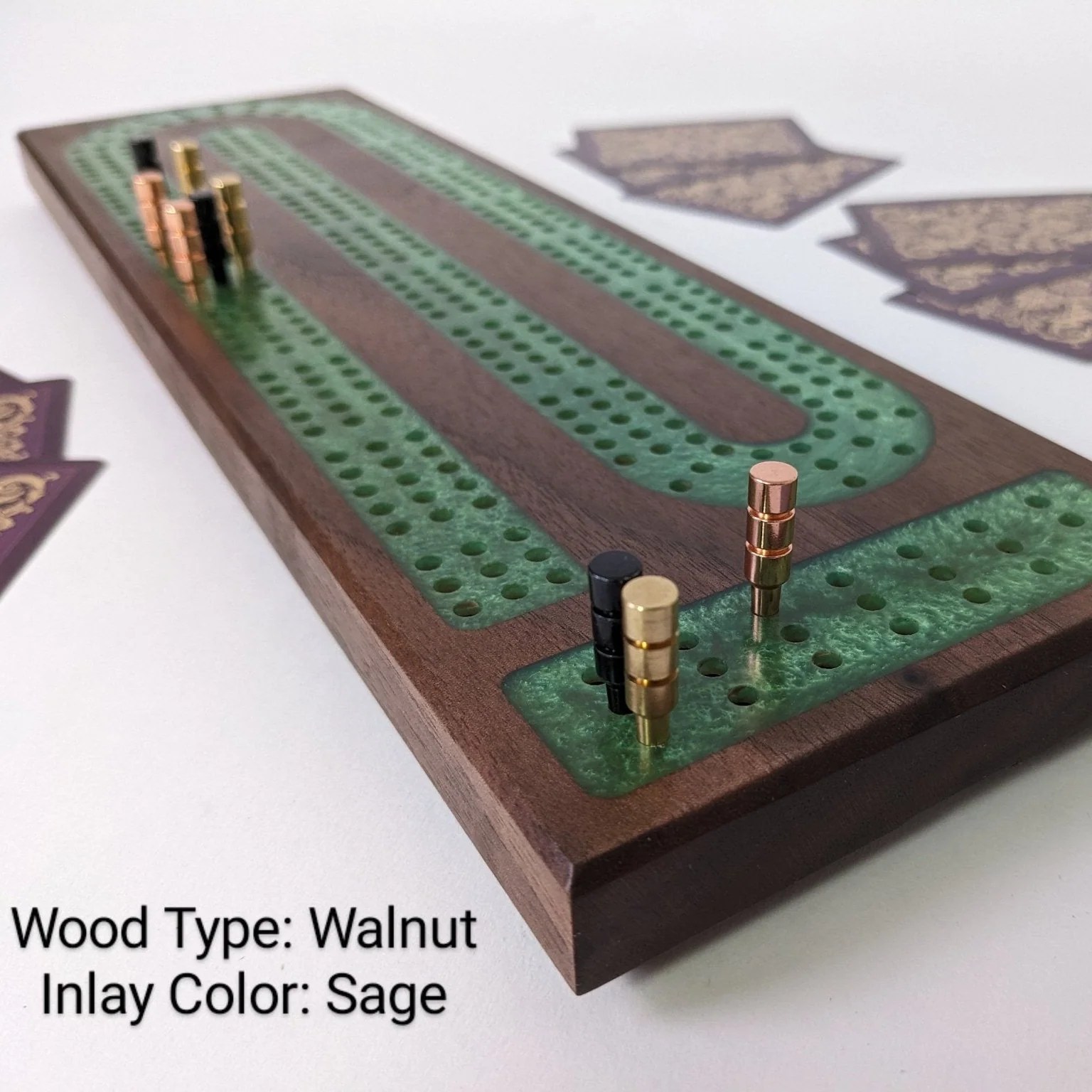
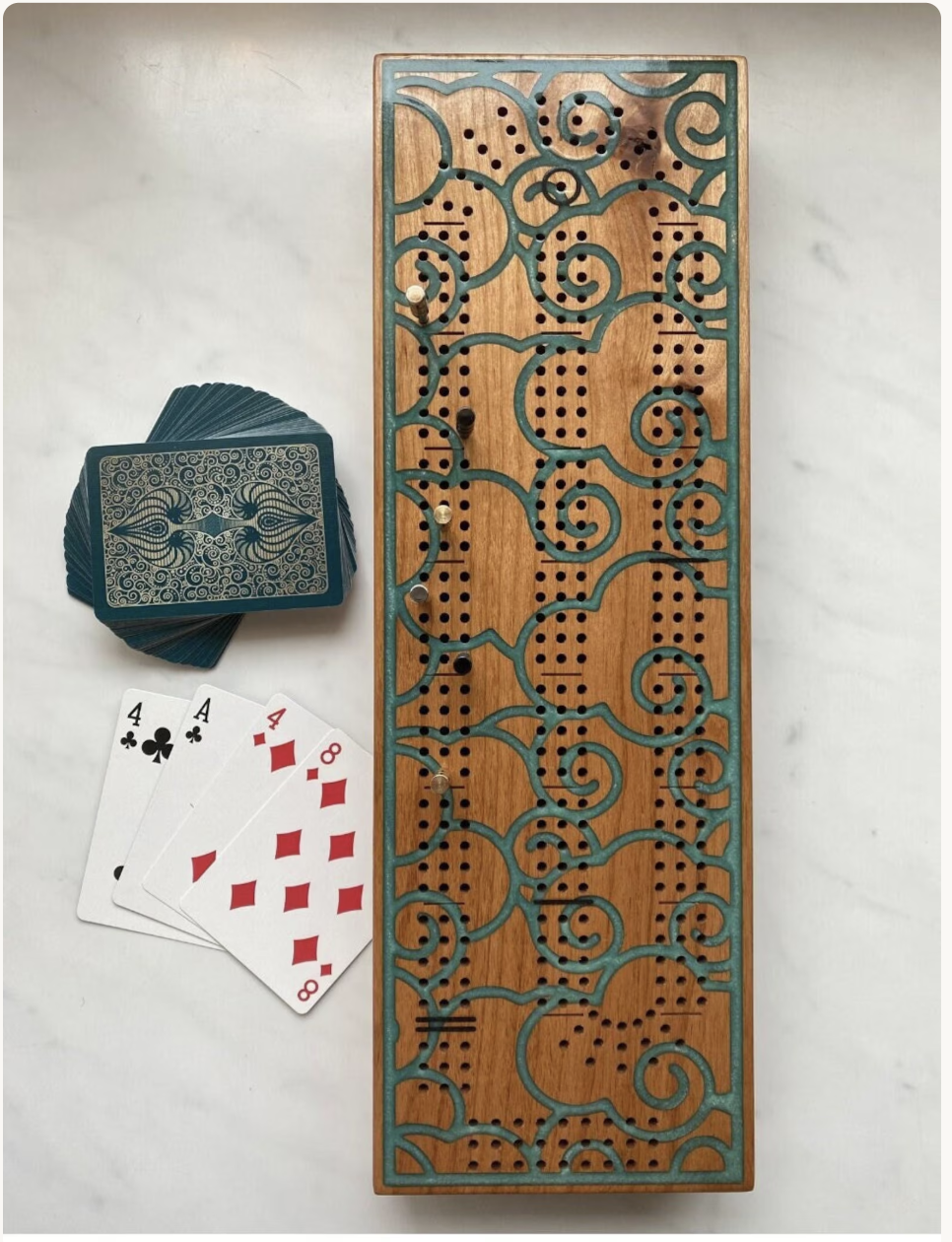
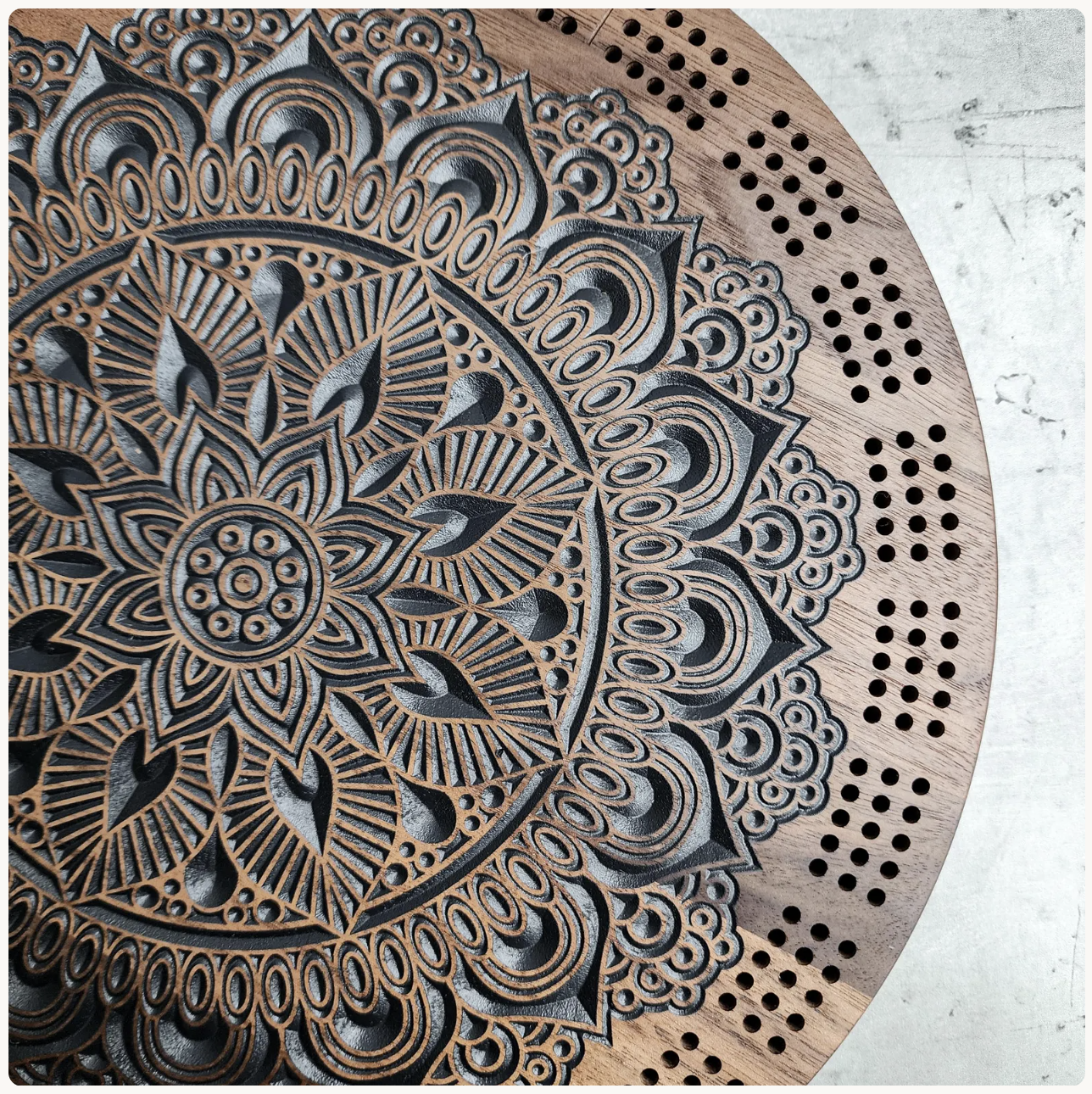
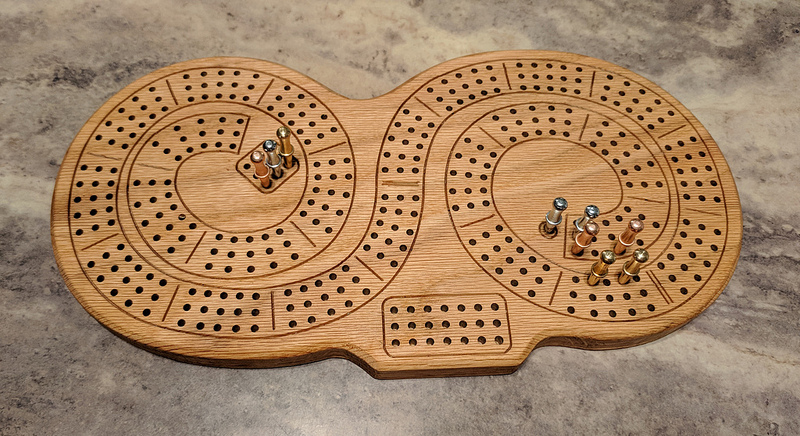
Even the fanciest cribbage boards have holes separated into groups of fives.
How it works
“Let’s say that your furthest peg is in the tenth hole. If you earn eleven points, you don’t count eleven holes. You count two lines and place your peg one hole past the second. That is eleven holes from your furthest peg. Five, ten, plus one equals eleven.
“If you earn ten points, and your furthest peg is in the eighth hole, you can also count two lines. This time you will peg the hole two holes before the second line that you counted. Both of your pegs, your furthest and the previous will hold similar positions within lined areas. It is similar to looking at a hundreds chart.
“What if you earn thirteen points, and your furthest peg is in the 21st hole? Should you count all thirteen holes to peg your points? You could. It’s an option. And, your opponent might want to do that to double-check your math. Don’t be offended. Your skills of pegging points will be so impressive that the person you’re playing won’t be able to believe that you could have figured out where your peg belonged so fast when you do what I tell you. They would be negligent if they didn’t challenge your pegging.
“Having earned thirteen points means that you have to count three holes. Why? Because you separate three away from the ten. You now know that the tenth hole will be the one right after thirty, so you just begin counting from there; one, two, three, done.”
“If you earned sixteen points, skip count by fives, three times. Then count one more hole before pegging your points. The trick is using the position of your previous peg to see the fives.
“How might you write this as an equation?” I might challenge my students.
If they tried writing the math of what I had just said, they’d realize I left out a number. Sixteen plus something equals something plus three times five, plus one would work. They could insert a variable to neaten it up.
At this point, students could be given papers that have images of cribbage boards on them, and they could practice locating the positions of various pointages. It would be even better if you could slide these papers inside clear plastic sleeves for students to use erasable markers to show their thinking while practicing. I would have paper problems that ask students to not only identify where the point-producing peg should go but the math that backs up their reasoning in order to assess the understanding of the lesson.
Math Writing
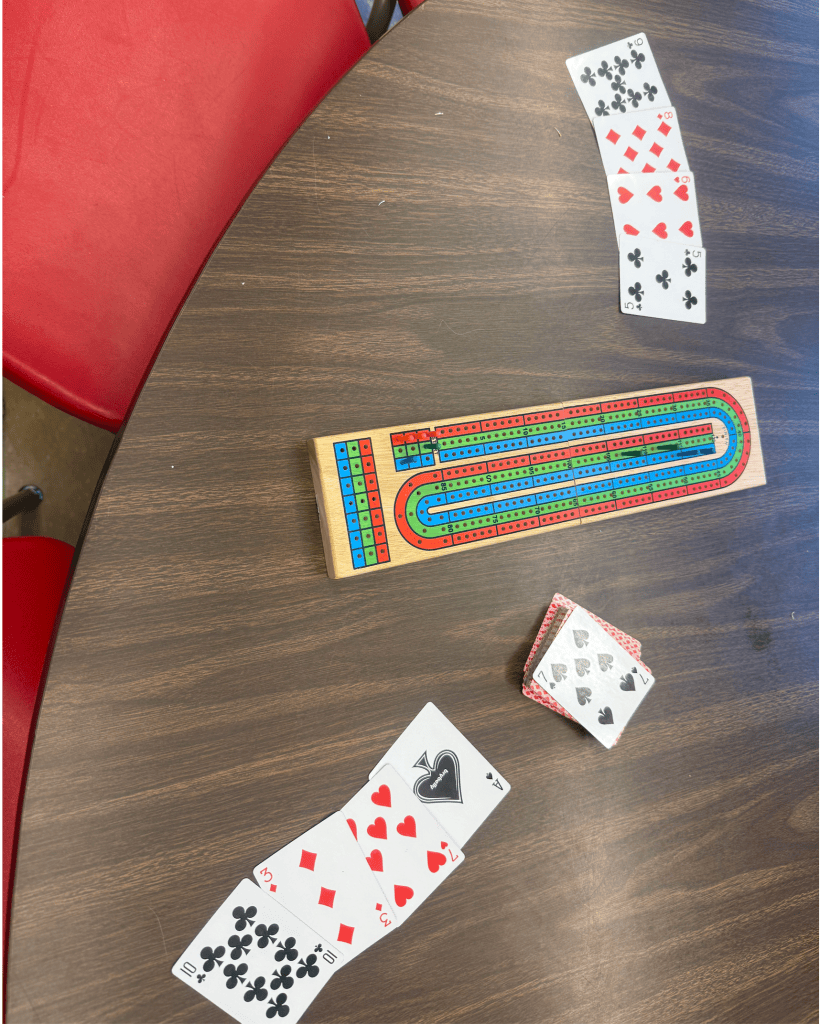
Have students write a paragraph or two (maybe three) about how they figured out the answer to my original cribbage riddle. The one that I provided at the beginning of this lesson.
They will have to talk about tallying up the points, skip counting and adding. Then, they will need to subtract each team’s current score from 120 to find out how many points are necessary for a winning position. Finally, they ought to mention comparing the total points of each with the holes left between the furthest peg and 120. If a team’s points are greater than the necessary number, they could win. Lastly, now that they know the answer of ‘The person sitting on the left of the dealer,’ students will need to write about the rules of the game in order to completely explain the meaning of the riddle.
Bonus: Make up your own riddle with different numbers, different cards, and make the necessary points to win higher than I did. Write it all out. Then play it out, making sure that it makes sense, and there isn’t any room for confusion, outside of not knowing the necessary key to the answer; whose turn is next.

