Have you ever seen someone who you thought wouldn’t be nice, but once you got to know them, you were pleasantly surprised? Have you experienced the feeling of regret after realizing you’d wasted time keeping your distance from someone, only to find out they are the most friendly, helpful person you’d ever met? And, now that you got to know them, you wish you had that time back.
To pre-judge is human. It can be useful to observe information and categorize people as friendly, helpful, hardworking, and also unkind, lying, and dangerous. This notion of placing a person into a closed category can be problematic. What if the person who looks scary is actually both friendly and knowledgeable?
Before pre-judging, consult the jury.
There are few things more classy than having an open mind. It is wise to observe the behaviors of others, judging whether their actions are friendly, intelligent, and kind. Before you completely write them off, however, do this:
Turn your brain into a courtroom.
In Chapter 2 of my classroom story, “The Polite Pirates” I introduce the idea of people being more than they outwardly seem.
The survivors of the massive storm (See Chapter One) did not feel comfortable being stuck on an island with pirates. The leader of the pirates was not only frightening looking, but also appeared to be lazy and bossy. All he did was command his few remaining friends to do things for him! Was he bossing them or instructing them, though?
I recommend that prior to judging someone’s character solely on first impressions or outward appearances (relying too heavily on prejudice), a classy person will introduce some additional thought-characters to the cognitive work of cementing opinions. You could think of them as mental lawyers and a jury.
Lawyers use the Law to forge arguments, proving and disproving cases. They interpret laws, using them as tools. A judge is like a referee. What do the jurors do? Jurors are like the audience at a baseball game. If players cheated, and a biased umpire favored the cheaters, the spectators would boo the wrong-doers right out of the stadium. Another outcome, if there was persistent cheating, could be growing disinterest and lack of support for the sport.
Jurors are common people from the populace who are purposefully un-versed in the language of complex laws (Horan, 2019). They force judges and lawyers to frame complicated ideas into simple, easy to understand concepts for everyday people to grasp.
Apply this to what you do in your head when you are judging someone. Do not trust your base instincts. Do not assume that what you observe with your eyes and ears is the whole story. How much backstory are you missing from an action you are witnessing? Try not to project your own attitudes and experiences onto other people. They didn’t grow up the way you did, where you did, with what you had!
It’s your job to interpret actions and looks for your mental jury. Even if you think a person’s motives or attitude is obvious, investigate the history behind them. Try to put this new information into understandable terms, like a courtroom lawyer would for a jury.
Lastly, do NOT condemn anyone to a negative, cognitive classification if there is ANY reasonable doubt (Kenton, 2021). Until you know the entire story behind an action, look, word, etc., a person should maintain an innocent or neutral position in your opinion. Find out their history. They could become your best and most valuable friend!
With Coronavirus keeping everyone at least 6 feet apart, how can we foster a sense of camaraderie?
I was tempted to scrap my usual “Polite Pirate” theme this year, in favor of doing something with “scuba diving.” While I still plan to incorporate this unique concept of underwater exploration & adventure, I decided to keep my original theme, as well.
This blog provides the first chapter of my classroom story. I shared it yesterday with my new students.
While we are all wearing masks, and we must keep our distance, the massive storm that disrupted the characters of our tale is more obviously symbolic of the pandemic pulling pupils out of school than any concept previously dreamed up!
Now, even more than before, we need to find ways to creatively connect with kids. Plugging students into pedagogy will be extra difficult with all of the flip flopping and seemingly impersonal screen work. How will you tie your students to your teaching?
Students wrote comments, connecting to the text, via Google Docs
One of the most important things to establish at the beginning of a school year is comradery among pupils. Several years ago I came up with a story idea that focused on this concept. It introduces my classroom theme of #ThePolitePirates as well as giving us a shared purpose.
The story has grown over the years, as I come up with more themes and invest more time into it. I usually share it with my students in a Google Doc through Google Classroom, so each kid has his/her own copy to practice connecting with the text via leaving comments. This year, for the first time, I plan to publish the chapters in this blog, so anyone can read the story and leave comments.
Feel free to “pirate” my tale. Change and tailor the idea to fit your classroom. I usually…
For years I have captained a classroom of polite pirates. The theme has involved turning pedagogy into an adventure. Learning content and skills was a treasure hunt for my students. Preparing for the first day of school, when I would meet my new crew was always exciting.
With a global pandemic promising to punish positive thinking, I have been pondering a new theme for this year. I will be teaching a team of “Cave Divers.” Not only will we be learning all about scuba diving, but the class will prepare to go where no one has gone before.
This year, my goal for the first day, week, etc is one word: “Safety.”
I look forward to blogging about the use of this theme of cave diving. Have you had to change your theme to fit the “unprecedented situation” school is facing this year? How have you changed your teaching to meet the safety concerns?
It’s August. Back to school sales are raging. Letters are arriving that tell students who their teachers will be this fall. Nervous energy is buzzing through bodies… Not just students’. Teachers worry about the first day of school, also.
August First, 2018 — This is what I saw when I pulled up to my building.
Here are a couple classy ways that I deal with the start of school jitters:
I have a goal… ONE goal for the first day. I’ll accomplish more than the one thing, but I measure my success based on this one thing. It isn’t the same every year. Sometimes it is learning everyone’s name. Other years, all I wanted was to get everyone back home safely. Nowadays, my goal usually centers on classroom management. I like the momentum to begin in my favor, so I establish myself as captain. The class is my crew…
Today I am returning to school, but unlike any other year. Teachers are entering the physical buildings in my school district in order to prepare classrooms to meet social distancing guidelines: Students are to sit 6 feet apart and face the same direction, among other things. It feels a little like preparing the classroom for the PSSAs, Pennsylvania’s standardized testing scenario.
I don’t think it is a stretch to suggest that every teacher in the world could use some positive thoughts, right now!
Here’s a couple, and I want to hear from educators that have others to share. Let’s see if we can bolster our mental health through optimism.
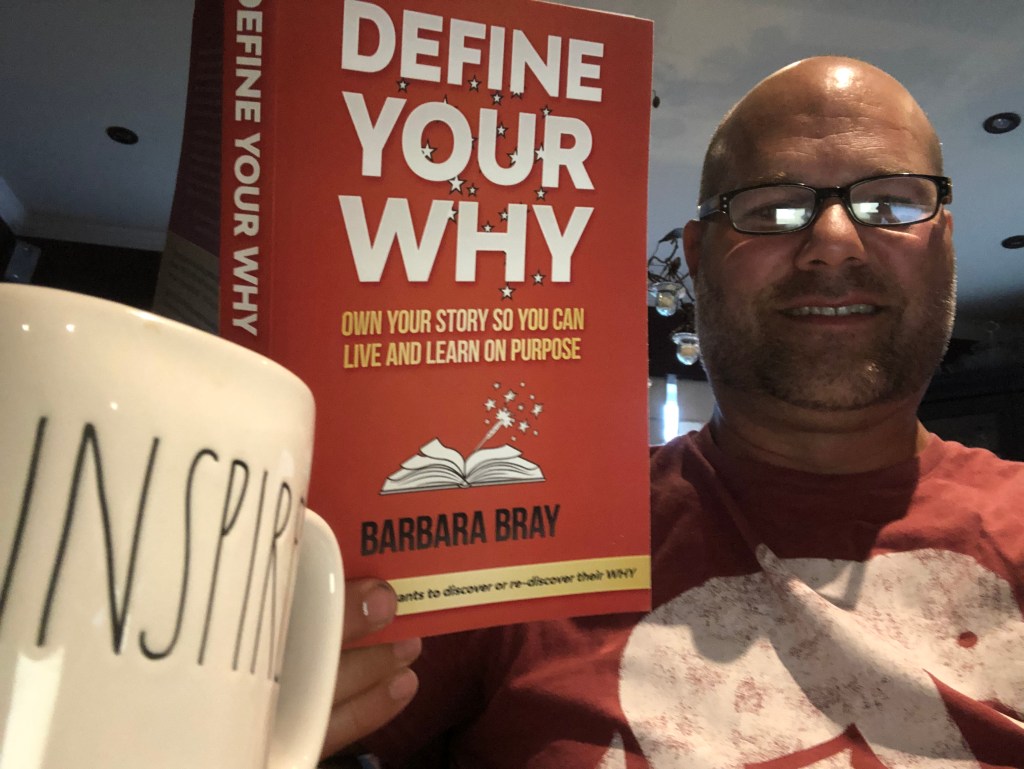
Thank you so much for my book, Barbara!
On Friday I was able to hang out with one of my favorite people, Barbara Bray. She is an author, blogger, edu-chat host, and technology innovator, among other things. I have followed Barbara on Twitter for a couple of years now, and I have been very impressed with the topics and hosts that she presents through #Rethink_Learning.
A few weeks ago, Barbara contacted me about guest hosting a chat. In addition to complimenting me on my recent efforts trying to help people feel comfortable talking about race on Twitter, Barbara shared some of the exciting things that she has been up to. It was Barbara who used the phrase “Pushing the Envelope” first, when she described her attitude about self-growth. I loved it and immediately began researching its etymology.
— ✨Barbara Bray (she/her) Story Weaver✨ (@bbray27) August 11, 2020
We used the saying “Pushing the Envelope” in our questions for the chat that I hosted. Through comments, replies, and shares, Barbara made it appear as though I were the one to come up with the theme of the chat. I mention all of this because it illustrates the classiness of this edu leader. Not only allowing someone else to take credit, but going so far as to promote the idea of another’s credit-worthiness is really above and beyond classy!
Fine and good, but what does all of this have to do with “Remote Teaching”? you ask.
Here’s the thing: Barbara Bray lives in California. I live on the other side of the country, in Pennsylvania. When we “got together” on Friday, it was through Zoom. We had wanted to chat about a blog I’d written recently. As we shared our introductions, a recurring theme was how helpful social distancing has been in the way of connecting people who wouldn’t have “gotten together.”
True, we were not in the same room. But, seeing each other’s facial expressions, witnessing body language, and connecting all of this with a voice, helped breath life into a relationship of text. When we ended our meeting, Barbara was more than a “contact” or collaborative partner. Having shared an experience, we found ourselves forging a friendship.
This would not have happened, had we never video-conferenced.
Perhaps your mind is telling you that you would have forged deep and meaningful relationships just fine, if you were face to face with your students in the classroom. While I won’t argue you on that, I will propose using video-conferencing tools like Zoom, Google Meeting, Skype, etc. can empower you to begin and build relationships in ways you wouldn’t have. Not only that, but if you think about it, do you honestly communicate with your students equally when you are teaching face to face? Or, do you rely on your class benefitting from the back and forth you practice with the same outspoken students day in and day out?
By being forced to use text more and rely on video-conferencing, teachers can more easily document the discussion equity of all students. While in the physical classroom I would tolerate some students monopolizing whole group conversation, a grid of kids on a computer screen makes this more evident and therefore easier to moderate.
What benefits or positive thoughts can you come up with as you prepare to begin varied levels of remote teaching? Are there any aspects that you look forward to?
I feel a little embarrassed that it has taken me so long to pen a blog about the race-related upheaval around the United States. The essays I’ve begun are too grow too long and are never good enough for me to post.
Today, I have decided that continuing in silence would be more negative than releasing a text that may not be A+. That idea got me thinking.
Silence condones.
I tell my third grade students that “Quiet is classy” all year long. Quiet is peaceful. Quiet is controlled. In order to communicate quietly, you must be clear and concise.
Silence is a lack of communication. The Silent Treatment can be the most torturous punishment.
Something inappropriate happens. You witness it. You are there; Within proximity, so that you could say something. If you were silent, you said nothing. You allowed it to happen, unchecked. Your silence communicates acceptance. Perhaps you made a face. That nonverbal communication isn’t silent, but won’t be seen by people behind you, people who hear about the story later.
A quiet person may not want to make a scene. Not every personality is comfortable with being highly visible, and even the slightest sound can be fingernails on a chalkboard in a silent situation. I am picturing the hesitant, shy kid witnessing others misbehave. A cough. The audible shuffling of feet. Nervous laugh. Wrinkling of clothes. Sounds that communicate you are not okay with this can break the silence. These could be a warm up to actually speaking, too. Perhaps the clearing of the throat will loosen the tongue.
This blog is my throat clearing. I have many things to say. I will start with this one: Silence is not classy.
Ages ago, a Black friend from Twitter posed a question that got me thinking. He asked, “How many people ignore race outside of Black History Month?” Since this seed was planted in my mind, I have made it a point to speak to race all year long. I now use Black History Month to champion the heroes of the Civil Rights and Abolition eras. February is when I will teach biography as a literary genre.
To ignore race is to make our students ignorant. It’s time to make some noise, even if you are quiet about it.
If you have any ideas about how students or quiet people can voice support for #BlackLivesMatter I’d love to hear from you. Let’s empower one another to speak up with the message, “We are NOT okay with this.” Oh, one more thing: If ever you are looking for a definition of “evil,” look no farther than the people who attempt to silence others.
Is it always classy to tell the truth? Is keeping the truth from someone the same thing as lying? Can you honestlyomit vital information? The word integrity comes to mind, but sometimes there is more to the story than the black- and white-ness of true versus false. There is nuance. To think that one must say the 100% truth at all times is simple-minded. Don’t think that I am advocating for deception; by no means. I’m suggesting that a classy person looks for the best possible outcome; What will help others the most?
We have all heard or read the story “The Emperor’s New Clothes.” A ruler is duped into parading around town with nothing on because he is too proud to admit that someone could possibly lie to him. The court cowards at the thought of telling him the ugly truth. Finally, an innocent child bursts the bubble, and the crowd spills the beans.
The May/June 2020 issue of Storyworks Junior presents this age old story by Hans Christian Anderson, retold by Spencer Kayden in the form of a play. I assigned this reading, along with the questions that Storyworks Junior provided, recently. As I was looking over my students fabulous answers and leaving comments, a revolution of thought hit me.
In this version there is a character named “Royal Aide” who, unlike the other members of court, wants the emperor to be successful. He fears the emperor’s exuberant love of looks, but he keeps this to himself… at least at first.
Through out the play this character shares the honest truth, but is rejected. In this super short, kid-friendly-version (the emperor still has his underwear on) of the age-old story the Emperor rewards the Royal Aide for having been the only person to tell him the truth.
One of the questions that Storyworks Junior posed for engaging students when reading this play was, “What message is the author trying to communicate?” Some students simply quoted the text, and told me “It is better to be hated and honest than loved through lies.”
More than being annoyed that my students would copy the text for their answers, it bothered me how simple this seemed. Is lying always wrong? As an educator I am constantly telling students that I am pleased with their “hard work,” even though I am certain that they didn’t work “all that hard” on an assignment. Am I telling a fib? I certainly am! I justify this by telling myself that I am projecting. I’m trying to get them to want to do “hard work.” Does that make my false praise okay?
There are many lessons to be learned from this story, though. Here is one that places honesty on its head: Do not believe everyone is completely honest with you. The Emperor was annoyed when the Royal Aide shared his distrust of the crafty tailors. The Aide was honest with himself before being truthful with the Emperor. He accurately assessed the trickery the tailors were up to.
This is when I realized, “Wait, there are many lessons, here!”
There is a place early on in the play when the Royal Aide was honest with the emperor, but it didn’t pan out well. The palace guard told the aide that two tailors were here to show the emperor clothing that only intelligent people could see. What does the Royal Aide do with this nonsensical information? He shares it with his boss, who he knows to be weak in the area of resisting luxurious fashion!
It was his honesty that got his boss into all of the trouble in the first place. Your with someone who cannot resist candy. They know it isn’t good for them, but they have no self-control. It has gotten to the point where this person actually asked you to help him to avoid candy, so that he will not be tempted. A salesman knocks on the door, selling candy. Do you say, “Hold on,” while you go get your friend who cannot resist buying every item the candyman is selling? Do you send the salesperson away, but tell your friend about the incident? Or, do you keep the interaction to yourself; Perhaps you even lie to your friend, in order to shield him from the pain of his cravings?
In other words, honesty was a horrible choice for the Royal Aide to display in this drama! Even if he didn’t foresee the outcome of his actions, he ought to have protected the Emperor from himself.
This is the crux of this blog: It’s all about ATTITUDE or motives.
In conclusion, the classiest action is hard to find. One must look deeply into a situation, explore all of the various potential outcomes, and choose what would be best. Also, one must decide “Best for whom?” Are you just looking out for Numero Uno;. yourself; or are you helping others first. On the flip side, will you hurt others in the long run if you are not available to help them due to allowing yourself to fall into disarray? Perhaps it is best to take care of yourself, then others. At what point do you flip the switch, though? It’s tricky.
The well of understanding is deep. Drink its classy waters. Honestly assess the best outcome for all involved. Good luck!
How do you decide when to switch over from taking care of yourself to helping others?
Bud compares ideas to seeds in “Bud, Not Buddy” (Curtis, 1999, p. 90). The same seed of thought that can inspire awe, entertain, and provide refuge could also be the thing that you smash yourself upon. It could be so all-consuming that it even hurts your relationships with others.
Cassie Beasley (2019) begins the sequel to “Circus Mirandus” with an idea. Her idea swims throughout the story, growing bigger and brighter, while always eluding the reader. Finally, it literally escapes; You actually want it to be realized, but the seed refuses to be planted. It has plenty of water, but no soil. (If you read “The Bootlace Magician,” you will know exactly what I am getting at!)
Claudia “From the Mixed Up Files of Mrs. Basil E. Frankweiler” (Konigsburg, 2007, p. 1), originally published in 1967 and winner of the ’68 Newbery Award, had an elegant idea to escape her prepubescent plight of indifferent unappreciation by running away to the most plush place she could think of.
The “Escape Novels”
I had an idea.
Escape through escape. Stuck at home, we are all feeling the pull, the desire, the need to escape our physical isolation.
One of the best ways to at least feel like you are getting away is by getting lost in a good book. And, what better way to lose one’s self than by identifying so much with a character or scenario that you feel like you are participating in the story?
I have three books for you. I am calling them Escape Novels. Two of them are Newbery Award winners, and the third has won multiple other awards. This idea of escaping through reading about escaping is geared toward middle school-age kids, but I am loving rereading these texts, myself, and I am far from ten or eleven!
“Bud, Not Buddy” by Christopher Paul Curtis (1999)
“From the Mixed Up Files of Mrs. Basil E. Frankweiler” by E. L. Konigsburg (2007)
“Refugee” by Alan Gratz (2019)
I chose “Bud, Not Buddy” (Curtis, 1999), winner of the 2000 Newbery Award, for its historical picture of a time the country hoped to escape, The Great Depression. The text shares some scary similarities to what America is experiencing right now. Millions of Americans have lost their jobs. Layoffs are lengthening. Continued closure of companies threatens. And, racial disparity is being ignored (Kaur, 2020).
Chapter 6 finds Bud, a 10 year old parentless black boy, in line to get breakfast from a mission (Curtis, 1999, p. 49). The line of African Americans was quiet, until it was faced with faces and words smacking of white privilege. The first image of the following slideshow displays this horror. The slideshow is a great tool for gaining background knowledge about the Great Depression.
It showed a gigantic picture of a family of four rich white people sitting in a car driving somewhere. You could tell it was a family ’cause they all looked exactly alike. The only difference amongst them was that the daddy had a big head and a hat and the momma had the same head with a woman’s hat and the girl had two big yellow pigtails coming out from above her ears. They all had big shiny teeth and big shiny eyes and big shiny cheeks and gig shiny smiles. Shucks, you’d need to squint your eyes if that shiny family drove anywhere near you.
You could tell they were rich ’cause the car looked like it had room for eight or nine more people in it and ’cause they had movie star clothes on. The woman was wearing a coat with a hunk of fur around the neck and the man was wearing a suit and a ties and the kids looked like they were wearing ten-dollar apiece jackets.
Through using the first person point of view Christopher Paul Curtis helps white kids know a new perspective. When Bud witnesses Lefty Lewis get out of his car for the first time, he tells of his putting on a “black hat like the kind the police or some army men wear. But all the cops I’d ever seen were white, so I knew this guy must be a soldier” (Curtis, 1999, p. 98). Curtis doesn’t shy from the topic of race throughout this book. Here you have an African American boy assuming a man to be a soldier because of the type of hat he was wearing. Was it possible he could have been a police officer?
As it turns out, No. Not only is that concept completely naive, but dangerously biased. I like to try to keep as even a playing field in my mind as possible, but it only takes two seconds of research to find out about the Black Legion, a white supremacist group that was credited for killing at least 50 people in 1936! Curtis keeps his book kid-safe, but 1936 was a scary time for black people in Michigan. When Lefty Lewis finds Bud walking on the side of the road between Flint and Owosso, Michigan at 2:30 in the morning, Curtis (1999) has him explain to Bud,
Bud-Not-Buddy, you don’t know how lucky you are I came through here, some of these Owosso folks used to have a sign hanging along here that said, and I’m going to clean up the language for you, it said, “To Our Negro Friends Who Are Passing Through, Kindly Don’t Let the Sun Set on Your Rear End in Owosso!” (p. 105)
I am a 45 year old white male, having grown up in New England; How ignorant and stupid do I feel, learning that this Black Legion group famously killed Charles Poole, the leader of the Works Progress Administration, the very group that Lefty Lewis was helping in “Bud, Not Buddy?” (Curtis, 1999, p. 138). Chapter 12 has Lefty Lewis keeping his cool, when being pulled over by the police. Unbeknownst to Bud, Lewis has a box of fliers advertising a meeting of railroad workers in his car. These papers are exactly what the police officer was looking for!
Backtrack for clarity.
As a side-side note, here; I am just now, having read this book many times, figuring out that this box of fliers is most certainly the very same box that had been in the back seat of Lewis’s car the night before, and had written on the side of it, “URGENT: CONTAINS HUMAN BLOOD” (Curtis, 1999, p. 106). This message had caused Bud to lose his mind, when he read it! Lewis had explained to Bud that he was delivering the blood to a hospital. I’d always figured Curtis had Lewis multitasking; Picking up a copying order, while dropping off medical supplies. His transfusion of blood wasn’t to one person or one hospital. He was transferring a message, help to all working people during the Great Depression!
After reading about “Bud, Not Buddy” (Curtis, 1999), one might feel like Claudia “From the Mixed Up Files of Mrs. Basil E. Frankweiler” (Konigsburg, 2007) is a spoiled white brat. She isn’t. Before I get into explaining that statement, let me end my discussion of “Bud, Not Buddy.” Christopher Paul Curtis performs magic throughout this tale of a young parentless black boy growing up in the most depressing era, territory, and scenario in America’s history. It is said that people can’t be sad when dancing, and that is one of the reasons jazz music was so popular during the Depression. “Bud, Not Buddy” doesn’t just tell of jazz musicians; It’s prose and story IS jazz literature.
“Shoot, this ain’t no city, this is just another cardboard jungle” (p. 65).
The steady swinging rhythm of Bud checking the contents of his suitcase…
A sax solo of Deza Malone’s dimpled kiss…
The brassy crackling of a fire consuming Hooverville…
Lefty Lewis fooling with the electric guitar…
All the while the hope of old Herman E. Calloway’s parentage thumbs the spinal cord of the blues bass line throughout the whole story.
The reader is left with the sweet sadness of the jazz tune never played but heard everywhere, “My Eyes Don’t Cry No More” (p. 159).
The character Bud has something important in common with Claudia, though. Both kids are attempting to escape their past, and in doing so they are finding themselves. Through this stay at home experience there have been times I wonder how my daughter Scarlet will look back at this time of her childhood. Claudia was unhappy with how she was treated at home. It is hard to imagine Bud being treated any worse than having a pencil shoved up his nose, confined to sleep in a haunted, hornet-infested shed, and parentless. It is true that Claudia did not have it nearly as bad as Bud, but in her world, she was being mistreated (Konigsburg, 2007, p. 2).
While her peers had full time maids, she was required to make, not only her own bed, but help take care of her baby brother. What was she growing up to become? During the Coronavirus pandemic, everyone is keeping themselves and others safe by not going outside. What are we preserving ourselves for? What will we do with ourselves when we are allowed out and can freely socialize with one another? Who will we be? The country seems to be bubbling with a frustration of being locked up to rot. Claudia wasn’t going to let herself be turned into a passive tool of her parents; Someone to help raise her three younger brothers and keep dust from accumulating on the marble mantle of her Greenwich, Connecticut home.
More than Claudia running away from her life, she made one for herself. I chose this book in my trio of Escape Novels because it represents the unknown of what will become of all of us. America is rich. Americans, however, are as powerless as the Kincaid children, Claudia and Jamie. In the same way that Claudia decided to stay in the most elegant place she could think of, I am suggesting that readers choose the best books to get lost in. Perhaps we will find ourselves through running down the halls of the Metropolitan Museum of Art with Claudia and Jamie. When Elaine Lobl Konigsburg was writing “From the Mixed Up Files of Mrs. Basil E. Frankweiler” (2007) in 1966, she was a stay-at-home mom of three kids, whom she left at the Met for the art to babysit, while she took art lessons in the city (Tolentino, 2007). Was Konigsburg running to something, from something, just running to run, or running the show? Thirty years later, she was to become the only person to ever receive a Newbery Award and Newbery Honor within the same year!
What are you making of yourself during this stay-at-home experience?
I never ran away from home. I never even entertained the idea, outside of a fifteen minute bought of insanity. I did, however, thoroughly enjoy reading about Claudia’s adventure when I was eleven or twelve. Some lessons that I gleaned from the tale then and appreciate now are the idea of self-sufficiency and independence that the kids learn. Claudia’s persistent determination and need for accomplishment in finding out the truth behind the creator of Angel. Lastly, but not finally, I must mention the planning. Claudia’s thorough thoughtfulness should be practiced by all.
Some people can escape into their planning. They can plan to never execute. The planning becomes the action. No event ever takes place; Just the planning. Perhaps Claudia had read Bud’s instruction manual, Rules & Things for Having a Funner Life and Making a Better Liar Out of Yourself, for she seems to have mastered Rule 328: “When You Make Up Your Mind to Do Something, Hurry Up and Do It, If You Wait You Might Talk Yourself Out of What You Wanted in the First Place” (Curtis, 1999, p. 27).
The third Escape Novel I chose was “Refugee” by Alan Gratz (2017). I already wrote about this in a review of the novel. This book made my list of Escape Novels because the characters of the book are trapped in so many ways. Reading about their situations and empathizing with their plights will free young minds of the biases that entrap so many xenophobic, racist adults. The reader of “Refugee” experiences the same thing Bud did when he was trying to figure out whether he belonged in the cardboard city of Flint, Michigan’s Hooverville (Curtis, 1999, p. 67). Bud looked around the place and saw all different kinds of people. He saw various body shapes, both sexes, and all ages.
They were all the colors you could think of, black, white and brown, but the fire made everyone look like they were different shades of orange. There were dark orange folks sitting next to medium orange folks sitting nest to light orange folks.
“All these people,” the mouth organ man said, “are just like you, they’re tired, hungry and a little bit nervous about tomorrow. This here is the right place for y’all to be ’cause we’re all in the same boat. And you boys are nearer to home than you’ll ever get.”
Someone said, “Amen, brother” (p. 68).
Home is made of all kinds of materials, just like humanity.
As I write this, I am trapped… Trapped at home. I am living in the most comfortable jail of all time. The very worst thing that could possibly happen is for the Internet to fail. I could survive without power for several hours. Were the WIFI to go out, we would all die… or, dig out board games.
My friend Julia Dweck reminded me, however, “Too much of a good thing ceases to be good.” After eight weeks of staying at home due to the Coronavirus pandemic, I am ready to escape my peaceful prison. Luckily, we can laugh about our entrapment.
Recently, I was mulling over this idea of being trapped in tranquility, when I thought about people who did not have homes. I’m not speaking of homeless people. Although they have their difficulties, the stay home order hasn’t affected them as much as the people who are seeking homes in foreign lands. I’m speaking of refugees.
When I walk to my mailbox, I look across the street. Human beings who were my neighbors are now potential carriers of the virus. How much more multiplied must the venomous thoughts of a hateful person be toward people they already viewed as threats? I can’t even imagine!
In an era when we wish to escape our castles, it would do us well to see our situations from the perspective of persecuted peoples forced from their homes only to be rejected entry into any other. I read a book last year that haunts my thoughts of wanting to leave the house. What if the moment I stepped foot out the door, I was never allowed to return?
It took ten paragraphs to completely hook me on this book, and halfway through I was wondering to myself, “How could this possibly NOT win the Newbery Award?” Few books have changed my perspective as much as Refugee. I was already sympathetic to the plight of refugees, believing that I couldn’t possibly understand what they experience that makes them leave their homes. Alan Gratz’s research and writing transformed this passive feeling into an empowered passion of empathy for refugees. No longer do I simply feel badly for them. I know that if I were in their shoes, I would have no other recourse but to throw myself and the fate of my family onto the path of the promise of a better life elsewhere.
Refugee braids three strands of families into a tight, strong rope of a tale. And, in the same way partners of greater genetic difference have the healthiest offspring (Oldfield, 2015), here is a book made stronger by its diversity. A middle class family abandons a decent job and life in contemporary Syria when there land experiences civil war. Persecuted for no reason past their parentage, a Jewish family is pushed out of Germany in 1936. The third family struggles with the decision to leave Cuba in 1994, during a brief window of opportunity.
As different as these families are, there are many elements they share. The governments of the lands they flee to are not interested in helping. There are people in those places who want to help. Along the route, refugees are fueled by hope, while simultaneously finding it drained at every turn.
The reader of Refugee will find their heart tapped, and the beating blood of humanity, with all of its life-giving as well as soul-sucking qualities, pumped into it. Be cautioned. It is not for the faint of heart, but it will grow your heart.
When we read, we escape. We live the lives of the characters from the text. Sometimes we escape boredom. Other times we escape reality. There are times we must escape ignorance.
What is the best way to put yourself in other people’s shoes? Put on other people’s shoes! Alan Gratz has been a writer-in-residence and teacher in Japan; Tokyo; the attic of James Thurber in Columbus, Ohio; and Jakarta, Indonesia. He grew up in Tennessee and now lives in North Carolina.
I grew up getting “Highlights” in the mail. All I remember doing was circling the stuff where two seemingly identical pictures varied. I never read anything from any of the magazines. Storyworks Junior is very different!
First of all, there isn’t any coloring or games. But, that does’t mean they aren’t fun. On the contrary, the articles and literature within each bimonthly magazine is more intellectually engaging than anything else I’ve witnessed. A traditional paper magazine arrives in my teacher mailbox every other month with a four page educator outline of the periodical. The outline gives overviews of the magazine’s stories, skills, and online tools that are available.
Storyworks Junior is not that old. It began four years ago, as an offshoot of the Storyworks magazine for 4th, 5th, and older grades. This “Junior” version covers the same type of material as the original, but is tailored for ages 7 – 10 (third grade and advanced second graders).
The magazine is perfect for the young minds that I teach because it has just the right amount of information. Each issue starts off with a literary appetizer that looks like the kid version of something you’d find in Time. Some favorites are about “The Best Pet,” “Why Do Animals Have Tails,” and more recently “The Fattest Bear In Alaska.” These two page articles have minimal text, contain funny ideas, and provide interesting pictures to get you thinking. It takes five minutes to read these pages, but a creative educator could spend a week right here!
Every issue has a feature story that is nonfiction. These usually come from the editor, Lauren Tarshis, author of the “I Survived” series. This report was supposed to be about an online resource, and so far I haven’t even mentioned the powerful online component of this incredible magazine! Well, buckle up, because here is where Storyworks Junior shines. I used to think that you have to read a book, before watching its cinematic rendition. If you witness the movie, the ending of the story will be ruined! Storyworks Junior, along with some accompanying research has changed this mentality for me. The featured story for each magazine has a video that you show before the students read it. This video is accessed through the StoryworksJr.com website. It not only has the story read to you by the actual author, but there are images and video that help kids visualize the text. One of my favorites was the story about the revolutionary war. The video had tasteful battle recreation scenes that made the story’s setting come to life, without being too scary for little kids. How do you do that with words?
“Does the video give away the ending of the story?” you may wonder. While it does answer the burning question of whether the main character survived, more than that, it gives students a mental literary road map for when they read the story on their own. They know what to expect. The video shows some of the text as it is being read, in between dramatizations of the story. Also, it provides vocabulary words with definitions in the middle of the screen when they are mentioned in the text.
If you stop to think about it, nothing is lost because the title gives away the answer, anyway: “I Survived.” You read and watch to find out what kind of hardships the kid survived.
The video isn’t the only online tool that Storyworks Junior provides. Every feature story comes in a variety of differentiated versions for beginners, intermediate, and advanced readers. And, don’t forget about those English as a Second Language readers! There is a text for them, too. These texts, along with vocabulary slideshows, worksheet packets, and quizzes, all made by Scholastic, can be shared via the Google classroom. Before Coronavirus imprisoned everyone at home, I used to print some of these packets for kids to fill in while reading/listening to the story. Then I’d let the kids use their work to take the quizzes that I nearly always altered a little. You can easily do this because the quizzes are Google forms.
You can seamlessly assign StoryworksJr resources through Google classroom or provide PDF versions for printing.
Let me backup a little. One thing that I love about assigning the Storyworks Junior magazine work online is that students can listen to the text. Scholastic knows the power of audio, so they have made every version of the story available in “Text to Speech” mode.
But, if you turn “Speech” on in the “Accessibility” section of the settings on your iPad, every single text from a screen can be read to students. When I type my own questions and information into quizzes in Google Forms, I can have students listen to the questions, explanations, and instructions. My aim with online learning is for kids to be able to do their work independently. I don’t want parents to be bogged down with reading or explaining things to their children. Between text to speech and in turn students using “Speech to Text” to type, I rest assured that my Polite Pirates have the tools in their hands to communicate their thinking to me.
There are many educators connecting and chatting online about Storyworks Junior articles and teaching tools. You could join the Facebook group or tag them on Twitter. Use #StoryworksJr to share information.
In my youth poetry was as elusive to me as calculus. It seemed unnecessarily complex and celebrated by the elite of literature. I wasn’t fond of reading in general back then. I definitely wasn’t going to champion wrestling over the hidden meaning of a poem.
And, really, if you want us to know that the sunflower symbolizes the afterlife, William Blake, just say so! Are poets trying to be annoying? In the same way no one imagines ever actually using calculus, poetry seemed worthless to me.
Then I became an elementary teacher. Poems are everywhere! Teachers begin the day with them. They are read on the morning announcements. Magazines end with them. Children’s literature is littered with them. Come to find out, some of my favorite authors celebrate poetry throughout their texts. Roald Dahl’s novels are packed with poetry. How did I never see this?
Searching my Google drive revealed this poem I wrote in 2013!
Beyond the fact that I wouldn’t be escaping poetry, two things happened. I realized that this was a weakness. If I were a musician, I was playing rock and roll, ignoring the tendon of blues music that connected the muscle of contemporary privilege culture to the soul of bone-crushing hardship. Disregarding poetry would leave my students malnourished in the area of literary arts. The second realization I discovered was how interesting poetry can be. Come to find out it was fun to read and surprisingly easy to write!
I will say that before delving into this topic, I had to let go of the idea that only smart people can understand or read poetry. The fact that I might not “get it,” and would therefore feel dumb was holding me back from reading poetry. The concept that if I couldn’t write great poetry it would reveal a deficient intellect had to be released. Had I been defensively shielding myself from feelings of inferiority by purposefully ignoring this artful literature? Coming to grips with this possibility was the key for unlocking a love of poetry.
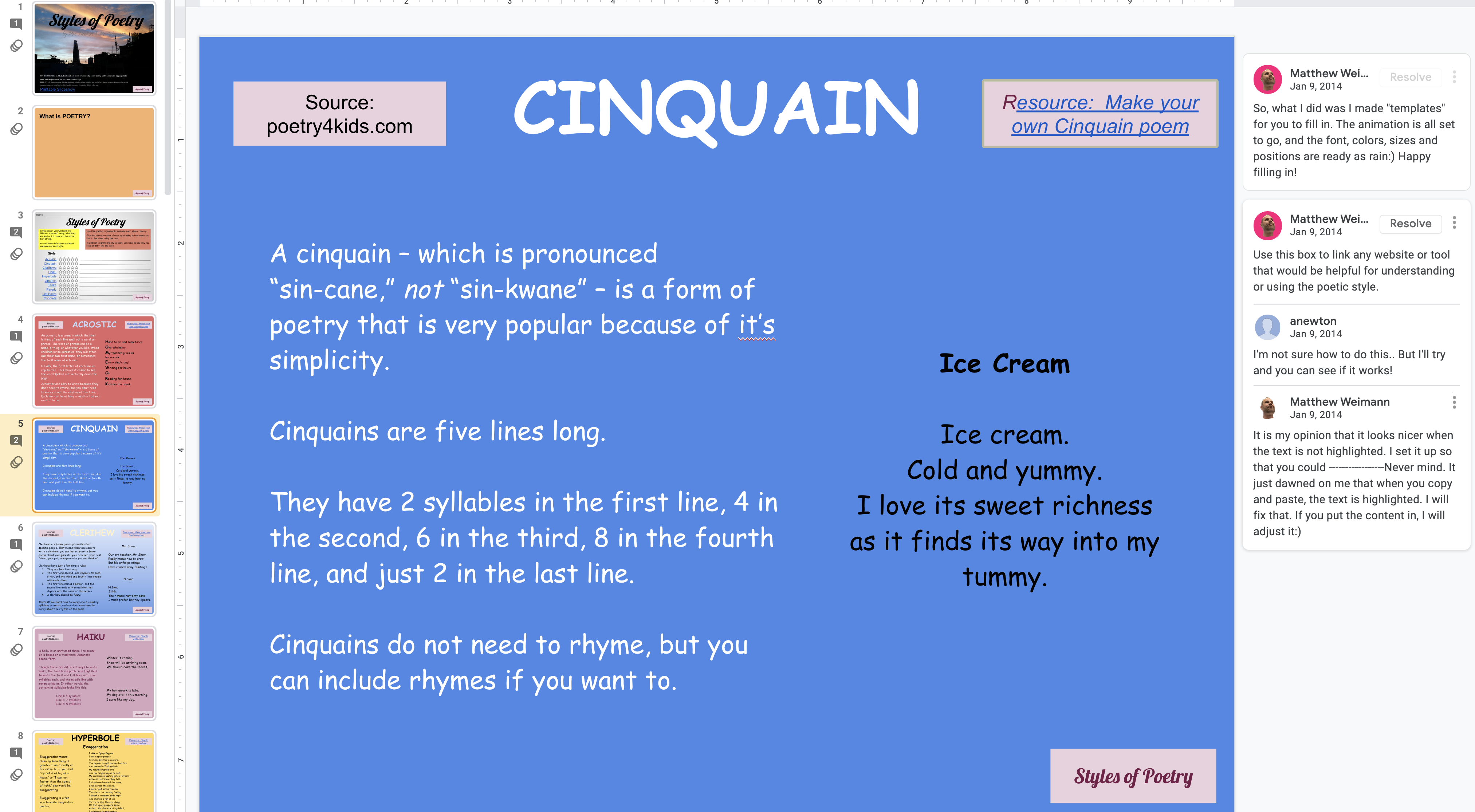
The librarian pulled a ton of poetry books for kids to hunt the styles after learning about them.
These screenshots show comments between the librarian and I in 2014.
The first thing I did was prepare to teach the subject that I knew precious little about. I find that teaching helps me learn. I shared this idea with my school librarian, and the two of us planned to collaborate on a fun project of teaching several styles of poetry to my class. I convinced the librarian to use Google slides to make a slideshow that we could both add information to simultaneously and from any device. She hadn’t used this tool before. Sharing the same love of learning, my librarian jumped right in to figuring out this great collaboration tool.
I learned poetry. The librarian learned Google slides. And, together we developed an exciting and fun interactive lesson that I still use to this day! Students are given a graphic organizer that has the names of the styles of poetry that they are about to learn on one side, five empty stars next to the name, and lines for writing. As they learn about the styles, they rate how they like them. In addition to coloring in stars, students are to write down a reason as to why they like or dislike a style. I guide them through this activity, sharing some of my own opinions. We explore examples of the poetry, and even try writing some of our own.
Blog post “Poetry is Classy” has a poem (“Spelling Story”) about the homonym spell. It teaches the importance of spelling while demonstrating poetry’s liberty for misspelling.
I by no means consider myself an expert on poetry. I have not read very much of it. The main change is that I am not afraid of it anymore. I’ve even tried writing some.
It helps that my audience is eight and nine-year-olds! By penning my own poetry and sharing it with my class, I am modeling giving it a try, even if you’re not good at it.
Not only that, but it is truly fun. One of the things that I like about poetry is the ability to break the rules. Like many things, it is important to know the rules, before breaking them. And then you don’t destroy grammar as much as bend it. My third graders are still a little young to truly understand “poetic license,” but they get the idea of bending rules. That’s for sure!
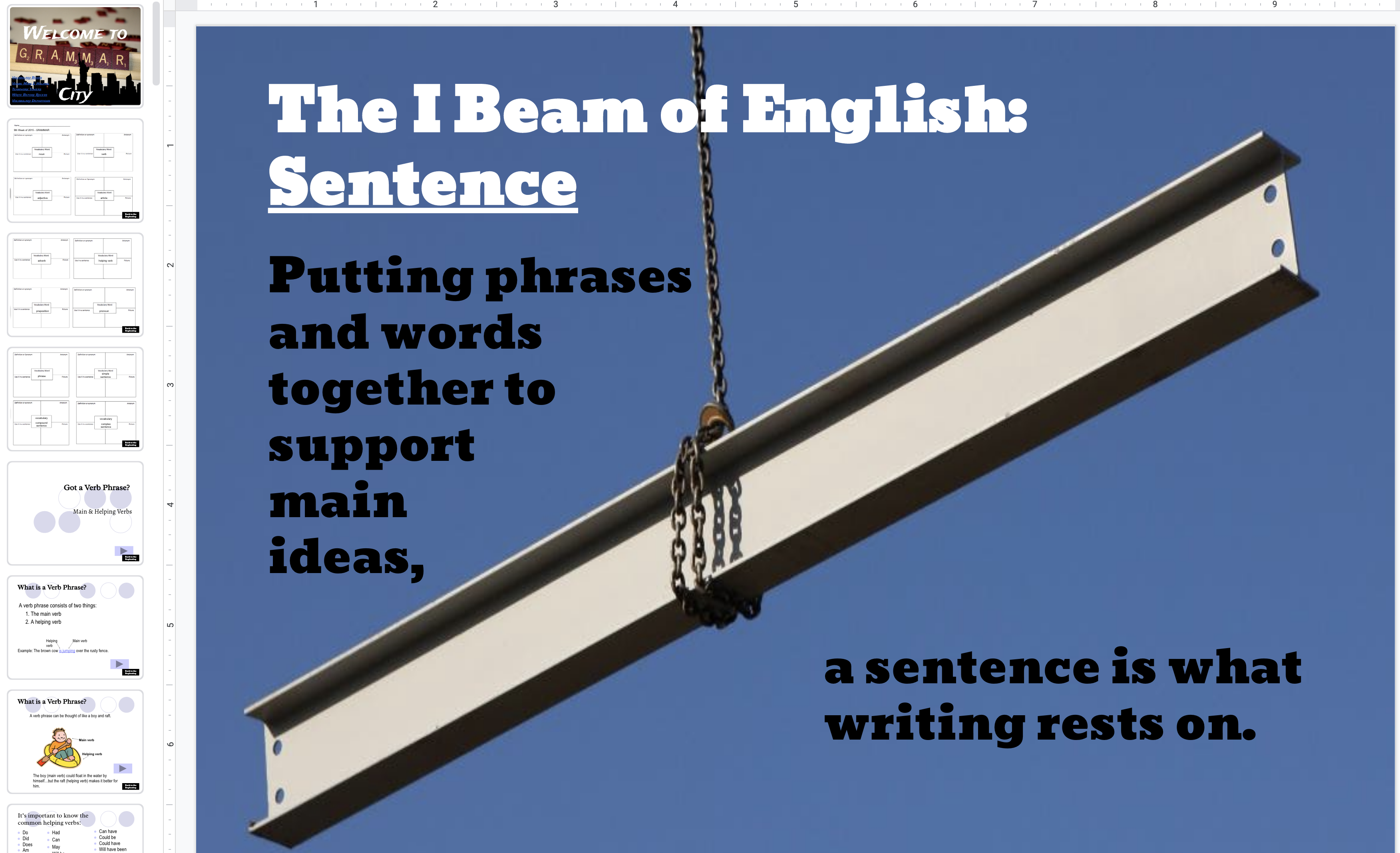
I devised this “Grammar City” two week lesson in 2015, making metaphors of constructing buildings to symbolize the structure inherent in writing.
How do you share poetry? Why do you teach it? Why do you think poetry is important?


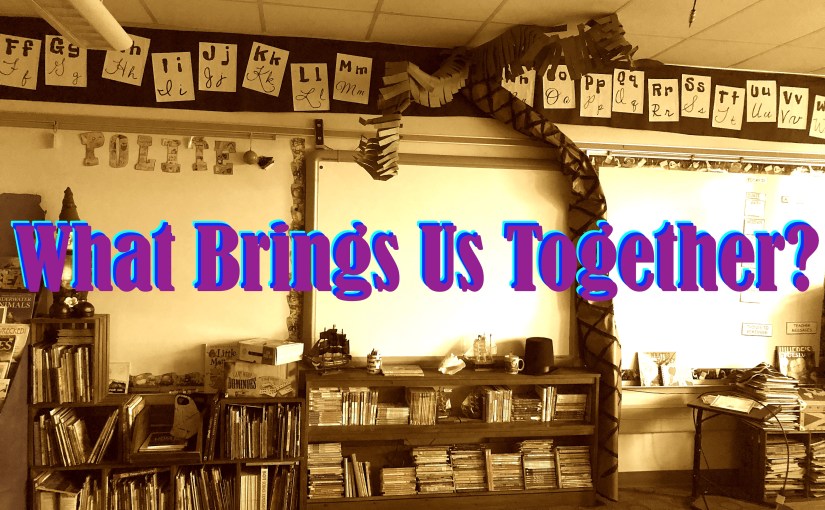

 Students wrote comments, connecting to the text, via Google Docs
 August First, 2018 — This is what I saw when I pulled up to my building.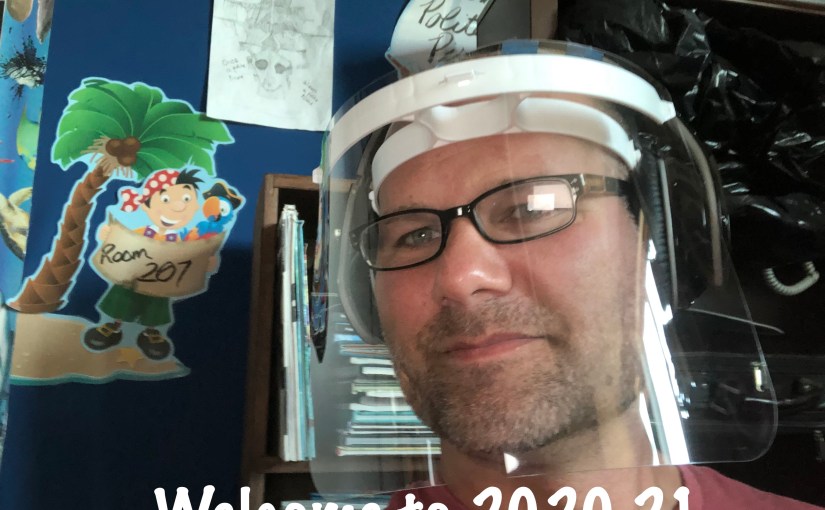



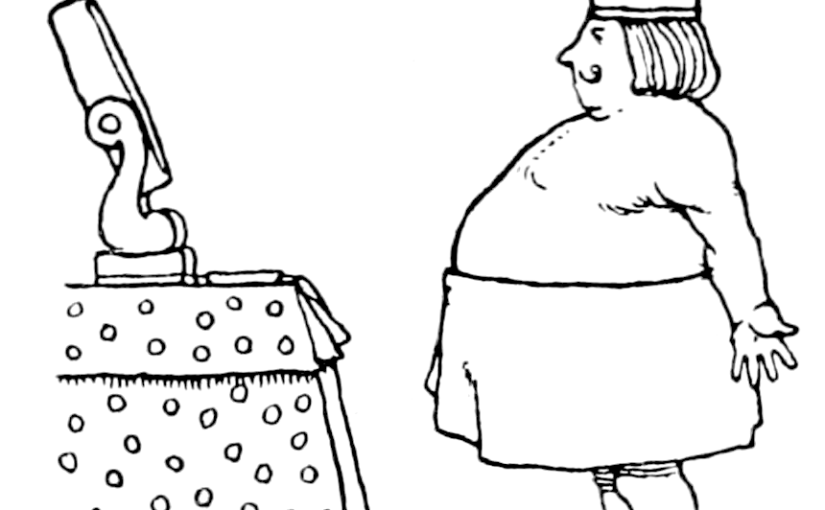
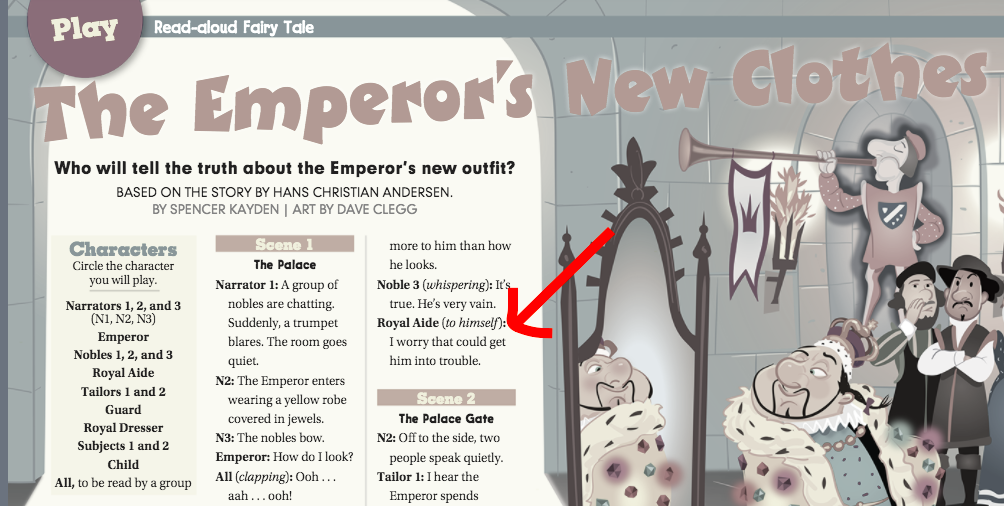 In this version there is a character named “Royal Aide” who, unlike the other members of court, wants the emperor to be successful. He fears the emperor’s exuberant love of looks, but he keeps this to himself… at least at first.
 One of the questions that Storyworks Junior posed for engaging students when reading this play was, “What message is the author trying to communicate?” Some students simply quoted the text, and told me “It is better to be hated and honest than loved through lies.”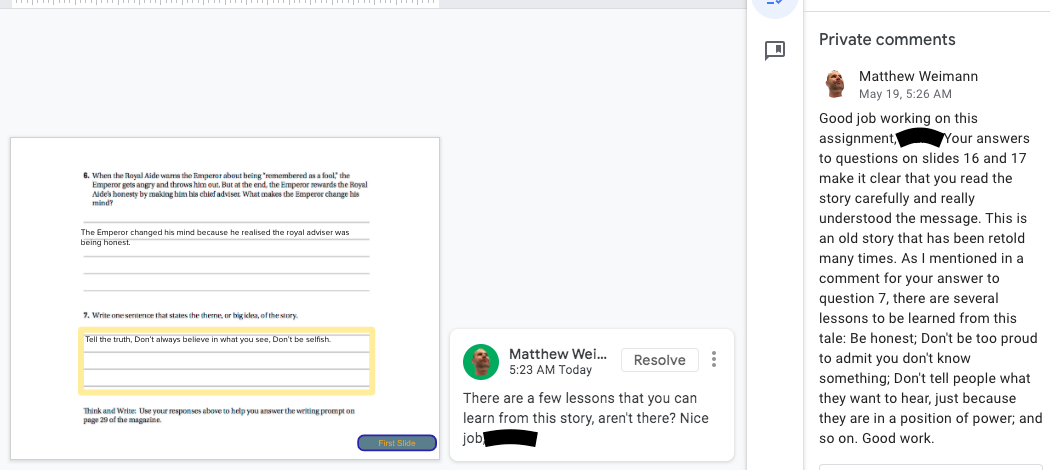
 There is a place early on in the play when the Royal Aide was honest with the emperor, but it didn’t pan out well. The palace guard told the aide that two tailors were here to show the emperor clothing that only intelligent people could see. What does the Royal Aide do with this nonsensical information? He shares it with his boss, who he knows to be weak in the area of resisting luxurious fashion!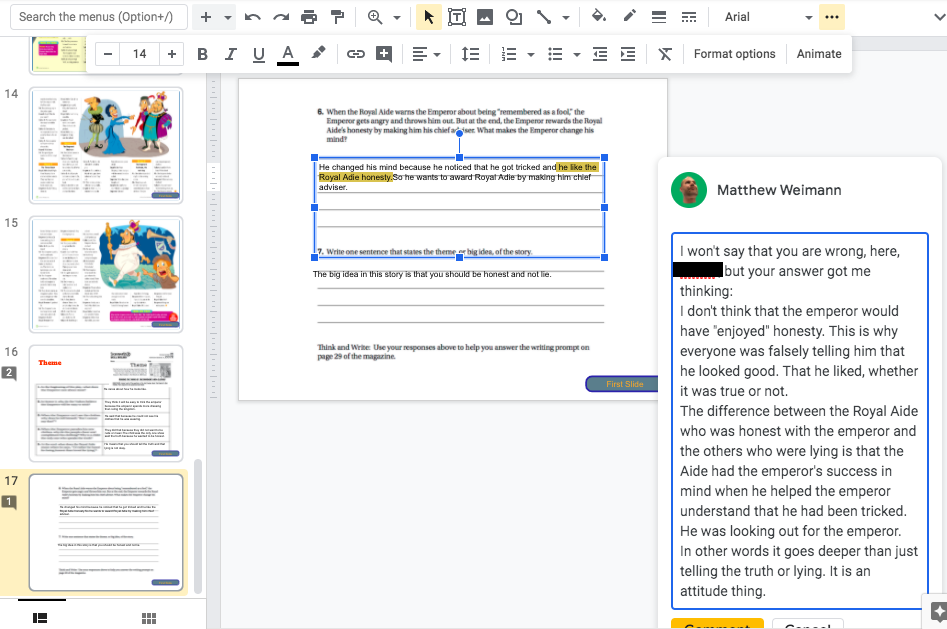
 The well of understanding is deep. Drink its classy waters. Honestly assess the best outcome for all involved. Good luck!
 Bud compares ideas to seeds in “Bud, Not Buddy” (Curtis, 1999, p. 90). The same seed of thought that can inspire awe, entertain, and provide refuge could also be the thing that you smash yourself upon. It could be so all-consuming that it even hurts your relationships with others.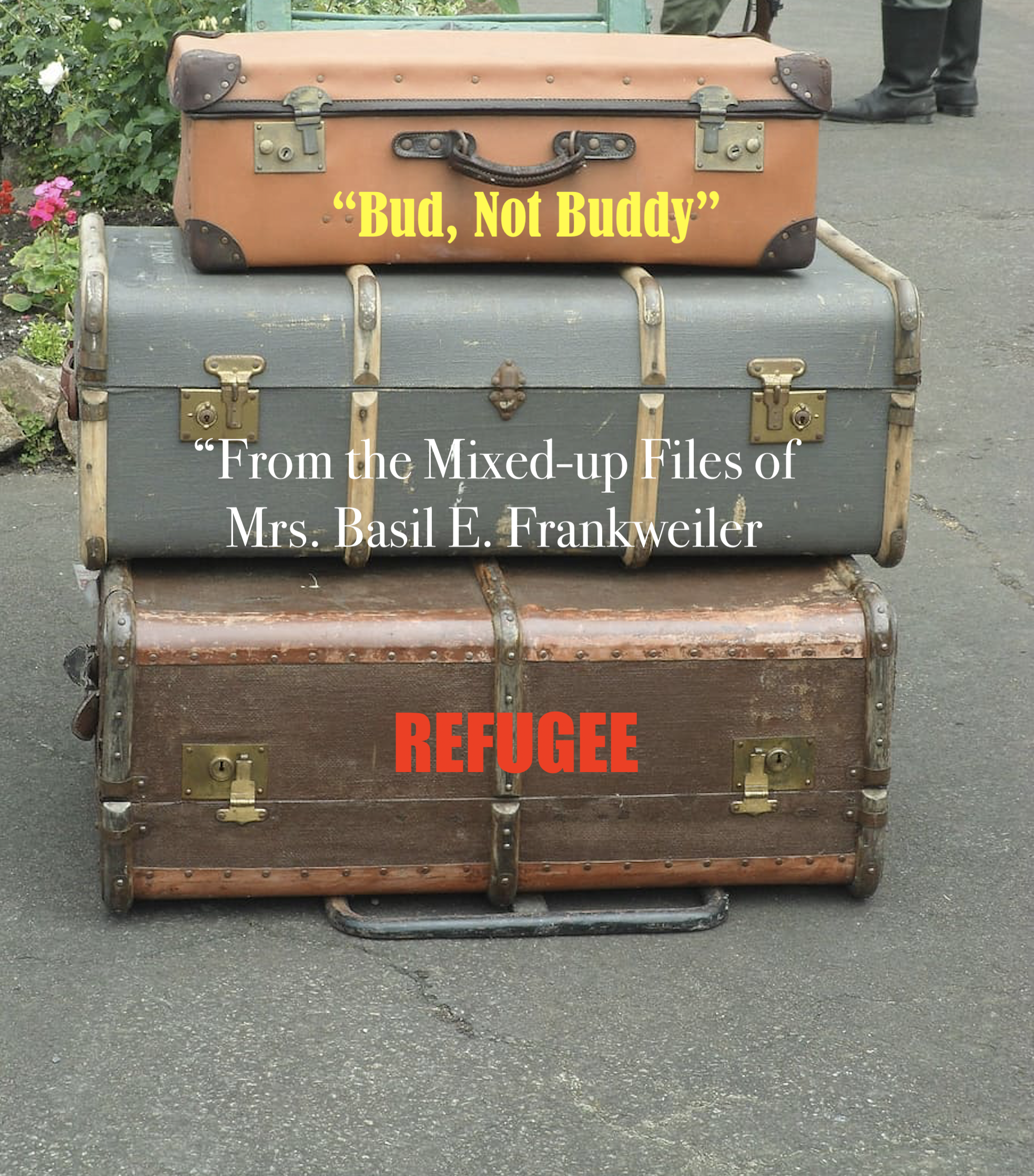


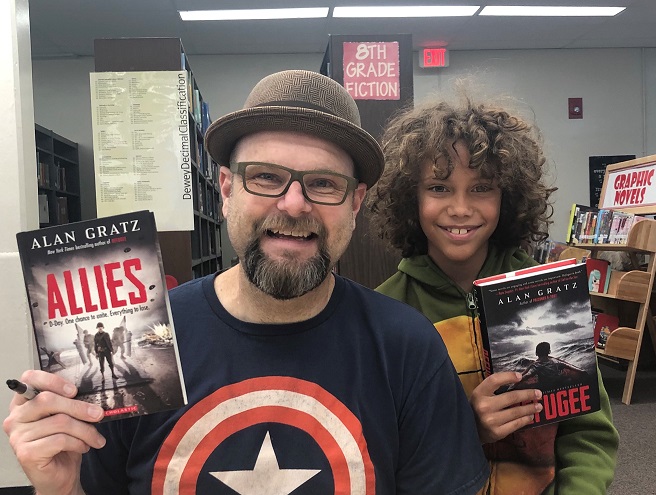
 BIBLIO: 2017, Scholastic Press, Ages 9 – 12, $9.74
 When we read, we escape. We live the lives of the characters from the text. Sometimes we escape boredom. Other times we escape reality. There are times we must escape ignorance.

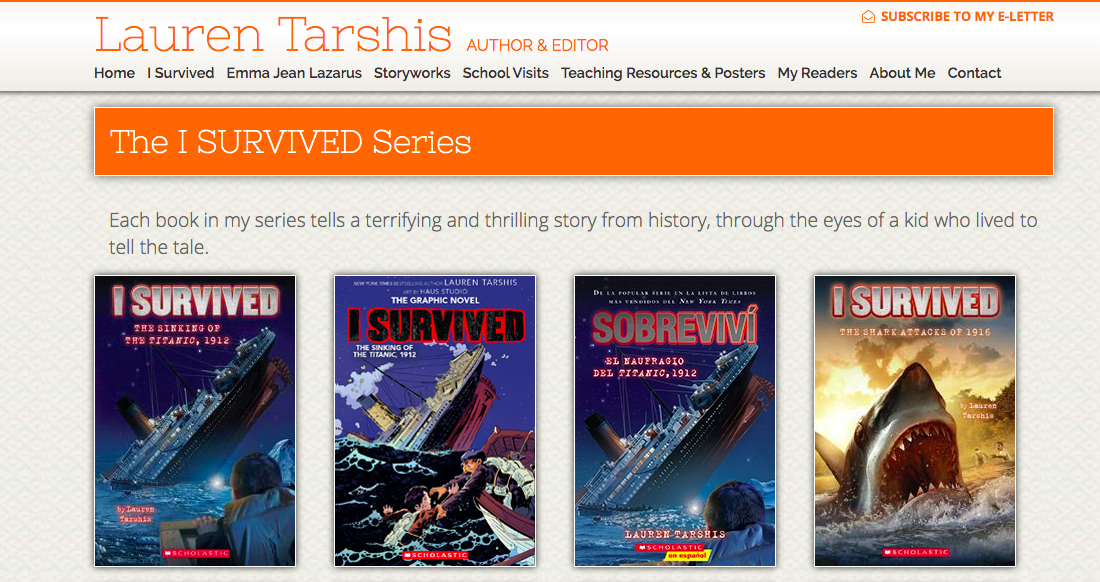 of this incredible magazine! Well, buckle up, because here is where Storyworks Junior shines. I used to think that you have to read a book, before watching its cinematic rendition. If you witness the movie, the ending of the story will be ruined! Storyworks Junior, along with some accompanying research has changed this mentality for me. The featured story for each magazine has a video that you show before the students read it. This video is accessed through the
  “Does the video give away the ending of the story?” you may wonder. While it does answer the burning question of whether the main character survived, more than that, it gives students a mental literary road map for when they read the story on their own. They know what to expect. The video shows some of the text as it is being read, in between dramatizations of the story. Also, it provides vocabulary words with definitions in the middle of the screen when they are mentioned in the text.
  The video isn’t the only online tool that Storyworks Junior provides. Every feature story comes in a variety of differentiated versions for beginners, intermediate, and advanced readers. And, don’t forget about those English as a Second Language readers! There is a text for them, too. These texts, along with vocabulary slideshows, worksheet packets, and quizzes, all made by Scholastic, can be shared via the Google classroom. Before Coronavirus imprisoned everyone at home, I used to print some of these packets for kids to fill in while reading/listening to the story. Then I’d let the kids use their work to take the quizzes that I nearly always altered a little. You can easily do this because the quizzes are Google forms.
 Let me backup a little. One thing that I love about assigning the Storyworks Junior magazine work online is that students can listen to the text. Scholastic knows the power of audio, so they have made every version of the story available in “Text to Speech” mode.

 Then I became an elementary teacher. Poems are everywhere! Teachers begin the day with them. They are read on the morning announcements. Magazines end with them. Children’s literature is littered with them. Come to find out, some of my favorite authors celebrate poetry throughout their texts. Roald Dahl’s novels are packed with poetry. How did I never see this?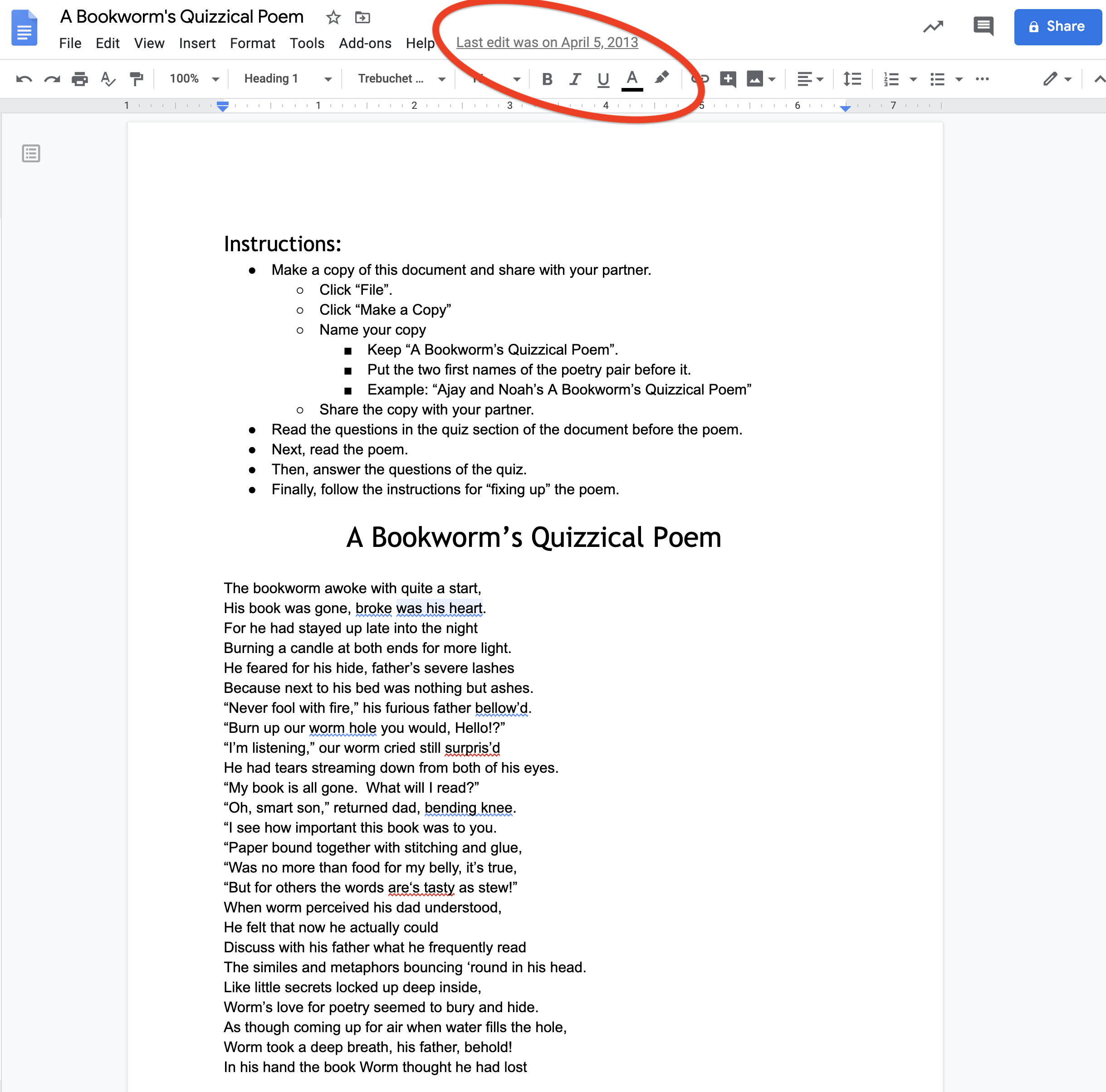



 The Captain of Class