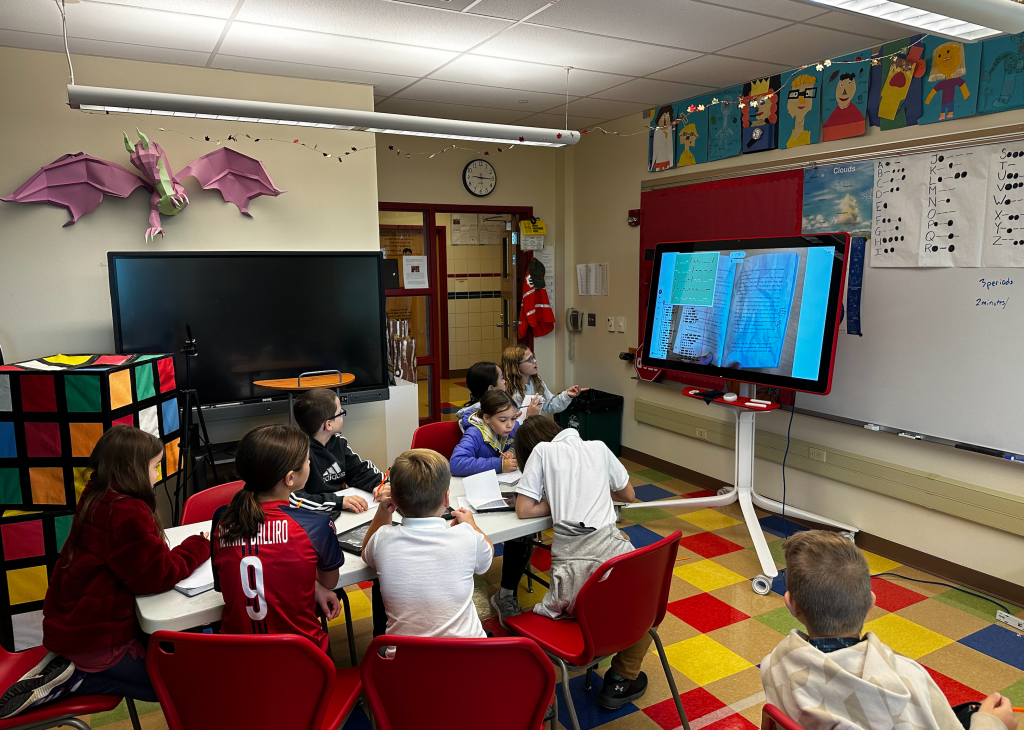
Give Your Teaching Life by Using Real-Life Situations to Teach

It’s math enrichment time again. The pacing guide has the fifth graders learning to add and subtract fractions. Our curriculum has an enrichment lesson that students can work on independently. It’s a grid that has empty spaces that need to be filled in order to help every row and column add up to the same sum. I like these types of exercises because they are puzzles and make the practice feel like a game

This is the enrichment activity provided by iReady. It’s a good tool for independent practice, but I wanted to provide a “Math Experience.”

I view my job as a math enrichment educator as deepening the understanding of already mastered math skills. Puzzles and games are a great way to make the skills easier to access, faster to use, and more accurate. They are excellent tools for regular ed teachers to provide for those students who have demonstrated competency in a math concept. This style of enrichment activity is good for keeping the advanced students busy while the teacher catches everyone else up to speed. For my part, I aim at helping students see the math from a different perspective, though. 

I cut all of the tiles for the ceiling before attaching them.

It makes a grid of mixed numbers!

Diamonds are beautiful, rare, and expensive gems used to make jewelry, but did you know that they are also the hardest substance on Earth? In fact, the fragments that are cut away from a diamond when it is shaped for a piece of jewelry were used to make saws and drill-bits that can cut through rock (2023). I’ve had the experience recently of using a diamond-studded saw blade to cut through ceramic tile and marble to make a new shower in my house. Just like adding and subtracting fractions can be used to complete a pretty grid, they are also very useful in everyday life. I hoped to make my students’ understanding of fractions more rich (enriched) by having them use their skills to help me measure tile precisely. 

This was one of the most difficult home remodeling projects I’ve tackled. I should use it to teach my students, I thought to myself. So I did.

Welcome to math-enrichment, real-world experience-mode. This project was full of fractions–really! I was excited to share it with my students. 

The first thing I did was think about the different ways I had to work with fractions in order to make the ceramic tiles fit my shower walls. I came up with a math problem that involved quite a lot of fraction work. This will be good, I thought, but perhaps there’s a simpler one to begin with. Even though it’s not the first part of tiling, I decided to have my students measure the window sill, a piece of white marble that had to be exact because the sides of the frame were already tiled. 

I put a photo of my window, minus the sill, into a Google jamboard. The photo shows my tape measure. “I took this picture, so that I would remember the exact measurement when I was at the granite store ordering my marble. I don’t want the gap to be too big on either side of the marble, or it will look weird,” I tell my students. “What I want is for the gap to be the same size as all of the other gaps between tile in the shower, ⅛ of an inch.” After explaining the parameters of the problem, my students have a goal: Make the marble look nice. It will look nice if the measurement is just right. “The space we have to fill is exactly 28 ½ inches wide,” I informed my students. “What width will the marble be cut in order to leave ⅛ of an inch on either side? Go!”

Anyone with experience measuring with rulers and tape measures for cutting materials will understand that you can simply back up your finger or the material on the tool to find the answer. Fifth graders have not had this experience, yet. Also, we were sitting in a classroom, instead of holding a tape measure up to the empty window frame.
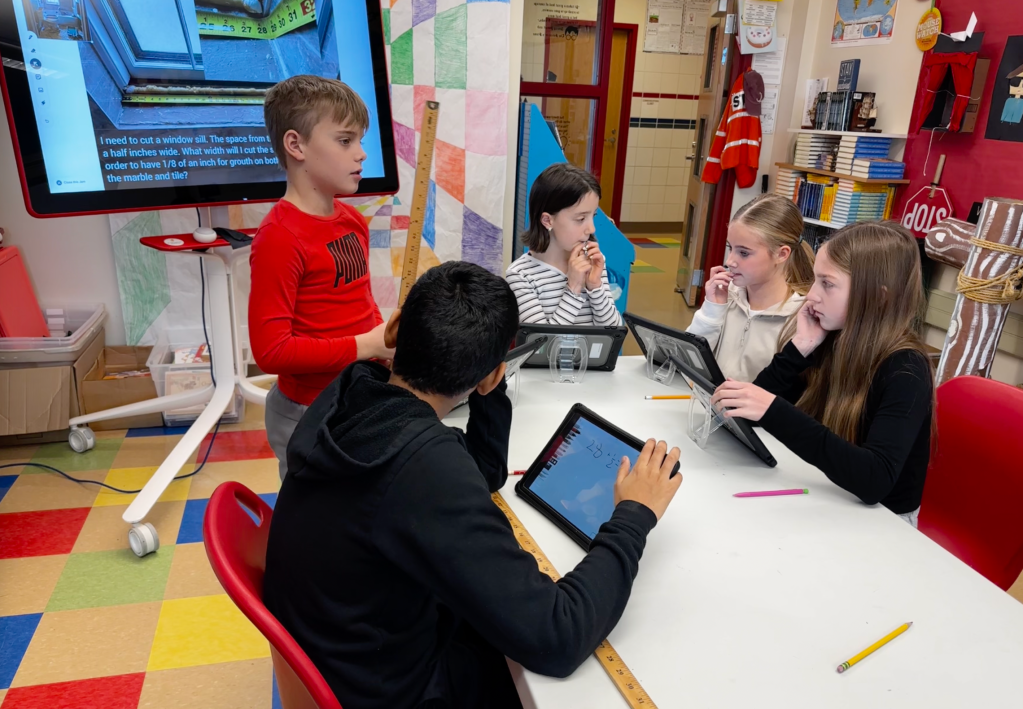
After letting my students wrestle with the fractions for a few minutes with a couple of them finding success, I showed the class how to look at the problem, by holding up a yardstick. I placed my finger at the 28 ½ inch mark. I slid my finger over a fraction (⅛) of an inch and asked them how much I just “cut” off of the marble. They saw that it shrank by ⅛ of an inch. “Now, we need to take ⅛ of an inch off of the other side, but do we move our finger ⅛ of an inch from the beginning of the yardstick?” I paused to let them imagine what would happen if we did that. “No, we include the subtraction of that ⅛ of an inch right here,” and I slid my finger over another fraction (⅛) of an inch. “Now, how wide is our marble?” 

Some of my students had written 28 and 2/8 on their papers. When we looked at the yardstick together, we discussed that it is better to say 28 and ¼ of an inch… “Not just because you are supposed to reduce your fractions! But, because one is easier and faster to count than two; plain and simple.” This set us up for our next problem, the one I had come up with originally, but put off until after having practiced some measuring, first. 

Time for some tiling!

“Now, we need to cut some ceramic tile to fit my shower wall,” I pitched. “Remember, we want to keep gaps of ⅛ of an inch between everything; between the tile, between the corner of the wall and the tile, between the tile and the metal edging; everything.” (This isn’t just easy for students to forget. It is easy for someone measuring for actually tiling a shower to forget. I should know! I can’t tell you how many times I had to re-measure or recalculate because I forgot to account for the grout!) 

“Okay, so our wall is exactly 30 and ¾ inches wide, from the corner of the shower to the metal edging. I’ve already tiled the window wall,” I explained. “This 30 and ¾ inches is the space that we need to fill with tile and grout.” I showed them a tile and told them that it is two feet by one foot, rectangular. There was a photo of my shower wall in the Jamboard, too. I wanted them to visualize the final product. While I had written the entire problem into a Google jamboard, I shared the problem with them orally, also. It was easy for me to communicate, because I just did this! It was fresh on my brain. 

“We will be alternating the tile,” I told them. “We begin at the bottom of the shower wall and work our way up. The first row will begin with a whole piece of tile placed in the corner. The next row will begin with half of a tile starting at the corner, and so on.”

“Guess what,” I exclaimed. “I have a treat for you: The tile that you thought (I thought;) was two feet wide isn’t! Like everything else in life, it is a little short; a quarter of an inch short to be precise. It’s your job to figure out exactly how wide to cut the tile that will fill the gap that is left within the 30 ¾ inches space. Don’t forget about the ⅛ inch grout between everything! Go.” 

Student mouths hung slack-jawed. I used the Jamboard to demonstrate the math. I drew lines that represented the sides of the shower wall. “This is the corner,” I told them, pointing to the line on the right. “And, this is the metal edging that is the end of our tiling.” I pointed at the line on the left when I said this. “Now, how wide is the space between the two lines?” I prompted. 

It took some waiting, but finally one of the students ventured, “Thirty inches?” 

“Thirty and what?” I reminded them.

“Three quarters of an inch,” they completed. I told my students that this was the width of my tub (30 ¾ inches).

“Okay,” and I wrote the complete distance in the space between the two lines. “Now, let’s begin by allocating ⅛ of an inch over here.” I drew a little circle next to the line that represented the corner. “What comes after the ⅛ inch of grout?” Pause. Wait. Patiently persist in waiting. “Look back at the problem.”

“A tile,” someone says out loud.

“Yes,” I affirm the correct answer. “We put a whole tile on the wall. How much distance does that take up?” I went ahead and wrote on the Jamboard while they were thinking: 24” – ¼ of an inch.

“23 and ¾ of an inch,” a student answered before I was done writing. Pleased, I put the length into the designated space in our row of tile. 

“Now what?” I asked.

“We figure out how wide the remaining space is,” a student said in a half statement/half question.

“Yes, but…” I wanted to provide positivity, but needed to help them toward accuracy. “Don’t forget about the ⅛ of an inch on either side of the remaining tile. You have to leave space (⅛”) between the two pieces of tile and also a space (⅛”) over here.” I drew tiny circles and labeled them on the Jamboard. “Use all of these measurements to figure out where I will cut my tile to place on the wall,” I told them. “Be careful!” I warned. “I don’t want to waste any tile. I have just enough.”

There were a few ways to figure out the answer. You could add up all of the fractions. And then, subtract the mixed number from 30 ¾ inches. You could also subtract each individual “space” away from 30 ¾ inches to see what is left. This method is like sliding your finger down the yardstick. After letting the students try the math on their own, we discussed. 

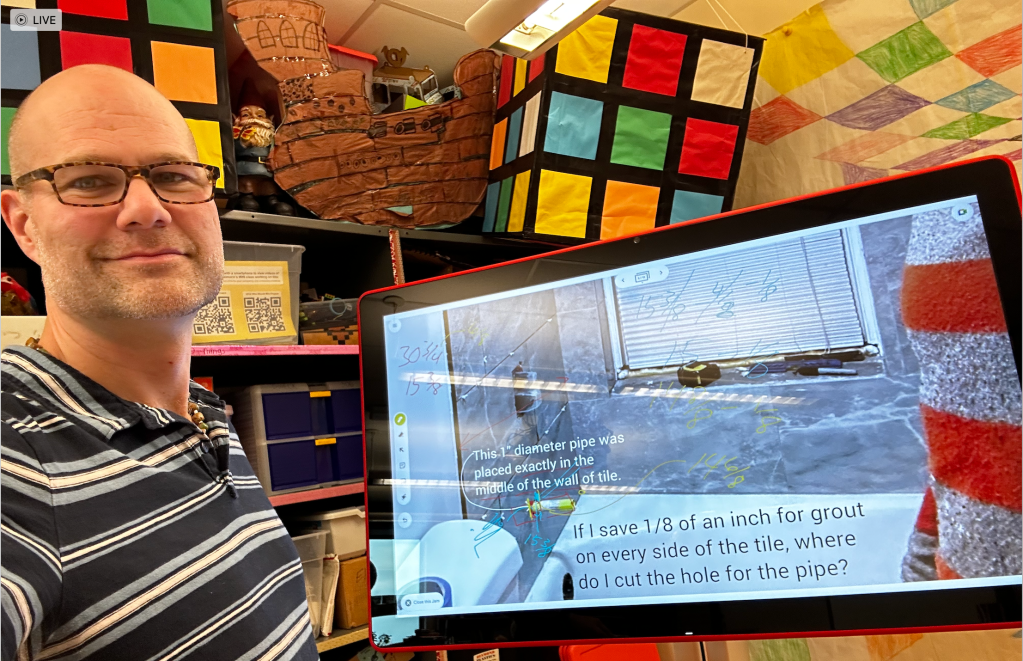
If you thought that the previous problems were difficult, buckle up. “Now, I have a real treat for you,” I told my students. “That first whole tile; The almost two feet wide tile; We have to cut a hole in it. The spout for my tub has to go through it.” Groans. “That’s right! I want the pipe, which is exactly one inch in diameter, to be in the center of my wall. What does that mean?”
“Halfway,” someone says. 

“Yes.” I let that sink in. “How far from the corner is the pipe?”

One of my fraction experts quickly tells me that it ought to be placed 15 ⅜ inches from the corner. I was pretty impressed, and had the student explain how he had converted ¾ into 6/8 in order to divide the fraction in half. 

“That’s right, but that is the center of the pipe,” I tell them. After explaining the term diameter, I point out that half of an inch will be on one side of 15 and ⅜ and half an inch on the other. “Where do we cut the hole for the pipe? …Don’t mess up! We don’t want to waste a great big whole tile!!”

After they fight with fractions for a minute, I remind them of the ⅛ inch of grout that precedes the beginning of the whole tile. Many groans follow this reminder. 

The whole lesson ends with me warning the students that, “After all of that measuring and math, you better be sure to cut the tile on the correct side of the line you draw, because your diamond blade will shave 1/16 of an inch off of whatever you’re cutting. In other words, you could figure out that the hole for your pipe has to be cut 14 ⅞ from the edge. Mark that measurement on your tile. And then, when you go to make the cut, slice the tile on the wrong side of the mark, which would make the distance from the hole to the edge of the tile 1/16 of an inch short. What would that be?” I posed the question, but didn’t actually expect them to figure it out. They knew I was messing with them, and they all gathered their things to leave. 

“Wait! What about our next row of tile?” I laughed as they left shaking their heads. 

Tony Wagner, the author of “Creating Innovators: The making of young people who will change the world” (2012), describes the practices of some highly effective schools. One of them is Olin College, a small engineering school that is pioneering hands-on learning.

“In classes at Olin, the primary goal is not the acquisition of knowledge. The goal is to develop a set of skills–or, in Jon Stolk’s terms, competencies–by solving a problem, creating a product, or generating a new understanding. Knowledge is important, but it is acquired on an “as needed” basis. It is a means to an end. Traditional academics often criticize this approach for being too utilitarian and lacking an appreciation of learning for its own sake, but the evidence is that Olin students are very well prepared for graduate school and better prepared for work, with managers who have been surveyed by the college reporting that Olin students who’ve just graduated act as if they’ve had three to five years of experience. Learning research shows that students understand and retain much more of what they learn when they have studied and used the knowledge in an applied context.” (Wagner, p. 175)

“When will we ever use this in real life?” is a question many math students will utter when trudging through seemingly pointless pedagogy. Infuse life into your teaching by showing how the lessons are used in real-life.  

Sources:

Development History of the Notched Rim Lapidary Diamond Blade. Barranca Diamond. (2023). https://www.barrancadiamond.com/home/history.html#:~:text=Richard%20Felker%2C%20a%20pharmacist%20develops,natural%20and%20manmade%20stone%20products.  

Wagner T. & Compton R. A. (2012). Creating innovators : the making of young people who will change the world (1st Scribner hardcover). Scribner. 

Math Games: Dessert for Dinner?

What if you could produce a dessert packed with protein and healthy nutrients; I’m talking even more beneficial than a typical meal. Would you serve this delectable dish for dinner every day? My conclusion may surprise you.

Last week was Parent-Teacher-conference-week at my school. Students had half-days, and families either visited the building or used virtual conferencing tools to converse face to face with educators. This was the very first time that I bounced around from teacher to teacher, visiting the conferences of my gifted students’ parents. While there are many ideas that I could comment on, the one that stands out most was from the parent of one of my math enrichment students. 

The family has a third grader who is gifted, and that is why I was attending the conference. But, his little sister, who is in first grade, attends my math enrichment lessons, and it was something that she said that got me thinking. Her parents told me that they asked their daughter what she did in math enrichment class, and she told them, “We play games.” 

“Is that all?” I imagine them pressing, being the good communicative parents they are. Yup, is the first-grade answer:) 

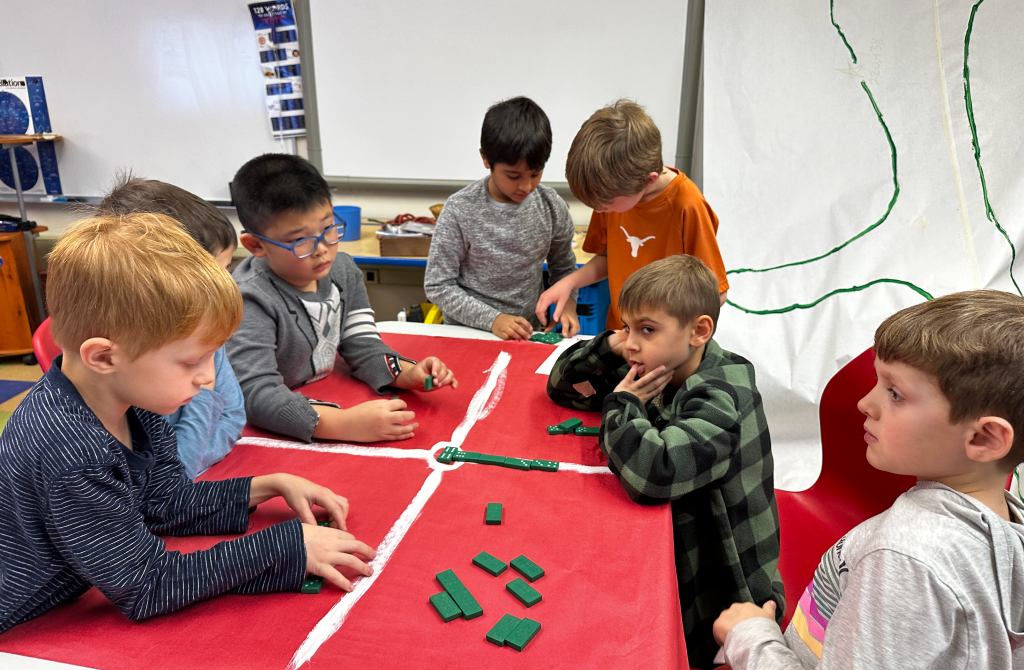
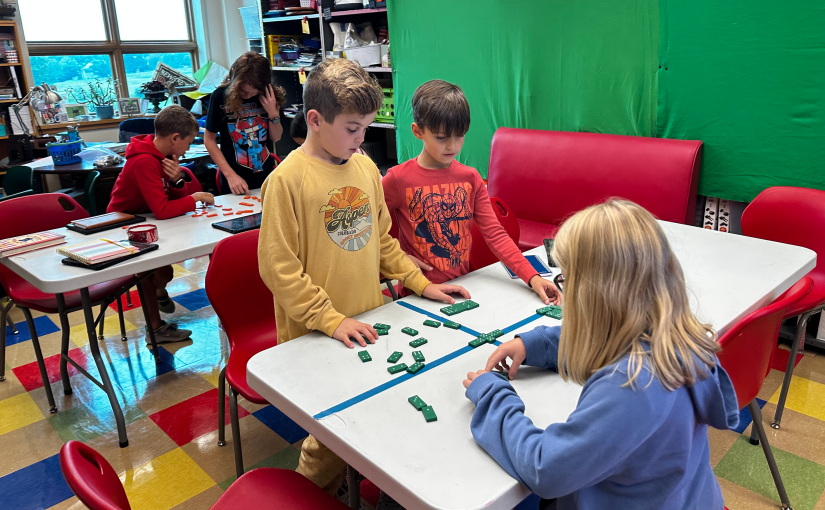
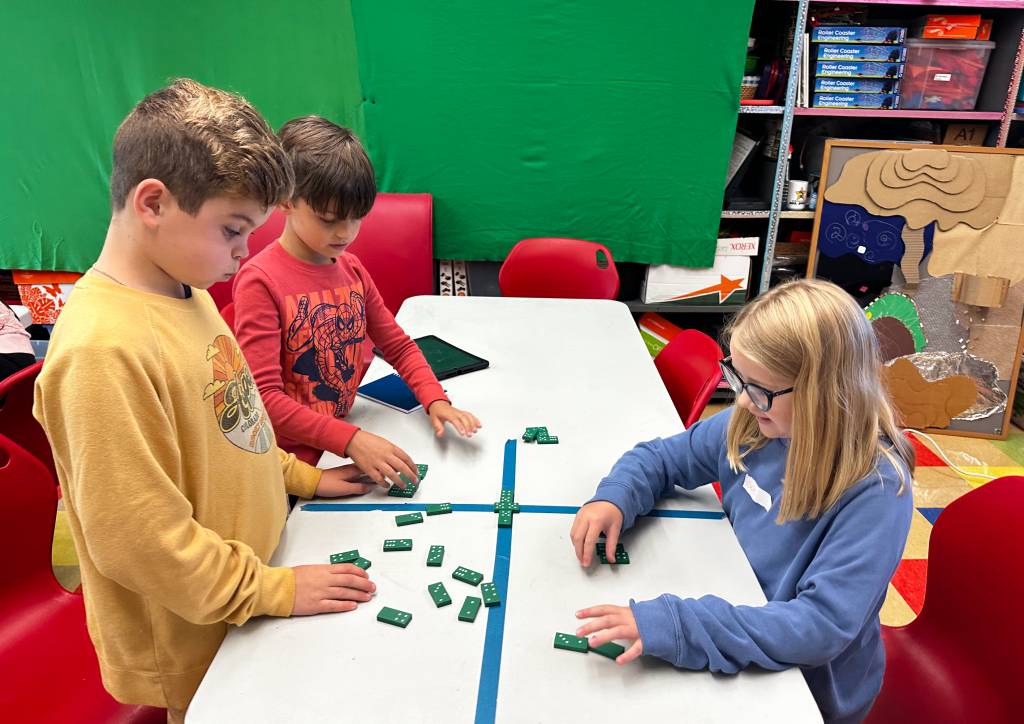
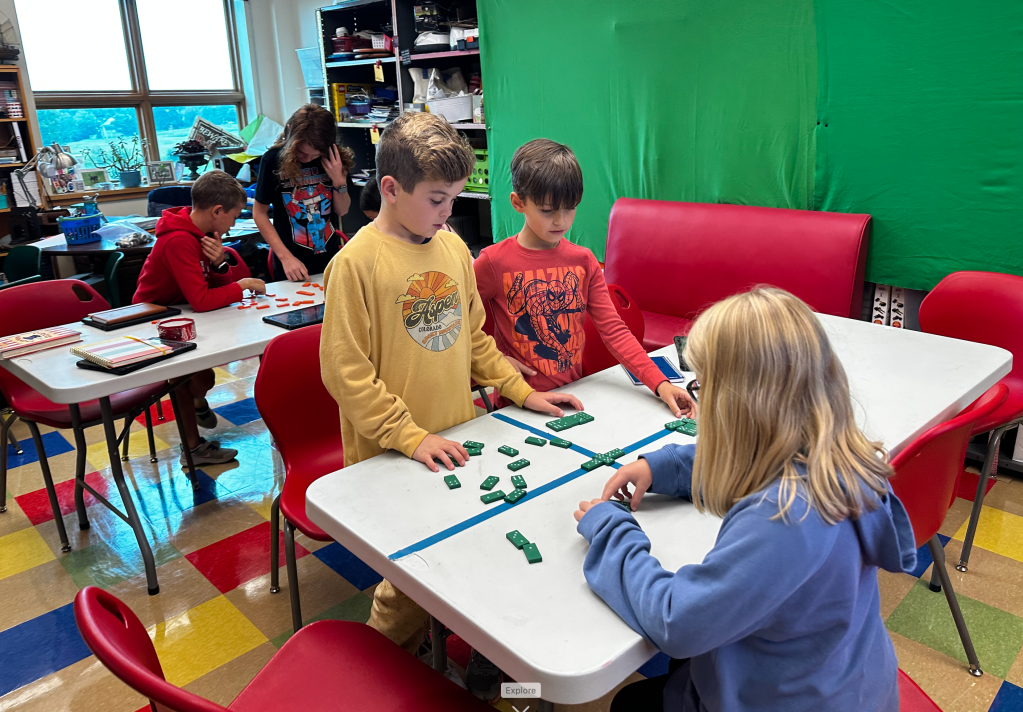
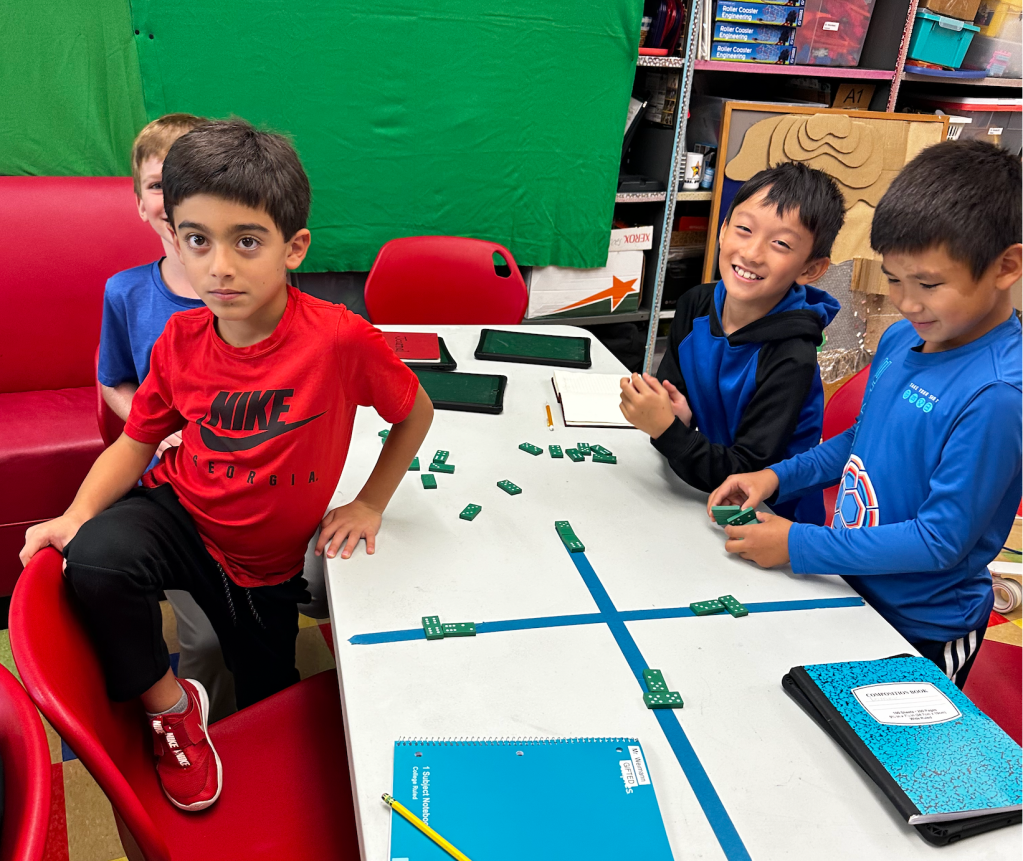
This is a recent pic of 2nd grade learning to play Dominos.

I laughed when I heard their tale. I explained to the parents that I was teaching the first graders Dominos. After defending the fact that there is a lot of mental math and problem-solving, there was some light banter between parents and the regular ed teacher about only knowing the stacking and tumbling side of Dominos. 

Because their gifted third grader had already experienced lessons showing the critical thinking development of Dominos, it wasn’t necessary to get too defensive. They were “on board” with my use of games for strengthening math skills. But, the idea of my lessons being categorized definitively as nothing more than games gave me pause. Initially, I was perfectly okay with tricking students into learning through having fun. What teacher would turn down that strategy? “Can we have some more math enrichment, please!” the students whine. “Um… Yes!” every math teacher in the world would utter. 

Then I thought about the idea of turning everything into a game. Wouldn’t that be wonderful for the students? But, would it be healthy? Hmm… 

This is where the thought experiment at the top of this blog originated. I was musing over my math lessons being perceived as games, and I dreamed up the analogy of only eating dessert. Prepare to enter a rabbit hole of research. I’ll try to keep it palatable😉

History of Dessert

Asking “Why does dessert even exist?” feels a little like questioning the purpose of gold or jewels. Isn’t it obvious? It’s awesome! 

Believe it or not, dessert did not always exist, however. Similarly to gold and jewelry, it was discovered, and has evolved over time. The French are responsible for turning entremets into dessert (Gerson, 2019). Before there were sweets to end a meal, entremets were served as “interval” dishes, literally “between-foods” courses (Teppen, 2015). They were meant to cleanse the palate. They may be sweet, but not necessarily. 
Eventually, a final course of fruit, called le fruit, was formalized (Gerson, 2019). Only, before serving it, the table must be completely cleared. This cleaning of the table was called desservir, the French verb for “to clear.” More than tasting wonderful, the original final course of fruit developed into something lovely to gaze upon. Some desserts even consisted of “Elegant metal and glass structures holding whole apples or plums. Other times, meticulously crafted sugar figures became the center of dessert displays, and might not be eaten at all. Dessert specialists in the eighteenth century were supposed to understand architectural design and be capable of replicating it in sugar paste” (Gerson, 2019). 

These creators of dessert, as it came to be known around the time of the French Revolution, when the Bourgeois assimilated the term, were originally more like artists than chefs. Maryann Teppen (2015) writes of an entire battle scene, complete with tiny sugary soldiers with guns and canons, that told the story of Louis XV’s demise crafted out of sugar. It is hard to imagine your dinner table being cleared; plates, napkins, silverware, and foods being “dessert-ed” away; only to be replaced by an elaborate, sugary scene of violence that you feast your eyes upon but don’t touch!

Modern dessert serves a different purpose. BreezeMaxWeb (2022) suggests it psychologically signals the end of eating. Consuming a small, sweet treat at the conclusion of a meal might communicate to the body and brain that we are all done, and there is no need to nibble superfluous snacks. The End. 

A practice that I began a couple of years ago has helped me lose some weight and become more healthy; I will eat an apple at the end of every lunch. Many years ago I heard that apples help clean your teeth, and apparently there is some truth to that (Apples: Dental Hygiene Facts, 2017). Once I’ve eaten my apple, I cannot/will not eat anything else. I don’t want to undo my teeth cleansing. This has helped me de-snack my afternoons.

Let me reintroduce the concept of math games, here. Could a game be used to transition from one course of subject matter to another? Would playing a game cleanse the cognitive palate, and prepare students for something completely different? Of course! Would this be an appropriate way to signify we are done with the subject? I think so.

Delayed Gratification (Deferred Satisfaction)

How many parents use dessert as a reward for finishing a well-balanced meal? That treat is the ribbon at the end of a race. Some contests require more work and take longer, but when getting to the game of a lesson is the goal, students may trudge longer, work harder, and persist through all kinds of problems. Those students who finish first might learn patience through having to wait for their peers to catch up with them before the whole group can consume the dessert of a lesson together. 

Self control. Training. Conditioning. “If I let you eat this piece of cake, do you promise to gobble up all of your peas and carrots without complaining?” doesn’t just sound silly. I probably don’t have to tell you that this is an ineffective reward model;) 

But, what if the dessert is carrot cake? What if the dessert is healthier than the dinner? Then what? “Eat all of your cake, or you won’t be given any peas…” Wait, what?!

Is there something to be said for learning to crunch through cardboard in order to earn cake? According to a longitudinal study spanning 40 years (Casey et al., 2011), learning and practicing self control early on in life can lead to better academic performance, less behavior problems, and even higher SAT scores. Casey and company (2011) describe in their paper, “Behavioral and neural correlates of delay of gratification 40 years later,” some ways kids can curb the pull of stimuli by learning cognitive control. There are mental strategies and tricks that people can use to provide buffers, dampeners, and walls to contain and maintain self sovereignty. Students may never learn or develop these important skills if they are never asked to wait for anything.

Through reading this research I wondered if teachers, themselves, are bypassing the delay of gratification when they jump right into games to teach. What educator looks forward to grumblings from their students? I propose that most  would prefer praise of pupils happy with pedagogical practices over the squabbling of scholars required to earn a fun activity. Are we educators partaking in dessert before dinner when we teach with games?     

Dessert Before Dinner

Before we beat ourselves up too much, let’s bring our metaphor along with us as we explore a couple of Jamarillo’s fun list of 11 Reasons to Eat Dessert First (2023). This may initially seem like a self-serving exercise, justification, or defensive maneuver, but hold on. Jamarillo raises the point that food can sometimes be a serious psychological hangup. “When we have disordered eating, we can often develop food or meal fixation.  Dessert is one of the most common food items restricted. This can lead to binge restrict cycles and disruption of hunger cues” (2023). 

Is it possible for students to develop “learning disorders” by experiencing “binge-playing” with learning games after enduring unnecessarily long restrictions? Just as Jamarillo (2023) suggests that dessert-first-eating can help overcome eating disorders through stimulating hunger, tapping into nostalgic memories, practicing navigation of bodily needs versus wants, and learning to respect cravings, beginning a lesson with a learning game can help students who struggle academically to open up to pedagogy.  

One thing more, and this might be a great way to end this blog, Jamarillo (2023) ends her short article with the fact that dessert is an ambiguous course. It can be a sweet, but doesn’t have to be. Fresh, raw fruit could serve as dessert. Pies, pastries, a tiny chocolate or candy, sweetened veggies, and yes, of course cake can all constitute desserts, whether eaten at the beginning of a meal, middle, or end. 

In conclusion, my first grade student may imagine all she does is play games during math enrichment time, but this learning dessert is rich with problem-solving proteins, mental math nutrition, and healthy higher-order thinking! With the short amount of time I have with my students, I have to make my challenges tasty. And, I’m okay with that;)

Sources

BreezeMaxWeb. (2022). Why Is Dessert Important After Eating Food?. Casa Romana Sweets. https://casaromanasweets.com/why-is-dessert-important-after-eating-food/#:~:text=When%20you%20eat%20dessert%20after%20your%20meal%2C%20it%20signals%20to,moving%20after%20you%20eat%20it.  

Casey, B. J., Somerville, L. H., Gotlib, I. H., Ayduk, O., Franklin, N. T., Askren, M. K., Jonides, J., Berman, M. G., Wilson, N. L., Teslovich, T., Glover, G., Zayas, V., Mischel, W., & Shoda, Y. (2011). Behavioral and neural correlates of delay of gratification 40 years later. Proceedings of the National Academy of Sciences, 108(36), 14998–15003. https://www.pnas.org/doi/full/10.1073/pnas.1108561108 

Cherry, K. (2023, November 5). The Meaning of Delayed Gratification: Deferred Satisfaction and Its Rewards. Very Well MInd. https://www.verywellmind.com/delayed-gratification-why-wait-for-what-you-want-2795429 

Apples: Dental Hygiene Facts. Summit Dental Health. (2017). https://summitdentalhealth.net/apples-dental-hygiene-facts/  

Gershon, Li. (2019, August 21). The Invention of Dessert. JSTOR Daily. https://daily.jstor.org/the-invention-of-dessert/  

Jaramillo, S. (2023). 11 Reasons to Eat Dessert First. Peace and Nutrition. https://peaceandnutrition.com/11-reasons-to-eat-dessert-first/  

Miller, K. (2019, December 30). What Is Delayed Gratification? 5 Examples & Definition. Positive Psychology. https://positivepsychology.com/delayed-gratification/  Tebben, M. (2015). Seeing and Tasting: The Evolution of Dessert in French Gastronomy. Gastronomica, 15(2), 10–25. https://doi.org/10.1525/gfc.2015.15.2.10

Multiple Enrichment Opportunities: Multiplication and Compatible Numbers with 3rd Graders

The idea underlying math enrichment is to deepen the understanding of math concepts that advanced students have already mastered. I began meeting with the top math students from each grade level (K-5) a few weeks ago, and I started off my introductions with this definition of enrichment. I didn’t want them to expect to go farther in their math skills, surpassing their peers. I also didn’t want them thinking that they were “above” their classmates who did not join me for this enrichment time. Rather than looking down from the mountain tops, we would dig in; We are in search of the riches (from en-rich-ment) that can only be found by looking beyond the ordinary teaching of math skills.

The challenge to myself is to find novel ways to show the use of math skills. I want the students to see that what they learn in the classroom is very necessary. Even if you never, ever have to use Pathagoream’s theorem, being able to use a formula correctly and understanding why is extremely valuable. 

An example of this is my lesson on multiplication for 3rd graders. Having completed an “Understanding Multiplication” lesson weeks earlier, and learning facts for multiplying zero through ten, I wanted to have students use these ideas creatively. I came up with a lesson that shows a way adults use multiplication all of the time without even realizing it!

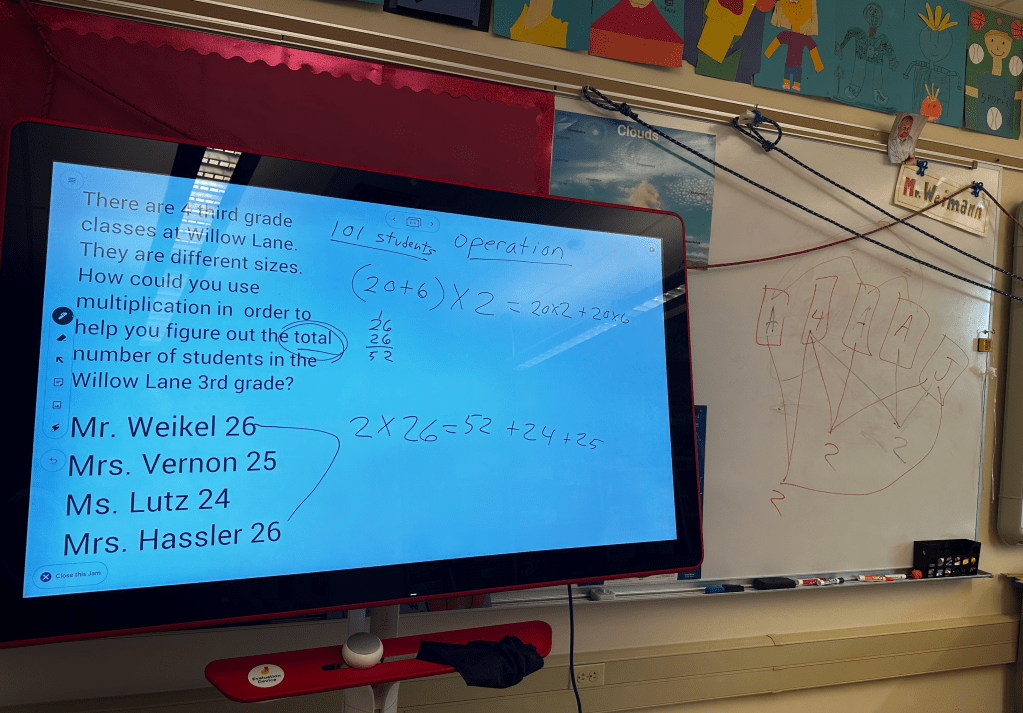
There are four 3rd grade classes. Each one is very close to 25 students. How many students are in 3rd grade? Adults immediately know that there are about 100 kids in the 3rd grade. How? We instantly know that 4 X 25 = 100. Easy-peezy. But, there are a few things going on behind the scenes. We, grownups, are already rich in the knowledge of four 25s equaling 100, due to decades of dollars and quarters! Also, we know to use the compatible number 25 when numbers are close to it. Third graders have been taught how to round, but they don’t know that it is okay to completely change numbers into “easy to use integers” (compatible) for simplifying computations!

I told them that they could simply add all of the numbers together, first. That way they know what they are aiming for. But, they have to show the use of multiplication to complete the problem.

As always, I wasn’t going to just come out and tell them all of this. My math enrichment students had to dig for it, en-rich-ing themselves. I gave them this math problem. 

It has to do with them, which is fun. The numbers are accurate. I looked them up on the school’s database. These are the names of the actual third grade teachers. 

I read the problem to the enrichment students. Then, I asked them, “What is this problem about?” After the students identified the topic of third-grade population, we discussed what the goal was. You have to provide the total number of students, but there’s a catch; “You have to use multiplication to do it!”

When I walked the students through the Important Information; the data that will be used to solve the problem; I paused to point out some key elements. The students noticed the multiple 26s. I showed them that there was something else they all had in common; They were all in the twenties. There were multiple numbers with a two in the tens. 

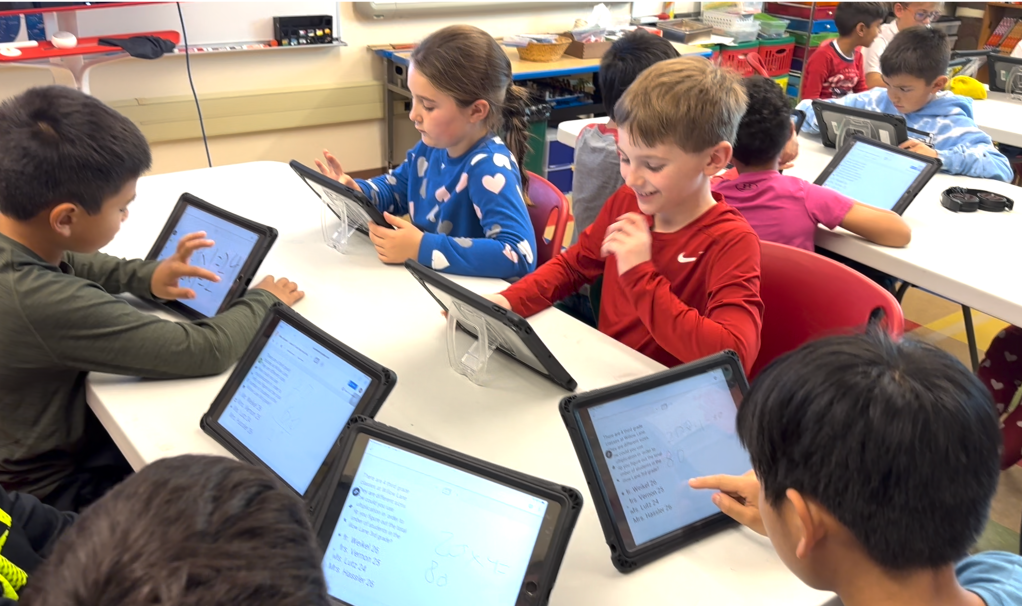
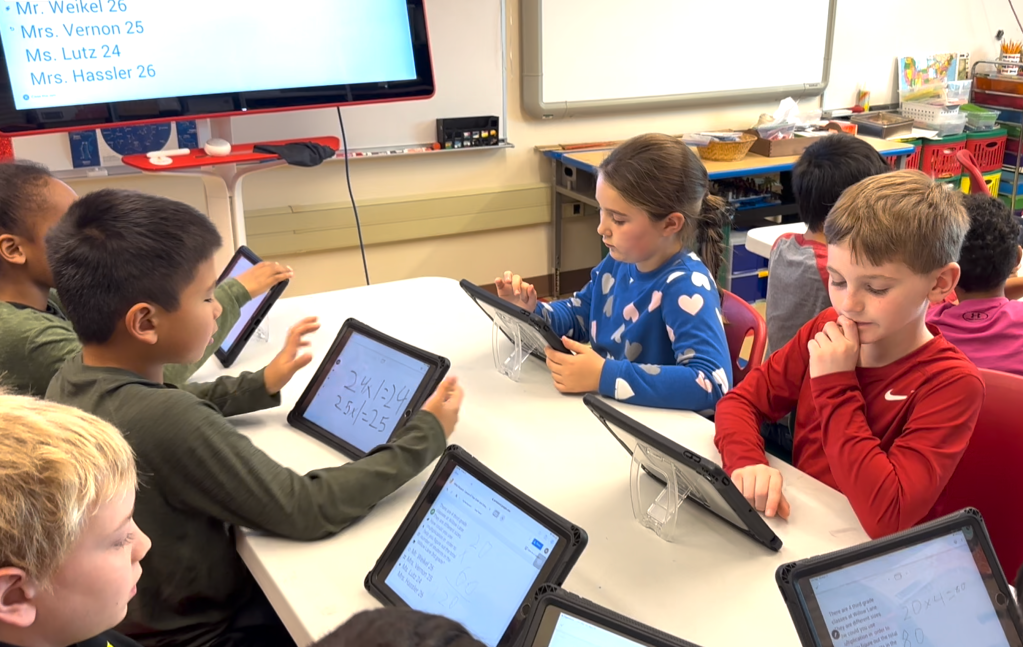
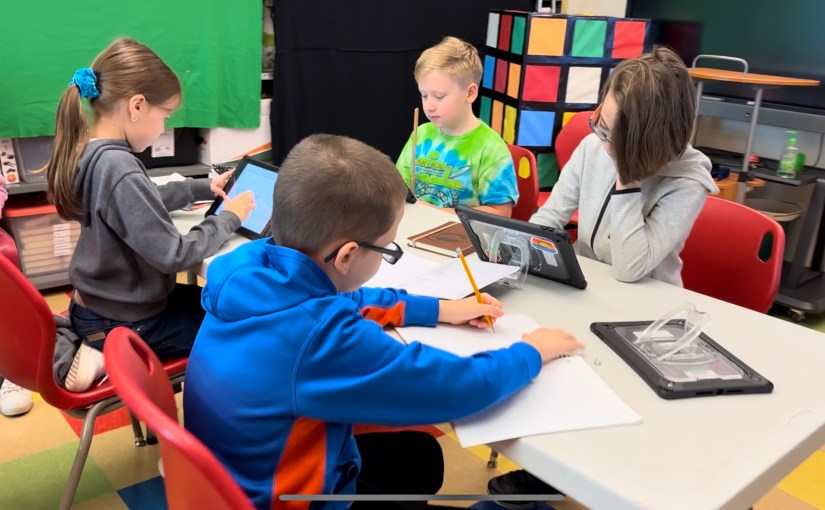
Finally, it was time for the students to do their work. “Dig in!” I had put the word problem into a Google Jamboard, so I could make a copy for each student in the Google classroom that I’d shared with the enrichment students. They were able to write on the Jamboard, using their iPads. I walked around and witnessed the digging. It was awesome to see the variety of computations. When students told me that they were done, I showed them how to duplicate the Jamboard slide, erase their math, leaving the word problem, so that they had a new work space to solve the problem in a new way. 

After letting the students wrestle with the word problem for several minutes, I had students share their calculations. One student multiplied the totals of class sizes by 1 before adding them all together. “Does this meet the parameters of the problem?” I asked the class. Yes. “Is this useful, though?” No. The student had only done this after I told them to come up with multiple ways to solve the problem. I was glad they had, because it was an opportunity to point out making math work for you. “Multiplication is a way to simplify math, believe it or not,” I told them. “Can you multiply 20 times 4 in your head?” Yes; see? I reviewed with the group that multiplying anything times 1 is the identification principle. It simply tells you what you are working with; “One times Dominic, means you have one Dominic” 😉

I had students share their Jamboards on the classroom Googlel Jamboard, so we could witness the different ways to use multiplication. I was impressed by a few students breaking apart bigger numbers before multiplying. Only a couple of students recognized the closeness of the class sizes to the number 25. This presented a teachable moment, and I shared the vocabulary/math concept of compatible numbers

After this, our time was up. I mentioned that time, like money, presents some compatible numbers. “What is 4 times 15?” I asked the class. When no one answered immediately, I asked, “How many fifteens are in an hour?” They knew this to be four. “So… four 15s makes up one hour… ?” 

Sighs and “ah has” could be heard. “If you have a few numbers that are near fifteen, could you use fifteen as a compatible number for multiplication?” Hmmm… 

Average Salt Consumption: 5th Grade Math Enrichment

In the excitement of beginning a 5th grade math enrichment club I created a math problem that may have been a bit extreme. I wanted to use something from real life, make it challenging, and leave my students thinking. 

Photo by Castorly Stock on Pexels.com

The topic I settled on was sodium; specifically, our salt intake. What 5th grader can resist paying attention to a life and death lesson? They may have already heard about salt consumption severity, but if not, they will! This should make the lesson stick. (see “Explanation” of The Power of Contrast.) As it turned out, I was right. Not only did a few of the 5th graders understand the dangers of salt, but some knew that too much can negatively affect your blood pressure. 

In order to increase the cool-factor of the lesson, I explained the importance of salt in conducting electricity throughout your body. I did this by asking them which is more dangerous during a lightning storm, swimming in a chlorinated pool or a salt water pool. Salt is a much better conductor of electricity than regular, clean water. They were energized by this new information. (For a very easy to read article about salt’s necessary functions in our bodies, check out “Pass the Salt: Sodium’s Role in Nerve Signaling and Stress on Blood Vessels” by Abbey Bigler-Coyne. And, here is an awesome, short read about salt’s dangerous properties during lightning storms: “Ask the Physicists: Swimming in a Lightning Storm“)

I knew that the 5th graders had been working with decimals. I thought it would be fun to make a problem that had them wrestle with decimals in more than one way. We would average our salt intake. 

First, I did some research. According to the American Heart Association, humans would ideally consume 1,500 milligrams (or less) of salt per day. Written in decimal form, this translates to 1.15 g.

American foods are loaded with salt, and our favorites are the worst! For lack of time, I did not burden my math enrichment students with too much detail. They had no trouble understanding what foods are super salty. They mentioned French fries, hot dogs, and chicken fingers. Then, we discussed foods that didn’t seem salty, but definitely had some, like ice cream. 

This set me up for presenting my word problem: While the human body needs some salt (only around 500 mg), too much of it can be harmful. It is recommended to consume around ½ of a teaspoon or less per day. A half of a teaspoon of regular table salt measures about 1.15 grams. 

Some foods are notoriously more salty than others. In the interest of being healthy, one might try to consume less salt on days surrounding heavy intake periods. 

Look at the data to the right. How many days will this person need to consume only 1 gram of salt in order to bring their average down to 1.15 grams per day?

How It Works

Before going over the problems with my 5th grade math enrichment students, I taught what it means to find the average of a few numbers. I pretended that the students had taken a quiz, and I wrote some fake scores on the board. What was the average score? It isn’t necessarily the middle of the range (distance from smallest to greatest). I had written 10, 8, 5, 6, 8, 4, 0. (They insisted that someone get a zero; Rude! I suggested that the zero was probably due to the person failing to put their name on the quiz, and couldn’t get any credit;) 

There were two 8s. That might pull the average up. “You use an algorithm to find the average, and it can adjust,” I explained. I showed them how you add all of the numbers together, and then divide by the number of scores. “There’s more than one 8, so that should cause the average to weigh heavier on the higher end of scores. But, then the zero is going to drag the average down.” 

“It is like tug of war,” I explained. “The higher the scores, the more the rope gets pulled in that direction. If there are more low scores, the rope begins to go to that side.” 

We played with the numbers, changing them a few times. I showed how, when you raise a few grades, the average goes up. I had students make predictions. 

Next, I showed the 5th grade math enrichment team our word problem for the day. I read it to them, and then asked them our Ready Math questions that help us understand word problems:

  1. What is this problem about? A. Salt; Adjusting the average consumption.
  2. What are we asked to find? A. The number of days necessary to significantly decrease our average amount of salt consumption.
  3. What is the important information? A. The amounts of salt we consumed over the weekend, our goal, and the amount of salt we will allow ourselves to eat until we reach our average goal.
  4. And finally, what are you going to do? A. Continue figuring out the average of the three weekend amounts, combined with ones (1 gram per day) until you reach an average < 1.15 g.

They understood the story of the problem. We ate way too much salt over the weekend. Now, we feel the need to eat extra healthy to make up for it. 

I walked the class through one or two tries: “If you consume only one gram of salt during the day after the weekend, what happens to the average?” We added up the number of grams, and then divided by the four days in question. 9.61 ÷ 4 = 2.40, still too high.

I had placed the word problem in a Jamboard. When I pushed the lesson out to my 5th graders via their new 5th Grade Math Enrichment Google classroom, I made a copy for each. I let them wrestle with the numbers on their own for a few minutes. I showed them how you can “duplicate” a slide in Jamboard, so that all of the important numbers and word problem get carried over to another clean workspace. I wanted them to try the math a few times, showing me their work. 

I caught a few of them trying to average the three days of the weekend. I told them that this was unnecessary, because we already know that every single day of the weekend was way over our end goal of 1.15 g! “You can go ahead and practice averaging, but this won’t get you to our goal: Finding the day we don’t have to limit our salt intake to only 1 gram.” 

After a while, I wrote the weekend numbers on the dry erase board: 2.56, 3.08, and 2.97. Then I said, “What if you eat only one gram of salt for the next ten days?” I drew ten ones next to the first three numbers. “In order to find the average, you first add all of the numbers together.” I drew plus symbols between every number. “Next, you divide by the number of weights.” I walked them through dividing 18.61 by 13. “The average intake would be 1.43 grams per day. This is still too high, so we have to continue eating only one gram per day a little longer.”

We hadn’t found the answer by the end of our time together, but that was okay. This time of math enrichment was meant to provide teaching that they can bring back to class and use on their own during independent work time. I had hoped that some of the students would continue working on their salt word problem throughout the week, when they finish their other work. 

A few students seemed excited about finding the accurate number of days as they left the classroom. They told me their tries and expressed surprise at not finding the answer yet. I told them to keep going. It was out there!

I found out later that a few students expressed to their math teacher that the problem was a little too hard. This inspired me to include the next part of this blog; The explanation. 

I chose 1 gram to be the new amount that the person consumes each day because you could eliminate one of the steps from the algorithm for solving averages, if you used increments of ten days. More than erase the step, you do it mentally. We already did ten days in class. That wasn’t low enough. Next, try 20 days. If you remember that the three days from the weekend is 8.61 g, all you have to do is stick a two in front of it! Then put a two in the tens place of the number you are dividing by; 23 (twenty more days + the three weekend days). At this point, it would be best to use a calculator to figure out the long division. (I never said that you couldn’t. I modeled using long division, but once you leave the classroom… 😉 Just show your work!! Write down what you did. Document each try, the answer you got, what you did. Be a scientist about it. 

Once you find between what two tens your answer falls, you can begin narrowing your work further. 28.61 ÷ 23 = 1.24 (twenty days of 1 gram of salt per day); 38.61 ÷ 33 = 1.17 average grams of salt per day; close, but not there yet; 48.61 ÷ 43 = 1.13 We made it! …But, we only ate one gram of salt for more days than necessary. We overshot our goal. In order to figure out the exact day, we could go back one or two days at a time. Maybe try the middle; 35 days. 

One student messaged me within the 5th Grade Math Enrichment Google classroom, seeking clarification. She had taken notes on my example of ten days, and couldn’t remember why we added the ten to 8.61. I messaged her back, and a couple of days later, she had it! This student not only figured out the answer, but showed me all of her work. It is beautiful and impressive. 

In addition to this incredible success, however, I am pleased to share that some of the students were still mentioning the problem to me in the hall, days later. A student whom I see riding his bike when I monitor the crosswalk in the mornings queried if anyone had solved the problem, and we talked about possible solutions. I told him that it was more than 30 days. He couldn’t believe it. 

Congratulations to this amazing student! She did it. Great job!

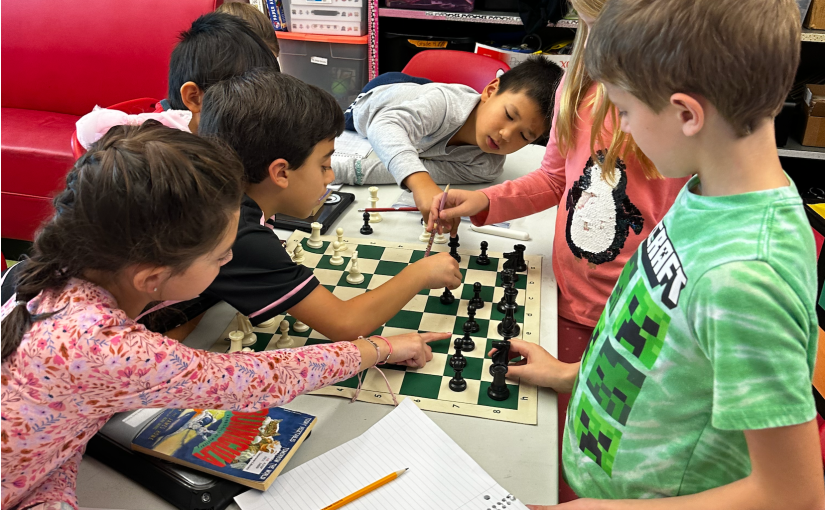
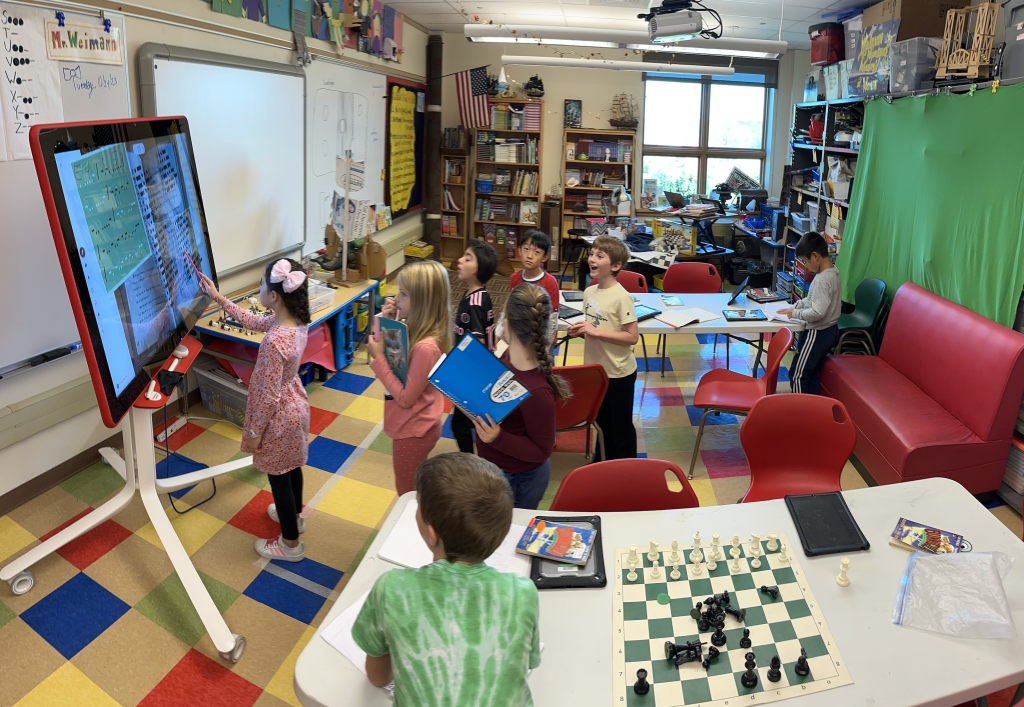
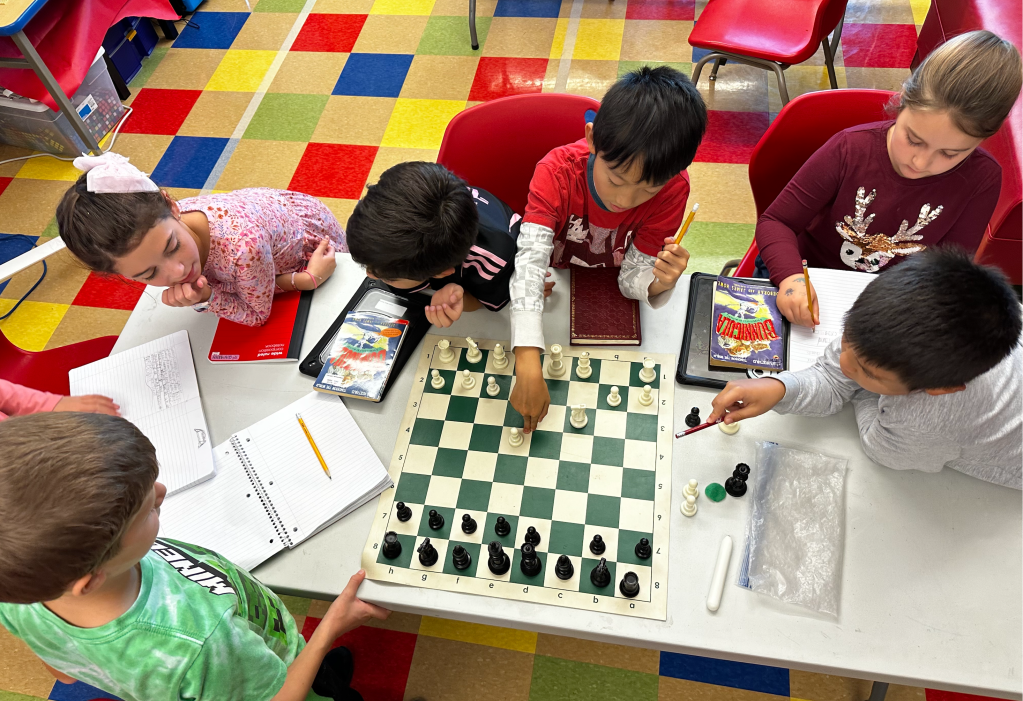
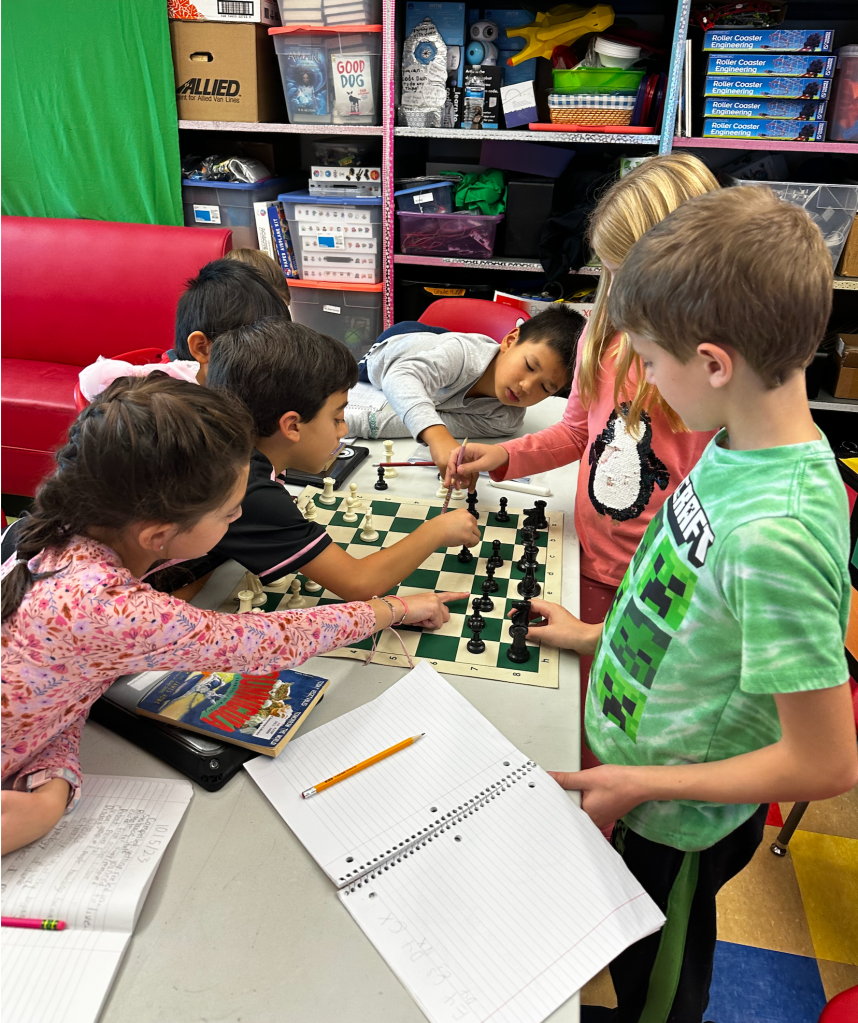
Math With Chess

“How many more squares is White attacking than Black?”

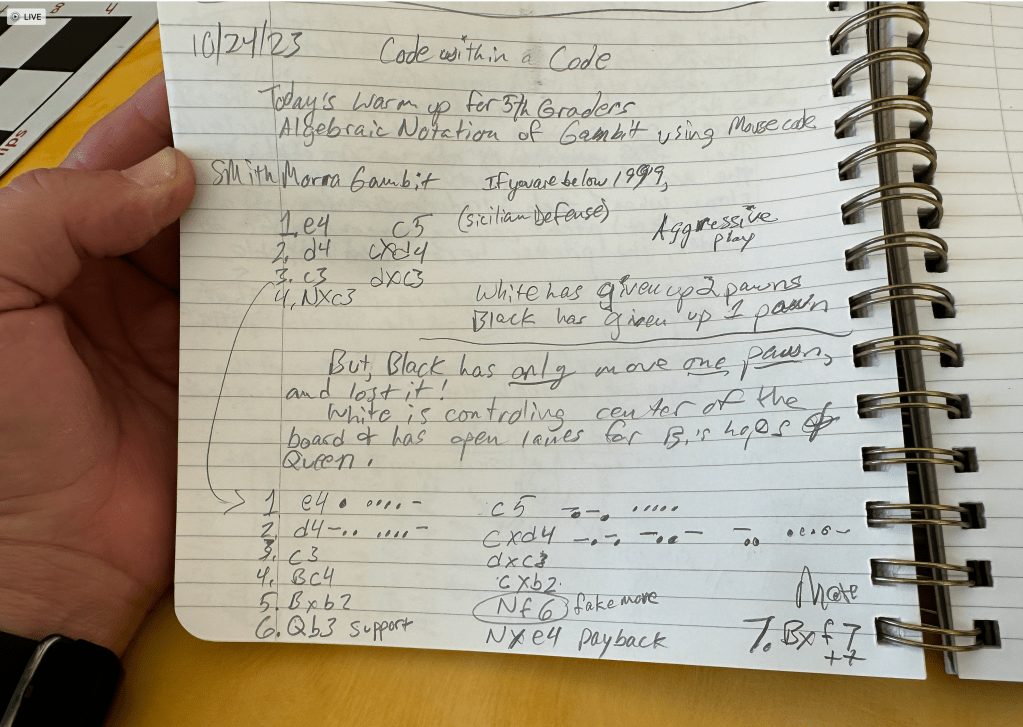
This problem was awesome on a few fronts. Students had deciphered a Morse code message that shared a short sequence of chess moves written in algebraic notation. They played out those moves and discovered that one player had a huge advantage over the other. “How much of an advantage? Be specific. Can you put a numeric value to the advantage?” 

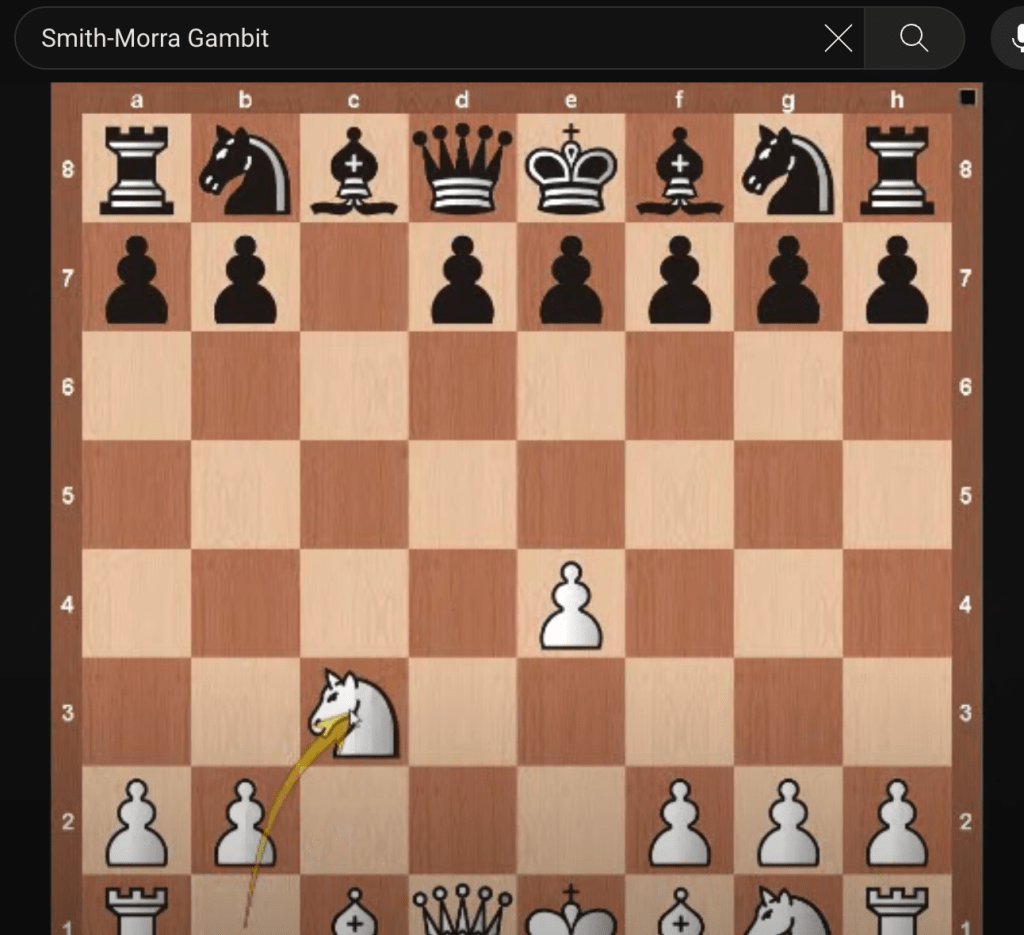
It all began with my preparing a lesson for chess club. I was going to teach club members about gambits. I researched the more common gambits and landed on the Smith Morra Gambit. I found a succinct video on Youtube that explained the gambit. While watching the video, I wrote down the algebraic notation. 

But, I wouldn’t just give them the chess code to learn the gambit; I decided to have my gifted students decode the code! My fifth grade gifted students were the first ones to see the code. They had only dabbled with decoding Morse messages. 

I had used Morse Code Translator to change the chess play sequence into dots and dashes. Rather than writing the number of the move; This was going to be confusing enough as it was; I decided to change the colors of the moves. White’s moves were turned to white dashes and dots. I made the background of the text box green, so that you could easily see the white and black codes. I put an image of my code, along with the Morse Code alphabet and accompanying numbers onto a Google Jamboard. The fifth grade gifted students were on it the moment they walked through the door. 

The two things that I shared with the fifth graders was that the slanted line (/) separates the words; In this case it broke up the moves, but I did not explain that. I told them nothing about the actual message. The second thing that I pointed out was where each letter or number’s code ended. The translator that I use makes it much easier and faster to produce Morse Code, but sometimes it is difficult to locate the space between each letter/number. After pointing out these two key factors, I stepped back and watched the struggle. 

Right away I heard a couple students divvy up the White and Black “words.” I was glad to hear the idea of collaboration. I wondered how long it would take for someone to understand that these were not actually words. The very first coded move was e4, the most popular opening move in all of chess. I heard a few people verbalize bafflement, but several recognized the move, “It’s chess!” someone shouted. 

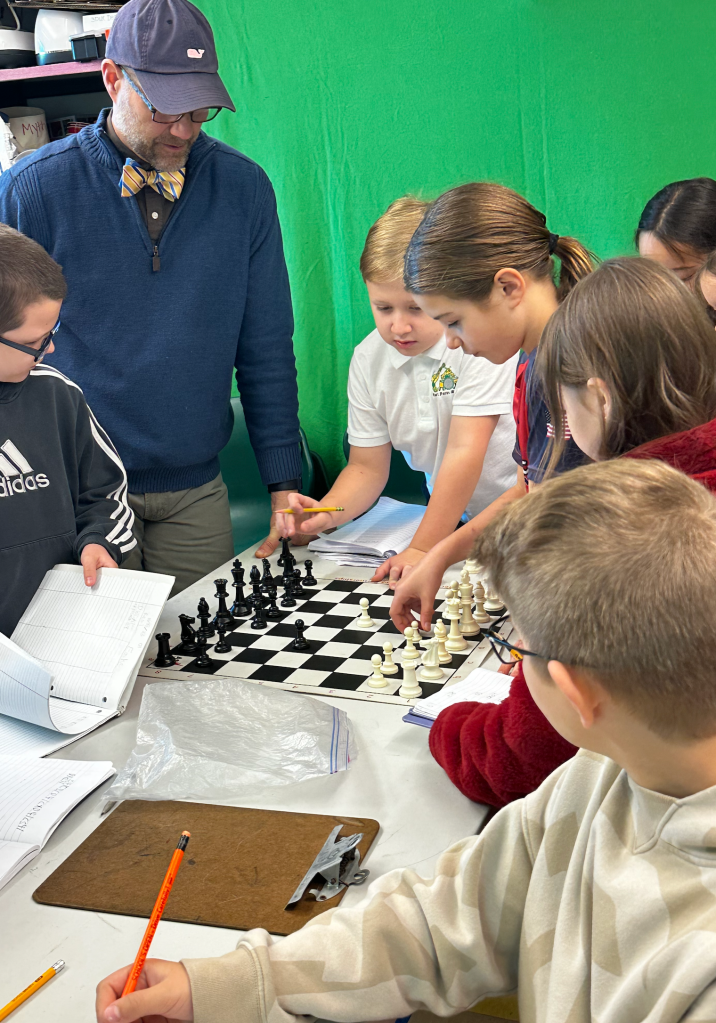
I didn’t help them with any of it. At least one student knew enough to be able to read most of the algebraic notation and make sense of the moves. Of course I had a chess board and pieces handy, and we set up a game. I let the students figure out the sequence of play. When they came to the gambit on the second White move, I stopped them to explain what a gambit was. This was good practice for my chess club lesson that afternoon. A couple kids would get a double lesson, but that was okay. They could be my co-teachers! 

“The word gambit is closely related to gamble. It means taking a risk. A chess gambit happens when one player offers up a peace as a sacrifice in order to draw an opponent into a trap or sequence of moves that would benefit the aggressor (the one offering the gambit). Do you capture the sacrifice or risk the piece taking your own?” 

I had the fifth graders play through the short sequence until Black’s pawn was captured. Black had accepted the gambit, capturing the initial White pawn placed on d4. White offered up another pawn on c3. When Black captured that, White might feel a little on edge, because now there is a Black piece threatening the second rank of the White team! It is so close to attacking the Queen!! 

Before any more damage can be done, White captures with the Queen-side Knight, Nxc3. White has lost two pawns, while Black is only down one. If you were to only count points, it would appear that Black has the advantage, being up a point. A mere glance at the board should show even a novice player that White is in a much better position!

I explained to the fifth grade gifted students that the best thing to do at the beginning of a game of chess is to control the middle of the board. With that criteria, everyone can easily see the trap that Black has fallen into. There is a White pawn left sitting on the initial e4 square. And, now a Knight is “developed,” backing up the e4 pawn and attacking four more squares (b5 and d5 as well as a4 and e2).

The fifth grade lesson stopped there, but my fourth grade gifted students got a treat. It only took seconds for them to figure out that the Morse Code message was algebraic notation for a chess game. When I heard some groans, I told them, “The first to solve the riddle can play me in a game of chess.” Now, the heat was on. I set the board back up in the middle of a table while my students grappled over letters and numbers seemingly unrelated to one another. 

We worked through the Smith Morra Gambit sequence the same way I had with fifth graders. I had the fourth graders figure out the algebraic messaging. They figured out that the Xs meant a piece had been captured. I had to explain that the “d” in dxc3 meant that the capturing pawn had come from the d file. After explaining gambits and discussing the advantages and disadvantages of the board we were left with, I played a blitz round of chess against a pair of students.

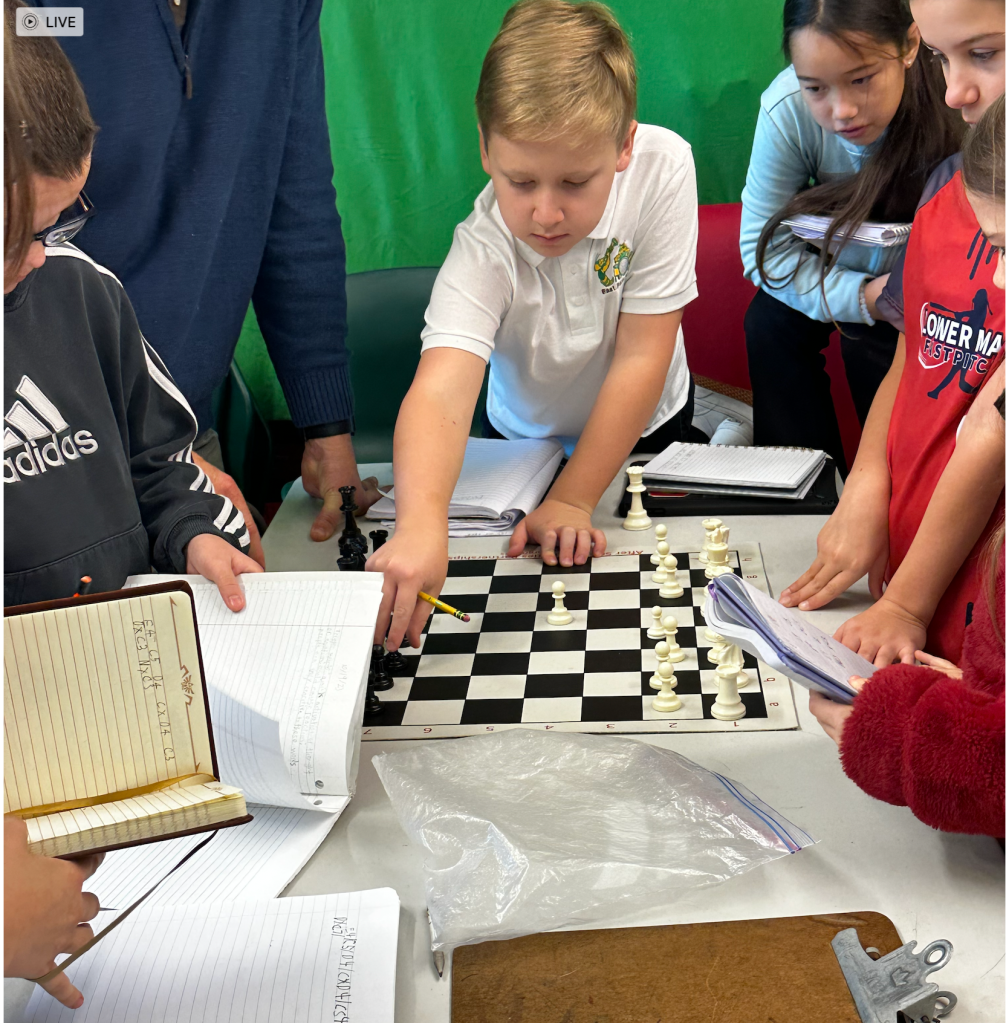
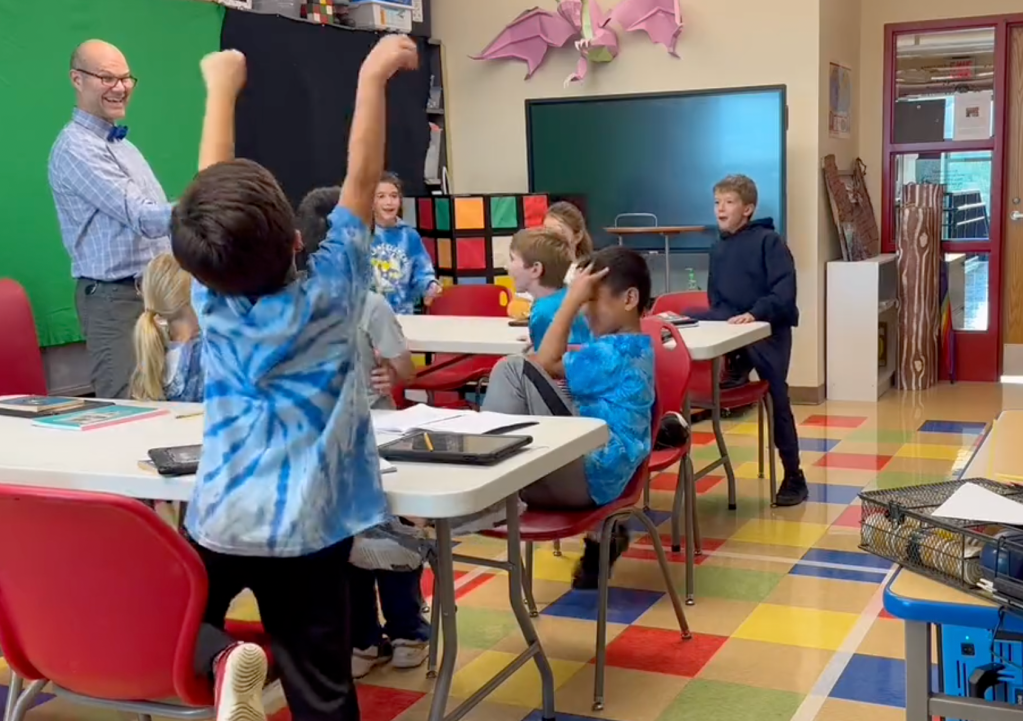
Third grade was next, and these students are not only classy, but they are some of the hardest workers I’ve witnessed. Their grit knows no end. I presented them with the same problem. They labored through decoding my Morse Code message. We played the sequence out. I taught them what a gambit was, and we discovered the significant advantage that White was left with. But… Then I was hit with a question that I liked so much that I recorded it on video so that I would remember it: “We know that White has the advantage, but how much of an advantage? Can we put a number to it? How many more squares is White attacking than Black?” 

Not all of my third graders know how to play chess. I taught the team how each piece attacks. “How many squares is the King attacking?” I asked. I showed them how it moves. The answer was two squares. “How many squares are the Bishops attacking?” We looked at their lines of attack. I showed them the squares that the Queen attacked, including the Black pawn on d7. We went over how a pawn attacks diagonally and the way a  Knight moves. Then I set them loose.

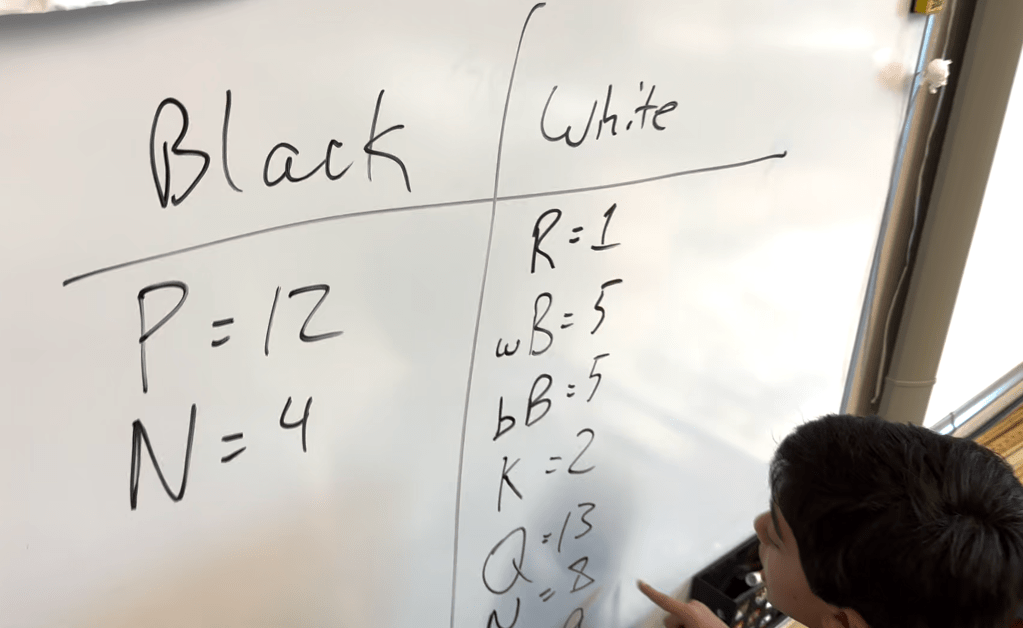
A few floundered, so I guided them to make a T chart. “Let’s do one color at a time,” I suggested. “Also, how about we focus on only one piece?” We carefully counted all of the squares that the Black pawns were attacking (12). Then we counted up the Knights’ attacks (4).

Next we moved on to White. There was an empty square next to the White Rook, so that counted as an attacked square. We continued counting until we covered every piece. I missed a couple of the the Knight’s attacks, but Gray got my back. She caught my mistake, and we corrected the calculation.

In the end, we discovered that White was attacking 43 squares to Black’s 16, way more than twice as many! So, was the gambit worth it? I’d say so. And, what could Black do differently to limit the massive advantage? Don’t fall for it. Don’t take the gambit. Push forward or ignore, but definitely think ahead.

Worm Burning: A Mental Math Game

John Burger, second grade teacher extraordinaire (2012)

When I first began teaching, I had a mentor who was amazing. He taught second grade, and it was a calling more than a career. His name was John Burger. Rather than do Social Emotional Learning (SEL) lessons, he was SEL. Everything he taught had emotional and social lessons woven throughout it. Like myself, education was a second career for John. He had been an engineer before becoming a primary school teacher. More than the money, he was doing this because he believed in it.

In addition to John’s unique way of teaching, he used some teaching tools that I liked so much that I adapted them into my own repertoire. One was readers theaters. I have shared a few blogs about those in the past. Another was mental math games

The mental math games were designed to make math fun and exciting. They are a great tool to use on the fly, because students don’t use paper or pencils. They should do it all in their head. Some of the games require critical thinking. Some rely on short-term memory and problem-solving. Others practice rote memory math facts. 

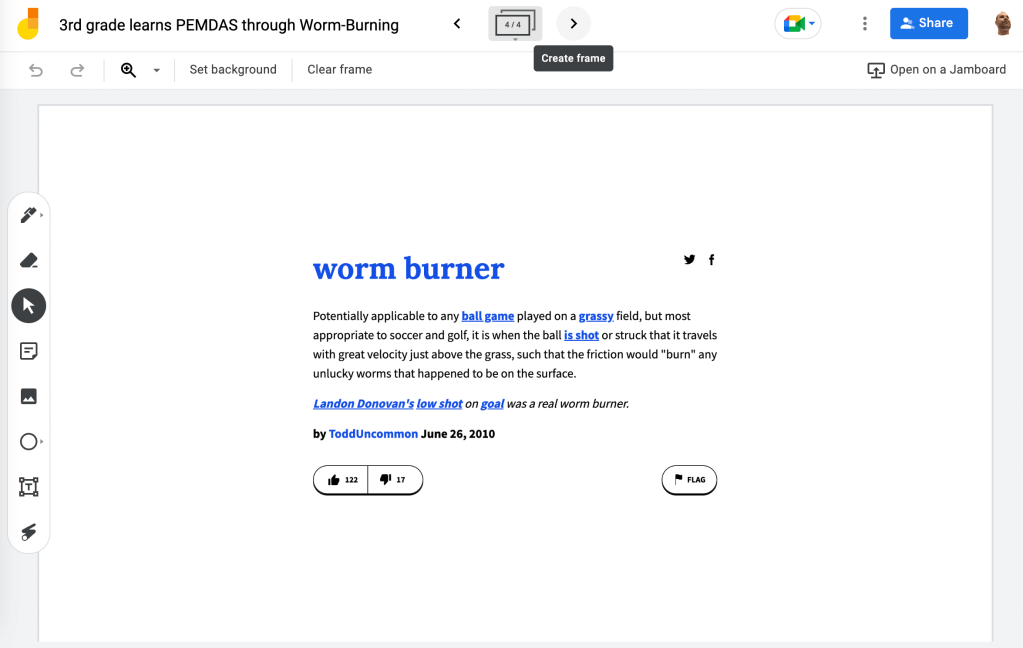
One of my favorites comes with a story. John liked baseball, and each year, when he introduced this game to his second graders, he would tell them, “When a baseball is hit really hard, and instead of it going up into the air, it is a line drive, straight over the grass… If a worm were to stick his head up out of his hole just at that moment, it would get its head burned by that cruising missile of a baseball! This is called worm burning.” There would be all kinds of gasps as kids pictured a worm being scalped by a wizzing baseball. Then, in his soft, understanding style of sharing, John would explain how the game works. “I’m going to say a bunch of numbers, and I will tell you what to do with them in between. You have to try your best to keep up. I’ll go slow in the beginning, but then I will begin to speed things up. When I stop, you tell me the answer that’s in your head.”

“You have to keep the answer at the front of your brain.” Sometimes I lose it and have to stop.

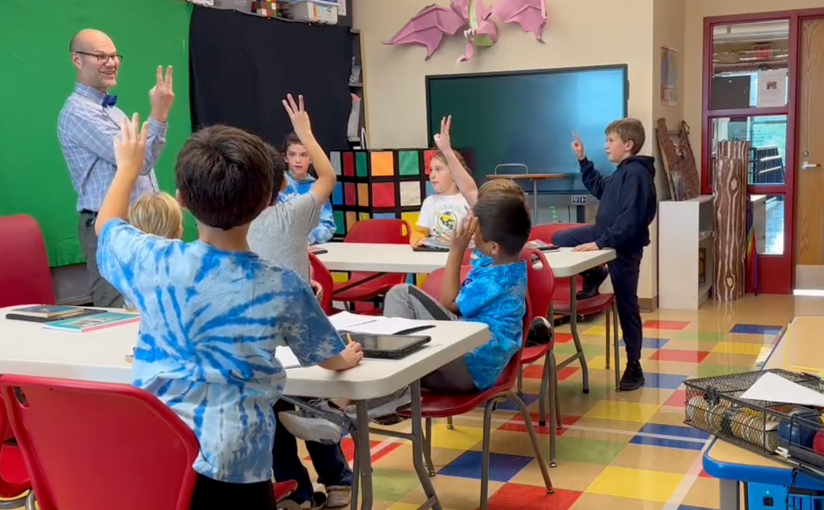
The mental math game is fast. The teacher will use single digit numbers and a variety of operations, keeping track of the answer until the worm burner has run its course. When the teacher stops saying numbers and operations, students have to raise their hands with whatever answer they are left with. I have my students show me their answers with fingers; They raise the number of fingers that they think is the answer. The teacher (or student; I’ll have kids try it when they get good at it) who is sharing the math must keep the final answer under 10. 

I often teach students this game at the beginning of the year and use it during whole-group bathroom breaks or times I need to keep students quiet. We get really excited when we know the answer and/or get it right, so it is hard to be completely silent. I remind students that they ought to only raise the accurate number of fingers. I praise students who do this well. 

You change up the difficulty of the digits and speed by which you say them to adjust so that more students can participate. The students who are more fluent with their facts are affirmed as math whizzes, and that’s just the way it is. “Good for them. The rest of you can study and memorize your facts just the same.” I have witnessed students work on learning their facts and gradually move up the ranks in Worm Burning, until they became competitive with the best of the burners.

I usually try to do a few that everyone and anyone can get. You can weave in a couple of tricks, like multiplying the whole thing by zero. Then everyone gets in on the answer. It gets everyone to at least pay attention and listen. Also, the Polite Pirates perk right up when they hear me say, “subtract 99 or 98” because they know the going answer before that was probably 100, and we are back to only 1 or 2, respectfully. I’ve had lost souls jump back into the game at that point. It’s fun to see them grab ahold of confidence as they celebrate success.

Sometimes, but not always, I will go back and walk the class through the Worm Burn. I’ll demonstrate keeping the answer right there at the front of your mind. Often, the Worm Burn is so fast or long that I can’t remember all of the steps. The successful students are usually proud to help me remember, though.

Math Enrichment

Photo by Pixabay on Pexels.com

Later on in the year I will introduce larger numbers that can be tricky. For example, I will have students multiply 25 by 4. “I don’t know that!” they’ll cry out. 

“How many quarters are in a dollar?” I’ll ask them. 

“Oh…” They get it, and then I will do a bunch of worm burners incorporating twenty-fives. 

Photo by EVG Kowalievska on Pexels.com

Another number I’ll throw in at some point is fifteen. “Three fifteens is the same thing as three quarters past the hour. How many minutes is that?” I’ll explain after stumping my students. Sometimes I’ll use alternative words like “dozen” or “double that” to keep things interesting.

By the end of third grade I would be throwing fractions into the mix. It’s a great way to cement the understanding of denominators dividing numerators. I will get the Worm Burn to the number 24, and then say, “What is a third of that?” Or, maybe I’ll start off with “Three fifths of fifteen (9), plus three quarters of four (3), divided by six…” and so on. Pause just enough so some students can get it, but not so much that others blurt out the answer. And, don’t make it so hard that no one gets it!

Gifted

This year I have transitioned from being strictly a third grade teacher to the gifted support teacher for kindergarten through fifth grade of my school. I was sharing the game of Worm Burning with my third grade gifted students, when I saw an opportunity to bring the math to the next level… and then some.

I never write the Worm Burn on the board. But I foresaw a unique teaching opportunity here.

I told my third graders about a trick that I often use in order to keep the numbers straight and maintain a going answer in my mind; I will use the answer in the next operation. For example, “Two times three, plus six…” I added the six to reinforce in my own mind that the product of two and three was six. I never write the Worm Burn on the board, but in going back to show this trick further, I wrote out the sequence of operations from a previous Worm Burn. This introduced the idea of squaring a number, which then lead to teaching exponents.

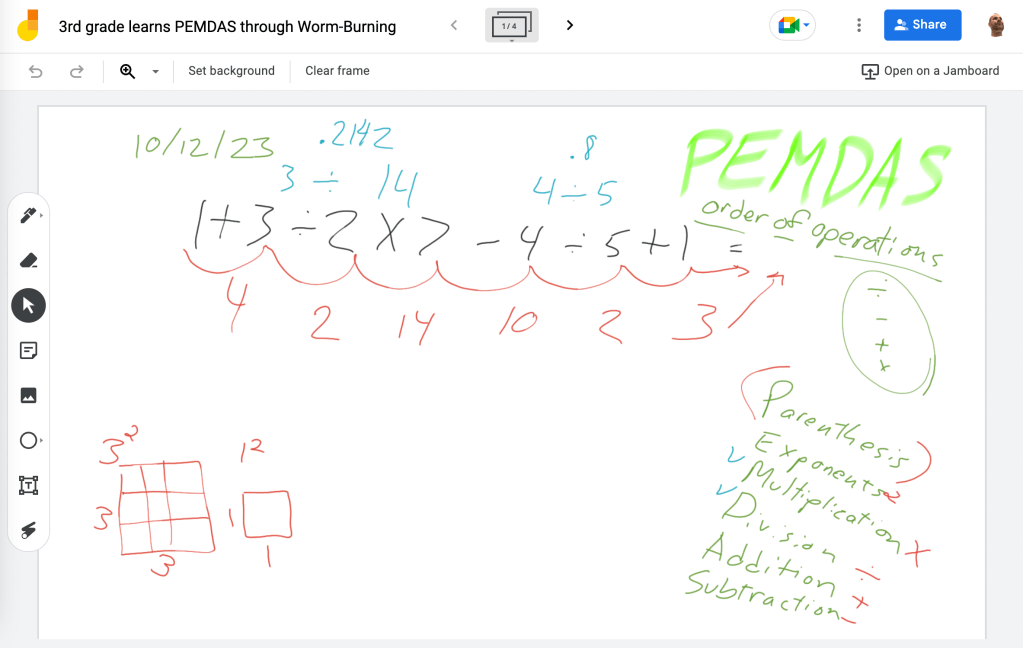
Then I thought about how different Worm Burning was from using Order of Operations. And, out comes PEMDAS! We were already talking about exponents!

I started out with a simple Worm Burn, “One plus three, divided by two, times seven, minus four, divided by five, plus one…” The answer is three. I wrote the burn on a Google Jamboard and showed the sequence of math. Then I told my students that if I were to do this math properly, the answer would be completely different. They were intrigued. “What do you mean, properly?” they wondered. I wrote the acronym PEMDAS on the board.

When we followed the rules for order of operations, our answer was much more complicated. With the help of Siri, we were able to divide numbers that didn’t have obvious answers. How do you divide three by fourteen? Is that even possible? Well, if you have three boxes of cereal, can fourteen people have some? How much of all of the cereal would each person get? Ask Siri.

The final answer came out to -.5858, which was really weird. They were unfamiliar with decimal points, let alone negatives. It was an eye-opening adventure.

From Worm Burning to diving down a rabbit hole of increasingly complex math concepts, my gifted third graders were happy to transition to reading about everyone’s favorite vampire rabbit, “Bunnicula,” and take a break from arithmetic.

Decorating the Classroom with Math Enrichment: 5th Grade Word Problem Work

This is my journal entry when I first came up with the idea.

Math enrichment, fifth grade style…

This idea came to me several weeks ago, but I hadn’t had a chance to throw it to my fifth grade gifted students until today. The topic that I started with was volume. The fifth graders were learning the algorithm to solve for volume at the time.

I wanted  to come up with a reason they would need to discover the dimensions of a 3-dimensional space. My background as a painting contractor came in handy. When I estimated the prices for painting ceilings and walls of rooms, I had to do tons of math. How could I bring that experience into the classroom?

I had the idea of working backwards. I would give them a large number, and they would have to figure out the dimensions of the space. 

I decided to turn my fifth grade gifted students into interior decorators. They would need to figure out the measurements of floor space and wall surfaces. 

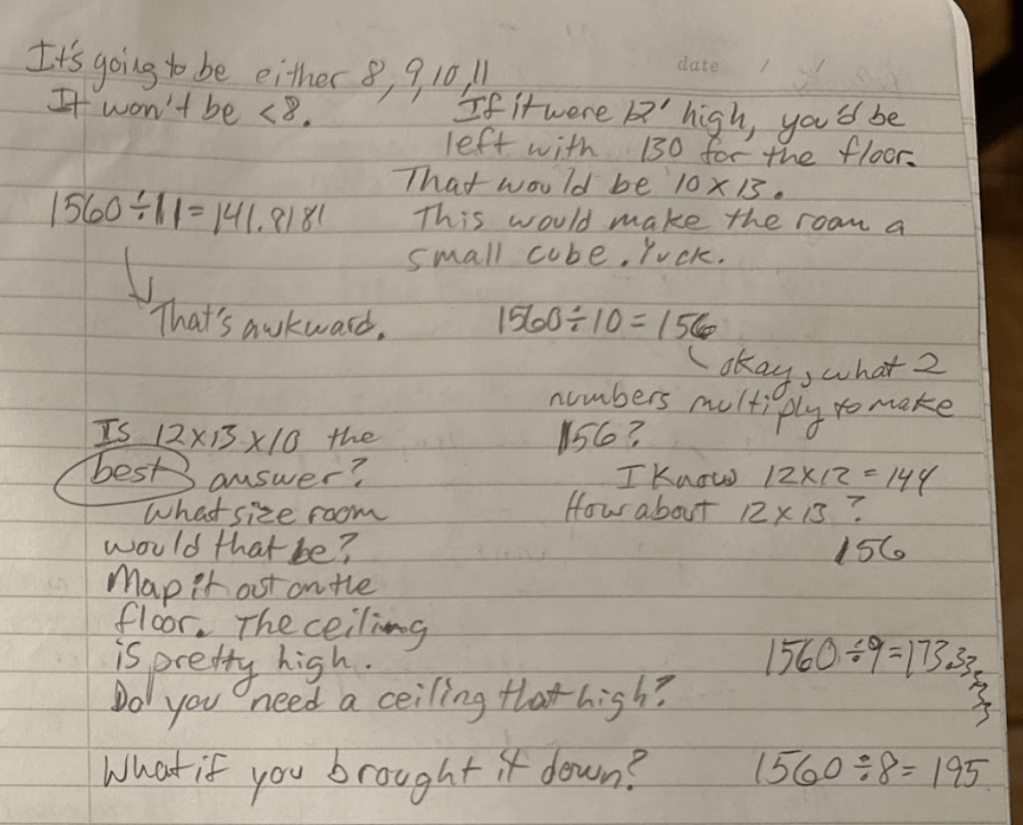
In creating my math problem I tried out a variety of numbers, multiplying length times width times height, until it created a nice round number. I made the ceiling 8 feet high, and the room 13 by 15. That comes to 1560 cubic feet. Before settling on this number, I tried breaking it up various ways. You could do 12 X 10 X 13 for a higher ceiling. This was good, because I wanted there to be more than one correct answer. 

I wrote the problem out and put it on the board for fifth graders to read prior to class beginning. After the announcements, I read the problem aloud to everyone. We practiced our Ready Math routine, the same four-step method I wrote about in a blog about 2nd graders writing their own word problems. First, I asked the fifth graders what the problem was about. Then we discussed what we were asked to find. Next, we identified the information necessary for solving the problem. As it turns out, the only number is 1560, but what does this number represent? And, don’t you know an algorithm that can help you interpret this number? “Yes!” 

I wrote L X W X H = 1560 on the board, when the fifth graders said it. “So, we identified the topic of the word problem; We know what we have to find; What are you going to do with this number and algorithm?” I guided my fifth graders. “You could try making some predictions. Plug in numbers and see what you come up with,” I suggested when I saw that they needed a nudge. 

Some students were still stuck, so I asked them what they thought the space looked like. “A cube,” someone suggested aloud. Dylan jumped on deciding the room was not a cube. He used his iPad to find the cubed root of 1560 to be 11.5977, and since one of the parameters was that the dimensions are whole numbers, this option was off the table. 

“You can’t use your iPad,” a peer protested. 

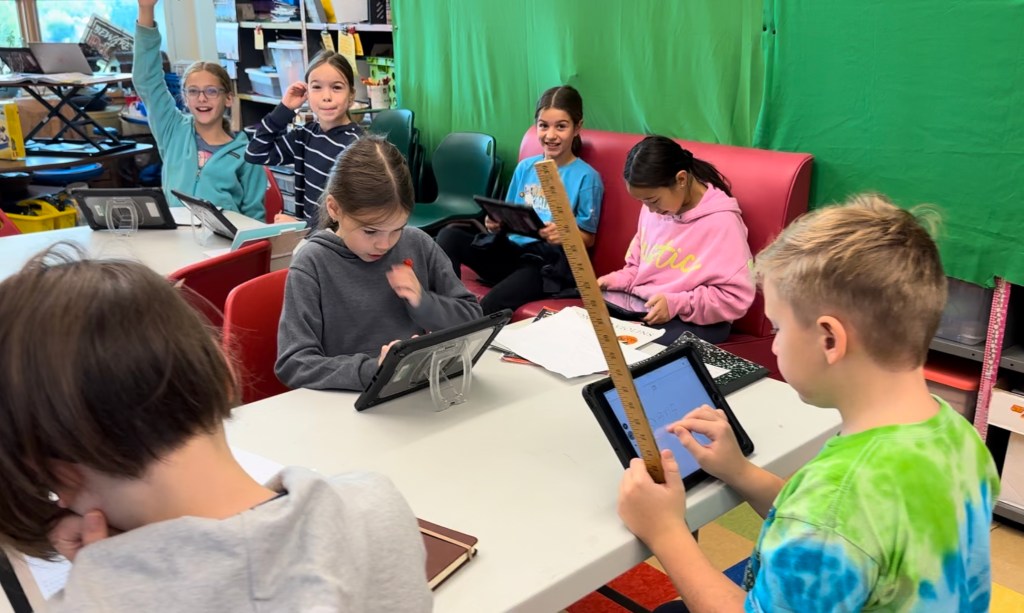
“I never said anything about not being able to use iPads or calculators,” I offered. Fingers feverishly fought to open devices. Not everyone, though. There were some students who chose to stick with paper and pencil. 

A group of girls asked to use some rulers. When I asked why, they told me that they wanted to get some ideas. This seemed perfect to me. They realized that they needed some background knowledge. They began measuring the classroom. 

A student came to me with the dimensions 40 X 39 = 1560. At this point I brought eveyone together for a teaching moment. “If the room were 40 feet by 39 feet, and the volume of the three-dimensional space were 1560 cubic feet, how high would the ceiling be?” They thought about it for a second. Some multiplied 39 times 40 and discovered that it equals 1560. “The ceiling would only be one foot from the floor! Two measurements would make it a two dimensional space. You need a third measurement to give it depth,” I explain. “What could you do with these numbers?” 

“2 X 20 X 39,” several students say at the same time. 

“So, now we have a two foot high room. This needs to be a space that normal adult humans can walk around and live in.” 

“4 X 10 X 39”

“We are getting closer. Why don’t you do to the 39 what you were doing to the 40? Try breaking it up.” 

After a while, a few students were beginning to figure out more reasonable dimensions for a living space. They thought that they were done when they came up with three numbers whose product produced 1560, but “Oh, no! You still have to do the interior decorating work. Now that you know the lengths and widths of the walls, you must figure out how much hardwood flooring you need to get. And then, you have to calculate how many double-rolls of wallpaper to order,” I remind them. 

I shared the word problem with the class via a Jamboard, so that they could share their work. They could write right on the Jamboard, or take a picture of their papers, using Jamboard. The classroom was electric with mathematicians calculating, communicating, collaborating. I don’t know about interior decorating, but these students were making my room look and sound great! 

Creating Word Problems: Math Enrichment

It’s October, and the second graders in my school are learning the basics of solving word problems. The arithmetic is super simple single-digit algorithms. Likewise, the stories couching the numbers are unadorned with character development, setting, or plot. Time for some #MathEnrichment!

My idea was for the 2nd grade gifted students to write their own word problems. Before creating our own, I thought I’d model some. I wanted to provide some math that was challenging, but doable, albeit with my help. As it turns out, my math riddles had the second graders perplexed to the point of paralysis.

It wasn’t just the numbers. Somehow, I’d forgotten what Ready Math had taught me! There is a specific way to read word problems. Even the smartest of the smart; kids who can wrestle with and make sense of the math; won’t be able to decipher what is being asked of them if they aren’t taught how to comprehend what is going on in a math story. It is like an Olympic runner being dropped into the middle of a forest and expected to sprint to the finish line that she can’t even see.

I constantly tell my students that challenges are fun. These kiddos weren’t buying it. Challenges are only fun when there is some hope.

Like an idiot, I dragged my students through my word problems, doggedly showing them what the numbers were doing. They were good sports. When I let them write on the Google Jamboard, they perked up. In the end, they left my room with number hurricanes storming their cerebrals. I was left to pick up the mess of math misconceptions strewn about the streets of seeming failure.

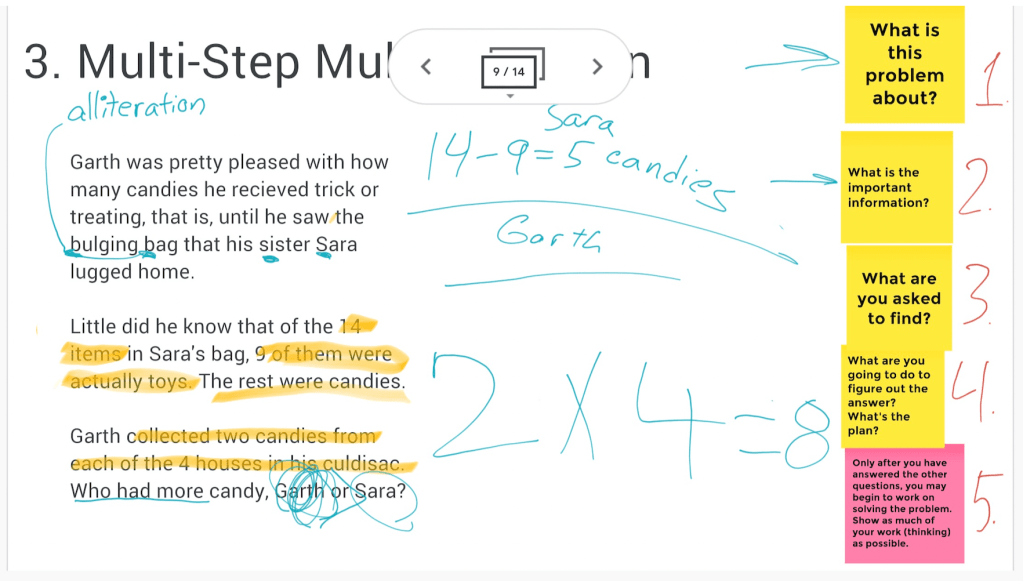
That was last Friday. Over the weekend I remembered; There is more to solving a word problem than crunching numbers! The Ready Math curriculum instructs teachers to have the students use a 4 step approach to solving word problems. When you break the process down this way, it is much more manageable.

  1. First, read through the word problem and decipher what the story is about. Don’t worry about the numbers. What is the topic? Are we talking about reading books or alien monsters that can control your actions with their minds?
  2. Next, identify the important information. What are the tools you’ll need to fix this problem? Don’t be fooled into thinking that unnecessary numbers or information will be needed. Sometimes there are superfluous facts stirred into tricky math stories to trip you up!
  3. Before doing any math, you must figure out what you are asked to find. (This step might come second. I can picture needing to know the end goal prior to identifying the important info.)
  4. Finally, we begin doing some math. Show all of your work/thinking.

There’s a fifth or bonus step that I told my 2nd grade gifted students about, that has to do with communication. Just like we include publishing in the “Writing Process” and the “Scientific Method,” we are not done solving our word problem until we share the answer. Make sure to label the numbers with whatever unit of measurement or name of thing you are talking about!

The answer of this word problem doesn’t even have any numbers in it! But, you better show and be prepared to explain your work for full credit.

Tuesday morning, the day after Indigenous People/Columbus Day, we were back at it with more challenging word problems. When I first showed my students this Jamboard, I had the “sticky notes” layered on top of the word problem. As we read and discussed what each one meant, I moved them to the sides and shrunk them, so that they all fit on the right for reference. Only then, did we read this word problem.

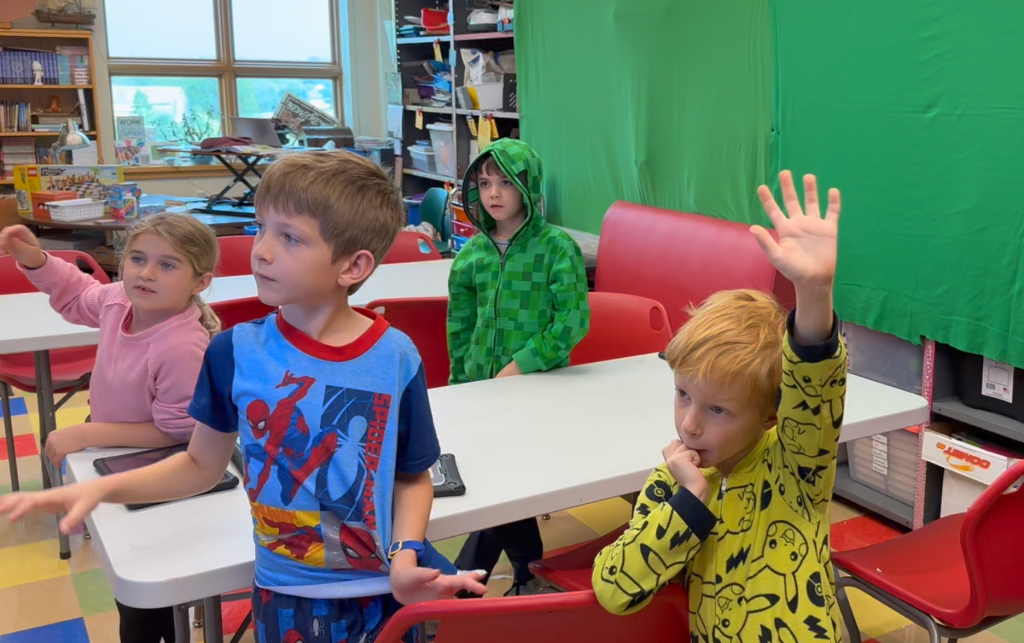
My 2nd graders kept yelling out numbers, like there was a contest for who could solve the problem first. It was humorous to tell them that every single number that they would say, no matter what it was, would be wrong. This was perfect for drawing their attention to step 3. “What are you asked to find?”

“Are you supposed to provide a number as an answer?” I asked my students. This got them thinking. And, even after solving how many candies each kid had, they still needed to compare the numbers in order to really finish the problem. It wasn’t enough to just know how many each had.

This is only the first of many word problems to come for our 2nd grade gifted students.

Once we had successfully solved our Trick or Treat word problem, it was time to make up our own. Before getting creative, we decided on the numbers and operation. We would have the mathematicians subtract seven from twenty.

I wanted to include everyone’s ideas. That is why the math story has flowers named after a student’s pet bunny, a main character named “Kid Pineapple, robots, laser blasts, and lots of the word “stinky” in it. Ha ha. We had a figurative blast coming up with our story.

We look forward to making up and writing down many more for our other 2nd grade friends to solve… The Ready Math way.

Box O’ Blocks: Math Enrichment

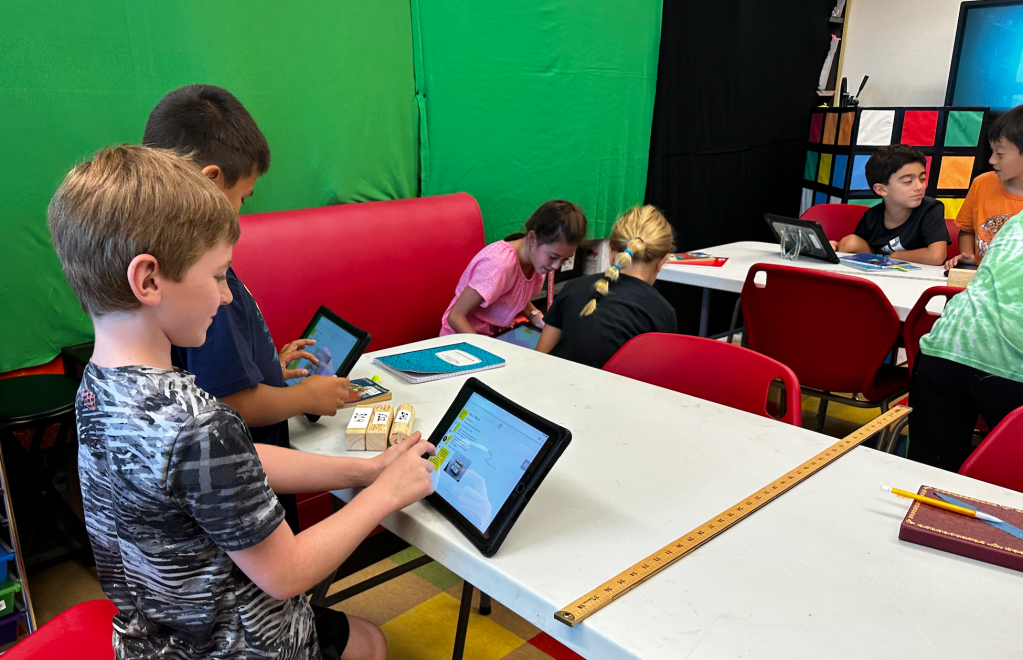
Looking for a fast math lesson to extend learning and use critical thinking? You’ve come to the right place. Because I only get to see my gifted students for 40 minutes a day; and that includes walking in the door, settling down, packing up, and exiting; I must make my lessons quick. Recently, I built onto a lesson that I loved in the past: “Box O’ Blocks.” 

Prep: Take those classic, little-kid, wooden blocks and stick 3-digit numbers on the sides. Put them in a box. You are ready to go! 

If you don’t have access to blocks, you could draw, color and cut out different shapes on card stock or index cards. Basically, simulate the classic building blocks, but 2 dimensional. Have the kids make them for ownership of the game. (Instead of “Box O’ Blocks,” it could be “Construction Cards.”) This would be easier to store, lend to other classrooms, as well as quieter;)

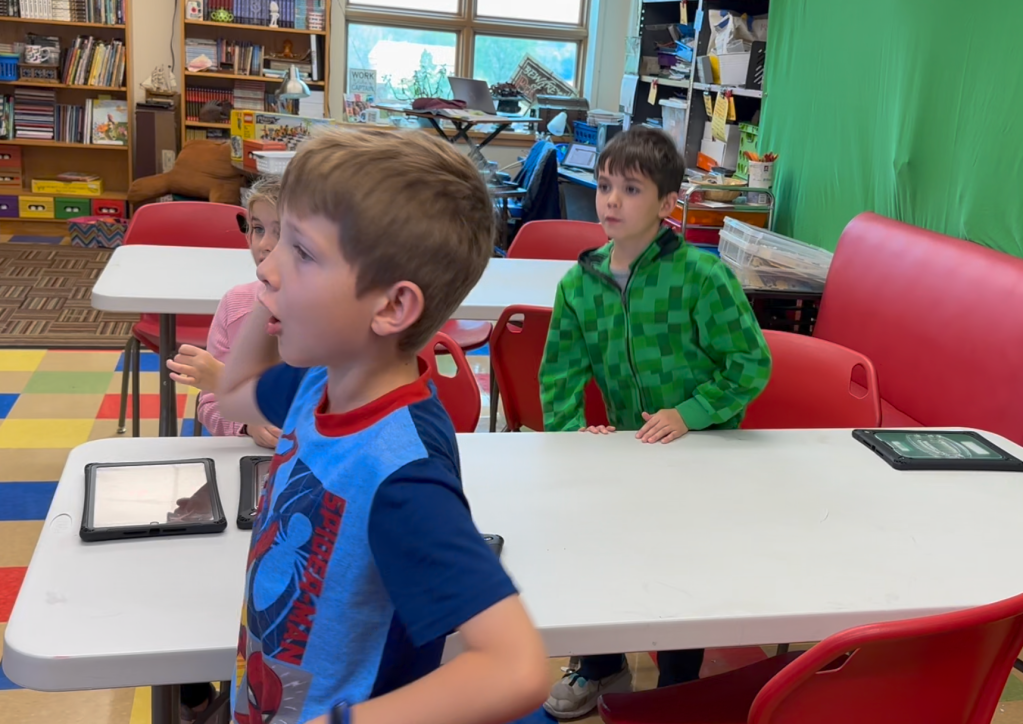
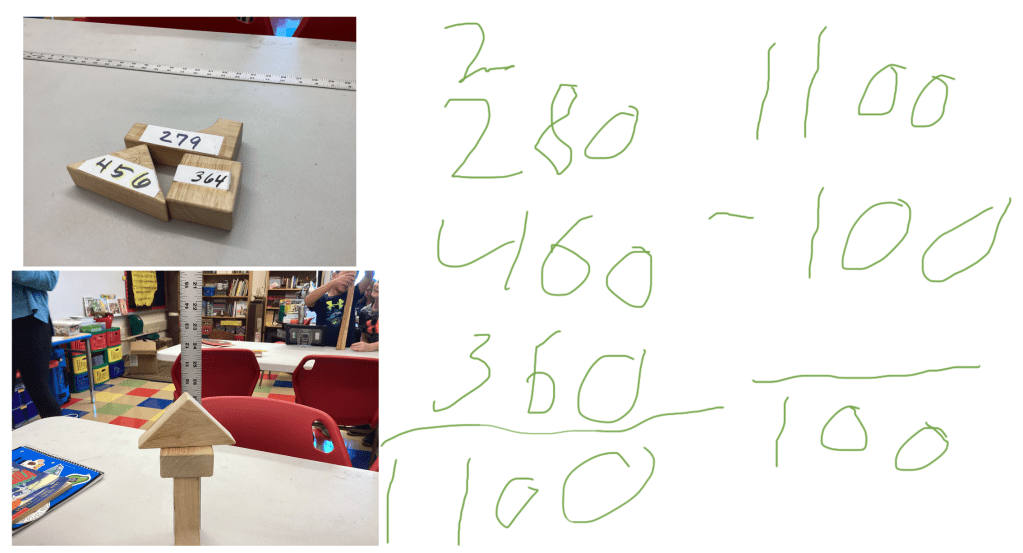
I began with a game so simple my 3rd graders could learn and play without use of any writing materials. Pull three blocks out of the box. Round them to the nearest hundred. Add them together. Closest to a 1000 wins.

Our first round had two teams get 700 and the third sum was 1300. At first they thought that thirteen hundred won. “Wait a minute,” I warned. “Are you sure?” Upon revisiting the numbers after I wrote them on the board, my students realized it was a tie! 

After a few rounds of this, I introduced the idea of trading a block. “If you could trade a block to make your total closer to a 1000, which one would you eliminate?” They hadn’t seen all of the numbers but enough to make an educated guess. “If you have three blocks, and they are the numbers 513, 522, and 346, you might want to trade the largest. It puts you way over 1000. This would make room for a block closer to 200.” 

Another fun variation that you could try; I didn’t, so I don’t know how well it would work, but it seems fun; is to let teams trade with each other. 

Here’s some easy-to-use enrichment: Rather than round to the nearest hundred, have students round to the nearest ten. Or, you could do what I did in my original lesson; Don’t have them round at all. They will need paper, dry-erase boards, or iPads to write on for this. 

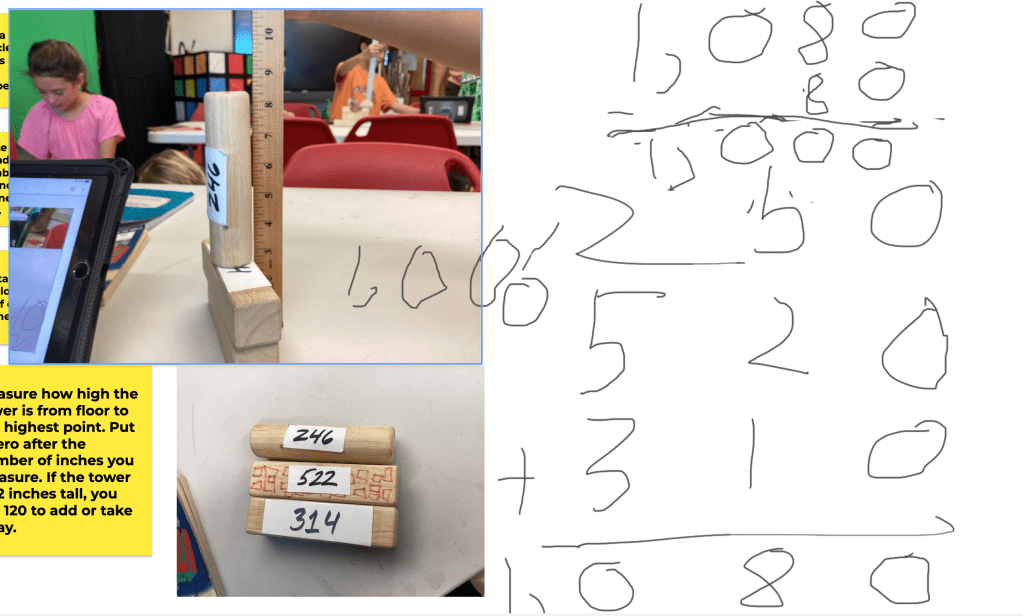
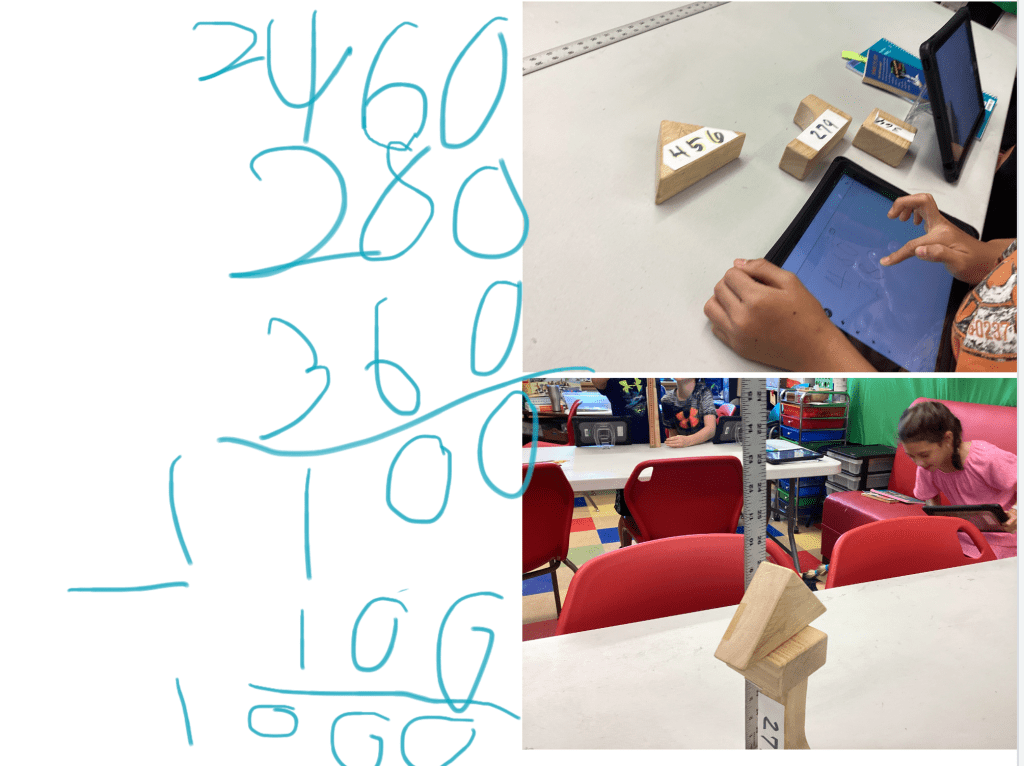
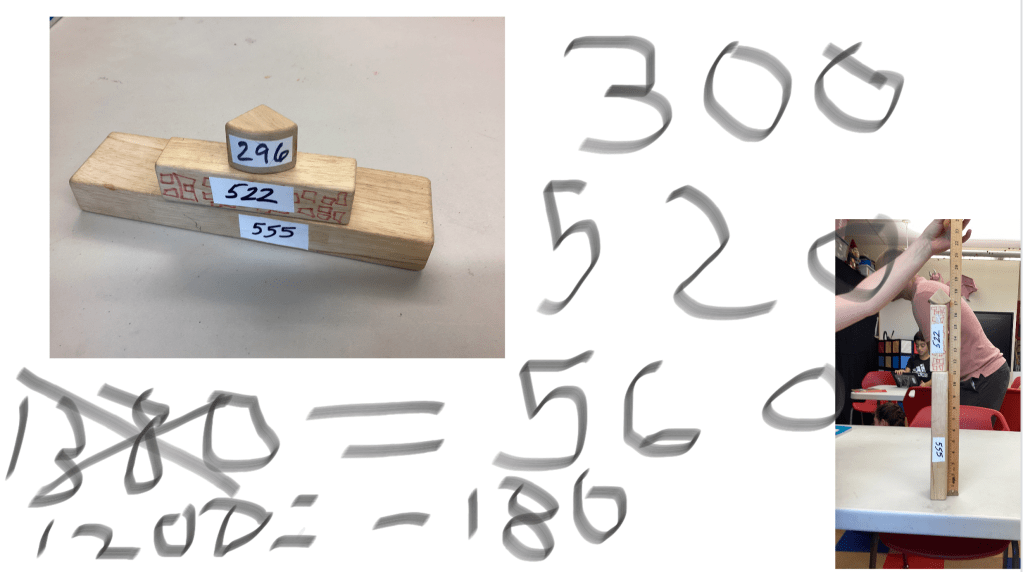
What I did with my gifted students is I had them actually construct towers that they measured to use an additional 3-digit number for lowering or raising the sum of the original three blocks as necessary. Here’s how it worked. Pull three blocks from the Box O’ Blocks. Round to the nearest ten. Add the three numbers. Evaluate how close you are to 1000. The difference is what you want to make up. If you are over a 1000, you want to take away from your sum. If you’re shy of a 1000, add. Next, you get to build! 

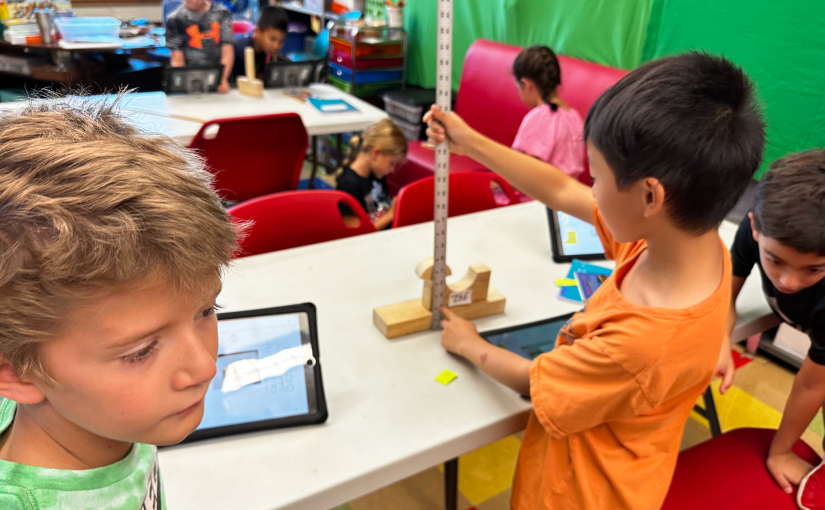
Students construct towers with their three blocks. They then use rulers or yardsticks to measure from the base of the structure to its highest point. Round to the nearest inch. Multiply that number by ten, and either add or take it away from your original sum. The trick is that the students can reconfigure the structure to be taller or shorter. 

This lesson incorporates an idea I had several years ago: Action. I wrote a blog all about an elaborate lesson involving purchasing blocks, constructing castles, homes, structures and renting them to make back their initial investment (purchase price). It was fun, but long; Great week-long project. 

Looking at the Jamboard images in Google Classroom makes it super easy to assess.

The way that I assessed the success of each group/student and the lesson was through the use of Google Jamboard. I made a Jamboard with the instructions on the initial board, leaving plenty of blank space. This was pushed out through the Google classroom, “mak(ing) a copy for each student.” I modeled how to use the Jamboard to take pictures of the blocks, showing the numbers. Then I used the writing tools in Jamboard to write the rounded amounts of each block. I added them all together for a total that could be evaluated next to a thousand. We discovered that I was over one thousand, so I will want to subtract. Once we got the blocks to reach the perfect height, where the number of inches times ten would lessen my original number just right, I used Jamboard to take a final picture and show my last computations. 

It is very easy to create a new board by pressing an arrow at the top of the screen. Then you start over. Pull three new blocks…

One group was 380 more than 1000. They were trying to make their tower 38 inches high, so that they could take 38X10 away from 1380. I told them to trade one of their blocks for another from our Box O’ Blocks. When they went to trade a teeny tiny one, I questioned them. “That block is only 300 (It was actually 296). The other two are both over 500. If you traded one of the blocks that was worth a lot, you might not need to construct as tall a structure.” They were interested in trading the tiny block because they were aiming for height, but was that the best strategy

I summarized this story to close our class time. And, it was off to collect some more gifted students from a different grade to teach a different lesson. 

Out-of-the-Box Thinking w/ Dominoes

This is a screenshot of the last paragraph + picture from my last blog, with the question of the day above it. I presented this on our Google Jamboard at the beginning of gifted teaching time for students to wrestle with.

I’m back with some more Dominoes word problem work. At the end of my last blog about Dominoes I dreamed up what I thought would be a good problem to get students thinking. It seemed not only doable to me, but I worried that it might be too easy. Not so.

I asked my students, “What is the highest score possible in one play of Dominoes?” I put 28 bones (one whole set) on each table, and encouraged students to move them around looking for the best combination.

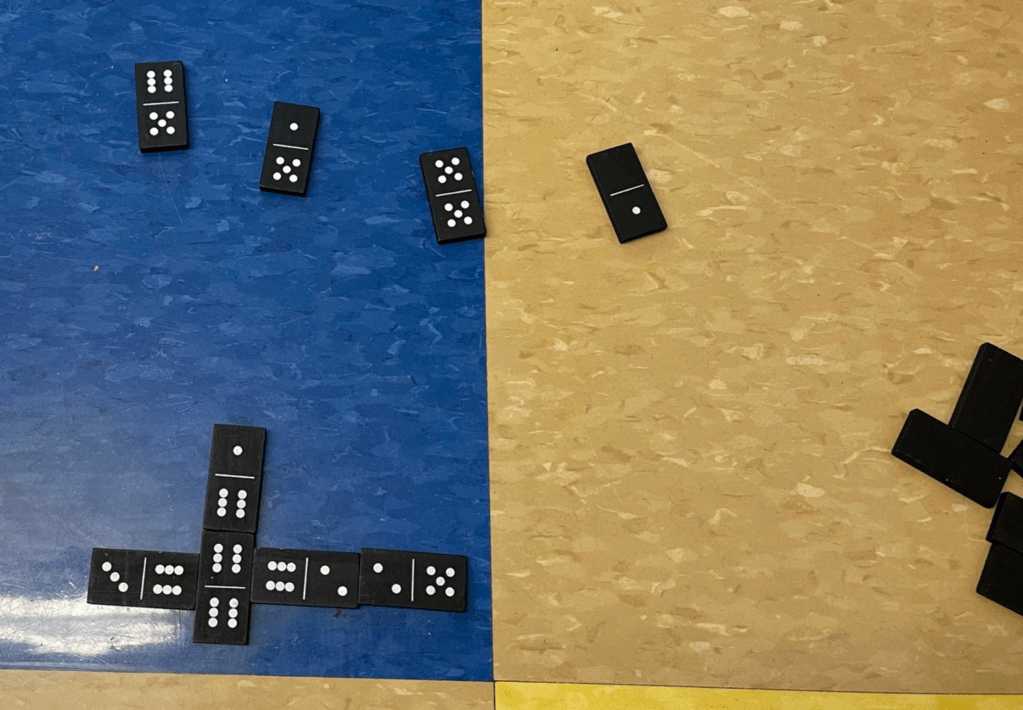
This is a screenshot of photos that I used to show students how to connect Bones, adding up all of the ends, and analyzing which Bone would make the best play.

A game of Dominoes proceeds until one player or team acquires 150 points. It takes several rounds to accumulate that many points. During each round the players add Bones (Domino pieces or tiles) to an existing cross of Bones. You have to connect the same numbers, so a 6-4 Bone could not be added to a 5-1 Bone. It could be added to a 4-4 or a 6-6 Bone. When you connect a new Bone to the Line of Play, you add the last number from each end. Your goal is to have a sum that is a multiple of five. Only multiples of five get recorded as points, pushing you closer to the goal of 150; victory.

The first group that I met with are 5th graders. They are still learning the game. I thought that providing the question of figuring out the very best play would create a goal; “This is what I can aim for.” Instead, my students began building towers with the bones and grumbled, “Why don’t we just play Math 24?” Upon self-reflection, I now realize that my word problem was like asking someone who is just beginning to learn how to construct an airplane to calculate how fast it will go. “Dude, let me get the wings on this thing, already!” Ha, ha. Sorry, students.

Before wasting too much time, fostering further frustration, I decided to scrap the 5th graders’ warm up and move on. I made a mental note on the idea of a Math 24 preference, though. This gave me much to think about; More to come on that, soon.

My 4th graders were at their wits’ end.

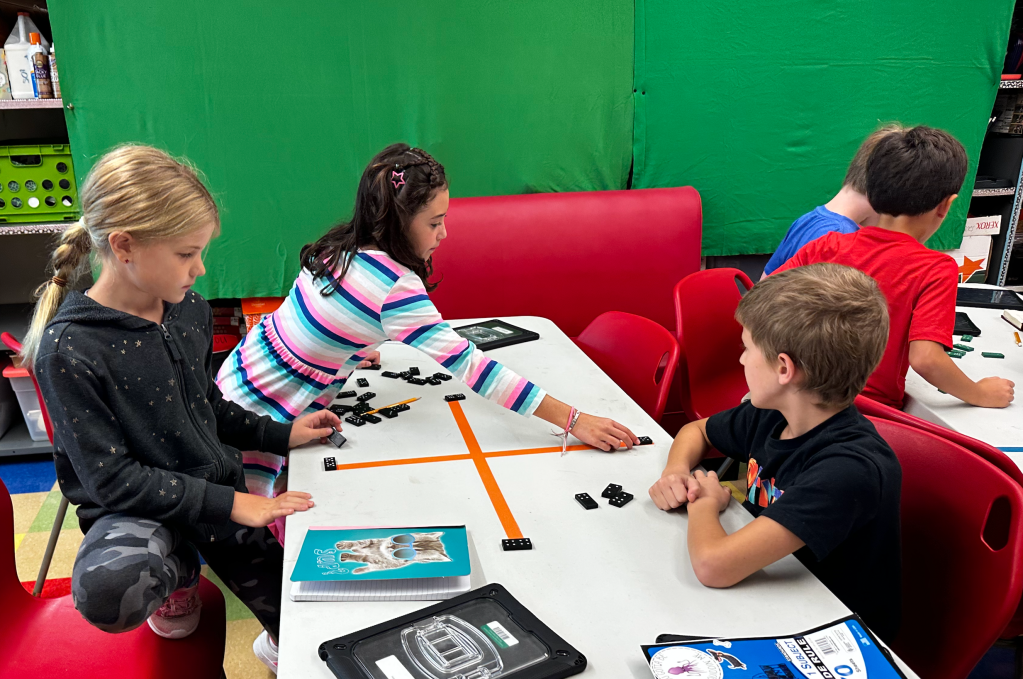
I didn’t even try the problem with my 2nd graders, who are also novice Domino players. I thought I’d wait and see how my experienced 4th graders, the students whom I taught to play the game last year, would do. These guys would love the challenge, and should have all of the conceptual tools necessary to tackle this problem. They’re the ones in the picture on the Google Jamboard, for crying out loud!

My 4th graders jumped into “Problem-Solving” mode right away. Their biggest hangup was trying to play the game from the beginning. They kept trying to build the arms from the center of the game, forming a cross they way they always do. That won’t work when attempting to find the highest possible score, though. They would have already used the Bones with the greatest number of Pips (that is the technical term for the dots on the Dominoes) on them. Those need to be saved for the ends.

I must have told them to, “Focus on the ends of all four arms. Don’t play a whole game. You don’t need the center of the cross in order to calculate the largest point accumulation possible,” a dozen times. I began to feel like a broken record.

This is a picture of the notes from my journal that led to this “Wonderful Word Problem.” I only focused on the ends of the Line of Play. I’d hoped that this is what my gifted students would do.

Finally, I stopped them and taught them a new vocabulary word: Hypothetical. “This is a hypothetical situation. If you could have the ideal play; The absolute best play ever, what would it be? Don’t worry about what was already played. What Bones would give you the very highest points?”

This is truly Out-of-the-Box Thinking. I wanted my gifted students to leave the box of the game and imagine only the very last play. All previous plays are fog. They don’t matter. You can only see the tips of the Lines of Play, and they have huge Bones… Doubles, every one of them; The highest Doubles, even! Eventually, I had to just tell them the answer.

I had one last group to try out my wonderful word problem. I started the Domino difficulty by sharing with my 3rd graders that the 4th graders could not do this. That got their competitive juices flowing! Next, I did not allow them to put any Bones in the center of the cross. “We are NOT playing Dominoes,” I explained. We are figuring out a hypothetical question: “What if you had an opportunity to make a play that gave you an enormous amount of points? How many points would be the greatest possible in one play of Dominoes?”

Believe it or not, the 5-5 Bone is worth more than the 6-5 Bone, because it can be played differently.

I guided their thinking toward the Bones that represent the greatest numbers. Even though a 6-5 Bone has more Pips than a 5-5 Bone, it does not present the greatest value when played at the end of a line. Why? Because, you don’t add the 5 and the 6 from the 5-6 Bone. Only one of the numbers would be available for adding. However, if you played the 5-5 Bone sideways, you’d have ten. Gasps, sighs, intake of breaths… Doubles were explored. I forced them to put the Doubles at the ends of the lines of tape I’d stuck on the tables to guide Lines of Play.

Letting the 3rd graders figure out answers to my guiding questions, I led them through Out-of-the-Box Thinking. In the end, they felt like they had solved the problem, and they had (with a little guidance from their teacher). Lesson: People can be taught to Think Outside of the Box. It is not necessarily natural.