Show Your (Math) Work (Part 2)

Algebraic notation in chess shows each move that a player makes. Ranks (rows) are notated with numbers, while files (columns) are designated a letter. Thus each of the 64 squares on a chess board has a name, the letter first, followed by the number. For example, the most popular opening in a game of chess is to place a pawn on the square e4. This square is located within the “e” file and on the fourth rank.

Chessgames.com provides the algebraic notation, along with some commentary, for “The Game of the Century.”

In order to show what happened during a chess move players write down not only the square that a piece was moved to, but also what piece was moved and whether something was captured, checked, or checkmated. (There are a couple of other symbols, but these are the major ones.) Abbreviations are used in order to save time. The moves are recorded so that the game can be analyzed and studied afterward. Most chess apps online and on phones will create the notation for you.
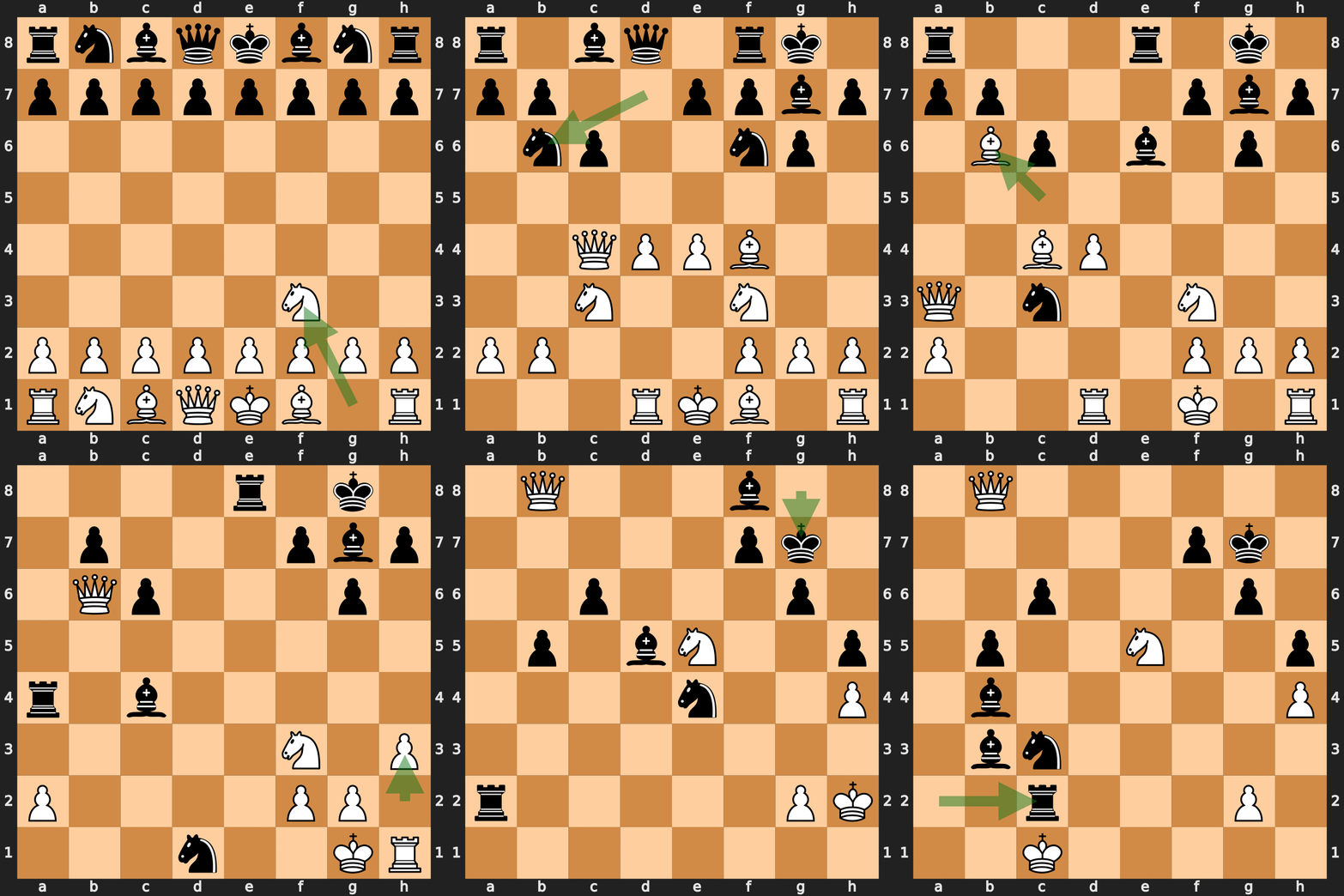
The algebraic notation of a chess game looks a lot like code. That’s because it IS! It is a string of commands. If you know how to read it, you could recreate a chess game, move by move. You could plug the code into a computer, as chessgames.com did for “The Game of the Century” between 13 year old Bobby Fischer and International Chess Master Donald Byrne originally played during the Rosenwald Memorial Tournament in New York City, October 17, 1956. 

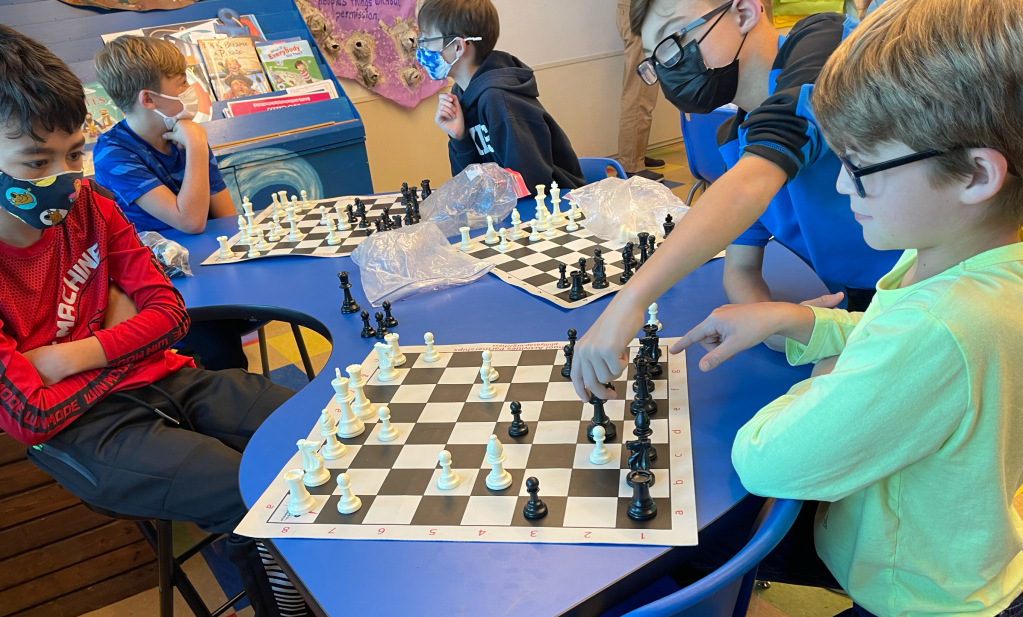
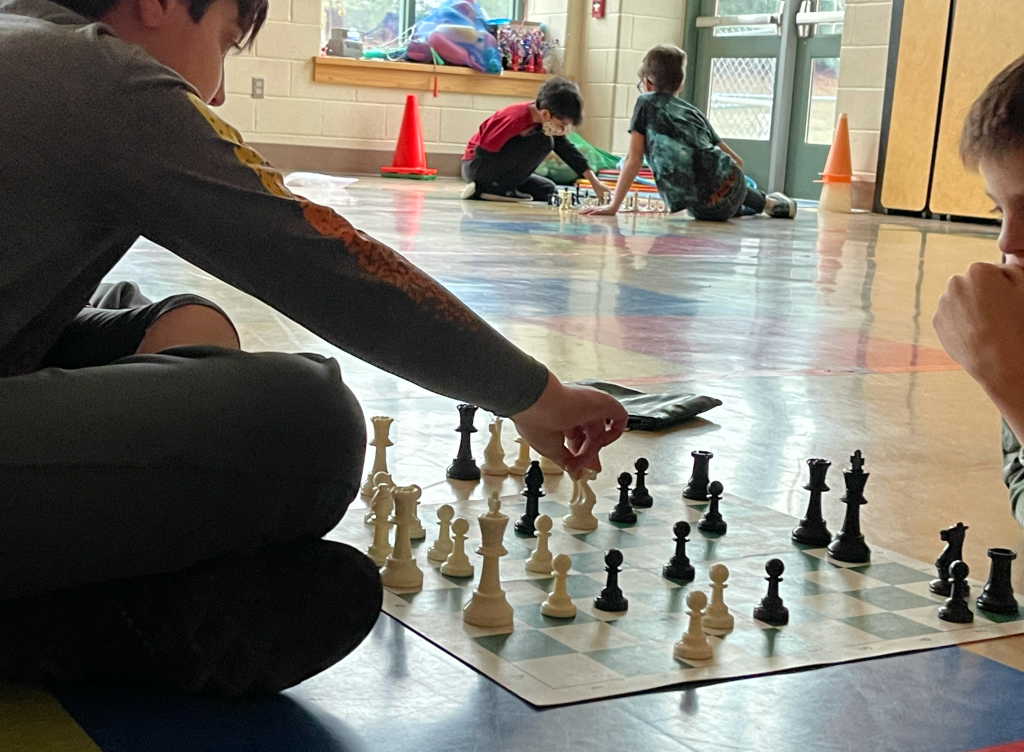
For several years I have been teaching elementary-age kids (7-11) how to play chess. I’ve run a chess club that meets after school. While I always share information about how to read algebraic notation, I don’t require them to use it during play. I want them to learn the game and have fun. 

As students get better and begin playing in tournaments, however, they will need to learn to use notation. During competitive play, they will be required to write down the code for each move on a piece of paper. Next to their move, they will also write down their opponent’s moves. In this way, they will be able to “view” the game after its completion. Serious players do this to evaluate each move. Which ones were better than others? Where did I or my opponent falter? What was the critical move? What could I have done differently? 


When solving a math problem, it can be valuable to write down some notes. Why? Sometimes you do this to keep short term memory space available. If there are a lot of numbers and a lot of computation is going on, there might be too much to remember in your head. Along the route of figuring out the answer, you write down what you have so far. 

Another reason for taking notes can be showing the steps you took to solve the problem. This might help someone else see a path from beginning to end of the math problem, demonstrating how the answer was achieved. They could “replay” the action of solving the problem by reading the steps taken.

In school, this last “reason” is usually proposed by teachers who want to “see” how you did your work. They say, “Show me your work,” so often that it becomes grating. And, writing down each step of computation can become tedious for a student who just knows the answer. Back in January (2024) I wrote a blog (Part 1) about students communicating their math work creatively. Learning to write down the steps involved in solving a math problem has value, however.

Here are a couple of ideas.

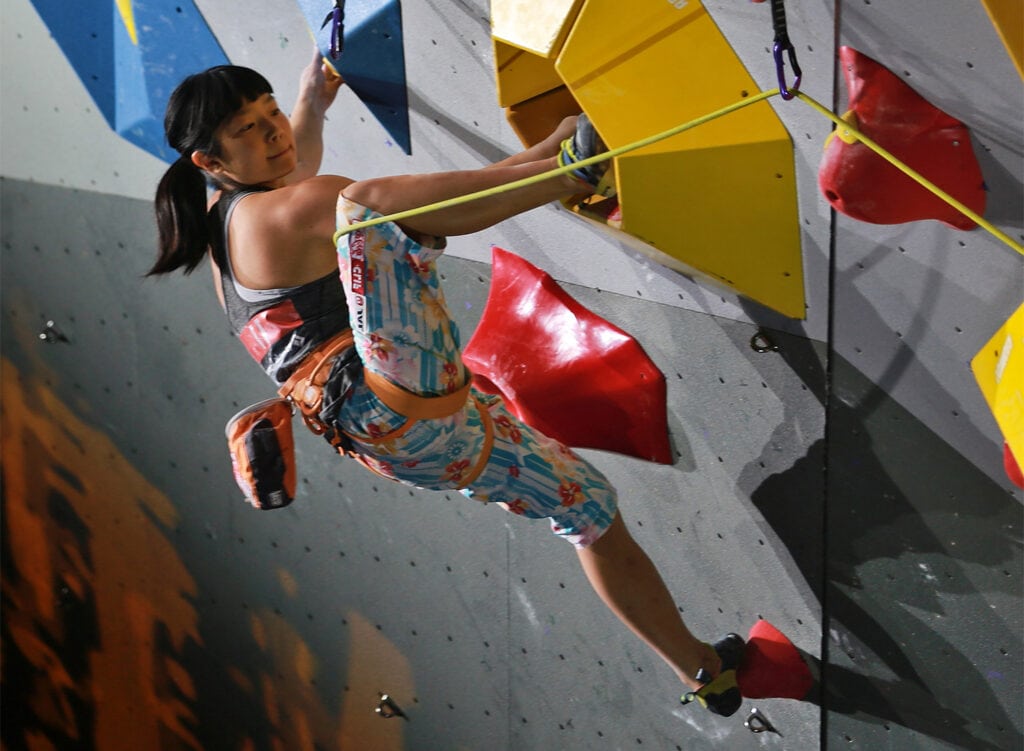
First, instruct students to treat each math problem as though it were a rock-climbing problem. Ashima Shiraishi is a champion of solving problems. She wrote a book about it. “How to Solve a Problem: The Rise (and Falls) of a Rock Climbing Champion” tells the story of 13 year old Ashima figuring out a map that will guide her to the top of Golden Shadow, a V14 boulder in Rocklands, South Africa. The story is an excellent metaphor for not giving up. It also shows how Ashima uses imagery to map out a doable path up the face of a difficult climb. She assigns symbols to the holds and footings that she uses. As she ascends, time after time, for it takes many tries to successfully conquer a difficult problem, she creates a story in her head, using the beneficial symbols (holds), so that she can find her way. The book, illustrated by Yao Xiao, shows (on paper) what Ashima does in her head. 
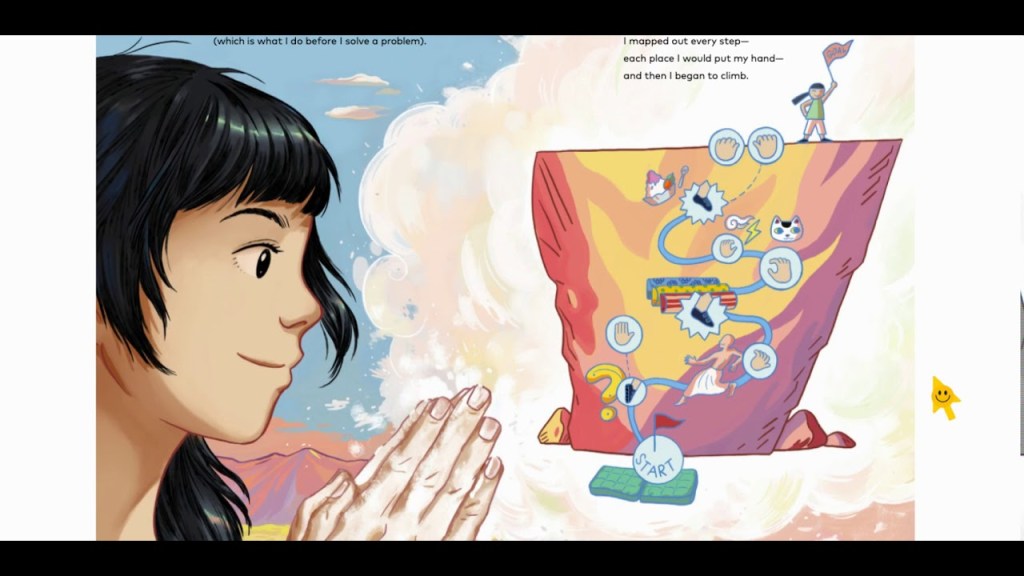
I often see students erase their math when they have tried a set of steps that did not accurately solve a problem. “Don’t do that,” I tell them. “You could very well make the same mistake again. It’s helpful to see what didn’t work, as well as the correct answer. I (and your math teachers) want to see the journey you took, including the fruitless paths.” 

Second, teachers ought to present problems that are worthy of their students’ struggle. Ashima Shiraishi has an amazing story of being the youngest person to successfully climb very challenging problems. At the age of 14, she was the first woman (and second person ever) in the world to climb a V15 boulder problem. She has crushed youth competitions, winning several years in a row. When she and illustrator Yao Xaio chose a problem to use for the basis of producing a picture book for kids, they decided on one that was very challenging. Ashima fell many times, having to start over at the beginning. The text shares her process of imaging each place that her fingers or toes would hold as something specific. One was the dot at the end of a question mark. Another was the crook of her dad’s elbow. 

What if Ashima used a simple boulder to illustrate her problem-solving skills? One of the most important themes of the short book would be lost; The idea of developing and practicing persistence couldn’t very well be shared if there were no falls. 

Create fewer math problems that are more challenging. Cause students to have to struggle to conquer each one. If they are required to make memories, it will mean more. If you want your students to “show their work,” give them a problem so complicated that they need to write down notes to get all the way through it. 

The math problem should be a challenging chess opponent in a tournament. Your students should have to show each “move,” as they progress through the solution of the problem. 

There will be practice problems. These are like the rock-climbing walls that Ashima climbs to stay in shape and hone her skills. She will climb the same wall over and over. She will challenge herself to complete the climb faster with each ascent. A story may be imagined for the short climb, and it could be repeated in her head a hundred times, giving the climb life and familiarity. 

This is like memorizing an opening for chess. Increasingly good chess players will learn a variety of initial moves that great players have developed over the years. They will memorize these opening moves through many steps, so that they can anticipate and prepare for potential rebuttals. 

In conclusion, if you want your students to show their work, give them something worthy of writing down the steps it took to complete. Teach them how to make the sharing of their math into a story. In the same way that each move in an important chess game is vital to its end, have students think about what they are doing and share the most important parts of the process. You could even have them try to identify the most crucial part(s) of the problem-solving process. With each boulder of a math problem you give them that challenges their minds and they successfully solve, they should develop a hunger for tackling more and more formidable ones in the future. 
Math With Chess

“How many more squares is White attacking than Black?”

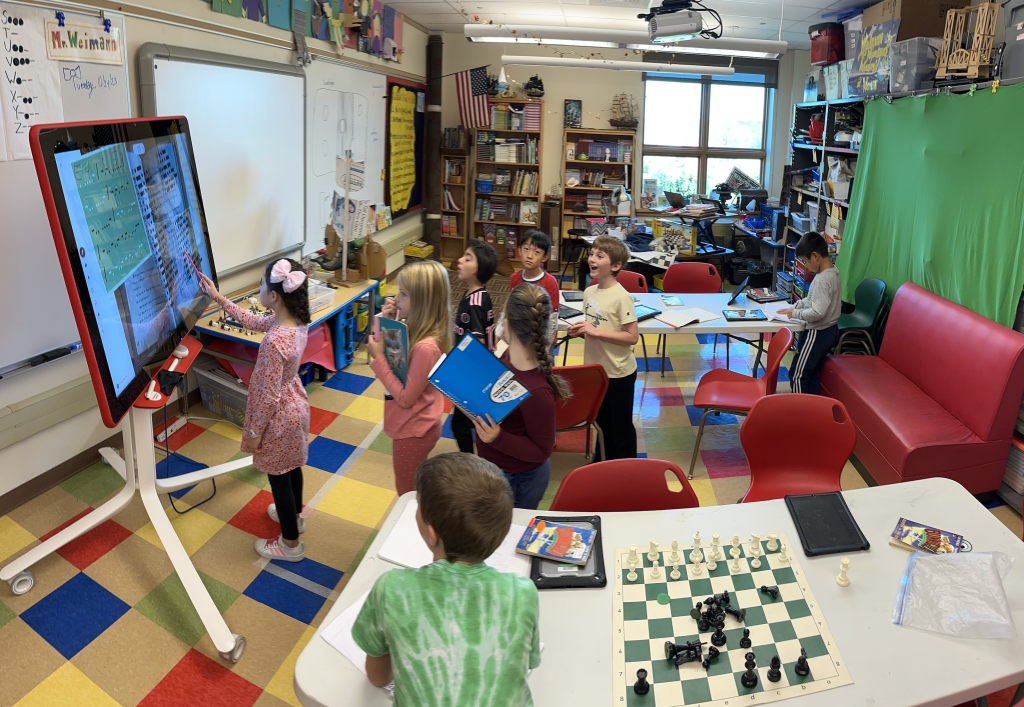
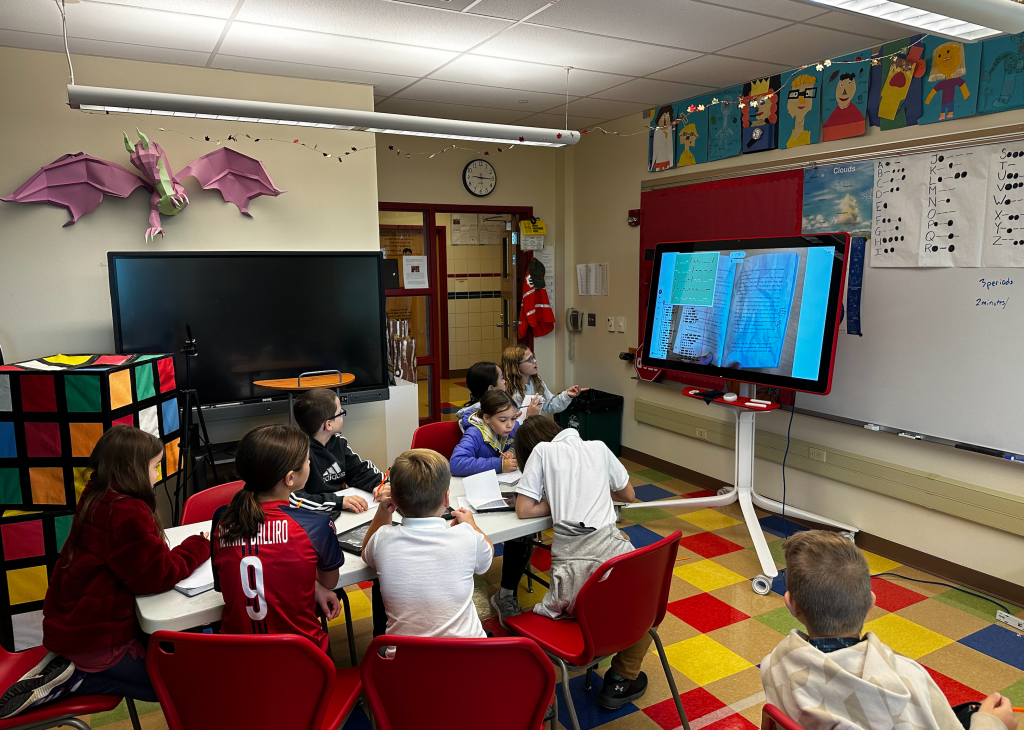
This problem was awesome on a few fronts. Students had deciphered a Morse code message that shared a short sequence of chess moves written in algebraic notation. They played out those moves and discovered that one player had a huge advantage over the other. “How much of an advantage? Be specific. Can you put a numeric value to the advantage?” 

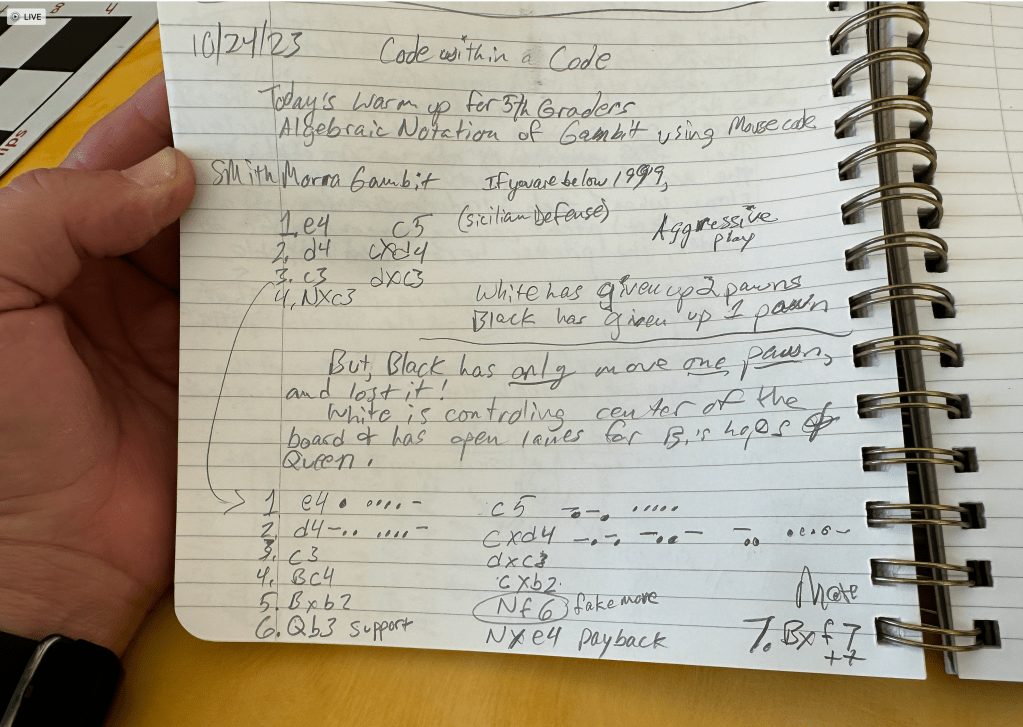
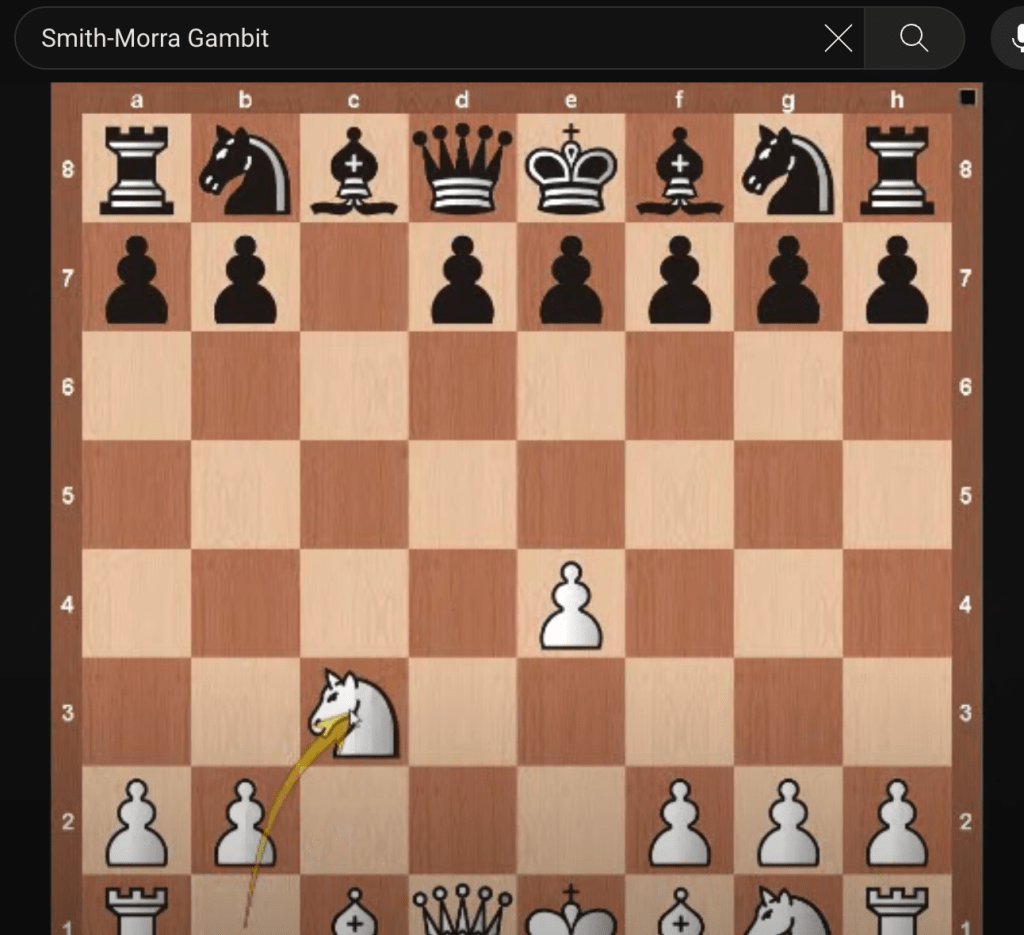
It all began with my preparing a lesson for chess club. I was going to teach club members about gambits. I researched the more common gambits and landed on the Smith Morra Gambit. I found a succinct video on Youtube that explained the gambit. While watching the video, I wrote down the algebraic notation. 

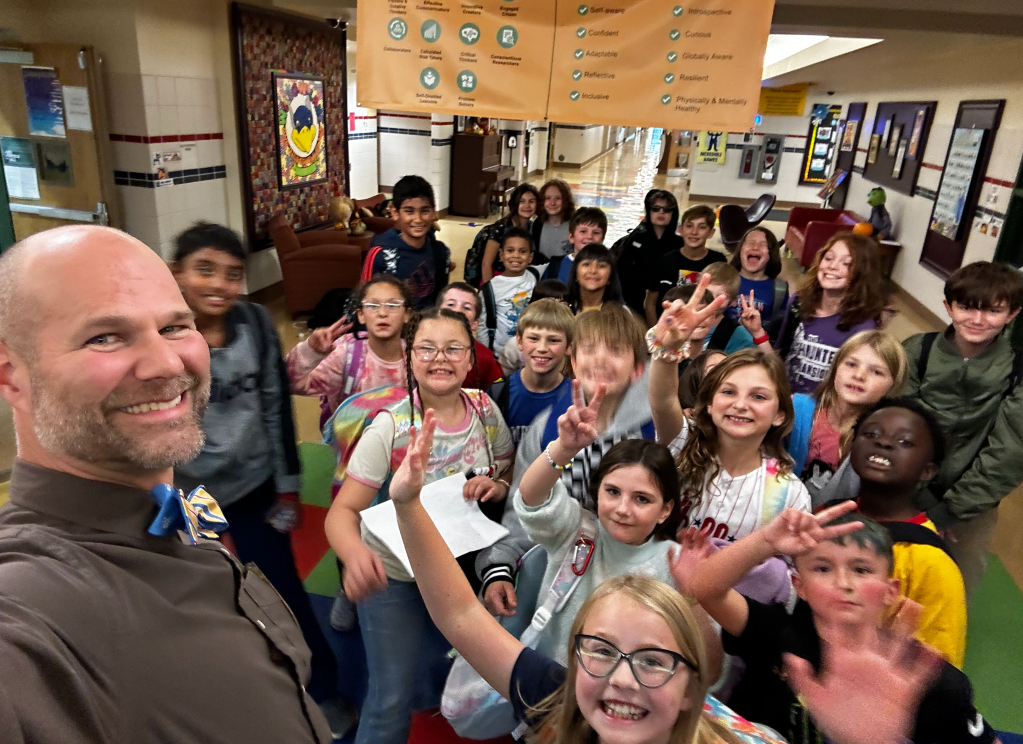
But, I wouldn’t just give them the chess code to learn the gambit; I decided to have my gifted students decode the code! My fifth grade gifted students were the first ones to see the code. They had only dabbled with decoding Morse messages. 

I had used Morse Code Translator to change the chess play sequence into dots and dashes. Rather than writing the number of the move; This was going to be confusing enough as it was; I decided to change the colors of the moves. White’s moves were turned to white dashes and dots. I made the background of the text box green, so that you could easily see the white and black codes. I put an image of my code, along with the Morse Code alphabet and accompanying numbers onto a Google Jamboard. The fifth grade gifted students were on it the moment they walked through the door. 

The two things that I shared with the fifth graders was that the slanted line (/) separates the words; In this case it broke up the moves, but I did not explain that. I told them nothing about the actual message. The second thing that I pointed out was where each letter or number’s code ended. The translator that I use makes it much easier and faster to produce Morse Code, but sometimes it is difficult to locate the space between each letter/number. After pointing out these two key factors, I stepped back and watched the struggle. 

Right away I heard a couple students divvy up the White and Black “words.” I was glad to hear the idea of collaboration. I wondered how long it would take for someone to understand that these were not actually words. The very first coded move was e4, the most popular opening move in all of chess. I heard a few people verbalize bafflement, but several recognized the move, “It’s chess!” someone shouted. 

I didn’t help them with any of it. At least one student knew enough to be able to read most of the algebraic notation and make sense of the moves. Of course I had a chess board and pieces handy, and we set up a game. I let the students figure out the sequence of play. When they came to the gambit on the second White move, I stopped them to explain what a gambit was. This was good practice for my chess club lesson that afternoon. A couple kids would get a double lesson, but that was okay. They could be my co-teachers! 

“The word gambit is closely related to gamble. It means taking a risk. A chess gambit happens when one player offers up a peace as a sacrifice in order to draw an opponent into a trap or sequence of moves that would benefit the aggressor (the one offering the gambit). Do you capture the sacrifice or risk the piece taking your own?” 

I had the fifth graders play through the short sequence until Black’s pawn was captured. Black had accepted the gambit, capturing the initial White pawn placed on d4. White offered up another pawn on c3. When Black captured that, White might feel a little on edge, because now there is a Black piece threatening the second rank of the White team! It is so close to attacking the Queen!! 

Before any more damage can be done, White captures with the Queen-side Knight, Nxc3. White has lost two pawns, while Black is only down one. If you were to only count points, it would appear that Black has the advantage, being up a point. A mere glance at the board should show even a novice player that White is in a much better position!

I explained to the fifth grade gifted students that the best thing to do at the beginning of a game of chess is to control the middle of the board. With that criteria, everyone can easily see the trap that Black has fallen into. There is a White pawn left sitting on the initial e4 square. And, now a Knight is “developed,” backing up the e4 pawn and attacking four more squares (b5 and d5 as well as a4 and e2).

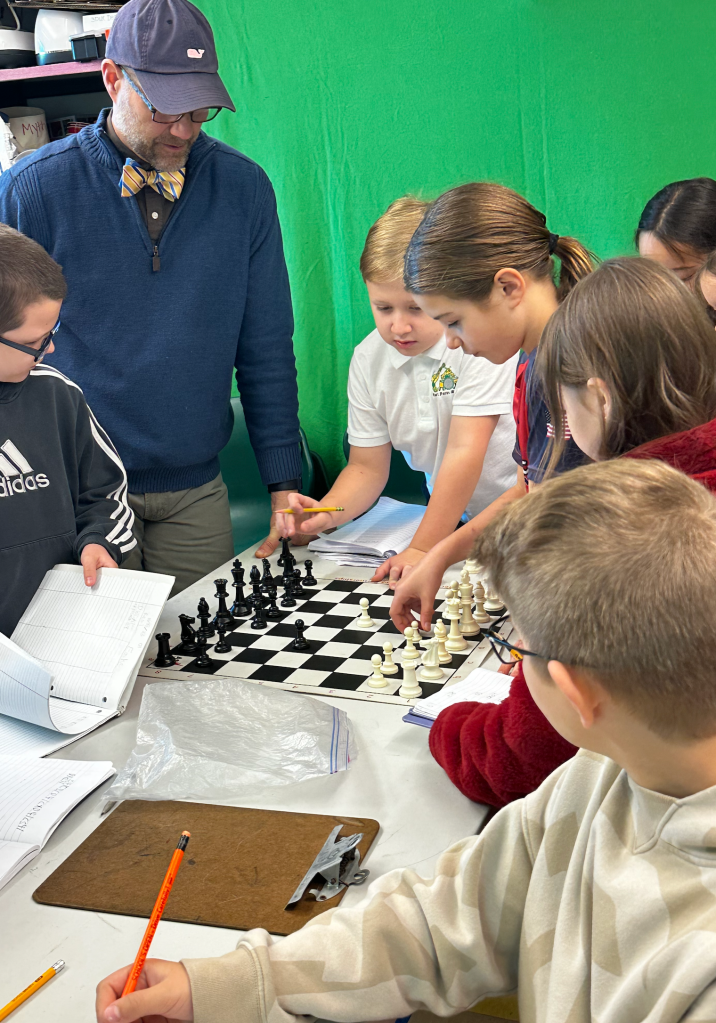
The fifth grade lesson stopped there, but my fourth grade gifted students got a treat. It only took seconds for them to figure out that the Morse Code message was algebraic notation for a chess game. When I heard some groans, I told them, “The first to solve the riddle can play me in a game of chess.” Now, the heat was on. I set the board back up in the middle of a table while my students grappled over letters and numbers seemingly unrelated to one another. 

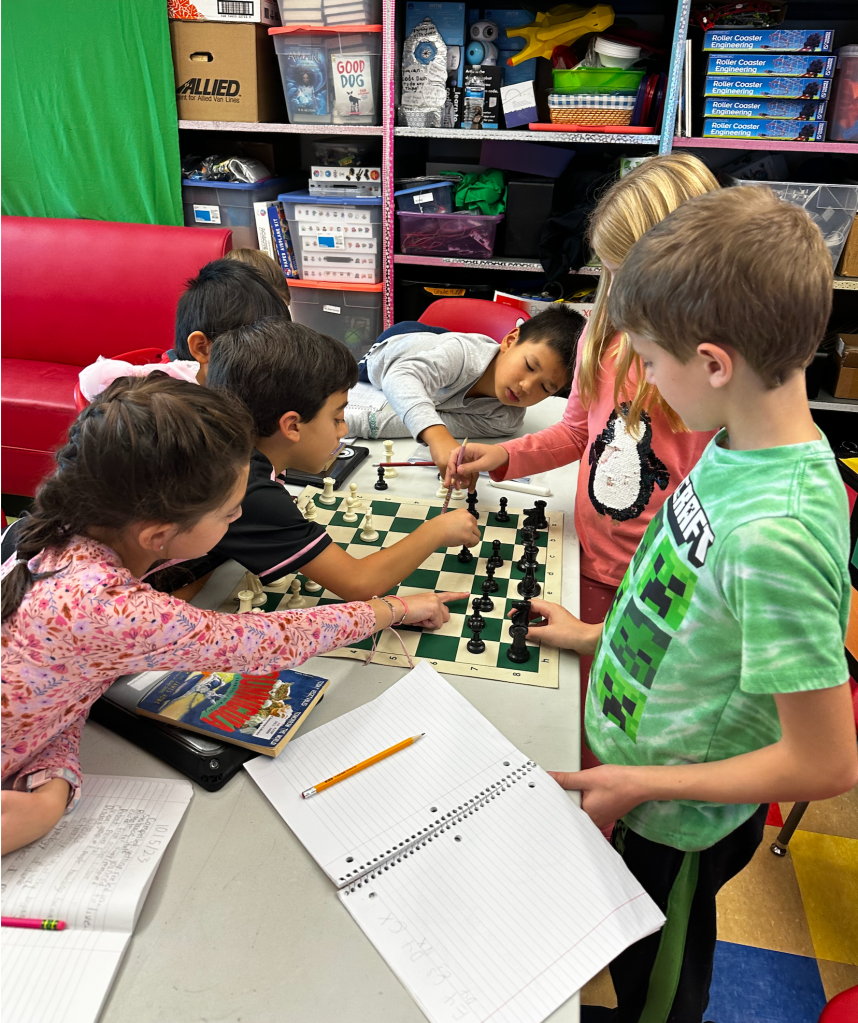
We worked through the Smith Morra Gambit sequence the same way I had with fifth graders. I had the fourth graders figure out the algebraic messaging. They figured out that the Xs meant a piece had been captured. I had to explain that the “d” in dxc3 meant that the capturing pawn had come from the d file. After explaining gambits and discussing the advantages and disadvantages of the board we were left with, I played a blitz round of chess against a pair of students.

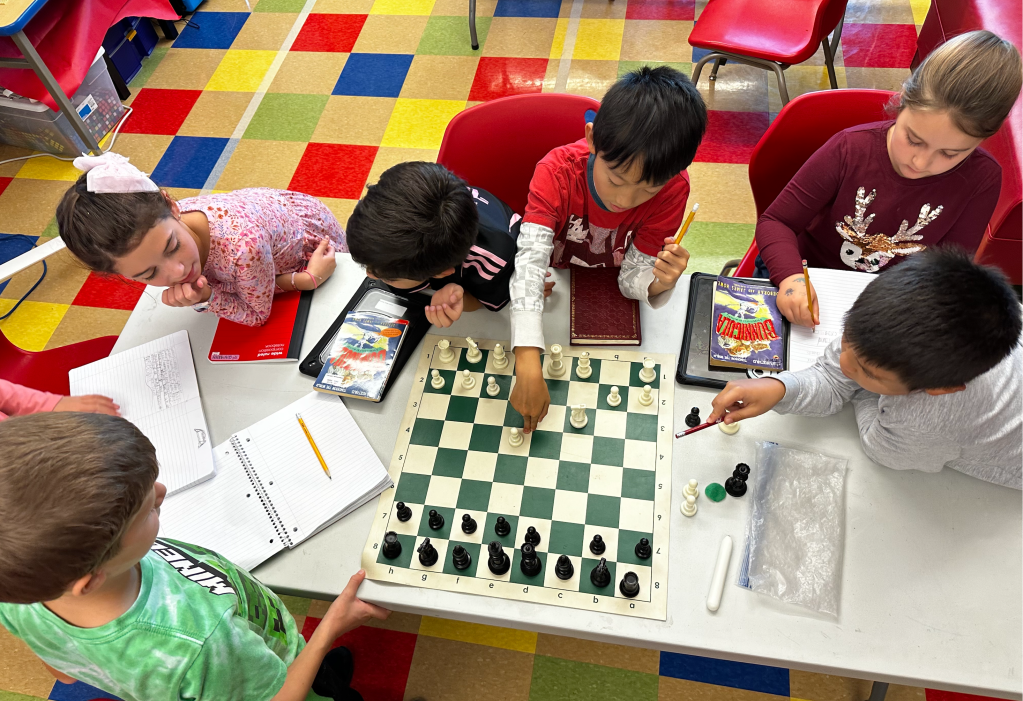
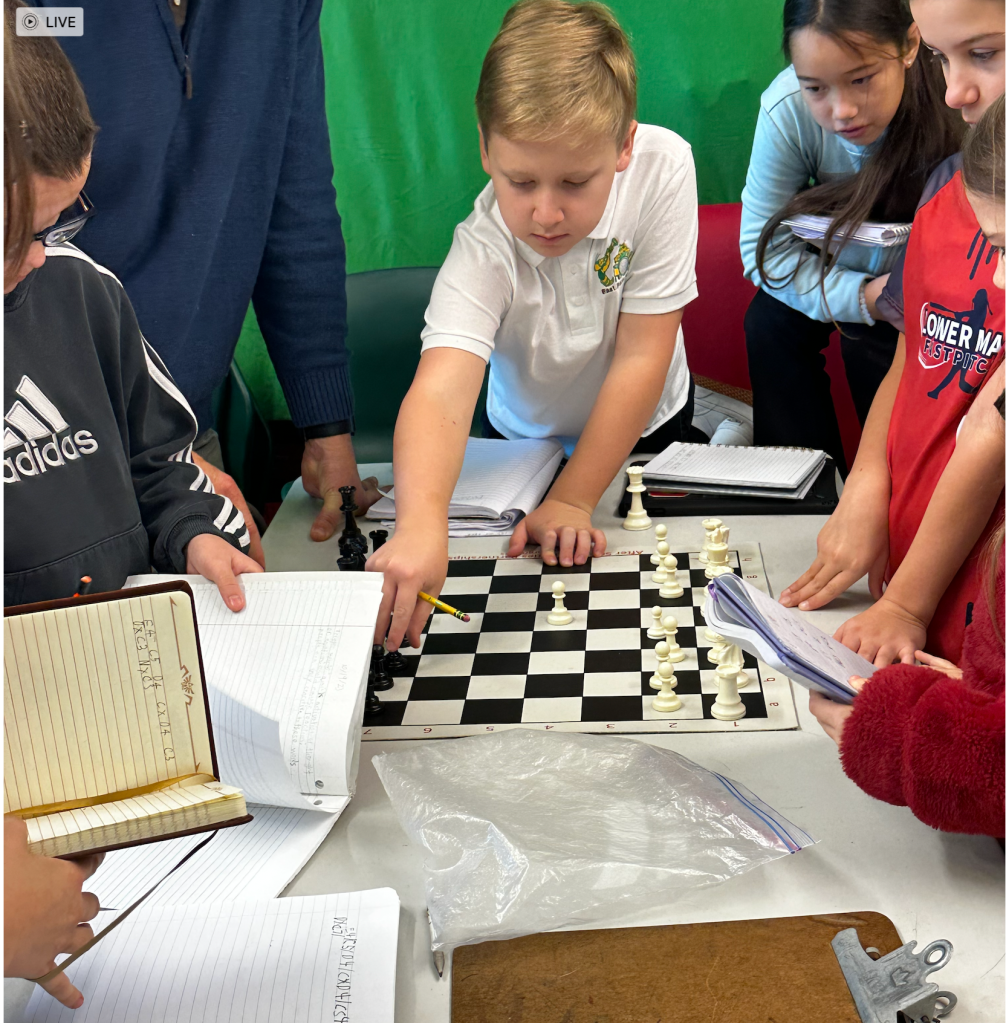
Third grade was next, and these students are not only classy, but they are some of the hardest workers I’ve witnessed. Their grit knows no end. I presented them with the same problem. They labored through decoding my Morse Code message. We played the sequence out. I taught them what a gambit was, and we discovered the significant advantage that White was left with. But… Then I was hit with a question that I liked so much that I recorded it on video so that I would remember it: “We know that White has the advantage, but how much of an advantage? Can we put a number to it? How many more squares is White attacking than Black?” 

Not all of my third graders know how to play chess. I taught the team how each piece attacks. “How many squares is the King attacking?” I asked. I showed them how it moves. The answer was two squares. “How many squares are the Bishops attacking?” We looked at their lines of attack. I showed them the squares that the Queen attacked, including the Black pawn on d7. We went over how a pawn attacks diagonally and the way a  Knight moves. Then I set them loose.

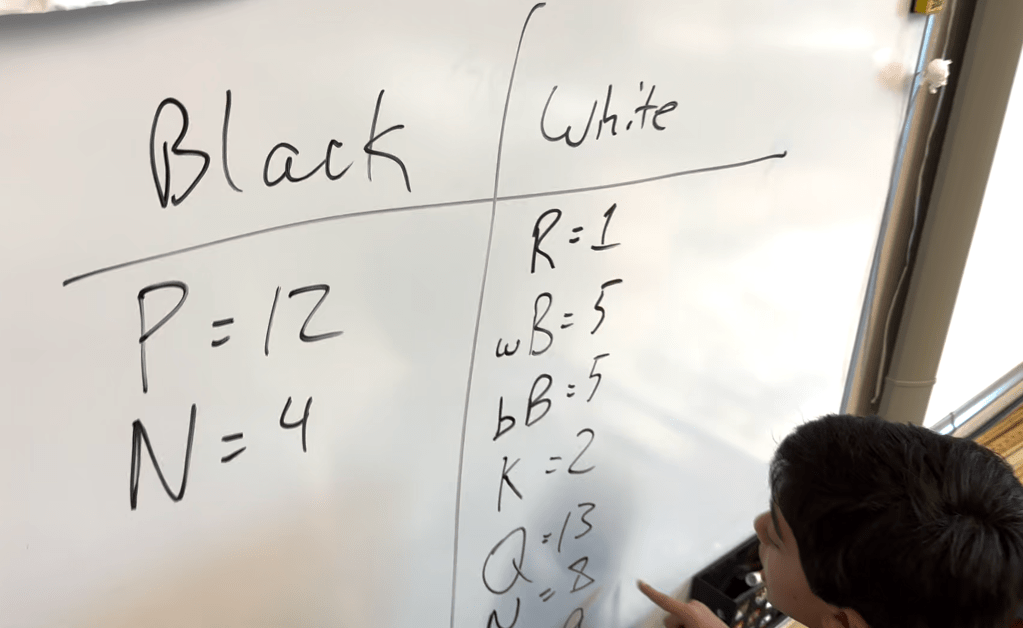
A few floundered, so I guided them to make a T chart. “Let’s do one color at a time,” I suggested. “Also, how about we focus on only one piece?” We carefully counted all of the squares that the Black pawns were attacking (12). Then we counted up the Knights’ attacks (4).

Next we moved on to White. There was an empty square next to the White Rook, so that counted as an attacked square. We continued counting until we covered every piece. I missed a couple of the the Knight’s attacks, but Gray got my back. She caught my mistake, and we corrected the calculation.

In the end, we discovered that White was attacking 43 squares to Black’s 16, way more than twice as many! So, was the gambit worth it? I’d say so. And, what could Black do differently to limit the massive advantage? Don’t fall for it. Don’t take the gambit. Push forward or ignore, but definitely think ahead.

Chess Club Isn’t Just for Members

I’d like to invite you to join the Willow Lane Chess Club kids for a game or two of chess. “But, I’m not good at chess,” you may say. This might sound weird, but you are exactly what we are looking for! The purpose of this event is for the Willow Lane Chess Club to show off its skills. We want to impress you with our knowledge of the game and ability playing it. The less you know of the game, the more impressed you will be when witnessing our skills. Also, as discussed in a previous blog, playing and losing to children is empowering (for them;). 

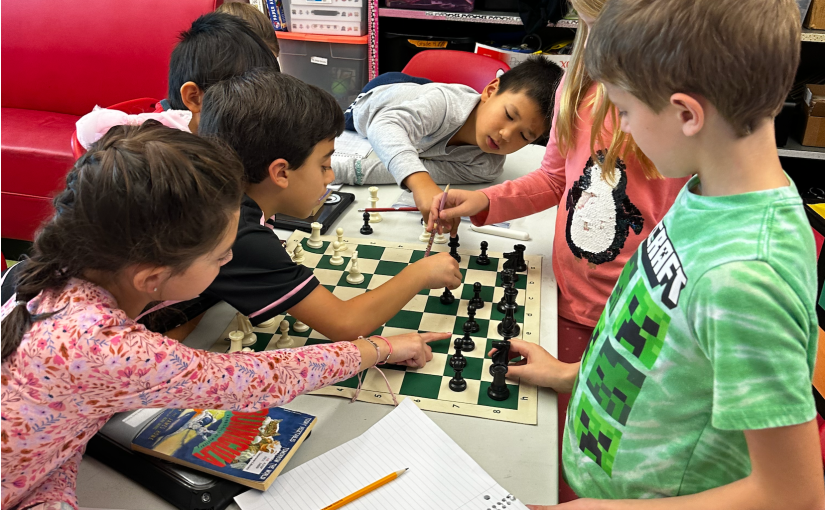
This event is the very first of its kind. Grownups are being invited to join the chess club from an elementary school; these are 9 to 12 year olds; during their regularly scheduled last club meeting. We have been meeting every other Tuesday all year. Students have learned how to move the pieces, win the game with checkmate, use tactics like skewering, pinning, and forking, as well as practicing with game after game. Each club member has played nearly every other one, and it is time to put our skills to a new test. 

Parents who attend will view not only their own child’s chess-playing ability, but that of their peers. The adult who is willing to sit down with a preteen and potentially lose at a strategic game like chess is a giant in humility and a god of empowerment. Students will become giant killers of fear, apprehension, and insecurity when they survive a chess match with people they view as all-powerful. Even if a child does not win, being able to play with dignity and hold one’s own against an adult will help raise a child up in their own perceived self-worth. 

If you think that you are too good at chess to join us for this day of play, I have two things to say to you. 1. Let’s see. And, 2. Please share. First of all, we have some pretty competitive kiddos in our Willow Lane Chess Club. If you are game, come on down and show us your stuff. Perhaps you crush our top players. Good. That will teach them some humility and show them how much they have yet to learn. If they give you a run for your money, all the better. Growth through challenge is strength. Secondly, we would greatly benefit from experiencing high-quality play. You could show our students some playing techniques and strategy that will help them in the future. The model of your play will give them something to strive for.
With the simple goal of showing off our skills, this ought to be a fun afternoon of gaming. Adults will be able to play a few kids. The winners of matches will NOT be recorded. This is NOT a tournament where only a few players sift to the top of a pyramid. Rather, it is going to be an hour of playing a FIFTEEN-HUNDRED-year-old game, minus the stress of game clocks, notation, or elimination. Even if you don’t know how to play at all, come and learn. If you have well-behaved children you are responsible for, bring them. They may be inspired. Don’t let anything hold you back from this extraordinary event.

Mark May 24th down on your calendars. Sign up on signup genius. Invite other grownups. And, prepare to be wowed by the students of Willow Lane.