Parameters Are Classy

I could get all educational-philosophical here, but really, I just want to share an awesome lesson. You know I would love nothing more than to explore the paradox of limitations providing freedom. And, I’ll definitely be looking up the etymology of parameter, but first…

Friday, September 15, 2023, was the last day of an incredible week of transition. Due to health complications, my good friend Julia Dweck is not going to be teaching the gifted students of Willow Lane this fall. (Please consider donating to her Go Fund Me.) I will be filling in for her.

That means someone has to fill in for me. The Polite Pirates (my 3rd graders) are lucky to have Julia Lutz at the helm! She began transitioning into captain of my class on Tuesday, following Monday night’s school board approval. 

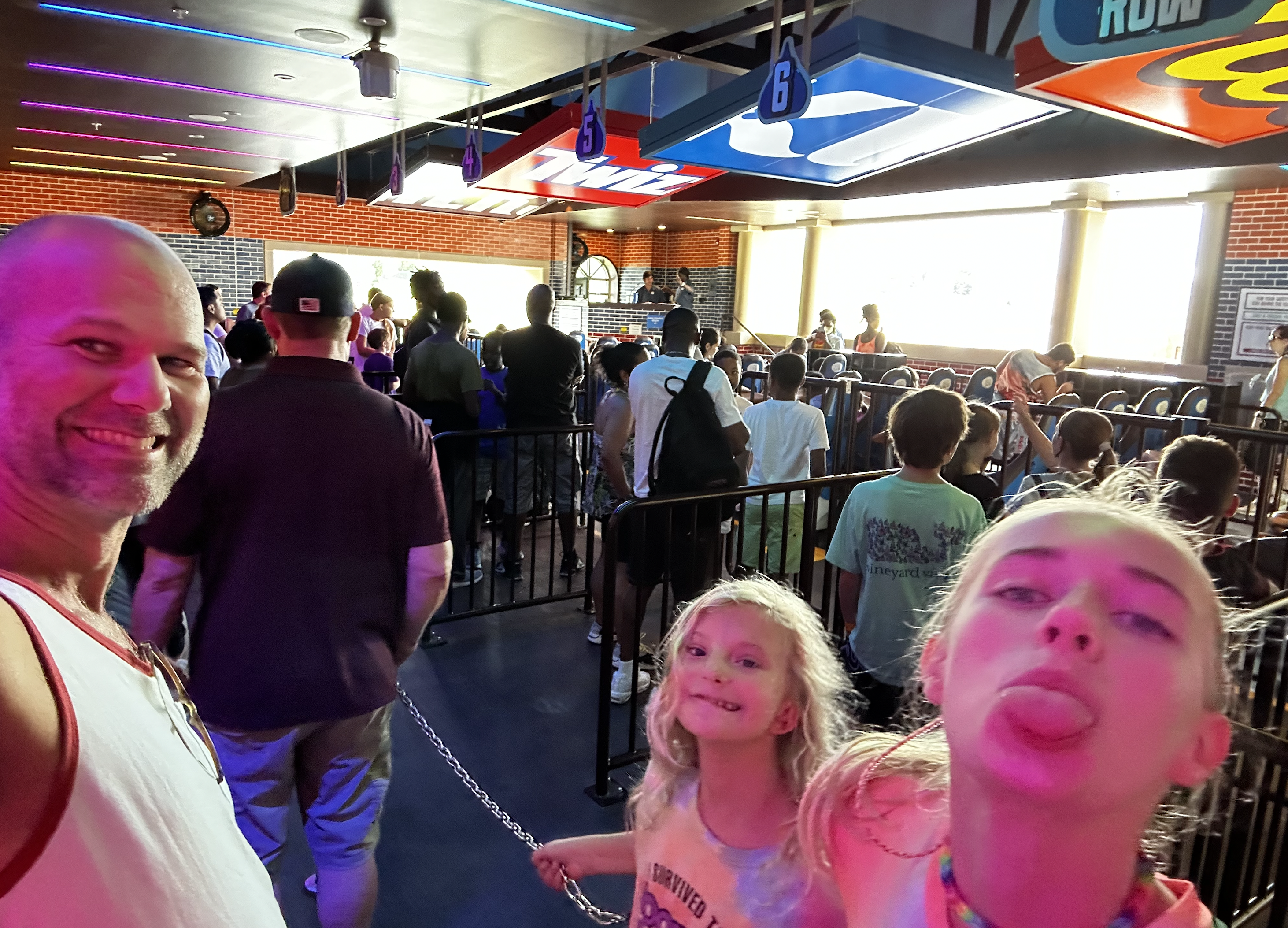
While it may have felt like a roller coaster ride of a week, it definitely wasn’t one of those vintage, wooden, chiropractor-necessitating coasters that loosen your molars. I recently visited Hershey Park with my family. My daughter Scarlet and I went on every single roller coaster. Her favorite was the Jolly Rancher Remix. I think she liked the dance music and lights. I enjoyed Farenheit. It was fast, loopy, and thrilling. It also looks cool from the ground. 

Handing my class over to Ms. Lutz was like watching a Hershey Park attendant safety-check my daughter’s harness and start a ride that we knew would deliver amazing thrills through scaring the wits out of us! It was clear at the onset that Ms. Lutz has better classroom management than I ever did. The Polite Pirates didn’t just obey and listen. They modeled the essence of respect when Ms. Lutz spoke to them. The cart on the track of this winding, hilly year was obviously a safe place, even if it was going to climb a very high hill and plummet toward earth at an incredible velocity. 

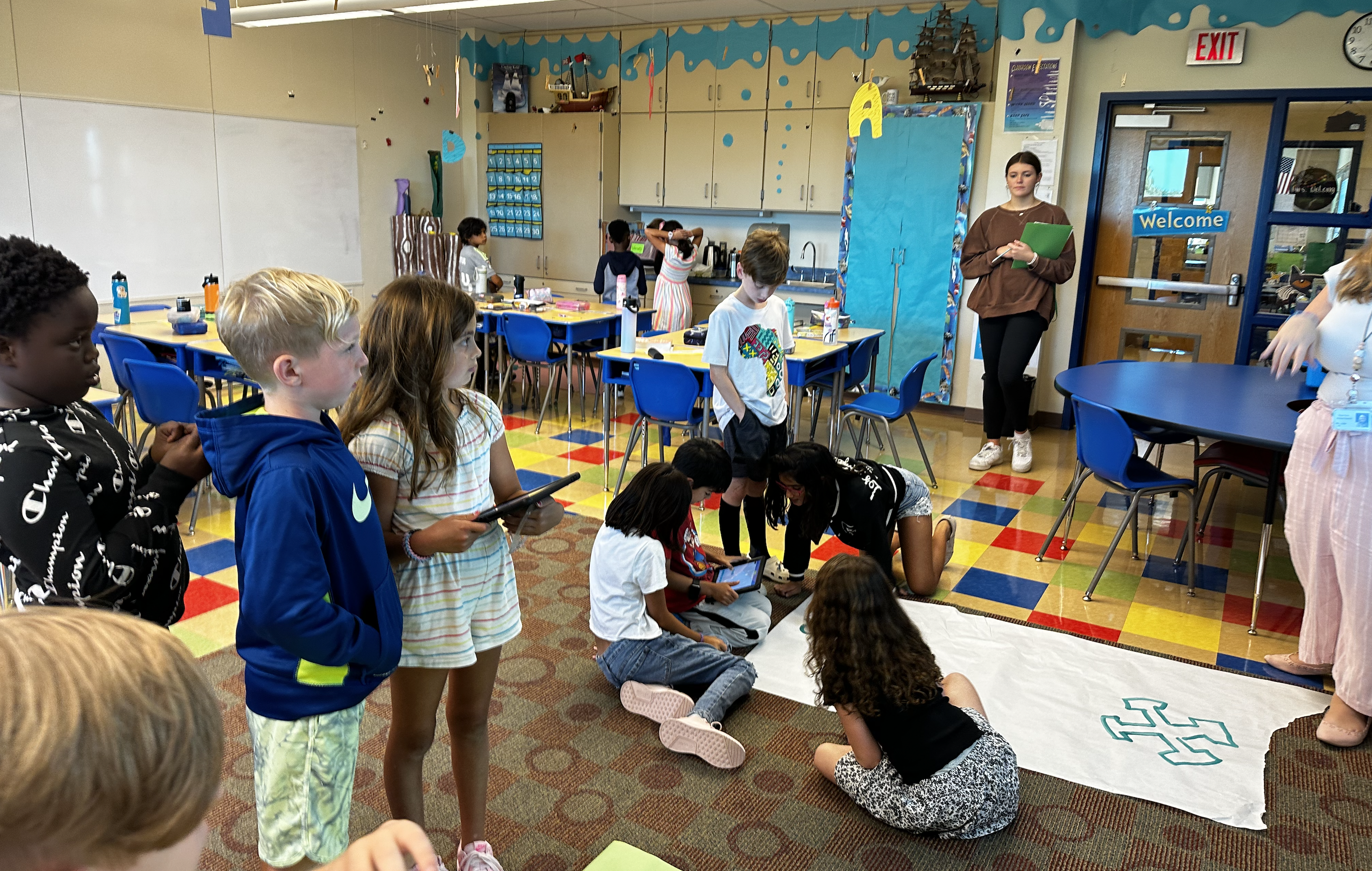
And now for the lesson. Friday afternoon Ms. Lutz, myself, and Cassie Doemling (East Penn HS field student, basketball player, and Polite Pirate; Cassie was a student of mine a few years ago;) brought the Polite Pirates on a treasure hunt. 

When I explained to the 3rd graders that, “We are going to be hunting in a place that is dangerous for humans, so we have to send in robots,” eyes understandably widened. Ms. Lutz opened the Spheros case, and everyone “Oooohed” and “Aaaaawed” at the lights. I swear a couple of Spheros shook with excitement, as well! 

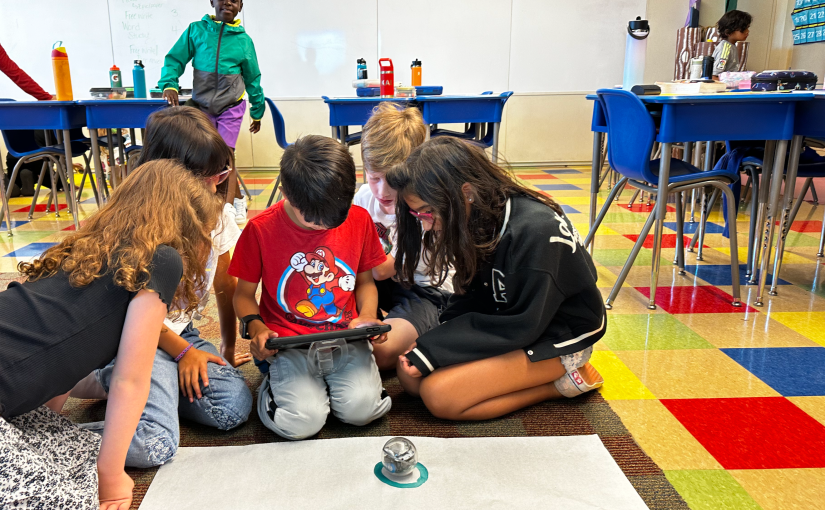
We had torn five large, different color rectangles of poster paper off of rollers in the hall earlier in the day. While Ms. Lutz demonstrated how to program a Sphero to a circle of students sitting on the carpet, I drew giant Xs on the other papers. One student from each of 5 groups would get their iPad and download the EduSphero App. Then go to Ms. Doemling to retrieve a robot. The groups of students were coached on how to work as teams. Then they were off!
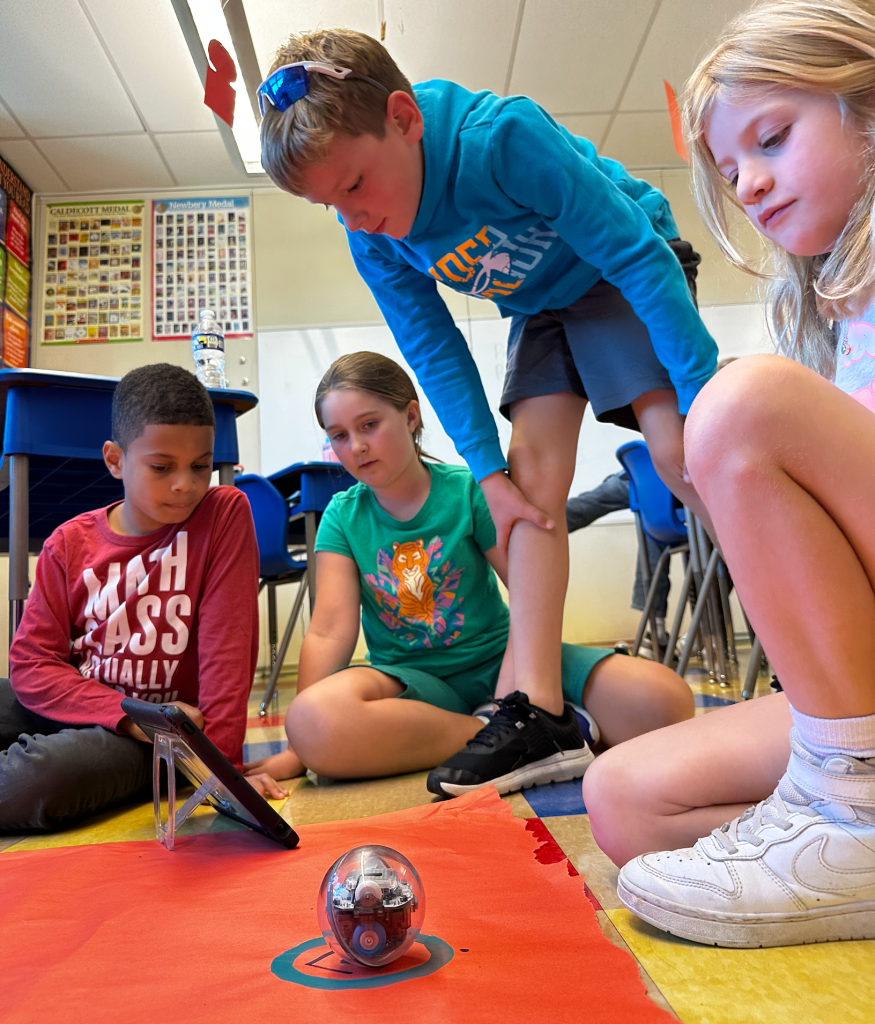
The first hunt was pretty easy. Students had to get their robot from the center of a circle to a giant X painted on the opposite side of the paper. The Sphero had to simply touch the X. It did not have to be in the middle. It was basically a straight line. 

As it turns out, the introductory coding you get when you open a new program, the very first time does exactly this. It sends the robot on a straight line away from you, and brings it back to its starting point. The Polite Pirates had to adjust the duration and direction. I told them to make the speed 30. 
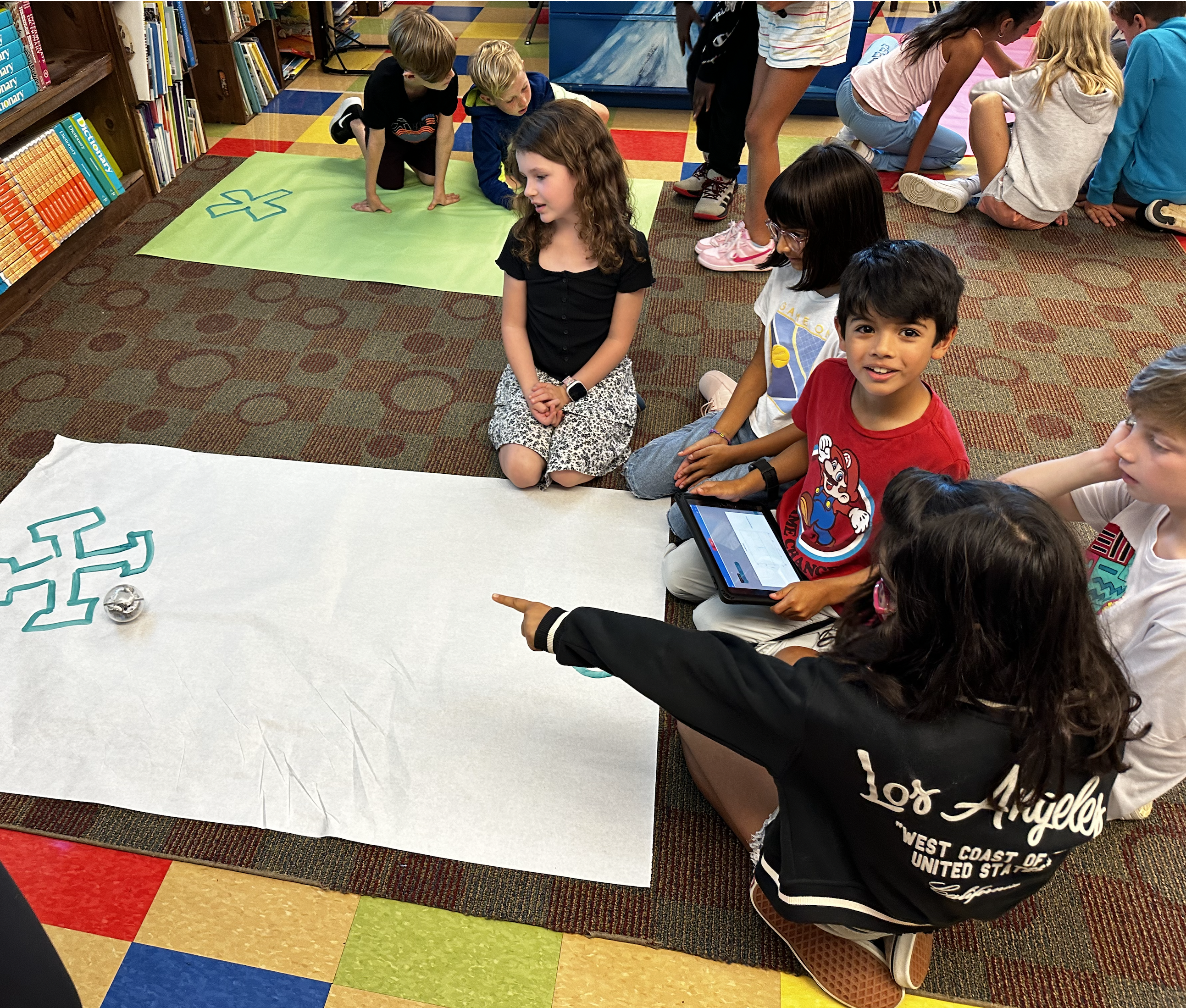
Once a team was successful in reaching the X that marks the spot of treasure, I introduced an obstacle. Cassie and I had made a bunch of piraty problems prior to the lesson. We had a different one for each team; There was a great white shark, a storm cloud, a mean-looking jellyfish, and a threatening pirate. Now, the obstacle was placed in the middle of the poster paper island, and here are the parameters:

  • The Sphero must get from its starting circle to the X without leaving the paper. 
  • It cannot touch the problem.

They were simple. They were measures of success. More than limitations, the parameters were goals. “Can we do it while meeting these demands?”
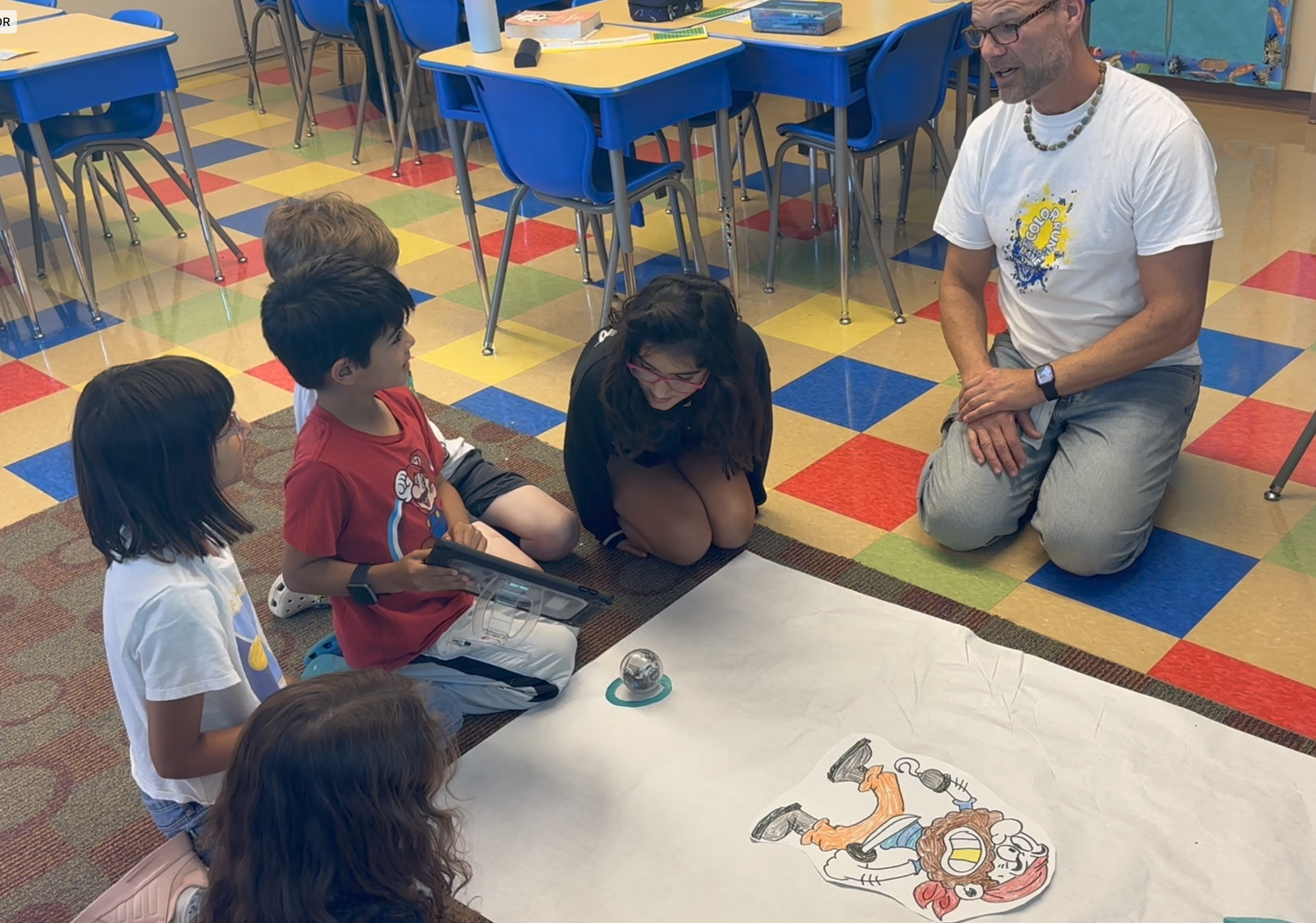
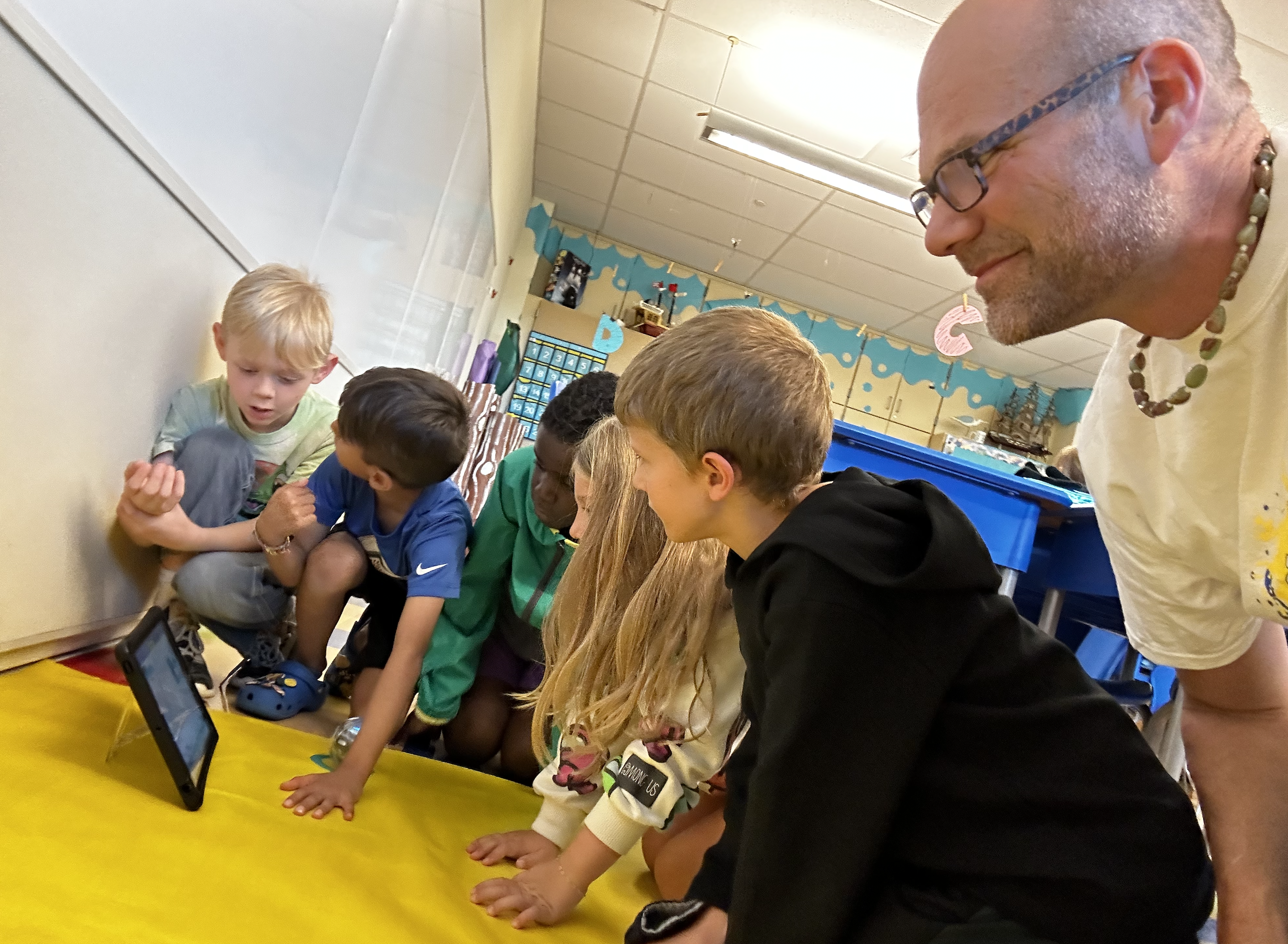
As teams began to experience successes, Ms. Lutz stopped everyone to both congratulate their progress, but also share some important news: “What good is a treasure that you can’t spend? You need to get your Sphero back to the circle. The starting point is your way off the island.” Now, students had to figure out a round-trip route. 
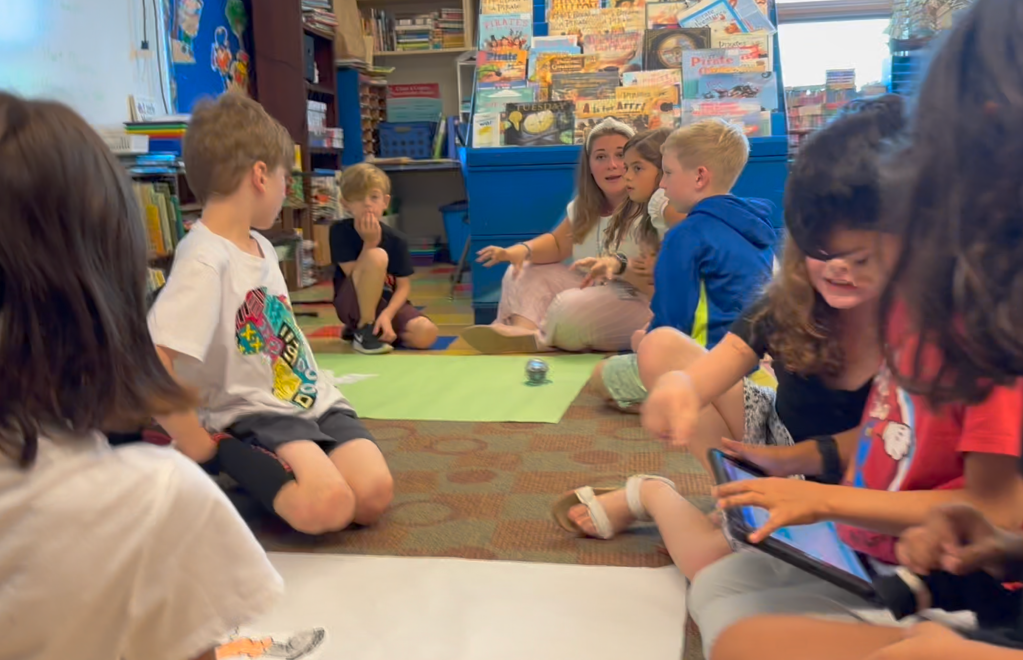
Because this was now Ms. Lutz’s “show,” I left Room 207 before the teams had completely finished their hunts. It felt like exiting an awesome roller coaster ride. I knew I could get back in line and go again, but was happy for the people who would experience it next. What a fun experience! 

Candy-Coded Morse Mondays

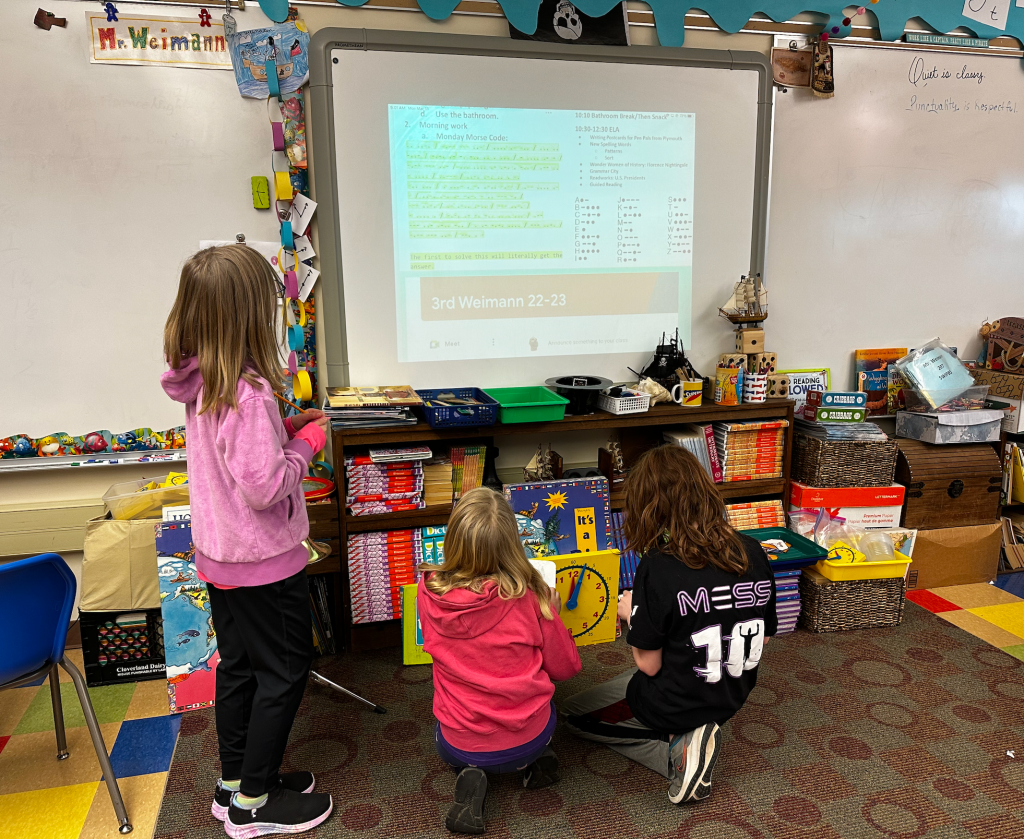
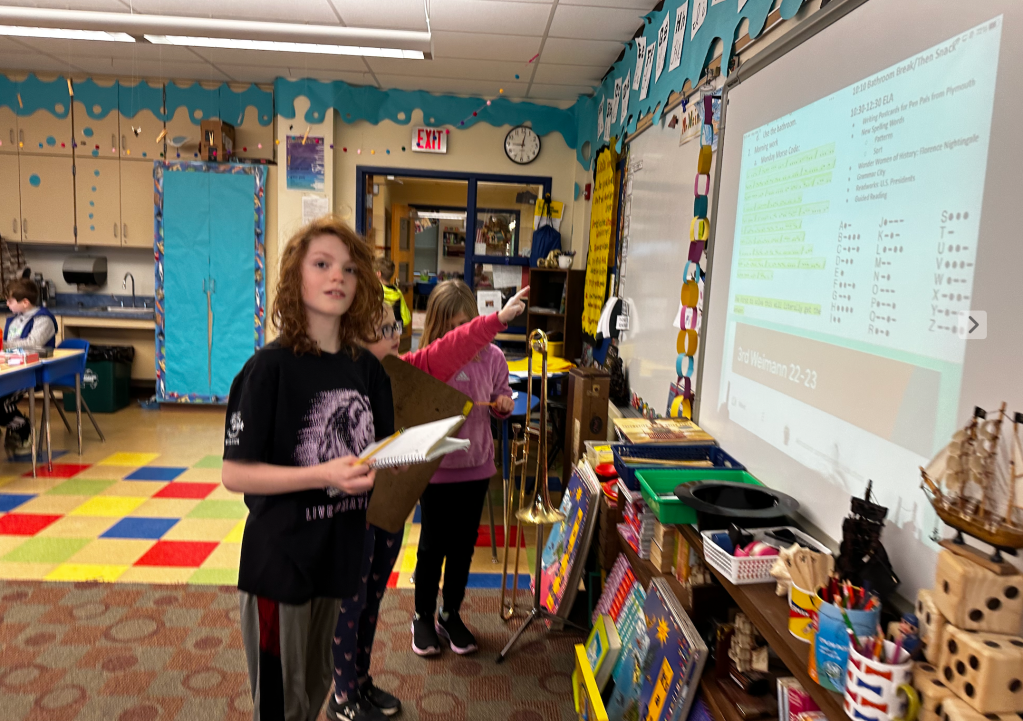
These two were so excited about earning their treasure through decoding the Morse Coded Monday Message that they just had to take photos of their discovery; a pile of Hawk Tickets in the vacant locker.

Yesterday was Monday, and among other things, that means Morse Code Morning Work for the Polite Pirates! Each Monday, since I introduced Morse code to the class back in January (Coding Teamwork), I’ve provided dots and dashes for deciphering. The prize for first decoder varies. At times it’s an intrinsic reward. One time, I hid a pile of behavior-plan tickets in the locker of a student who never showed up at the beginning of the year. Many of the codes contain riddles, so they are codes within codes.

The riddle within a riddle on this occasion was the vocabulary word “nonexistent” that described the Polite Pirate who had never shown up.

This was the case yesterday. I made up a word problem involving kids and candy. We have been learning fractions, and I was planning on introducing equivalent fractions first thing. Instead of saying, “Today we are going to learn about equivalent fractions,” I buried the treasure within the Morse coded message.  

Admittedly, not everyone was super into decoding this message. When I am coming up with a message, I try to keep it short. I don’t want the task to seem daunting. Another thing I have to look out for is only including letters. I avoid punctuation, and any numbers need to be spelled out. There is Morse code for letters and punctuation, but the image of the coded alphabet that I provide for the Polite Pirates does not have that code in it. (A fun, albeit challenging, task could be having the Polite Pirates figure out the code for numbers by embedding dash/dot combinations into messages that would only make sense after doing some calculating to figure out the answers to math problems. My students could build their own decoder of numbers through doing math, mixed in with Morse code.)

This is a screenshot of what I put into the Morse code translator website.

I messed up yesterday’s code. I accidentally included a number that wasn’t spelled out. When some students came to the “2” within the text, they knew it was a number. Rather than have them figure out what number it was from the problem, I told them it was an upside down five. (I can’t help myself!) It took them less than a minute to understand it was a two. 

Before stumbling across the number within the code, the Polite Pirates had figured out that it was going to be a word problem. This had some of them annoyed and others intrigued. In order to sweeten the deal, I had hinted that there would be a prize for whoever solved the problem first. Of course my hint was also a riddle: “The first to solve this will literally get the answer.” This worked because some of the first few words include “six candies.” My pirates, polite or otherwise, were going to bite onto this extrinsic motivation! Also, I was able to reteach the vocabulary literal versus figurative while they worked. 

When the word “fraction” was decoded, students knew what they were up against. Mr. Weimann was up to his many tricks. This was going to be “fun learning.” We have been working on fractions. The decoding heated up, and students began working in a frenzy. They were ready for this. 

As the final letters and words were discovered a veil of secrecy seemed to lower over the classroom. In order to earn the answer, you must figure it out. Now, students were back at their desks, hunched over their notebooks. “What is the problem about?” I prompted, half for the students working out the word problem, and half for those who were still decoding the Morse code message. I wanted the first half to understand the message of the problem, and I hoped to light a fire under the ones struggling with dots and dashes. This second goal worked, because one of my students who regularly succeeds in decoding these messages first had come into the classroom late that morning. Her pencil nearly carved the letters into her paper as she frantically discovered each letter of code. 

“Candy!” nearly everyone exclaimed, for the rumor had flown around the room like flu germs in a cramped elevator. 

Approaching the students working out the math, I asked, “What are you asked to find?” This is the second of our four word problem prompts that we use as a mantra when performing problem-solving math. 

  1. What is this problem about?
  2. What are you asked to find?
  3. What is the important information?
  4. What are you going to do? (What operations are necessary?)

I informed the front-runners that there was a riddle within the problem within the code. “Don’t be fooled,” I warned. “Look closely at who is getting candy in the end. It is written in the second person,” I instruct. I was hinting at the fact that, while you are sharing the candies with your friends, you still get to have some! “The problem states, ‘What fraction of the candy would each of you get?’” I quietly read to the students who are working out the math. 

One of the students got it. “There are three people and six candies,” he whispers. 

“Mm hmm,” I encouraged.

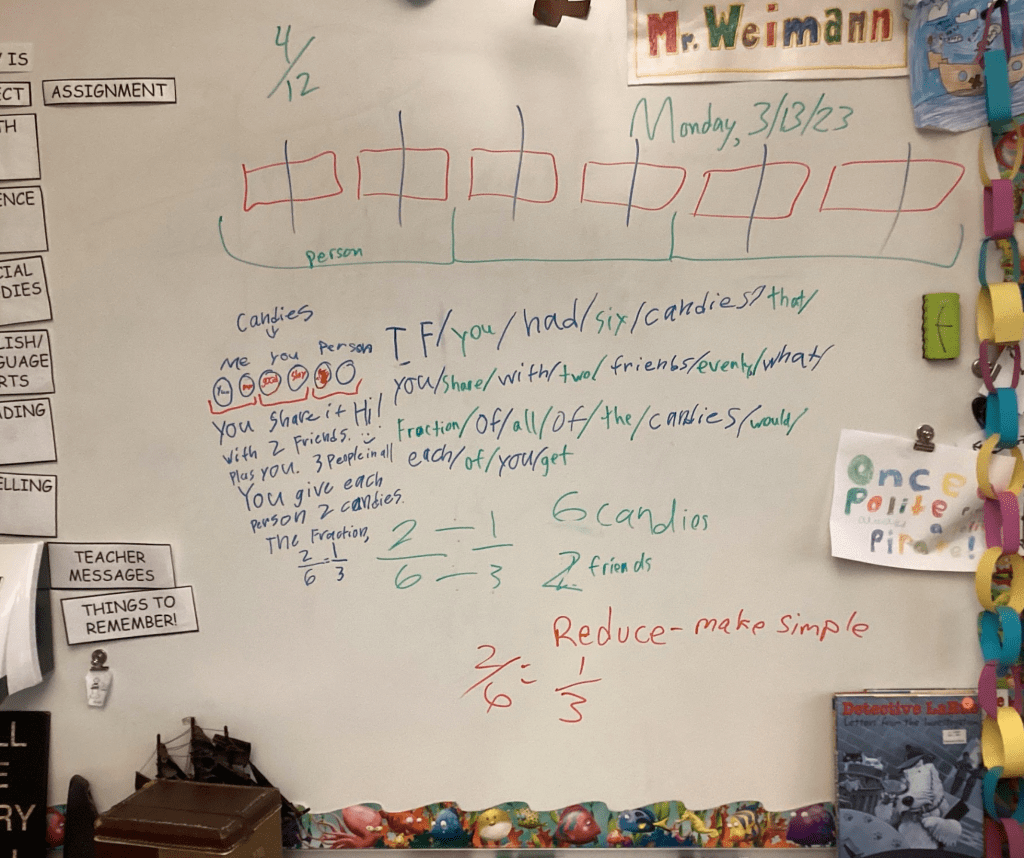
“Is this it?” His competition showed me her paper. She has not only written the correct answer, 2/6, but she drew pictures to show her work! I tell her yes, just as the boy shows me his paper. He has the same fraction. I then tell them to see if they can “simplify that fraction. Is there any way to make those numbers smaller, but have it describe the same amount of the candy?” They crunch the numbers simultaneously. 

I was so impressed with their work that I took pictures to project on the board.

“One-third!” they exclaim in unison. If I don’t say that they are correct verbally, my face assures them of victory. And, the action of getting a big bag of candy out of a cabinet is more proof of triumph than the class can handle. Everyone’s attention is on the Monday Morse code math masters who have earned the prize; literally the answer to the problem; six candies each to share between themselves and two of their friends. 

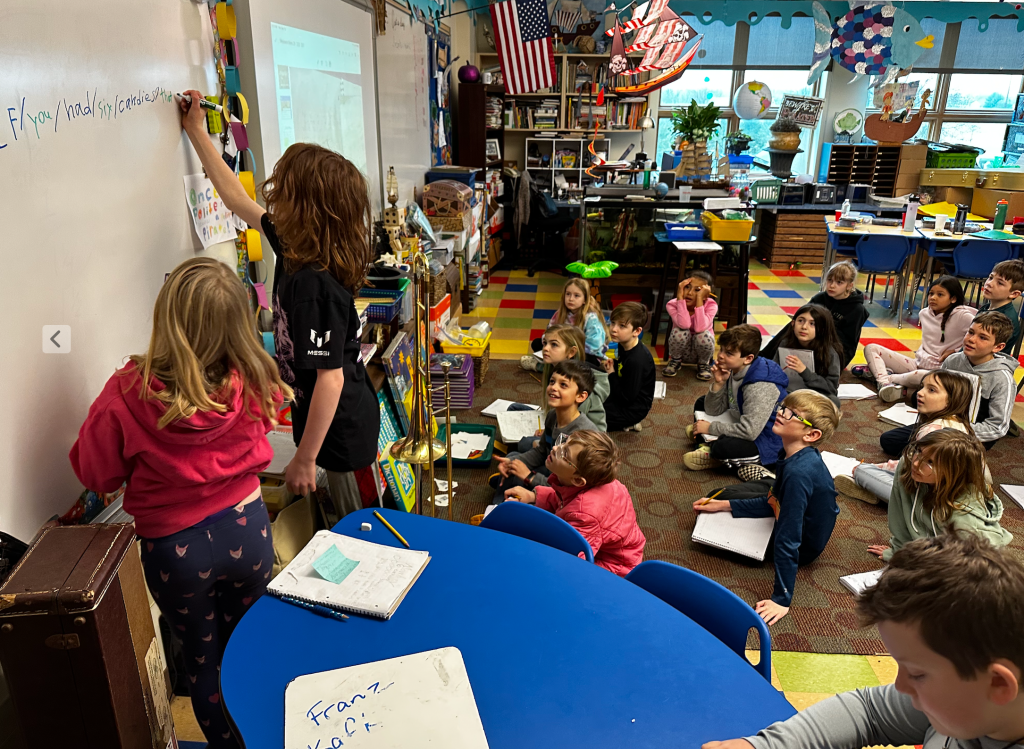
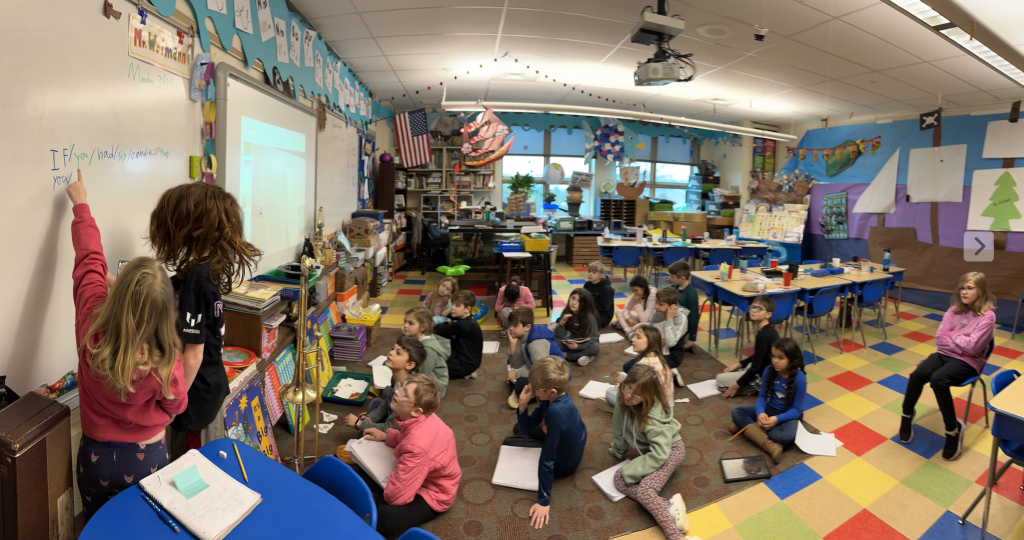
Before giving them the candies, I had them explain their work. They took turns writing and drawing on the board, talking their Polite Pirate peers through what they had done. The student who had drawn pictures in her notebook, not only drew them on the board but wrote complete sentences describing the whole procedure. I was so impressed that I was tempted to give her additional candies, but no, I am a pirate captain, if nothing else, and I be stingy with me treasure! (Really, I like to keep my word, strictly, when I can, because I stretch my meanings all of the time!!)

Who to share their treasure with, these two could not decide. I suggested that they witness who goes back to their desk the quietest and does the best job copying what is on the board into their spiral notebooks. The Polite Pirate pair nodded and the race was on… again. This time, every pirate but two were scrambling to get to their seats, sit up straight, and quickly copy everything the first two had explained. The candy captains walked around inspecting the work of their peers. Candy was dispersed, but you couldn’t tell because everyone was feverishly writing. 

And, this is how we began discussing equivalent fractions. As kids crunched on candy, I used the idea of candy to suggest each piece being cut in half or thirds. Halves would produce 4 pieces out of a total of 12 going to each student. Thirds would make it so that 6 pieces out of 18 would be had by each friend. We went backward, too. “How many sixes are in 18?” I asked. I had a worksheet for students to try out, and I circulated my ship… I mean classroom, and checked for understanding. 


One last thing about Morse Code. Some students complained and grumbled about the work of decoding the message. When the dust settled, I told my Polite Pirates that my intention is for them to know the code so well that they do not need to keep referencing the alphabet decoder. I had them try it out. I told them to close their eyes. “What letter is four dots?” I asked the group.

“H!” they called out in unison. 

“And, what letter is only one dot?”

“S,” the class provided. I did this with several more letters that we have seen over and over, and they had used to decipher the message still in front of them on the Monday Morning Board. They were amazed at their memory. I told them that this is how you memorize something. You have to work at it, practice it, use it. I’m planning on helping them memorize the code and see if they can decipher something without me providing the alphabet.