
My daughter Scarlet is almost 12 years old. She’s a “Tween.” For a while I’ve been wrestling with knowing when to let her make her own decisions, versus my telling her what to do. I’ve noticed that the more Scarlet has a say over what is happening, the more motivated she seems to be when completing a task or participating in an activity. We see this in our classrooms everyday. Teachers give their students tasks to choose from. Our goal is for them to work independently.
Is independence synonymous with autonomy? Scarlet and I explored the definition of autonomy with sidewalk chalk. It means “Self-governance.” This is quite different from simply “working by yourself,” independently. Do teachers strive to empower students to govern themselves, or are we simply trying to get them to work quietly?
What is power? Are power and control synonymous?
I’ve been mulling over the idea of power for a long time. I’ve read several books on the subject. I’ve discussed it with Scarlet. We read a book for kids together. Power is a subject that is explored, lost, earned, used and abused in every story, book, movie, play, and poem. I want Scarlet to feel and be independent; I want her to feel powerful. What does that mean? Am I saying that I want her to have a lot of power? What is power?
One of my favorite activities to share with Scarlet is read alouds. My fondest memory with my late mom was her reading to me. She read classics like “A Wrinkle in Time” during long car rides, and we labored over the vocabulary in “Swiss Family Robinson,” sitting in bed at night. Is this a novel or a botany book? I remember wondering! We gritted through it, and the experience bonded our relationship and a love of reading.

I’m proud to continue this family tradition with my daughter. The other day Scarlet and I finished reading a book together. If I were to say, “What do you want to read next?” I would be putting power in Scarlet’s hands. I’d be empowering her. She knows that we are not going to read any ole’ book that she suggests, however.
There are limits; Parameters. If she were to say, “Let’s watch Sponge Bob Square Pants,” I could point out the fact that I asked what we were to “read” next, not “watch” next. Her decision must fall within the parameters of text. Am I being controlling by fencing in her choices?
Could she choose a graphic novel? Yes. There is a lot of text in most graphic novels. Some argue that you read the pictures, and illustrations tell their own story. Could she choose a book that was far below her reading level for us to read together? Yes, as long as it contains text, and even some books with only pictures could be considered “readable.” However, just as I would guide Scarlet away from choosing a book that was too difficult to understand or one that had grownup situations in the plot, I’d steer our read-aloud away from texts that were too simple, also.
The term steering, providing guidance through suggestions, makes me think of the word “influence.” This term originates in medieval latin influentia which means “flow into” (2020). When you are causing thoughts and decisions to flow in a particular direction, you are influencing them; you’re being an influencer. Teachers do this all day long when they get conversations back on track. “Let’s return to the topic at hand…” a teacher suggests. They just put up a barrier, prohibiting the stream of students’ thoughts from meandering in other directions.
The more influential you are, the more powerful you are. Having the ability to move people’s thinking is powerful. I think we can all agree that a person with the authority to command others to stop an action or require them to do something is a person of power. Can an influential person have more power than a person in a position of authority? On the flip side of that coin, can an authority figure “un-influence”?
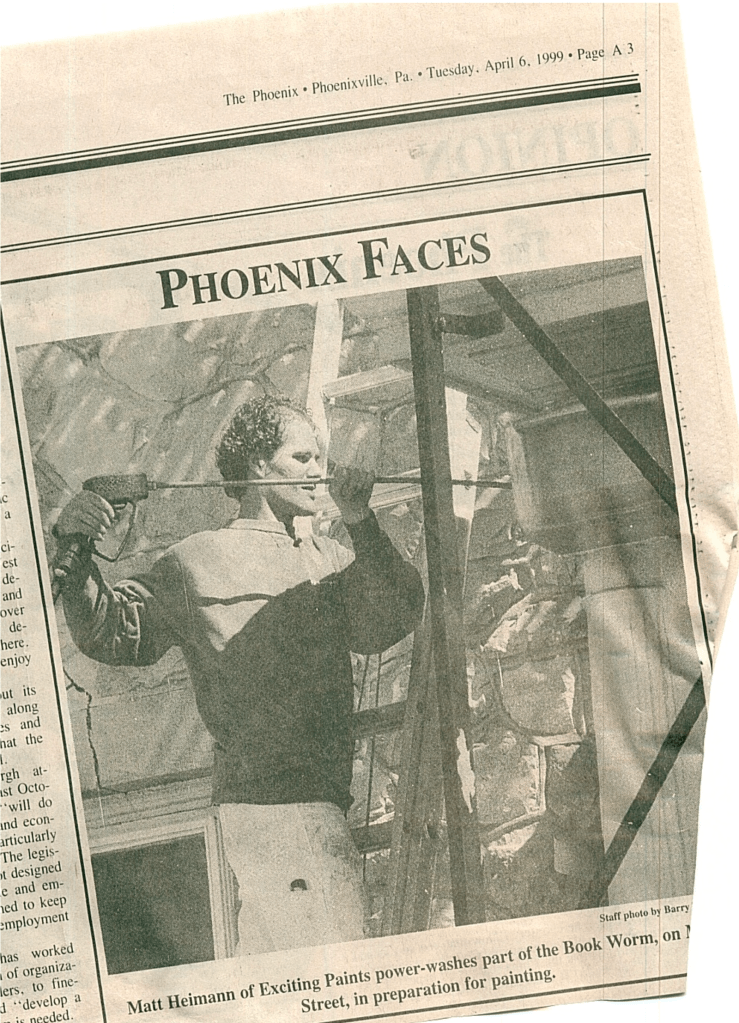
Going back to the concept of influence controlling the flow of water, what is more powerful, a pressure-washer whose motor pushes water at 3,500 pounds per square inch, or gravity? The pressure washer not only creates an astounding force behind the water it pushes, but there is a wand that has a trigger, so the water can be turned on or off. Is the pressure washer influencing the water?
That might sound like a silly question, but when you apply the analogy to “influencers,” and imagine a person wielding information, you can see that influence can be very forceful. Social media companies have built almost literal engines that limit and force users to view information (posts) tailored for them. “On social media platforms, algorithms are mainly designed to amplify information that sustains engagement ” (Brady, 2023).
In the same way water dripping on the same surface over and over for hundreds and thousands of years will affect a hole right through even the hardest rock, people cannot withstand constant influencing on a specific subject forever. And then, put the power of the media and other influential sources behind those ideas, and you’ve got yourself a pressure washer of information!

A term that has been popularized in recent years is saying an idea has been “weaponized.” This means that someone is using a concept; usually one that would typically be benign; in a negative way against someone else. They have turned what would be a gentle drip of an idea into a harmful stream of thought. “This is sometimes referred to as cognitive hacking” (Wigmore, 2017). You could try to shield yourself from the onslaught of weaponized influence, but you might need to simply remove yourself from the strong stream of information, if it is too overwhelming. If you find yourself drowning in a river of ideas that are too deep and wide to navigate, get yourself a raft, climb out, and find a shore, even a hill to climb up.
Some people put a lot of effort, money, time, and resources into diverting, changing, and even hiding information, so that their audience does not get influenced by it. These people are wielding power over others’ thoughts in a way that has been termed gaslighting. This nefarious behavior is hard to spot yourself. It usually requires someone observing it happening to a victim. Basically, if someone is trying to convince you of something that you know to be false, or they seem to be working at discrediting your system of judgment, generally, they may be attempting to gaslight you. Get help. Explain to people outside of your situation what is happening. Find people who will support your personal mental autonomy.
Controlling the thoughts of others, or a more subtle and polite way of putting it might be “influencing others’ opinions,” is only one form of power. This might seem like a dark subject, but if you are not thinking about power, others will lord it over you. Do not be vacuous. Also, water may be clear, but if you get enough of it in the same place, it can block out the sun. Those same ominous rain clouds might save your life if you are a farmer experiencing a drought or firefighter looking for help battling a wildfire. Context matters. Who you allow to influence you, and how much you allow them matters.
A person who influenced my teaching and thinking a lot was Julia Dweck, the gifted teacher from my school. She and I shared opinions, teaching styles, likes and interests. If Julia recommended a book, I would be more likely to read it than if someone else did. One that of the books that Julia suggested I read was “Circus Mirandus” by Cassey Beasley. This book explores the theme of influence as power more clearly than most. It has an illusionist who alters characters’ perceptions. And then, there is another character who is bent on accumulating and abusing immense power over others (birds and people) through both magic and persuasion. Autonomy gone bad. It is very thought-provoking.
I plan to write a few blogs exploring power; What it is, how it is used rightly and wrongly, how to help those around you have it (empower), and how to protect (shield) oneself from those who are using theirs against you. I hope you join me on this journey of thought.
Sources:
Brady, W. (2023). Social Media Algorithms Warp How People Learn from Each Other. Scientific American . https://www.scientificamerican.com/article/social-media-algorithms-warp-how-people-learn-from-each-other/
influence. Online Etymology Dictionary. (2020, April 2). Retrieved August 12, 2022, from https://www.etymonline.com/word/influence
Wigmore, I. (2017). Weaponized Information. Eye on Tech; Tech Target. https://www.techtarget.com/whatis/definition/weaponized-information

 The Captain of Class
One thought on “Influence is Power”