As promised previously (Parameters Are Classy), I can’t help but explore the profound paradox of boundaries liberating thinking. How could a strict rubric extend creativity and help students be even more successful? That seems counter-intuitive. Don’t rules hamper the imagination? Buckle up, because I plan to argue that tightening up the parameters actually helps foster inventiveness and deepen artistic design.
Several years ago, I did a get-to-know-you lesson where I had my 3rd grade students, The Polite Pirates, make self portraits. It was the beginning of the year, and I thought that this would be a fun way to both decorate the room and learn a little bit about the personalities of my pupils.
The Polite Pirates (politely) stormed the art room and used scrap pieces of construction paper and loads of glue; NO scissors or any drawing tools; to make our self portraits. Each student was supplied with a 12” by 18” piece of construction paper. They were told to tear the scrap papers with their fingers, and glue them onto the large piece of colorful paper. “It should look like you, but it obviously won’t be a photograph,” I told them. “Have fun with it and be creative.”
I had made an example the night before. I showed them how mine had some 3-dimensional qualities; my bowtie was a loop that you could see right through if you turned the artwork, and my hair (I still had a little at the time–this was a while ago;) curled off of the paper. I also pointed out that you don’t have to use realistic colors. I made my hair blue and green.
You were supposed to include something that made you unique, and it didn’t have to be your looks. For instance, I made my hair blue and green to symbolize the ocean, because I like the beach. I had curled each hair, so that it stuck off of the paper, not just because I had curly hair, but to simulate waves. I also pointed out that I gave my self-portrait-me a bowtie, because that is kind of my thing. I wear bowties every Tuesday (#BowtieTuesday !).

The Polite Pirates tore it up… Literally! They jumped right into the assignment, and we were nearly done in less than an hour. Only a few needed to add a little more detail to their portraits. They came out great and our classroom was adorned with these magnificent portraits for most of the year.
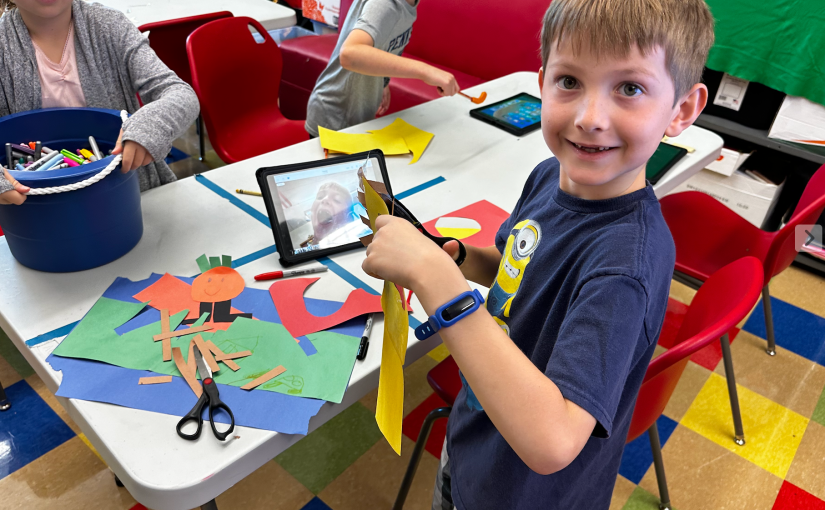
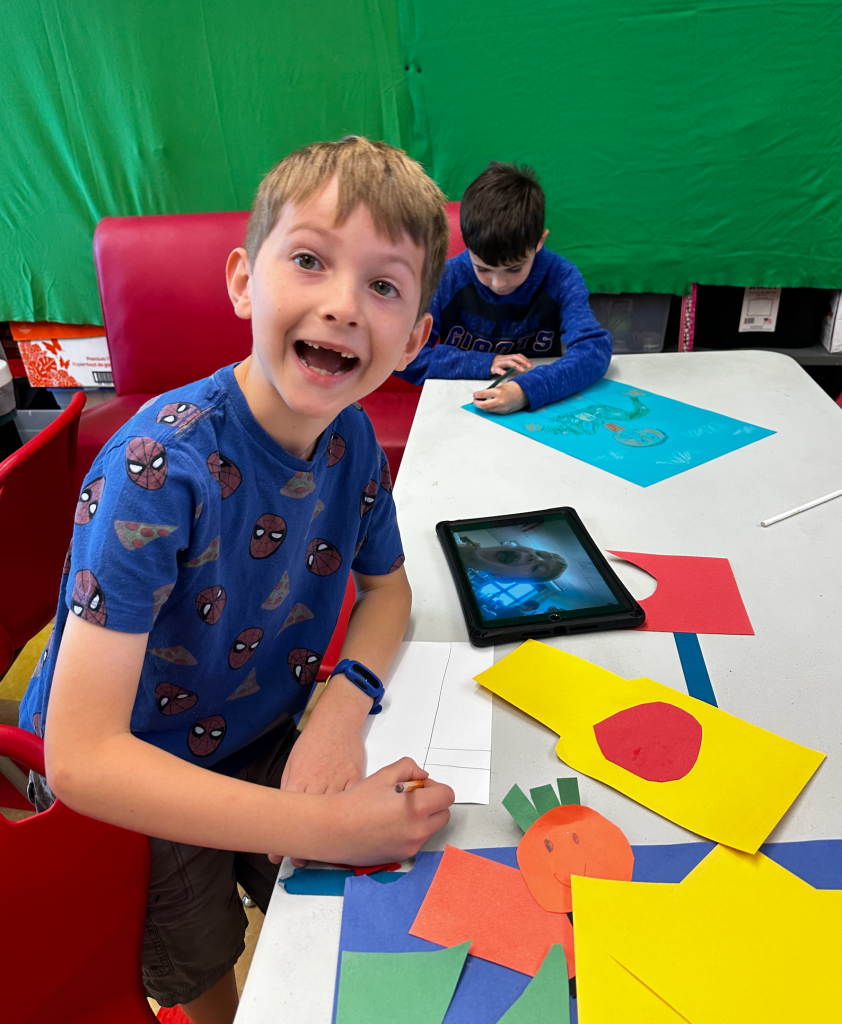
Skip ahead to this year. As I prepared to teach the kindergarten through fifth grade gifted students at my school, transitioning from solely 3rd grade teacher to gifted teacher, I thought about doing this self-portrait lesson again. Only, this time I didn’t want my students to be so limited. I was curious to see what these bright students would come up with if I took away the strict parameters of having to use only scrap papers, and prohibiting scissors or drawing tools. This time, students could cut, draw, and even bring in items from home to stick on their self-portrait.
I showed my gifted students and talked about the self portrait project from long ago. I mentioned the parameters of the previous project, but informed this year’s students that the laws were loosened. I thought that this would free them to be more creative and therefore motivated. I was very surprised at what happened next.

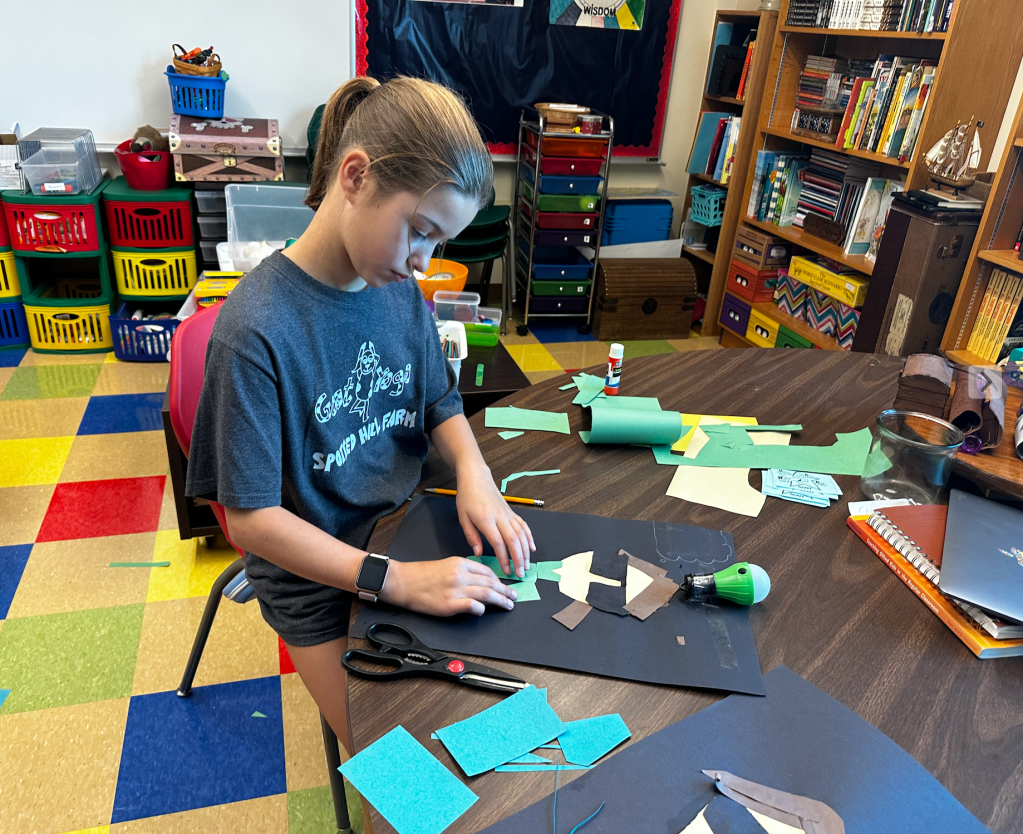

Many of my gifted students floundered. Several had no idea where to start. The students who led the charge into artwork did so by following the guidelines of the previous lesson, tearing scrap papers to glue onto their colorful construction paper. I reminded them that they did not have to do this. They could use scissors. They kept right on tearing away. That was the mental framework (imagination-parameters) that I had set up for them. It was like water running downhill through the path of least resistance.

There were a few rules: The self portrait was to be contained to a 12” by 18” piece of paper. The student had to produce it. No getting parents to do the work for you. And, no printing something out to paste onto the paper. Also, I told them that it had to be done by Friday, but I wanted it to be worked on all the way until Friday. In other words, no drawing something simple on day one, and saying, “I’m done.”
A couple of students used pencils to draw a picture on their papers. They had to be pushed into continuing to work on their portraits. Some students got stuck looking at pictures or using a drawing app on their iPads. They wanted to print out their digital drawings. I eventually had to tell them to put the electronic tools away and focus on their paper projects.

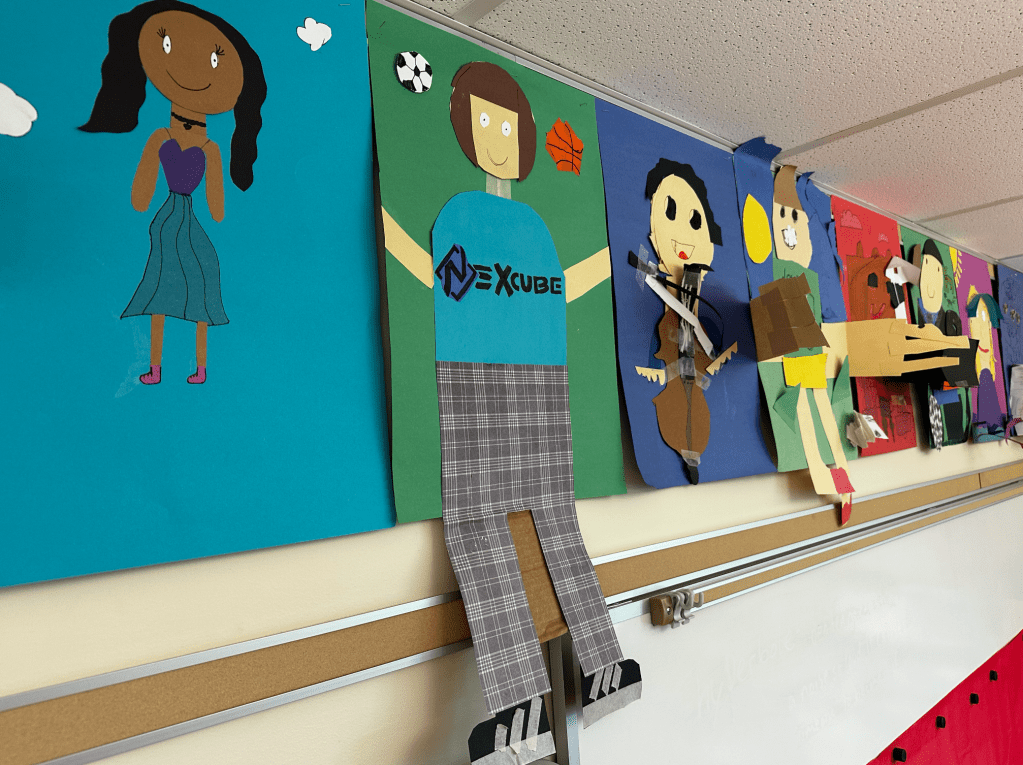
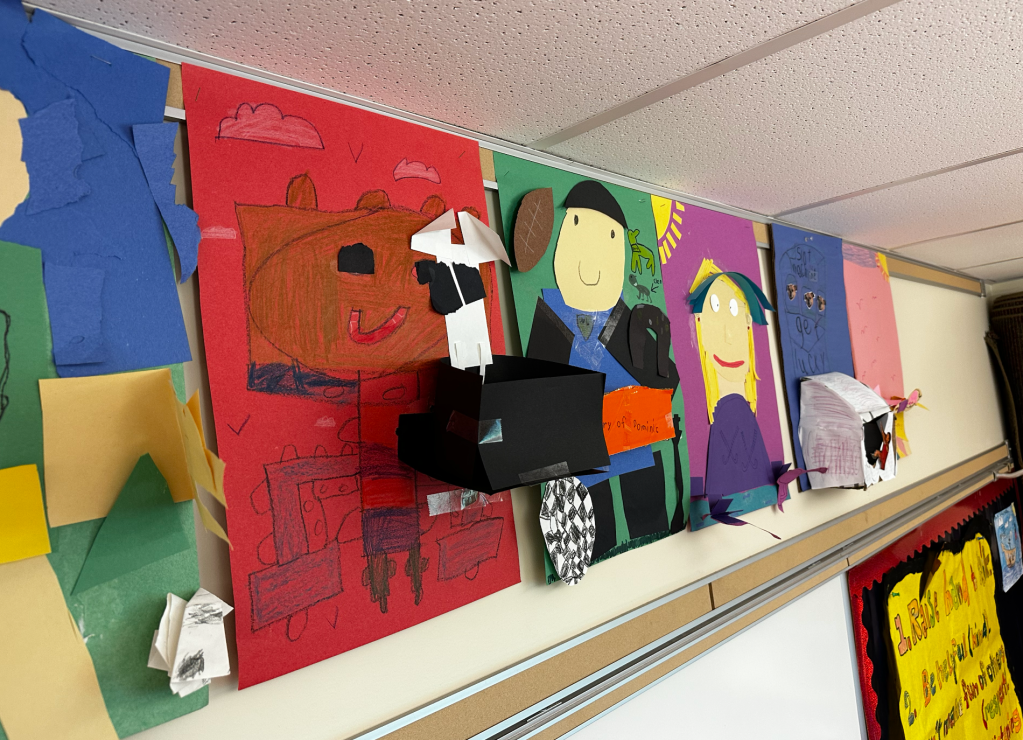
In the end we completed our self portraits by Friday. They all got hung on the wall. Each one is very unique, represents its creator, and fulfills the requirements. Some of them are super creative. I was able to learn a little bit about the students through witnessing how they tackled the project. In that respect the lesson was a success.
I also learned a valuable lesson about parameters. Generally, students do better when the parameters are tight; not rigid; but clearly and firmly established. Not only was my original self portrait project completed quicker, but if I were to conduct a survey, I think that the first lesson produced more positive vibes when it was all said and done. My gifted students were flummoxed with what to do and how to do it.
When there are strict parameters, every portrait had the same characteristics. Each was made from tearing and gluing paper. There was no flexibility for someone to bring a cool item from home to stick onto their portrait. Even though every portrait was very different, they were equal.
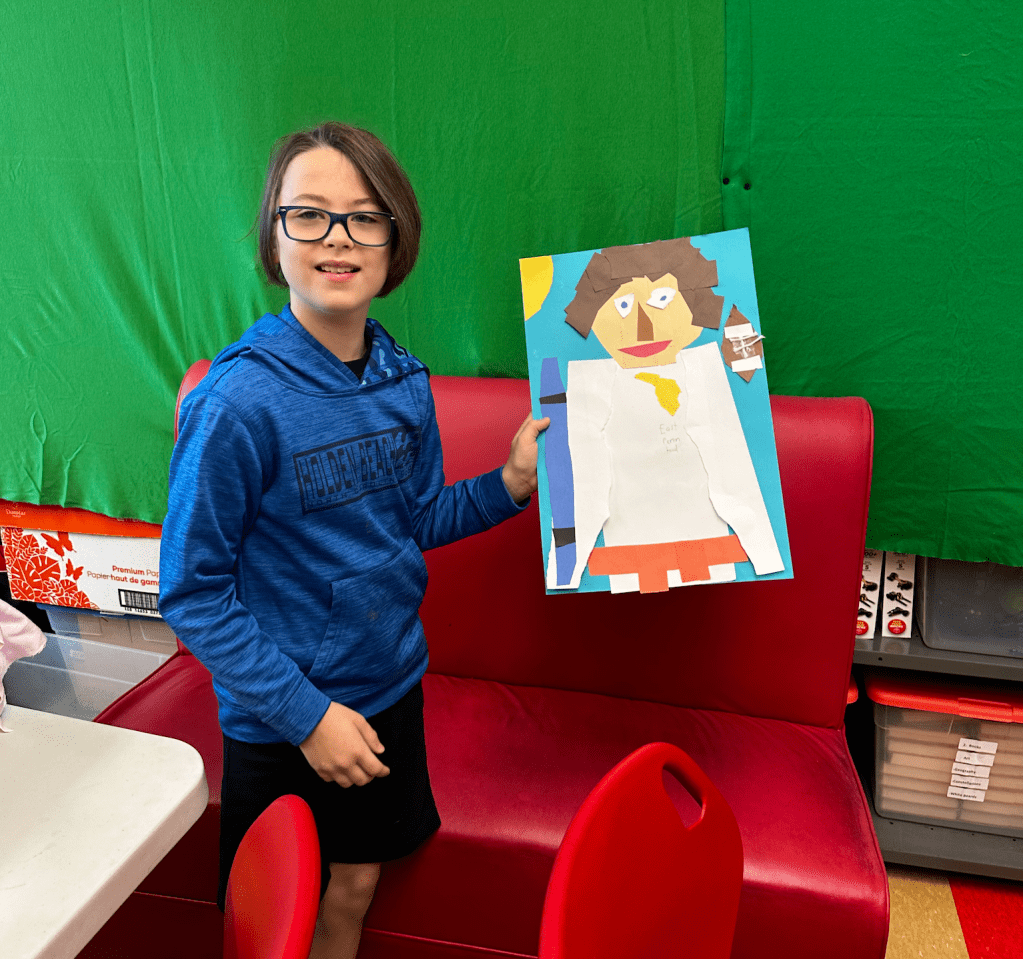
In order to preempt any unfavorable feelings of comparing someone’s portrait to another’s this time around, I put it right into the rubric. I told all of the gifted students on the first day that this was supposed to be fun, and that there will be no judging. Do your best on your work, admire your neighbor’s work, but do not say anything negative about anyone else’s artwork. If someone chooses to draw a stick figure, they can. It simply has to represent the artist in one way or another, be done by Friday, and be worked on until Friday. Good luck making that last parameter stick with your line art!

When I had very strict guidelines during the tearing and gluing lesson years ago, there was still room to be creative. It was more challenging to make your portrait unique since everyone was using the same mediums, but the uniqueness was more evident. The difficulty-level caused students to stretch their minds. Whenever I am given a task in a grad class, at a professional development session, or at a seminar, I always see how far I can bend the rules and still remain within the parameters of the project. This helps me make a boring (sorry teachers of teachers; they are) requirement fun or at least less mind-numbing.
When you narrow a channel of water, it becomes more powerful. Parameters are boundaries. Like a pressure washer, they focus all of the energy and attention on specific goals.
Experiment: Make a barrel for a projectile to travel through. The parameters are the sides. Shoot something through the barrel. Shoot something with absolutely no parameters. Which goes farther? Which is more accurate? At what point do the sides prohibit the distance? When do the parameters prohibit success?


Parameters can standardize results. This is often perceived as a negative thing. Educators don’t like being boxed in, confined, or limited. Rubrics guide our evaluation of students’ work. Using one to score a writing piece does not mean that students can’t use narrative to explain a nonfiction topic. It focuses attention on whether the student developed and mastered the skills taught. If you are looking to see if a student can research a topic, and they decide to show you that they can through producing a play, were they wrong? Did you put in your rubric that it has to be a six-sentence-paragraph? And, if so, why? Are you measuring mastery or how well the kid can be squeezed into a box?

I’ll end this parameter perusal on a positive product from my most recent self portrait lesson. Don’t be afraid to be creative in constructing parameters. I told my gifted students that they were not allowed to get stressed out. I put it in my rubric. If they felt like they were getting worried, they had to talk to me. This was supposed to be fun. If it wasn’t fun, they were not doing the assignment correctly. “I will dock points from anyone not having fun,” I mock threatened to smiles. My aim was to introduce my students to my goal; Which is to make working hard and tackling challenges entertaining.
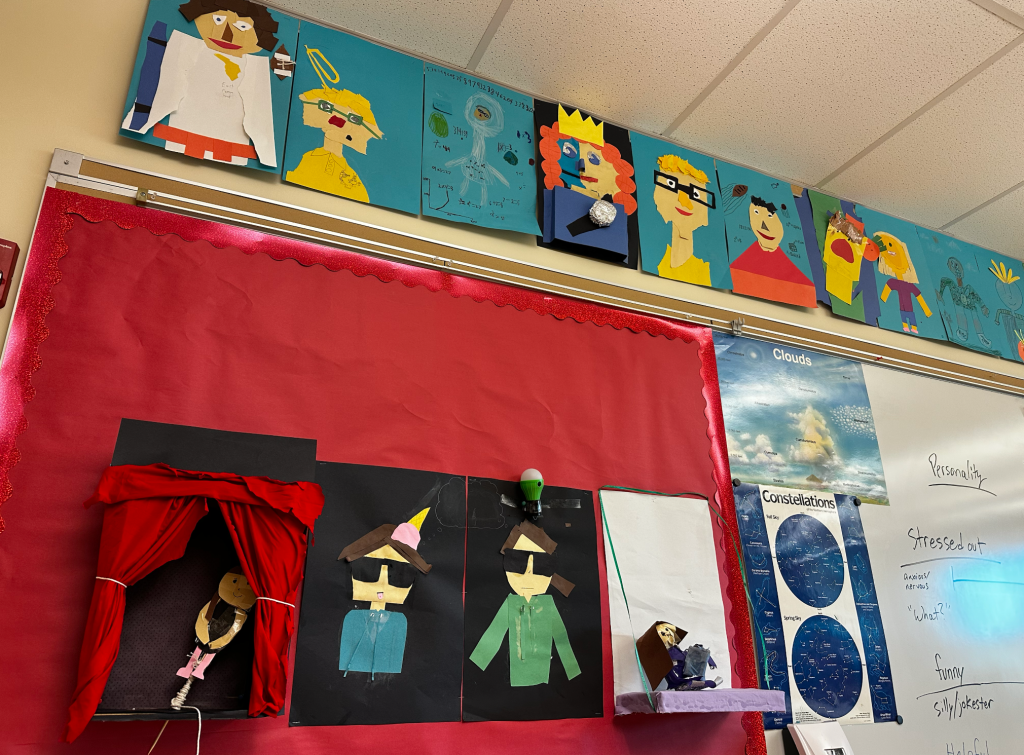
I already mentioned that, in addition to completing the artwork by Friday, they had to continuously work on their projects when they were in class. If they weren’t working, they were not meeting the expectations. This allowed me to praise them for working, rather than on the product of their work. (More on this later.) Lastly, as mentioned previously, rather than only telling my students to not view this project as a competition, I put it right into the rubric!


 The Captain of Class
2 thoughts on “Paradoxically Powerful Parameters”